
Reviewed · LISBON BIKE & E-BIKE TOURS
7 Hills and 14 Viewpoints – Lisbon E-Bike Tour
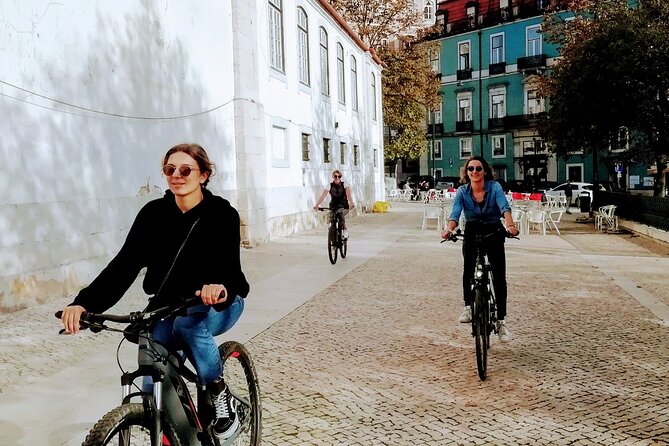
Lisbon on an e-bike feels like cheating—in a good way. This 7-hill tour blends big viewpoints with tight, story-led guiding, so you get the city’s drama without spending the whole day gasping for breath.
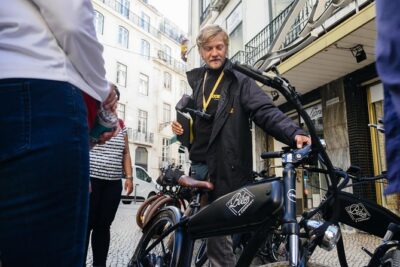
I especially like how the ride is paced for real conversation. With a group capped at seven, my guide could actually keep eyes on everyone, answer questions, and steer us through the hills like we were local.
One thing to think about: you’ll hit cobblestones and crowded streets, so confident bike handling matters, even with electric assist.
In This Review
- Key highlights you’ll feel fast
- Conquering Lisbon’s 7 hills without turning it into a workout
- The route: how the ride actually unfolds in your head
- Miradouro São Pedro de Alcântara: the view that sets the stage
- Largo do Carmo: ruins, revolution energy, and nearby iconic sights
- Tilework stop at Viúva Lamego: Lisbon’s built-in art style
- Miradouro da Senhora do Monte: the plane-view moment
- Miradouro da Graça and São Jorge views: the city from another angle
- Mercado de Santa Clara: market energy and a bigger historical backdrop
- Alfama by bike: narrow lanes, viewpoint “mini-stops,” and a local toast
- Castle neighborhood and São Jorge area: oldest houses + that gate feeling
- Mouraria: street art energy, photo spots, and surprising details
- Finishing toward major squares and churches in the historic center
- What it feels like to ride: cobblestones, traffic, and why your guide matters
- Price and value: why $54.42 can make sense
- Who should book (and who should pause and rethink)
- Weather and small bike issues: be realistic
- Should you book the 7 Hills and 14 Viewpoints Lisbon e-bike tour?
- FAQ
- How long is the Lisbon e-bike tour?
- What group size should I expect?
- What’s included in the price?
- Is the tour offered in English?
- Are food and drinks included?
- What if the weather is bad, or I need to cancel?
Key highlights you’ll feel fast
- Small group of 7 means you’re not just another rider in a stampede.
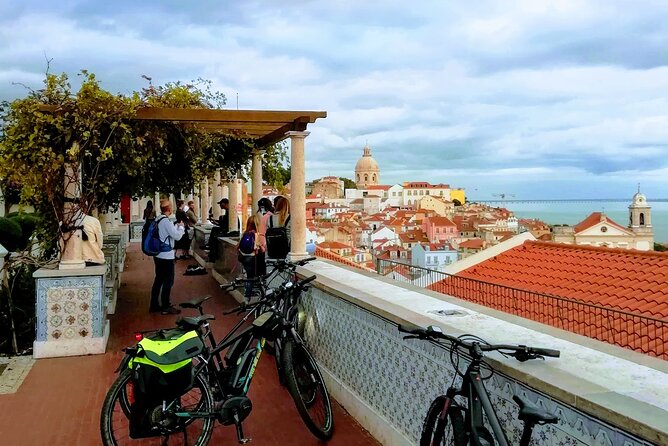
- Seven hills, multiple miradouros: you’re stacking viewpoints instead of doing one and calling it a day.
- Free monument entry tickets take the edge off costs at key stops.
- Guides like Miguel, Hugo, Pedro, Maya, and Mia bring the stories to life and keep the group together.
- Alfama + Mouraria + Castle area give you narrow-street Lisbon, not a sanitized postcard route.
- E-bikes handle the steep parts so you can focus on scenery and photos.
Conquering Lisbon’s 7 hills without turning it into a workout
Lisbon’s topography is no joke. The city climbs, twists, and drops in quick succession, and if you try to brute-force it on foot, your day can turn into a stair-based survival test. This is where the e-bike changes the tone completely. You still ride through steep stretches, but the motor keeps you from burning all your energy before the good views.
What I like is that the tour doesn’t treat the hills like a nuisance. It treats them like a feature. You get planned pauses at lookouts, then you roll down to the next old neighborhood, where the streets tighten up and the atmosphere changes.
The best part is that the hills are matched to viewpoint stops. So you’re not just grinding uphill for the sake of moving from A to B. You’re climbing because the next corner has a reason to stop—wide angles, rooftops, the Tagus direction, and that Lisbon feeling of layers.
Seven hills on two wheels, a few more routes
- Lisbon: Hills, Alfama, and Mouraria Tour by Electric Bike
★ 4.8 · 3,438 reviews - Lisbon E-Bike Tour Commerce Square, Mouraria and Alfama
★ 4.5 · 1,688 reviews - Lisbon: 7 Hills Half-Day Electric Bike Tour
★ 4.9 · 1,592 reviews - Lisbon: City Highlights and Viewpoints E-Bike Tour
★ 4.9 · 1,556 reviews
The route: how the ride actually unfolds in your head
This tour is designed as a loop from historic center viewpoints down into neighborhoods known for their narrow lanes, then back toward major city squares. The big idea is simple: you start by looking over Lisbon, then you spend the second half learning Lisbon from inside the streets.
You can expect short viewpoint pauses (often around five minutes) and longer neighborhood moments where you can soak in details—church facades, tilework, convent ruins, and the kind of street texture you only notice when you’re moving slowly.
Also: the ride includes both “photo stops” and “human-story stops.” One moment you’re framing a panorama; the next, your guide is pointing out something specific—an old site tied to modern Lisbon, or why tiles show up the way they do.
Miradouro São Pedro de Alcântara: the view that sets the stage
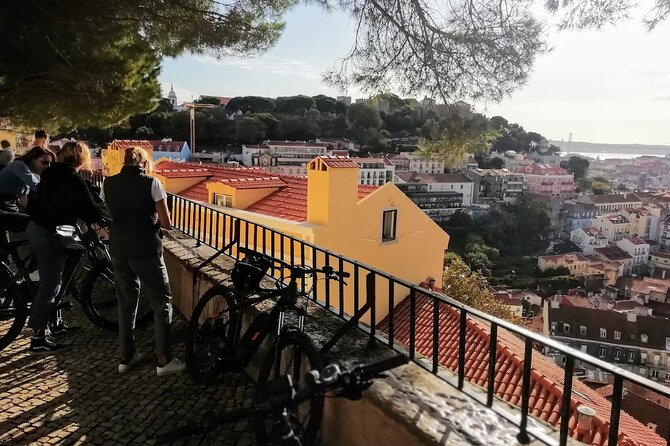
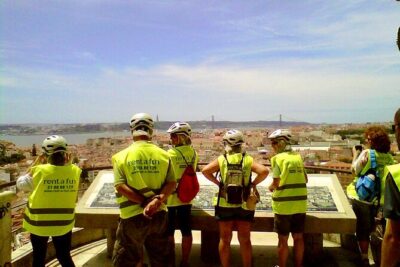
Your day starts at Miradouro de São Pedro de Alcântara, one of Lisbon’s most famous viewpoints. This is a fast orientation moment. From here, you can see the historic center and also the wider eastern side of the city. It’s the kind of place where you suddenly understand why Lisbon looks the way it does—buildings layered across slopes, with viewpoints acting like punctuation marks.
In practical terms, I’d treat this stop as your “map in your mind.” Before you ride deeper into neighborhoods like Alfama and Mouraria, this is where you learn the overall shape.
Because the stop is brief, come prepared to photograph quickly. If you’re using your phone, clear a spot in your camera settings beforehand so you’re not fiddling while everyone else is snapping.
Largo do Carmo: ruins, revolution energy, and nearby iconic sights
Next comes Largo do Carmo, a small square with an important connection to Portugal’s Revolution period. It’s not a long stop, but it’s a good one if you like history you can see without a museum ticket.
From this area, you’ll have the option to see Carmo Convent ruins (from the 19th century) and the top of the Santa Justa elevator. Since the tour includes free monument tickets and the stop is marked free, you’re not stuck deciding whether an extra paid entry is “worth it.”
Why this matters: Lisbon has many viewpoint stops, but Carmo connects that drama to real Lisbon events. It gives you a reason to look at the city not just as scenery, but as a place that changed.
Worth a look before you lock anything else in around Lisbon:
Tilework stop at Viúva Lamego: Lisbon’s built-in art style

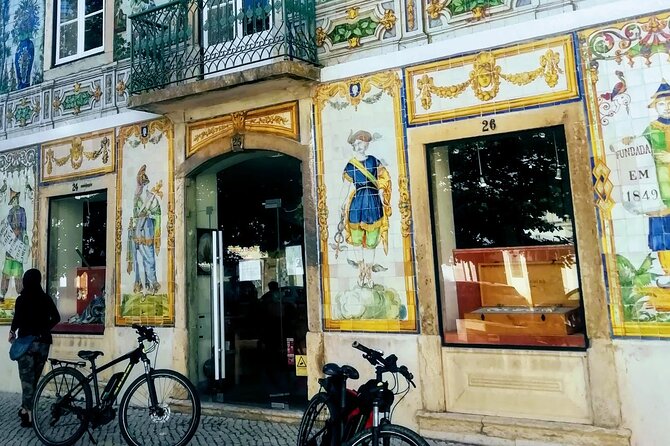
Then you’ll roll into an area focused on tiles—the patterned ceramic tradition that shows up on façades across Lisbon. The stop focuses on a building connected to Portugal’s most famous tile factory, and it’s one of those moments where the tour shifts from “look at the view” to “look at the details.”
This is valuable because tiles aren’t random decoration. They’re part of how Lisbon identities got painted onto streets: historical scenes, national motifs, and decorative designs that make neighborhoods feel instantly “Lisbon,” even when you’re far from the riverfront.
If you love photos, take a close look at the colors and the way tile patterns frame windows or entrances. On a bike, you’ll pass quickly, but your guide can point you at the exact spots worth stopping for.
Miradouro da Senhora do Monte: the plane-view moment
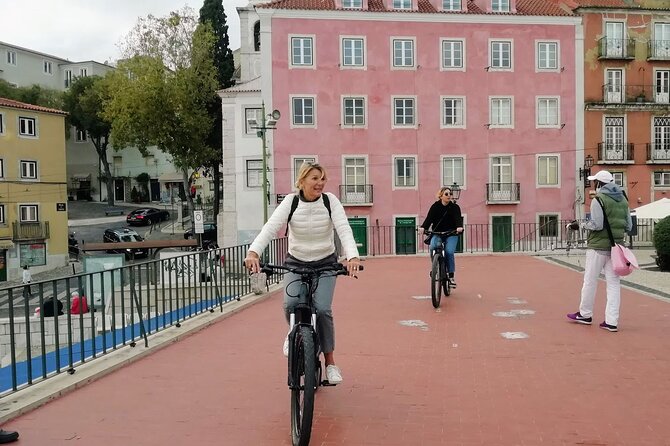
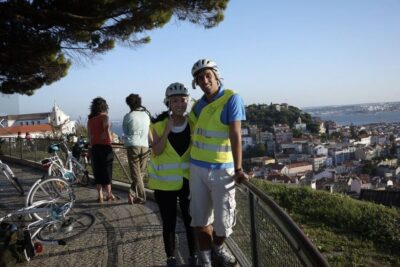
At Miradouro da Senhora do Monte, the tour hits one of Lisbon’s highest viewpoints. The feeling here is different from São Pedro. It’s not just a wide view—it’s almost like you’re floating above the city, seeing how everything stacks and overlaps.
This viewpoint stop also comes with local context: it was important to Lisbon about 900 years ago. That kind of “why this place mattered” talk helps the view land harder. It’s not only pretty; it has a story.
If you’re chasing photos, this is one of the best places to slow down and get a clean shot. If you’re going at dawn, you might catch softer light; if later, you’ll still get strong layers and the rooftops that make Lisbon look like it’s built on hills made of tiles and time.
Miradouro da Graça and São Jorge views: the city from another angle
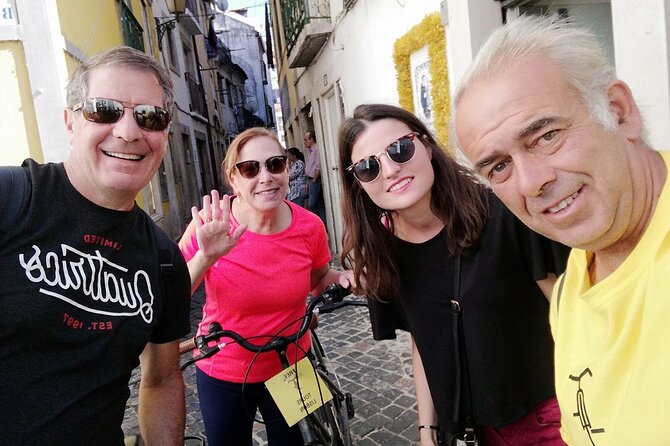
After that, you arrive in Graça, a traditional neighborhood vibe you can feel in the streets. You’ll stop at Miradouro da Graça (named for Sophia de Mello Breyner Andresen), which gives you another major angle on the city—plus close views toward São Jorge Castle.
The tour also includes a chance to visit the church and part of the Graça convent for free. This is a nice balance: one moment you’re up in open air with city views; the next you’re down in a religious and community space.
What I like about this stop is the contrast. You get grandeur from above, then you get texture up close—stonework, quiet corners, and that classic Lisbon feeling of “this has been here forever.”
Mercado de Santa Clara: market energy and a bigger historical backdrop
You’ll then reach Mercado de Santa Clara, in the middle of an important area of town. The tour points out that on Tuesday and Saturday, the oldest street market in Lisbon—the Flea Market—happens right here.
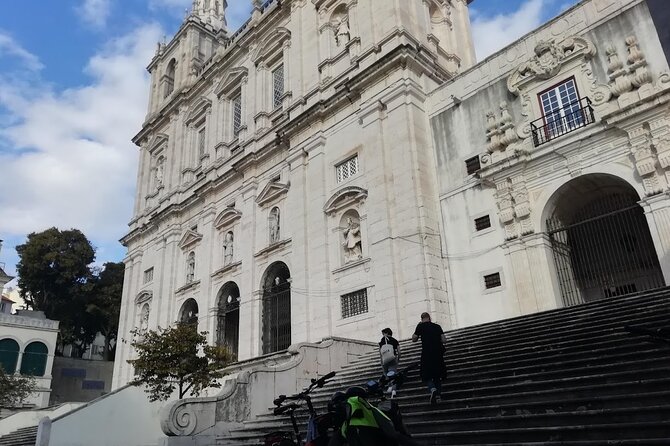
Even if you’re not on market days, the area gives you a sense of local life rather than only tourist scenery. Next to the market, you’ll also observe from outside two key monuments: São Vicente de Fora Monastery and the National Pantheon.
Even when you don’t go inside, seeing these landmarks from street level helps you connect neighborhoods to famous buildings. It’s one of those details that makes your later self-guided exploring easier.
Alfama by bike: narrow lanes, viewpoint “mini-stops,” and a local toast
Then you hit Alfama, Lisbon’s oldest traditional neighborhood. This is where the tour becomes more than a scenic ride. You’ll cycle through very narrow streets, a maze-like feel that’s hard to replicate on your own when you’re trying to navigate and photograph at the same time.
Here, you’ll make short stops at multiple viewpoints: Santo Estevão, Santa Luzia, Cerca Moura, and Portas do Sol. You’ll also pass significant religious landmarks like Lisbon Cathedral and Santo António Church.
This is also where the tour leans into local culture in a small but fun way. You’ll toast with a ginjinha (a cherry liqueur) with your guide and group during the ride. It’s not a long, formal meal moment—more like a quick flavor of Lisbon stitched into the experience.
My practical tip: Alfama is where you’ll notice how tight the streets get around parked cars, pedestrians, and turning traffic. Pay attention to your guide’s instructions at crossings. Even with electric assist, bike handling and awareness are what keep the experience smooth.
Castle neighborhood and São Jorge area: oldest houses + that gate feeling
After Alfama, the route moves into the São Jorge Castle area. You’ll ride through narrow streets again, but with a different vibe: older houses, stone surfaces, and the sense that you’re closer to Lisbon’s “fortified past.”
You’ll see the castle gate and the surrounding neighborhood texture, giving you a sense of why this area has always felt important—even if you’ve only read about it from afar.
This part is worth it even if you’ve already seen photos of the castle. In person, the scale and the slope changes make it feel more grounded. Plus, you’re arriving there by bike, which means you’re part of the neighborhood—not watching it from a distance.
Mouraria: street art energy, photo spots, and surprising details
Next is the neighborhood of Mouraria, one of Lisbon’s oldest areas bordering the castle and Alfama. The streets are narrow again, but the “surprise” here is visual: there are hundreds of photos hanging on the streets featuring the people who live there.
It’s a fun, human detail. Lisbon is full of old stones, but this adds contemporary community presence. Your guide can point out what you’re looking at so you’re not just seeing random decorations.
This section tends to be memorable because it feels personal. It’s less about grand monuments and more about everyday Lisbon identity—still historic, still dense, but more intimate.
Finishing toward major squares and churches in the historic center
The tour then continues back toward central Lisbon, passing through big squares, theaters, shops, and notable monuments near the core.
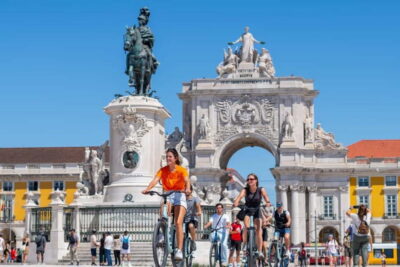
You’ll visit São Domingos Church, ride past Praça do Rossio (near the base of the Santa Justa elevator), go under the Rua Augusta Arch, and finish around Comércio Square by the Tagus River.
If you like wrapping up with a sense of scale, this works. You’ve spent hours riding steep slopes and narrow lanes; then you land in wider spaces where Lisbon feels open again. It also leaves you with a strong mental map for where to go next—restaurants, river walks, and easy transit links.
What it feels like to ride: cobblestones, traffic, and why your guide matters
Let’s talk about the real-world part: riding conditions.
Lisbon’s historic streets can be bumpy, and cobblestones show up where you least expect them. Even on an e-bike, you’ll feel the vibration and jostling. That’s not a deal-breaker, but it’s a reason to avoid wearing your fanciest footwear.
Then there’s traffic and crowding. This is an active city. You’ll bike through areas with cars, pedestrians, and heavy foot traffic—especially in central streets and near popular sites. In one experience, someone separated from the group briefly due to crowds, which shows you why staying alert matters.
The good news from guides and on-the-ground experience: the better the guide, the smoother it feels. Guides in this tour style (Miguel, Hugo, Pedro, and others) are trained to keep the group together and handle route choices at crossings. In multiple accounts, the guides were careful, patient, and confident, with road-crossing habits that inspire calm.
Two practical tips for you:
- Wear shoes with grip and expect some jolts.
- If you’re nervous around traffic, take the briefing seriously. Your comfort improves when you follow their positioning and crossing instructions.
Price and value: why $54.42 can make sense
At about $54.42 per person for roughly four hours, this tour is priced for value in a few key ways.
You’re paying for:
- an e-bike (which would cost you money or time to rent elsewhere),
- a helmet,
- a guide who handles navigation and storytelling,
- and free monument tickets tied to the stops.
The free tickets matter because Lisbon’s “worth seeing” list often stacks paid entries fast—especially viewpoints and historic interiors. Even if you don’t use every option at every stop, the structure still reduces decision fatigue.
For someone who wants both a broad overview and the chance to get inside neighborhood texture, this is a smart use of time. You’ll cover more ground than walking without the “every hill is a personal challenge” part.
Is it cheap? No. But it is not inflated for what you get—especially if you care about viewpoints, local details, and guided context.
Who should book (and who should pause and rethink)
This tour fits best if you want:
- a high-view, quick-coverage Lisbon day,
- a guided version of neighborhoods like Alfama and Mouraria,
- and hills handled by an e-bike motor.
You do not need to be a hardcore athlete. Multiple experiences highlight that the e-bike makes steep areas easier to pedal, including for families with teenagers. The ride is designed for moderate fitness, not marathon endurance.
But don’t ignore the practical requirement: you should feel comfortable on a bike and aware in traffic. Lisbon’s tight streets aren’t a quiet park loop.
I’d especially think twice if:
- you’re very uneasy around busy streets,
- you expect smooth pavement the entire time,
- or you need a purely relaxed, slow-and-easy sightseeing pace.
On the “maybe” side, if you’re new to cycling, your comfort depends on your willingness to take instruction and stay with the group.
Weather and small bike issues: be realistic
This experience needs good weather. If conditions are poor, it can be canceled and you’d be offered a different date or a full refund.
Also, bikes are machines. Even with inspections and a renewed fleet, occasional small problems can happen. The tour notes that guides are trained to solve issues and replace bikes if needed. So don’t assume “perfect gear forever,” but do assume there’s a plan when something minor goes wrong.
Should you book the 7 Hills and 14 Viewpoints Lisbon e-bike tour?
If you want to see Lisbon’s “top of the city” energy and also ride into the oldest streets, I think you should book this. It’s one of the better ways to get an overview fast without sacrificing local character. The small group size is a major plus, and the viewpoint sequencing makes the effort feel worth it.
Book it if you’re okay with:
- cobblestones,
- crowd density,
- and following guide instructions in traffic.
Skip or choose a different style of tour if you want totally car-free streets or you’re not comfortable handling a bike in busy historic areas.
If you’re debating, here’s the simplest way to decide: if you’d rather conquer Lisbon with help than suffer through hills on foot, this is your ticket.
FAQ
How long is the Lisbon e-bike tour?
The tour runs for about 4 hours.
What group size should I expect?
The tour caps at a maximum of 7 travelers.
What’s included in the price?
Your ticket includes use of the bicycle, helmets, a guide, and free monument tickets.
Is the tour offered in English?
Yes, the tour is offered in English.
Are food and drinks included?
No. Food and drinks aren’t included in the tour price.
What if the weather is bad, or I need to cancel?
This tour requires good weather. If it’s canceled due to poor weather, you’ll be offered a different date or a full refund. You can cancel for a full refund up to 24 hours before the start time.
More Tours in Lisbon
- Lisbon City Center Tour – The Unmissable Lisbon★ 5.0 · 22,234 reviews
- Lisbon: History, Stories and Lifestyle Walking Tour★ 4.8 · 10,902 reviews
- True 4Hour Private Tuk Tuk Tour: Discover Lisbon with a Local!★ 5.0 · 8,008 reviews
- Winner 2025 Undiscovered Lisbon Food & Wine Tour by Eating Europe★ 5.0 · 6,390 reviews
- Lisbon: Sintra, Pena, Cabo da Roca, Cascais Tour with Pickup★ 4.8 · 5,445 reviews
More Tour Reviews in Lisbon
- Lisbon City Center Tour – The Unmissable Lisbon★ 5.0 · 22,234 reviews
- Lisbon: Sintra, Pena, Regaleira, Cabo da Roca & Cascais★ 4.7 · 19,656 reviews
- Lisbon Card: 24, 48, or 72-Hour Pass★ 4.5 · 17,944 reviews
- Lisbon: Jerónimos Monastery Entrance Ticket★ 4.1 · 14,164 reviews
- Lisbon: History, Stories and Lifestyle Walking Tour★ 4.8 · 10,902 reviews
The Seven Hills on Two Wheels
- Lisbon: Hills, Alfama, and Mouraria Tour by Electric Bike★ 4.8 · 3,438 reviews
- Lisbon E-Bike Tour Commerce Square, Mouraria and Alfama★ 4.5 · 1,688 reviews
- Lisbon: 7 Hills Half-Day Electric Bike Tour★ 4.9 · 1,592 reviews
- Lisbon: City Highlights and Viewpoints E-Bike Tour★ 4.9 · 1,556 reviews
- Lisbon: 3-Hour Tour by E-Bike★ 4.8 · 1,150 reviews
Just in: fresh Lisbon reviews from the team





Lisbon Bike & E-Bike Tours, compared.
 ★ 4.8Hills, Alfama, and Mouraria Tour by Electric BikeFrom $253,438 reviews
 ★ 4.5Lisbon E-Bike Tour Commerce Square, Mouraria and AlfamaFrom $301,688 reviews
 ★ 4.97 Hills Half-Day Electric Bike TourFrom $271,592 reviews
 ★ 4.9City Highlights and Viewpoints E-Bike TourFrom $291,556 reviews
 ★ 4.83-Hour Tour by E-BikeFrom $471,150 reviews
 ★ 4.9From Lisbon: Atlantic Coast Guided Quad Bike TourFrom $152864 reviews
 ★ 5.03-Hour Lisbon 7 Hills Electric Bike TourFrom $32818 reviews
 ★ 4.7Bike Tour from Lisbon to Belém + Liquor & PastryFrom $46688 reviews
Browse the lists this tour appears in