Reviewed · LISBON
The Portuguese Tiles
Lisbon’s walls tell stories—one tile at a time. This 3.5-hour walking tour links landmark churches and facades to the way Portuguese ceramics evolved, from Moorish influence to local style. You’ll start near Av. da Liberdade, then move through some of the city’s most memorable blue-and-white spots with Miguel Cardoso, a guide who blends art, architecture, and practical local context.
I especially like the stop-by-stop focus: each place is chosen because it teaches you something you can actually spot later—colors, patterns, and how tiles became part of Lisbon identity. I also like that you’re not stuck in a lecture. You’re walking in the same air as the history, seeing tiles where they still live—in churches, on facades, even on the side of everyday buildings.
One consideration: this is a walking route and it runs on good weather. If it’s wet, expect slippery stone and slower pacing, so wear grippy shoes and be ready to move at a careful tempo.
In This Review
- Key highlights you’ll care about
- Why Lisbon’s Tiles Feel Like a Cheat Code
- The 3.5 Hours: How the Walk Stays Pleasant
- Casa do Alentejo: When Tiles Start with History
- Convento de São Pedro de Alcântara: Early Blue-and-White Beginnings
- Igreja de São Roque: Signed 16th-Century Panels in Place
- Trindade: The Brewery Covered in 19th-Century Tiles
- Largo Rafael Bordalo Pinheiro: Tiles with Masonic Motifs
- Livraria Bertrand (Chiado): Bookstore Facades That Read Like Art
- Alcôa: From Lottery Shop to Ceramic Story
- Praca Dom Pedro IV: Big Square, Big Context
- Viuva Lamego: A Tile Factory Showroom Today
- Rua da Misericórdia: A Store That’s Almost a Museum
- The Value Play: What $60.24 Buys You
- Who This Tour Suits Best
- A Few Practical Tips Before You Go
- Should You Book This Portuguese Tiles Tour?
- FAQ
- What is the duration of The Portuguese Tiles tour?
- Where does the tour start?
- What time does it start?
- Is the tour in English?
- How many people are in the group?
- Are tickets included?
- What happens if the weather is poor?
- Is there a mobile ticket?
Key highlights you’ll care about
- Miguel Cardoso’s “spot-what-you’re-seeing” explanations so tiles make sense as you walk.
- In-place tiles, including early blue-and-white examples in churches you can still visit.
- A smart mix of iconic and slightly offbeat stops, from breweries to bookstores.
- Mostly free admissions at the stops, with one included site visit.
- A max group size of 9 travelers, which helps the pace and questions.
Why Lisbon’s Tiles Feel Like a Cheat Code
Lisbon is full of art you don’t have to chase. Many cities give you a few famous monuments. Lisbon often gives you beauty on the street corner. Portuguese tiles—azulejos—can be both decoration and storytelling, with layers that reflect who lived here, what they worshipped, and what they wanted to show off.
That’s what makes this tour work. You’re not just “seeing tiles.” You’re learning how to read them. You start noticing differences in style, time period, and technique. After a couple stops, you’ll look at a wall and think: Why does that pattern feel older than the next one? Why is it blue-and-white here, and more varied somewhere else?
And the route is built around that idea: each stop is there because it marks a shift—religious art turning from Moorish tradition toward Portuguese identity, tiles becoming civic branding, and ceramics showing up in everyday places.
Still deciding? See how this one measures up against a few Lisbon favourites.
- Lisbon City Center Tour – The Unmissable Lisbon
★ 5.0 · 22,234 reviews - Lisbon: Sintra, Pena, Regaleira, Cabo da Roca & Cascais
★ 4.7 · 19,656 reviews - Lisbon Card: 24, 48, or 72-Hour Pass
★ 4.5 · 17,944 reviews - Lisbon: Jerónimos Monastery Entrance Ticket
★ 4.1 · 14,164 reviews
The 3.5 Hours: How the Walk Stays Pleasant
Plan on about 3 hours 30 minutes of moving time. It’s a small group (up to 9 travelers), which matters more than you’d think. With fewer people, the pace feels human, and your guide can slow down when surfaces get slick or when you want to linger.
You’ll start at Av. da Liberdade 6 at 10:00 am. The tour ends in a different location than where it starts, so I recommend building the rest of your day with a little flexibility. The advantage is that you won’t just circle back to the same spot—you’ll finish closer to new neighborhoods you can keep exploring.
Also, it’s offered in English, and you’ll use a mobile ticket. Since you’re moving between sites, it helps to keep your phone charged and ready.
Casa do Alentejo: When Tiles Start with History
Your first real stop sets the tone: Casa do Alentejo. This is one of those buildings where you feel the city changing its mind over time. It started as an aristocratic home, then was remodeled in the 19th century to house Lisbon’s first casino. In that period, the decoration picked up Moorish influence—perfect prep for what comes next on the tile trail.
What you’ll love here is the way the building primes your eye. You’re not thrown straight into tiles with no context. You see the atmosphere of 19th-century romantic design, and then you start noticing how Moorish elements quietly show up before Portuguese style fully takes shape.
If you’re sensitive to heat or rain, this is a good place to catch your breath. It’s also a logical “beginning” because it’s a historical structure you can genuinely understand before walking into churches and facades.
Convento de São Pedro de Alcântara: Early Blue-and-White Beginnings
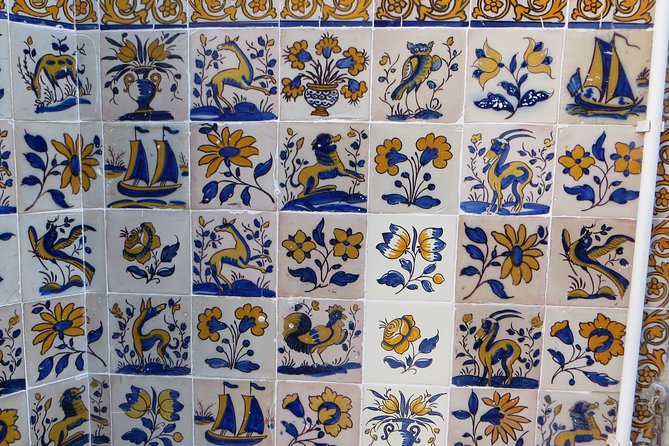
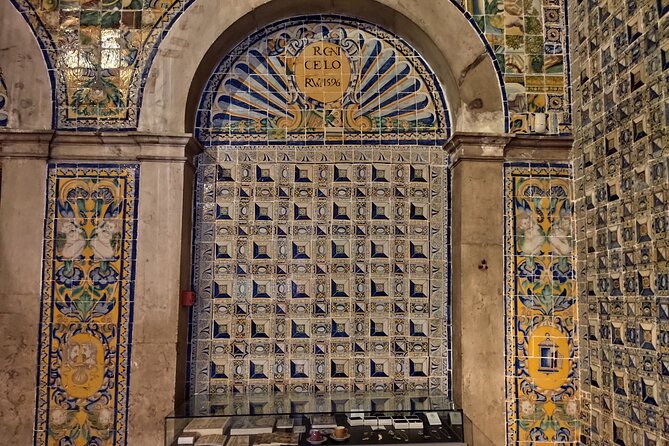
Next up is the Convento de São Pedro de Alcântara, specifically the church of S. Pedro de Alcântara. This is where the tour points you toward a key origin story: here you discover some of the beginnings of the blue-and-white tile tradition in Portugal.
This church includes tiles from the late 17th century and early 18th century. That time window matters. Earlier tiles often carry influences and experiments that look different from what becomes the more recognizable Portuguese “house style.” You’re basically walking into a chapter where a visual language is still forming.
The practical value? You’ll learn to spot what “early” looks like. That’s how the rest of Lisbon clicks—because later, when you see newer tilework, you’ll understand why it feels more settled, more Portuguese in tone, and less transitional.


Igreja de São Roque: Signed 16th-Century Panels in Place
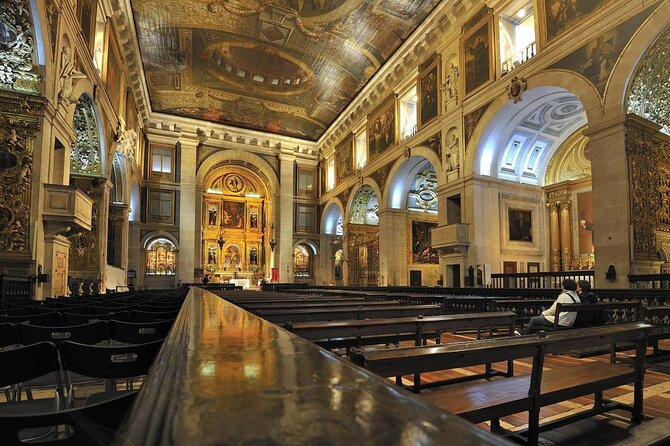
Then you move to Igreja de São Roque, a stop that tile lovers tend to find hard to top. Here you’ll see the oldest tile panels in Lisbon that remain in situ—meaning they’re still where they were meant to be.
These are signed 16th-century panels, and the tour frames them as a turning point: you can see the transition from Moorish tradition toward a more Portuguese brand of tilework. This is one of the stops where I’d slow down if you can. Look closely. Patterns, placement, and how the imagery is built can feel different from later decorative schemes.
A drawback? This is one of the more “watch and learn” parts of the walk. If you’re hoping for lots of outdoor photo time, pace yourself. It’s worth it, but it’s not the kind of stop you speed through.
Trindade: The Brewery Covered in 19th-Century Tiles
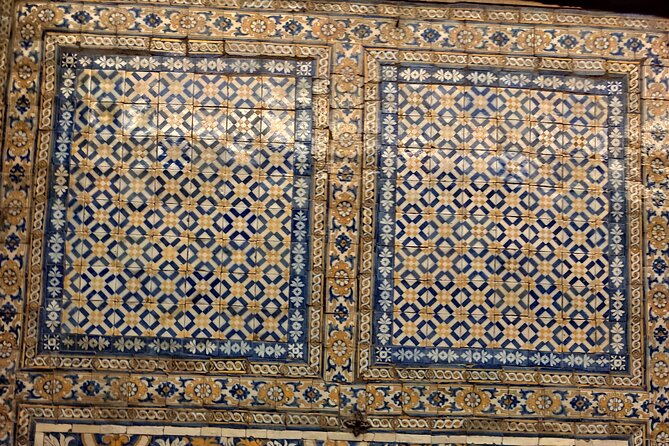
At Trindade, you get a delightfully unexpected angle: the oldest brewery in town, and it’s covered with 19th-century tiles. It’s a reminder that ceramics weren’t only for churches and palaces. They were also a way to brand a business, decorate an industrial space, and show civic pride.
This is where the tour helps you connect the dots between “religious art” and “everyday Lisbon.” Tiles on a brewery feel different. They’re more public-facing. Less about doctrine, more about presence.
If you’re the kind of traveler who takes photos of facades and storefront details, this stop will give you a lot to work with without feeling like a museum hallway.
Largo Rafael Bordalo Pinheiro: Tiles with Masonic Motifs
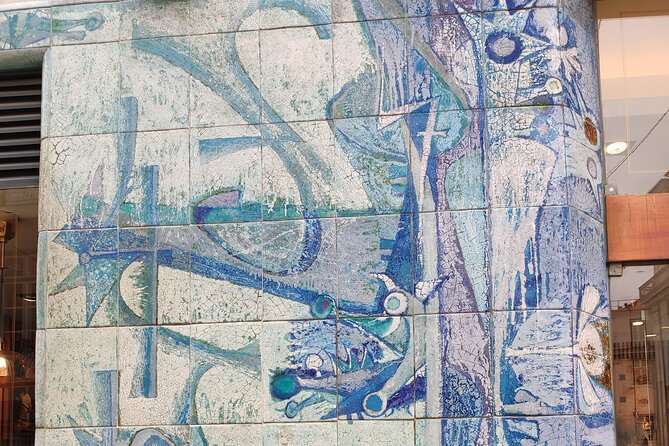
Now you’re at Largo Rafael Bordalo Pinheiro, where you’ll appreciate a 19th-century tile façade with Masonic motifs. This stop also brings the human piece: you learn the history of the man behind this iconic Lisbon façade.
What makes it interesting is the theme. It’s not just “blue and white.” It’s symbol-heavy decoration—motifs that reflect networks of ideas and social identity. The guide’s explanations help you see why the façade is more than pretty patterning.
One thing I like about this stop: it breaks the repeating cycle. After a church and a brewery, you get something that feels more street-level and civic.
Livraria Bertrand (Chiado): Bookstore Facades That Read Like Art
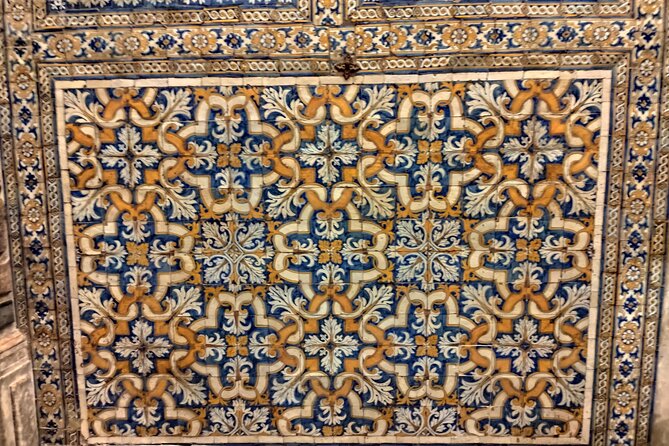
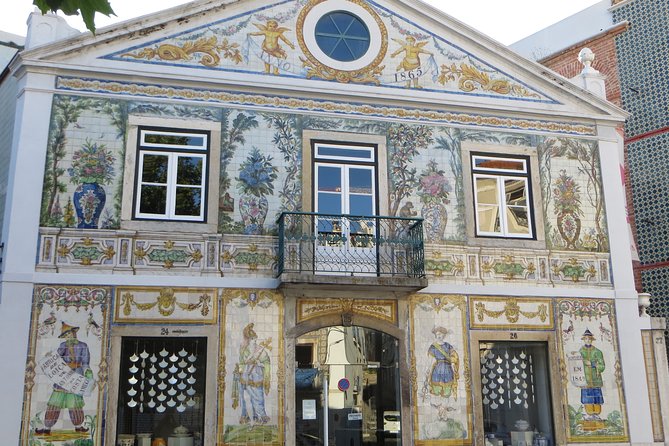
Next is Livraria Bertrand in Chiado—the oldest bookstore in the world still in operation. Even if you don’t buy a book, the building is the show. Its luxurious facades are covered with blue-and-white tiles from the 19th century.
This stop makes an important point: tiles became a way to project culture. A bookstore isn’t just a place to sell words; in Lisbon, it also becomes a decorative landmark. You can see how ceramics create a “welcome” even when you’re just walking by.
If you like bookstores as meeting points and not just purchase stops, add a few extra minutes to your day here. The tilework rewards slowing down.
Alcôa: From Lottery Shop to Ceramic Story
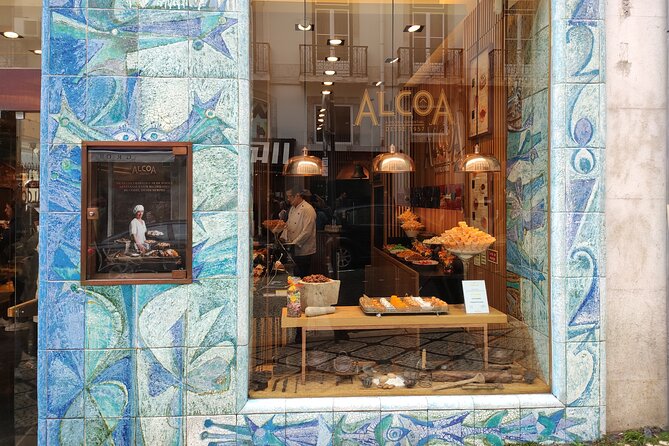
Then comes Alcôa, an iconic pastry shop. But the tour goes further than the smell of sweets. It explains how this place was once a lottery shop and how it was covered with ceramic work by one of Portugal’s greatest potters of the 20th century.
So you’re not only seeing a tile panel—you’re seeing a local story about how businesses evolve and how ceramics can “follow” those changes. It’s a great reminder that tiles can be both historical record and cultural glue.
If you want a quick palate break mid-tour, this is a natural moment. Just keep an eye on timing so you don’t lose your place when the group moves on.
Praca Dom Pedro IV: Big Square, Big Context
At Praca Dom Pedro IV, you get a change of pace. This is Lisbon’s most important square, and the tour frames it with the history and stories that surround the space.
Tiles aside, squares matter because they’re where people gather and where styles spread. Standing in a major square helps you understand why Lisbon tiles became so widespread—public-facing art in public-facing places.
This also helps the walking rhythm. After multiple architectural stops, you get an open-space break to reset your eyes.
Viuva Lamego: A Tile Factory Showroom Today
Now you reach Viuva Lamego, a place tied to two of Lisbon’s most important tile factories. Today it operates as a showroom, which is a smart pairing: you’re not only seeing tiles in churches and buildings—you’re seeing how the industry side of ceramics fits into the bigger story.
This stop is marked as admission ticket included. That’s a value point for your money: you’ll pay the price of the tour and still get at least one covered element that’s not just outside viewing.
If you enjoy comparing styles, this is where you can connect what you’ve learned to what you see more broadly in a showroom setting.
Rua da Misericórdia: A Store That’s Almost a Museum
Finally, there’s Rua da Misericórdia, a store where you can enjoy tiles from almost every era. It’s the endcap to the learning curve: you’ve spent hours training your eye, and now you can test that skill.
This stop is about 20 minutes, and it’s free to enter per the tour. It’s a great chance to walk back through what you saw earlier—this time comparing patterns, periods, and styles side by side.
A word of advice: if you plan to shop, go in with a budget mindset. Tile souvenirs can be tempting, and it’s easy to lose time when you start thinking about frames and display spots at home.
The Value Play: What $60.24 Buys You
At about $60.24 per person for roughly 3.5 hours, the value isn’t just the “tile views.” It’s what’s wrapped around them: an expert guide (Miguel Cardoso), a curated walking route, and multiple stops where admission is free.
Most stops are free to enter, and at least one site is included (Viuva Lamego). That means your money is paying more for interpretation and time than for tickets.
You also get a small group size (max 9). That often matters more than people expect because it reduces that rushed, herd-like feeling. You can ask questions, get photo help, and keep the pace comfortable—especially on wet days.
Who This Tour Suits Best
This tour is a strong fit if you:
- Like learning how to recognize styles, not just name places.
- Want a head start on Lisbon architecture and Portuguese cultural identity.
- Appreciate walking city centers with minimal friction and a clear route.
It’s also handy for travelers who want structure on their first day. With tile context, you’ll notice more all over town later—on facades, churches, and even ordinary storefronts.
If you hate walking, this might not be the best choice. You’ll be outside much of the time, and surfaces can be uneven.
A Few Practical Tips Before You Go
- Wear shoes with grip. Rain can make stone slippery fast.
- Bring a light umbrella or rain layer if the forecast looks iffy. The experience depends on good weather, but you’ll still want to be ready.
- Take your time at the church stops. That’s where the “spotting the difference” skill becomes real.
- If you’re traveling with older legs (or you just tire easily), pace yourself. I recommend planning a slower rhythm and using any natural breaks to rest and reset.
Should You Book This Portuguese Tiles Tour?
Yes—if you want Lisbon to make sense fast, book it. The mix of major tile sites, the way the guide explains transitions in style, and the small-group pace make this a smart use of a half-day.
I’d only skip if you’re determined to avoid walking and indoor viewing in older churches, or if you’re traveling in a week where weather is very unreliable and you’d hate adjusting your day.
If you can handle a careful walk and you like learning through what you can actually see on the walls, this is one of the most satisfying ways to start Lisbon.
FAQ
What is the duration of The Portuguese Tiles tour?
It runs for about 3 hours 30 minutes.
Where does the tour start?
The meeting point is Av. da Liberdade 6, 1250-144 Lisboa, Portugal.
What time does it start?
Start time is 10:00 am.
Is the tour in English?
Yes, it’s offered in English.
How many people are in the group?
The tour has a maximum of 9 travelers.
Are tickets included?
Most stop admissions are free, and one stop (Viuva Lamego) has admission ticket included.
What happens if the weather is poor?
The tour requires good weather. If it’s canceled due to poor weather, you’ll be offered a different date or a full refund.
Is there a mobile ticket?
Yes, it uses a mobile ticket.
More Tour Reviews in Lisbon
- Lisbon City Center Tour – The Unmissable Lisbon★ 5.0 · 22,234 reviews
- Lisbon: Sintra, Pena, Regaleira, Cabo da Roca & Cascais★ 4.7 · 19,656 reviews
- Lisbon Card: 24, 48, or 72-Hour Pass★ 4.5 · 17,944 reviews
- Lisbon: Jerónimos Monastery Entrance Ticket★ 4.1 · 14,164 reviews
- Lisbon: History, Stories and Lifestyle Walking Tour★ 4.8 · 10,902 reviews