
Reviewed · SINTRA DAY TRIPS
Surf and Bodyboard Classes in Sintra
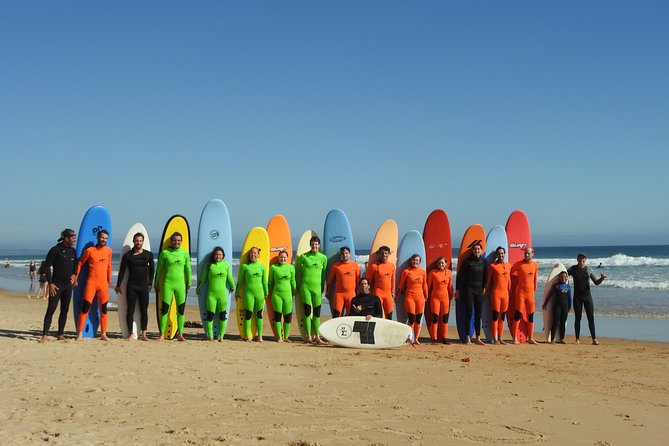
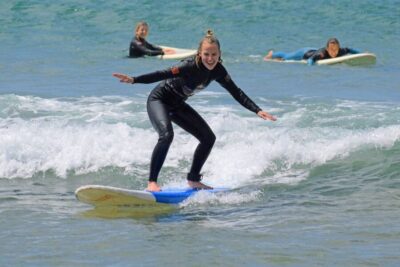
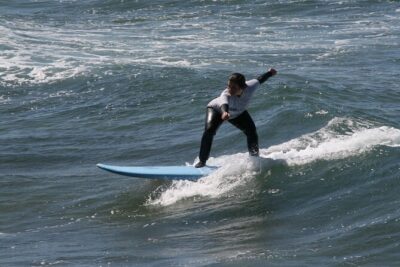
A good surf lesson is half technique and half timing, and that’s exactly what you’re buying here. In the Sintra-area surf scene near Cascais, you’ll get hands-on coaching that adapts to the sea, with lessons that run more than once a day in summer.
I especially like how this is built for different ability levels: it’s shared, but small, and you’re guided by an instructor for every five students. Second, the school handles the hard part for beginners—getting you kitted out with all the equipment you need and then breaking the basics into clear, workable steps.
One thing to consider: sessions depend on sea conditions and tides, so the exact timing can shift (and if weather is poor, the activity may be rescheduled or refunded).
In This Review
- Key things that matter before you book
- Surf and bodyboard classes near Sintra: how the experience really works
- Price and value for a small-group lesson (not a big-tour deal)
- Group size and instructor support: why you’ll feel less lost
- Your timing plan: tides, sea state, and why the schedule shifts
- Meeting point in Colares and getting to the water
- Stop 1: Praia das Maçãs — learning basics with a calmer feel
- Stop 2: Praia de Carcavelos — a chance to apply what you learned
- What equipment included really means for your day
- Bodyboard or surf: you’ll still get skill feedback
- The vibe: welcoming, structured, and tuned for families
- How much progress should you expect in 2 hours?
- Weather and sea conditions: your day is at the mercy of the Atlantic
- Who this class suits best (and who should think twice)
- Quick cost check: what you’re really paying for
- Should you book Surf and bodyboard classes in Sintra/Cascais?
- FAQ
- How long is the surf and bodyboard class?
- Where do you meet for the class?
- What beaches are included in the session?
- Is the class offered in English?
- Do I need to bring surf or bodyboard equipment?
- What happens if weather is poor?
Key things that matter before you book
- Small groups, real coaching: about 1 instructor per 5 students, with attention to different levels
- Equipment included: you show up ready to learn; you don’t have to pack or rent gear
- Pick your moment with the tides: summer schedules run multiple times daily, based on conditions
- Two classic beaches in one session: Praia das Maçãs and Praia de Carcavelos as the coaching grounds
- English-friendly: offered in English, with a maximum group size of 10
Surf and bodyboard classes near Sintra: how the experience really works
This is a surf-and-bodyboard class designed for people who want progress without the chaos. You’re not just signing up for a generic “beach time” session. The format is coaching-forward: a warm-up, short teaching moments, then getting in the water with close supervision.
The area matters, too. You’re based in the Colares/Sintra coastline zone, close to Cascais, where the Atlantic can be friendly when conditions line up. The whole rhythm of your day is built around that reality: the sea decides how and when things happen.
Plan for a total outing of about 2 hours (approx.). The class itself runs 1h30, and the rest of the time is wrap-up and getting organized before and after. In practice, it’s a short, efficient block of time—easy to fit between sightseeing days.
More runs up the hill to Pena and Regaleira
- Lisbon: Sintra Private Day Trip with Pena Palace & Wine Tasting
★ 5.0 · 226 reviews - Lisbon: E-bike Trip from the Sintra Mountains to Cascais Sea
★ 5.0 · 67 reviews - Relaxed E-bike in the backroads of Cascais and Sintra
★ 5.0 · 62 reviews - Small group tour Romantic Sintra & amazing Cabo da Roca & Cascais – from Cascais
★ 5.0 · 37 reviews
Price and value for a small-group lesson (not a big-tour deal)
At $41.40 per person, the value comes from what’s included and how the group is managed.
A lot of “cheap” surf lessons crumble in two places: gear and coaching. Here, equipment is included, and the teaching is organized around ability levels with an instructor-to-student ratio of about 1 to 5. That ratio is the difference between standing around and actually getting feedback while you’re learning.
This also helps you if you’re nervous. First-time surfers often need quick corrections and reassurance, not a long speech. The setup is clearly made to keep you close to the instructor so you can try, get adjusted, try again, and keep your confidence.
If you’re booking through a third party, you might pay a bit more than booking directly with the school. One surfer noted they saved money later by booking directly, and it was also better for the school. So if you’re price-sensitive, it’s worth comparing.
Group size and instructor support: why you’ll feel less lost
The class is shared with other students, and that matters for expectations. But it’s not “crowd surfing with a single supervisor.” The school runs it as a small-group environment (up to 10 travelers) with teaching organized so the instructor can give special attention to different levels.
Here’s what that means for your learning:
- Beginners get the foundations first—how to handle the board, basic safety, and simple technique cues.
- Intermediate students can focus on refinement without being held back by the slowest pace in the group.
- Everyone gets enough time in the water to form habits, not just memorize instructions.
You’ll also notice the coaching style: instructors stay close and explain what’s working and what to change. That kind of feedback loop is what turns a first splash into real progress.
Your timing plan: tides, sea state, and why the schedule shifts
The schedule changes depending on the season.
- Summer season: classes run every day, at least twice per day. Timing depends on the state of the sea and tides.
- Outside summer: classes run once per day, every day including weekends, with start times agreed based on sea conditions and your class level.
This flexibility isn’t a gimmick. It’s how you protect the quality of the lesson. Surfing isn’t one fixed “activity time.” If conditions are wrong, the learning goes sideways fast. By tying the session to tides and sea state, you’re more likely to land in waves that let you practice safely.
In short: don’t obsess over the exact hour. Expect the team to pick the best workable window.
More time in the water on the Lisbon coast
Meeting point in Colares and getting to the water
You’ll meet at Surf at Praia Grande, Av. Alfredo Coelho 41, 2705-329 Colares. The activity ends back at the meeting point.
I like this because it keeps the day tidy. You’re not hunting for the van or transferring between multiple far-flung locations. It also makes it simpler if you’re using public transportation, since the meeting point is noted as being near transit.
For families and first-timers, predictability helps. You’ll know where to be, when to gather, and where you’ll return.
Stop 1: Praia das Maçãs — learning basics with a calmer feel
Your first beach stop is Praia das Maçãs. This is a practical starting point for many lessons because it lets the coaching happen in a controlled way before you push farther into more dynamic surf.
What makes Praia das Maçãs valuable for learning:
- It’s a strong place to practice early-stage skills like board control and positioning.
- You can get comfortable with the motion and timing before you’re dealing with bigger or more chaotic wave sets.
- It’s easier to build confidence at the start of a session, especially if you’re new to surfing or bodyboarding.
Possible drawback: beaches can vary day to day, depending on tides and how the sea is behaving. If the conditions don’t shape up as expected, the school’s priority is still to find decent surf. That means the real “what you do” can vary by day, even if the beach name stays the same.
Stop 2: Praia de Carcavelos — a chance to apply what you learned
The second stop is Praia de Carcavelos. This is where your session shifts from learning-by-doing basics to actually applying technique in live conditions.
Why this stop works:
- It gives you a new stretch of water to test your skills rather than repeating the exact same setup.
- If you improve across the session, you’ll feel it. Beginners often start tense, then by the second stop they can relax and ride the learning curve.
- The two-beach structure helps you avoid the common problem of one location being too limiting for growth.
Possible drawback: if you’re truly brand new, some days may feel challenging simply because the ocean is still the ocean. The good news is the teaching is designed for multiple levels, and the instructor-to-student ratio helps reduce that “I’m alone out here” feeling.
What equipment included really means for your day
The class includes all necessary equipment.
That matters more than it sounds. When gear is provided, you don’t waste time negotiating rentals, sizing boards, or driving around hunting the right shop. You also avoid the awkward “I think this is my board size but I’m not sure” problem.
For a 2-hour outing, that efficiency is everything. You’ll spend your energy on the actual goal: learning how to move with the board and timing your rides.
If you’re traveling light, this is also a big win. Bring a swimsuit, maybe a rash guard if you like extra comfort, and keep the rest simple.
Bodyboard or surf: you’ll still get skill feedback
The experience is described as surf and bodyboard classes, and that usually means the coaching is built around similar foundations: wave reading, positioning, and safe handling of your board.
Even if you’re picking bodyboard vs surf, the teaching style stays consistent—clear explanation, close supervision, and immediate adjustments. That’s what you want as a beginner. You don’t need complicated theory. You need corrections that fit what you’re doing right now.
The vibe: welcoming, structured, and tuned for families
The reviews you’re likely to care about focus on two big things: the instructors are welcoming, and the teaching is organized.
If you’re doing this as a family, that’s especially relevant. One review described it as a solid first experience for kids, with clear explanations and a good mood even when learning is stressful. Another highlighted that the beach setting felt charming and less crowded, with quality instruction and good humor.
This “human scale” vibe is the difference between feeling like a number and feeling like you’re actually learning. When the instructor can keep track of multiple students’ levels, you get more than just a safety check—you get coaching that helps you improve.
How much progress should you expect in 2 hours?
Let’s be realistic. In a single 1h30 class, nobody becomes the next big-wave legend. But you can absolutely make progress fast if the coaching is tight.
Here’s what I’d expect from this kind of structure:
- You’ll get the basics down well enough to attempt rides without guessing everything.
- You’ll understand what to fix when something goes wrong.
- You’ll leave knowing what skill to practice next, which is the real value if you book another session.
One person even booked multiple lessons because they felt they were progressing each time. That’s usually the sign of a good setup: it gives you enough momentum to keep going.
Weather and sea conditions: your day is at the mercy of the Atlantic
This experience requires good weather. If it’s canceled due to poor weather, you’ll either get offered a different date or a full refund.
So yes, it’s outside your control. But it’s also a good sign when a surf school is honest about conditions. Surf lessons work best when the sea isn’t chaotic in a way that prevents safe learning.
Also note: in summer, there are multiple sessions per day, so the school has more flexibility to find a workable window. Outside summer, it’s still daily, but timing is agreed around the sea and your level.
Who this class suits best (and who should think twice)
This is a strong match if you:
- Are a first-timer and want close coaching
- Want a lesson that adapts to mixed ability levels
- Prefer a short, efficient activity over a full-day surf trip
- Are traveling with family and want a structured but upbeat environment
You might think twice if you:
- Need a guaranteed exact start time down to the minute (tides and sea state can shift things)
- Are only comfortable with very controlled water and dislike uncertainty
Quick cost check: what you’re really paying for
You’re paying for three things:
- Time in the water guided by an instructor
- Equipment included
- A class structure built around different levels with a small group ratio
At $41.40, it’s not the cheapest surf experience you’ll ever find. But in many places, the hidden cost is gear and under-staffed coaching. Here, those problems are addressed upfront.
So for most people—especially beginners—the price-to-value ratio is solid.
Should you book Surf and bodyboard classes in Sintra/Cascais?
If you want a beginner-friendly surf lesson with coaching that stays close and doesn’t treat you like background noise, I’d book it. The strongest reasons are the small-group structure (up to 10) with an instructor-to-student ratio around 1:5, plus equipment included and English support.
Book it even if you’re only curious at first. If you catch a good wave window, this kind of class can turn curiosity into a real skill you can build on with a second or third session.
If you’re the type who needs a rigid schedule, go in knowing tides and sea state drive timing, and you may need to be flexible with start times.
FAQ
How long is the surf and bodyboard class?
The class lasts about 1h30, and the whole activity is listed at about 2 hours total.
Where do you meet for the class?
You start at Surf at Praia Grande, Av. Alfredo Coelho 41, 2705-329 Colares, Portugal, and you return there at the end.
What beaches are included in the session?
The class uses two stops: Praia das Maçãs and Praia de Carcavelos.
Is the class offered in English?
Yes. The experience is offered in English.
Do I need to bring surf or bodyboard equipment?
No. All necessary equipment is included in the class.
What happens if weather is poor?
The experience requires good weather. If it’s canceled due to poor weather, you’ll be offered a different date or a full refund.
More Tour Reviews in Cascais
- Surf Experience in Cascais★ 5.0 · 423 reviews
- Cascais: Sunset Boat Trip with Welcome Drinks★ 4.7 · 248 reviews
- Lisbon: Sintra Private Day Trip with Pena Palace & Wine Tasting★ 5.0 · 226 reviews
- Cascais: Dolphin Watching Speedboat Tour★ 4.9 · 156 reviews
- Cascais: Local Surf Experience★ 4.9 · 135 reviews
More Surf on the Lisbon Coast
- Surf Experience in Cascais★ 5.0 · 423 reviews
- Cascais: Local Surf Experience★ 4.9 · 135 reviews
- Lisbon: Surf Lesson★ 4.5 · 110 reviews
- Surf Lesson★ 5.0 · 99 reviews
- Surf Lesson on Praia de Carcavelos★ 5.0 · 84 reviews
Sintra, a Few More Fairy-Tale Days
- Lisbon: Sintra Private Day Trip with Pena Palace & Wine Tasting★ 5.0 · 226 reviews
- Lisbon: E-bike Trip from the Sintra Mountains to Cascais Sea★ 5.0 · 67 reviews
- Relaxed E-bike in the backroads of Cascais and Sintra★ 5.0 · 62 reviews
- Small group tour Romantic Sintra & amazing Cabo da Roca & Cascais – from Cascais★ 5.0 · 37 reviews
- Private tour through the Romantic Sintra & Amazing Cabo da Roca & Cascais★ 5.0 · 31 reviews
Just in: fresh Cascais reviews from the team


Sintra Day Trips, compared.
 ★ 4.7Sintra, Pena, Regaleira, Cabo da Roca & CascaisFrom $2319,656 reviews
 ★ 4.2Sintra: Pena Palace and Park Entrance TicketFrom $1117,410 reviews
 ★ 4.7Sintra, Pena, Regaleira, Cabo da Roca, and CascaisFrom $2110,147 reviews
 ★ 5.0Sintra and Cascais Small-Group Day Trip from LisbonFrom $607,018 reviews
 ★ 4.8Sintra, Pena, Regaleira, Cabo Roca Coast & CascaisFrom $236,499 reviews
 ★ 4.8Sintra, Pena, Cabo da Roca, Cascais Tour with PickupFrom $585,445 reviews
 ★ 4.8Sintra, Pena, Regaleira, Cabo & Cascais TourFrom $644,326 reviews
 ★ 5.0Small Group Tour to Sintra, Pena Palace, Cabo Roca and CascaisFrom $673,559 reviews
Browse the lists this tour appears in