

Reviewed · HISTORICAL TOURS
Queer Lisbon Historical Tour
Queer Lisbon starts with a memorial. This 4-hour historical walk connects LGBTQ+ life in the city to Portugal’s bigger political story, ending with a stop that celebrates Black queer resistance. I like the way the tour mixes real place-based history with questions you can actually think about, not just facts on a plaque.
Two other things I’d call out: the included updated Queer Map of Lisbon (PDF) is genuinely useful after the tour, and the pacing keeps you moving while still making room for discussion. The vibe also comes off as earnest and friendly, with local guides who know how to keep the group engaged.
One consideration: this is not a soft-focus sightseeing loop. You’ll hear about patriarchy, colonial mindsets, dictatorship, and church power over sexuality, so if you want only light city views, this may feel too pointed.
In This Review
- Key things to know before you go
- A four-hour route that connects Pride, power, and resistance
- Meeting spot in Misericórdia and ending in Graça
- Principe Real: starting with a memorial and the roots of organized visibility
- Bairro Alto, Bica, and Cais do Sodré: views plus the politics of day and night
- Largo Trindade Coelho: Padre António Vieira and the church as a regulator
- Largo do Carmo: revolution beginnings, dictatorship, and LGBTQ resistance
- Praca Martim Moniz: contemporary queer movements and immigrant strength
- Graça finale at Criolense Kitchen Club: Black queer resistance in the neighborhood
- Price and value: what $72.29 actually buys
- Weather, walking pace, and how to prep
- Should you book this tour?
- FAQ
- How long is the Queer Lisbon Historical Tour?
- How much does the tour cost?
- What languages is the tour offered in?
- Is there a mobile ticket?
- Where does the tour start and end?
- What’s included in the price?
- Is dinner included?
- Is the group large?
- Is the tour affected by weather?
- What about cancellations?
Key things to know before you go
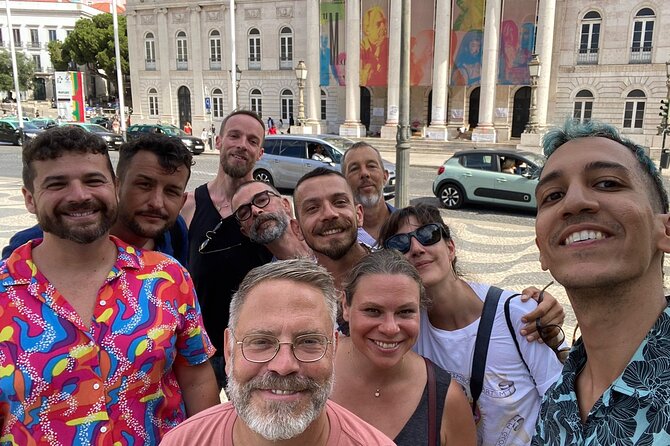
- Small-group format (max 20) helps the conversation stay human and not like a lecture.
- Mobile ticket makes the start smoother and reduces paper juggling.
- Free admission stops mean you’re mostly paying for the guidance and the route, not entry fees.
- Stops are politically intentional, from a homophobia memorial to revolution sites and contemporary activism.
- Ends at a queer-owned venue connected with Criolense Kitchen Club, with food/drinks paid by you.
A four-hour route that connects Pride, power, and resistance
Lisbon has long been a city where identity, survival, and public visibility overlap. This tour uses that overlap as its engine: you walk through several neighborhoods while the guide ties each stop to a different layer of LGBTQ+ life in Portugal. It’s less about a single “timeline” and more about how systems shape what people can live openly.
I also like the tone: it’s informative, but it keeps coming back to the present. Instead of treating history like something finished, you’re prompted to ask what inclusion actually costs, who gets protected, and who gets left out.
At $72.29 for about four hours, it’s priced like a serious guided experience, not a quick stroll. The good news is that the structure gives you multiple value points, including a free map PDF and a final venue stop where the discussion stays grounded in community.
Worth a look before you lock anything else in around Lisbon:
- Lisbon: History, Stories and Lifestyle Walking Tour
★ 4.8 · 10,902 reviews - Lisbon: Daytime or Sunset Boat Cruise with History and Wine
★ 5.0 · 1,053 reviews - Explore Lisbon by Tuk Tuk: History and Viewpoints
★ 5.0 · 840 reviews - Private Tuk Tuk Tour Through Lisbon’s Historical Streets
★ 5.0 · 734 reviews
Meeting spot in Misericórdia and ending in Graça
You start at the Juniper tree arbor in Misericórdia (1250-095 Lisboa). The tour ends in Graça, so you can plan your evening around that area instead of trekking back to your original neighborhood.
The route also assumes you can handle walking with a moderate fitness level. Lisbon involves slopes, and even if the tour times each stop around short segments, you’ll still be on your feet for the whole 4-hour experience.
If you like public transport, you’re in luck: the start is near transit, and the walk connects neighborhoods that are easy to reach. You’ll also have a mobile ticket, so bring your phone battery if you rely on it for the pass.
Principe Real: starting with a memorial and the roots of organized visibility
The tour begins at a monument honoring the victims of homophobia. The first stretch is a short introduction that frames what follows: early LGBTQ+ movement history in Portugal, including the first Pride March and public demonstrations.
This opening matters because it sets the emotional and historical context. You’re not only learning dates—you’re learning why public visibility was risky, and why symbolism has power in LGBTQ+ community life. It’s also a way to slow down before the walk gets more urban and social.
What you’ll get here: a clear foundation for the rest of the tour, plus a reminder that rights didn’t arrive through optimism alone.
Potential drawback: if you prefer purely neighborhood scenery, this first stop is heavier than a photo break and may set a serious tone right away.
Bairro Alto, Bica, and Cais do Sodré: views plus the politics of day and night
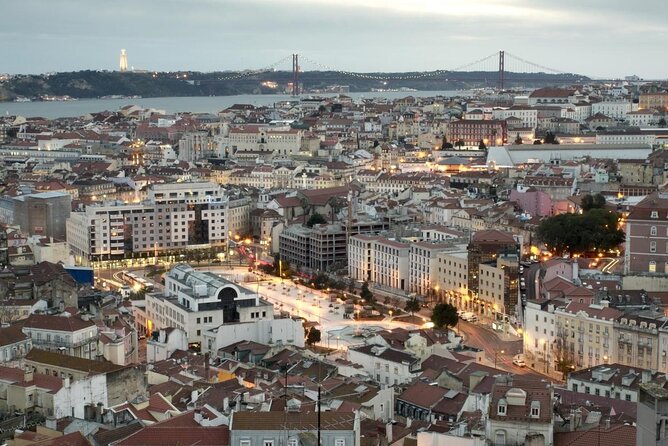
Next you move through Bairro Alto, with a pause at a viewpoint to take in the hills and the city below. It’s the kind of stop that gives your bearings fast—then the guide turns to what changes across time.
This segment looks at how the LGBTQ+ neighborhood shifts from day to night. You’ll hear how different experiences can depend on access, privilege, and what people feel safe doing in public. The conversation also touches on patriarchal and colonial mindsets showing up in everyday behavior, even when laws and policies seem more open.
Why this works for you: you’re learning how space affects identity. A neighborhood isn’t just a place on a map; it can operate differently depending on time of day, social pressure, and who has power.
A consideration: the discussion includes social critique, so be ready for reflective questions, not just local color.


Largo Trindade Coelho: Padre António Vieira and the church as a regulator
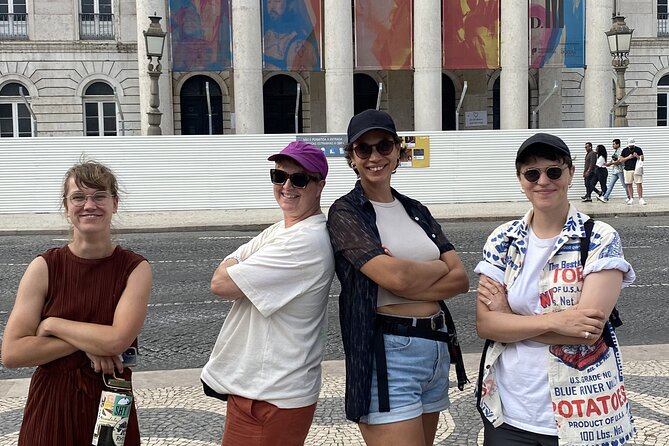
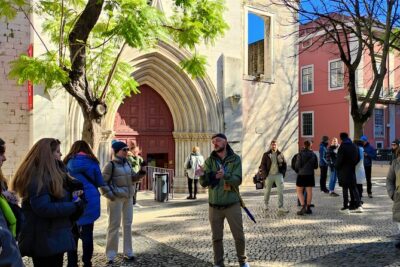
At Largo Trindade Coelho, you’ll observe the monument of Padre António Vieira. From there, the guide connects the church’s historical role in regulating sexuality to broader societal attitudes, including how non-normative expressions were treated.
This stop is about control—who had authority to define “normal,” and how that definition impacted LGBTQ+ people. Even if you’ve never thought about the church as a governance system before, the tour’s framing helps you see it as part of culture and institutions, not only theology.
What to expect: a focused explanation tied to the site you’re standing near.
Possible drawback: if you’re sensitive to religious-history topics, this segment may feel blunt, since it aims to explain how regulation shaped behavior and identity.
Largo do Carmo: revolution beginnings, dictatorship, and LGBTQ resistance

Then you reach Largo do Carmo, where you’ll explore the site linked to the Portuguese revolution’s start. The guide puts it in context of the dictatorship period—described as the longest-lasting in Europe—and how it shaped a strict family model: a man, a wife, and happy children, with nothing different allowed.
This is where the tour stops being only “history class” and becomes a story about enforced norms. You’ll also learn about resistance from key LGBTQ+ figures during the dictatorship era, connecting personal courage to political change.
Why it’s valuable: you understand that LGBTQ rights didn’t grow in isolation. They developed while society was being controlled through family ideals, public morality, and fear.
Watch for this: the tour gives weight to repression, so if you want a purely upbeat walking tour, you might find this emotional.
Praca Martim Moniz: contemporary queer movements and immigrant strength
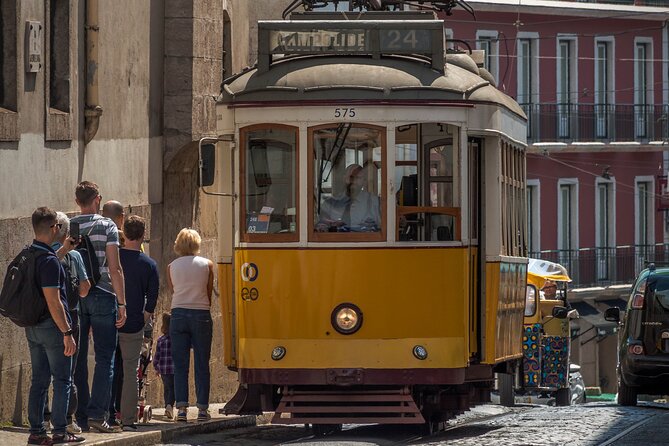
At Praca Martim Moniz, the tone turns more present-day. You’ll talk about contemporary queer movements challenging existing structures and raising tough questions about who belongs and what equality should look like.
A key theme here is immigration. The guide highlights how immigrants bring new strength and perspectives to LGBTQ+ movements in Portugal, reinforcing the idea that queer life is shaped by many histories, not one.
What you’ll take away: a sense of how activism keeps evolving. This stop doesn’t pretend problems are solved; it shows how people are still building change in real time.
Practical note: this is also a good moment to absorb what you learned earlier and see how it echoes in modern organizing.
Graça finale at Criolense Kitchen Club: Black queer resistance in the neighborhood
The tour ends in Graça at a queer-owned venue. Here, you’ll pay homage to Black queer resistance connected with Criolense Kitchen Club, and you’ll learn why this neighborhood matters to the community.
This closing stop is important because it links the tour’s ideas back to living culture. Instead of ending at a viewpoint and dispersing, you end where community work and daily presence happen—plus you get an easy next step if you want food afterward.
You’ll pay for your own dinner or drinks in the restaurant. That can be a plus if you want flexibility, but it also means you should budget a bit beyond the tour price if you plan to stay.
Price and value: what $72.29 actually buys
At $72.29 per person, the value comes from several parts working together:
- About four hours of guided route thinking, not just sightseeing stops.
- An included updated Queer Map of Lisbon (PDF) you can use afterward to keep exploring with better context.
- A local guide who’s able to run in Portuguese and English, so the explanation stays accessible.
- Free admission for the listed stops, so you’re not stacking extra entry costs onto the ticket.
- A small group cap of 20, which usually means more back-and-forth and fewer people blocking the way for questions.
The part I’d treat as the real money-saver is the map PDF. Many walking tours give you directions; this gives you a tool for understanding where to go next and why it matters.
Weather, walking pace, and how to prep
This experience is weather-dependent. If conditions are poor, the tour can be canceled and you’ll be offered a different date or a full refund, so build in some flexibility.
For comfort, wear shoes you trust for uneven streets and some uphill sections. The tour is listed as moderate fitness, so it’s not a hard hiking day, but you should still plan for steady walking and short stops rather than long seated breaks.
Also, if you’re coming with mobility needs, it’s worth thinking in advance about the uphill terrain in Lisbon and the fact that the tour runs continuously for roughly four hours.
Should you book this tour?
Book it if you want LGBTQ+ Lisbon with context: how public visibility, community life, religious power, political repression, and modern activism all connect. It’s also a great pick if you like walking tours that ask questions and help you see neighborhoods with sharper eyes.
Pass or consider another style of tour if you want only quick photo stops or you’re not up for political and social history. This route is honest about systems and conflict, and it uses that honesty to help you understand what people are still working through today.
If your plan includes exploring Lisbon after the tour, the included updated Queer Map PDF alone makes it easier to turn a morning or afternoon into a longer stay with purpose.
FAQ
How long is the Queer Lisbon Historical Tour?
It’s approximately 4 hours.
How much does the tour cost?
The price is $72.29 per person.
What languages is the tour offered in?
It’s offered in English, and Portuguese-speaking local guides are also supported.
Is there a mobile ticket?
Yes, the tour includes a mobile ticket.
Where does the tour start and end?
It starts at Juniper tree arbor in Misericórdia (1250-095 Lisboa) and ends in Graça.
What’s included in the price?
You get an updated Queer Map of Lisbon (PDF) and a Portuguese and English-speaking local guide.
Is dinner included?
No. You pay for your own meal and drinks at the restaurant.
Is the group large?
The tour has a maximum of 20 travelers.
Is the tour affected by weather?
Yes. It requires good weather, and if canceled due to poor weather you’ll be offered another date or a full refund.
What about cancellations?
There is free cancellation up to 24 hours before the experience starts for a full refund. If you cancel later than that, the amount you paid won’t be refunded.
More Historical Tours in Lisbon
- Lisbon: History, Stories and Lifestyle Walking Tour★ 4.8 · 10,902 reviews
- Lisbon: Daytime or Sunset Boat Cruise with History and Wine★ 5.0 · 1,053 reviews
- Explore Lisbon by Tuk Tuk: History and Viewpoints★ 5.0 · 840 reviews
- Private Tuk Tuk Tour Through Lisbon’s Historical Streets★ 5.0 · 734 reviews
- Lisbon Sunset Sailing with Portuguese Wine and History★ 5.0 · 668 reviews
More Tours in Lisbon
- Lisbon City Center Tour – The Unmissable Lisbon★ 5.0 · 22,234 reviews
- Lisbon: History, Stories and Lifestyle Walking Tour★ 4.8 · 10,902 reviews
- True 4Hour Private Tuk Tuk Tour: Discover Lisbon with a Local!★ 5.0 · 8,008 reviews
- Winner 2025 Undiscovered Lisbon Food & Wine Tour by Eating Europe★ 5.0 · 6,390 reviews
- Lisbon: Sintra, Pena, Cabo da Roca, Cascais Tour with Pickup★ 4.8 · 5,445 reviews
More Tour Reviews in Lisbon
- Lisbon City Center Tour – The Unmissable Lisbon★ 5.0 · 22,234 reviews
- Lisbon: Sintra, Pena, Regaleira, Cabo da Roca & Cascais★ 4.7 · 19,656 reviews
- Lisbon Card: 24, 48, or 72-Hour Pass★ 4.5 · 17,944 reviews
- Lisbon: Jerónimos Monastery Entrance Ticket★ 4.1 · 14,164 reviews
- Lisbon: History, Stories and Lifestyle Walking Tour★ 4.8 · 10,902 reviews
Just in: fresh Lisbon reviews from the team





Historical Tours, compared.
 ★ 4.8History, Stories and Lifestyle Walking TourFrom $2910,902 reviews
 ★ 5.0Daytime or Sunset Boat Cruise with History and WineFrom $471,053 reviews
 ★ 5.0Explore Lisbon by Tuk Tuk: History and ViewpointsFrom $19840 reviews
 ★ 5.0Private Tuk Tuk Tour Through Lisbon’s Historical StreetsFrom $27734 reviews
 ★ 5.0Lisbon Sunset Sailing with Portuguese Wine and HistoryFrom $54668 reviews
 ★ 4.8Live Fado Show in Historic Alfama with Port WineFrom $17572 reviews
 ★ 4.8Guided Tuk-Tuk Tour Along the Historic Tram Line 28From $147475 reviews
 ★ 5.0Private Lisbon-Arrábida Wine Tour: 3 Wineries, Coast & HeritageFrom $156450 reviews
Browse the lists this tour appears in