
Reviewed · ÉVORA DAY TRIPS
Private Tour to Evora and Merida – World Heritage City of the Roman Empire
A Roman road trip and a ghoulish chapel in one day. This private 10-hour tour strings together Mérida’s top Roman monuments with Évora’s human-remains bone chapel, plus a stop in Badajoz for Moorish-flavored fortress history and art museums. I like the way the guide-friendly pacing gives context for what you’re seeing, and I love that the day mixes big-ticket ruins with smaller, memorable sights.
One thing to consider: you’ll spend a lot of the day moving between cities, so it’s not the best fit if you want slow, linger-and-wander time in each place. Still, the private format and pickup help you start and finish the day with less hassle.
In This Review
- Key highlights to know before you go
- Why this day trip works: Roman power, Moorish layers, and one unforgettable chapel
- Badajoz first: fortress walls now used for art and museums
- Mérida’s National Museum: mosaics and artifacts with context
- Roman Theater of Mérida: Marco Vipsanius Agrippa and the feel of imperial scale
- The Temple of Diana: a Roman landmark tied to Lusitania
- The Roman circus plus aqueduct ruins: entertainment and engineering in the same breath
- Évora: Romans and Moors, then a bone chapel that stops the day
- Time on the road: how to make the most of a full 10-hour loop
- Private tour value: why the price can make sense
- Guided history that changes ruins from rocks to places
- Small practical tips before you go
- Who should book this tour
- Should you book Private Tour to Evora and Merida?
- FAQ
- How long is the tour?
- Is this tour private, and is it in English?
- Where does the tour pick up and drop off?
- What are the main places you visit?
- Are admission tickets included?
- Can I cancel, and is the tour okay for children?
Key highlights to know before you go
- A Mérida Roman circuit you can actually understand, with mosaics, a theater, and a temple tied to Lusitania
- The Roman circus details you don’t usually hear, including the legions linked to the Cantabrian Wars
- Évora’s bone chapel (decorated with human remains) as the emotional peak of the day
- Badajoz’s Alcazaba fortress areas now used for culture, including museums tied to archaeology and local carnival
- Private pickup and drop-off across Lisbon, Cascais, Sintra, and Almada, so you don’t burn time commuting on your own
Why this day trip works: Roman power, Moorish layers, and one unforgettable chapel
This is a “three-cities, one story” kind of outing. You move from the defensive world of Badajoz, to the imperial showpiece of Mérida, then to the Portuguese town of Évora where Romans and Moors both left marks.
What makes it feel special is how the monuments connect. You’re not just looking at ruins; you’re seeing how people built, defended, entertained, and worshiped across centuries. That’s the kind of day where a good guide can change the whole experience.
And yes, there’s a reason the bone chapel draws people in. It’s not horror-movie stuff—it’s a stark, human-made statement about mortality that sits right in the center of a historic town.
Out to the plains: more Évora and Alentejo trips
- Évora and Megaliths Full-Day Tour from Lisbon
★ 4.7 · 456 reviews - From Lisbon: Évora and Monsaraz with Regional Wine Tasting
★ 4.7 · 345 reviews - Évora and Monsaraz with Regional Wine Tasting from Lisbon
★ 4.5 · 229 reviews - Private Day Tour With Guide to Évora and Monsaraz
★ 5.0 · 134 reviews
Badajoz first: fortress walls now used for art and museums
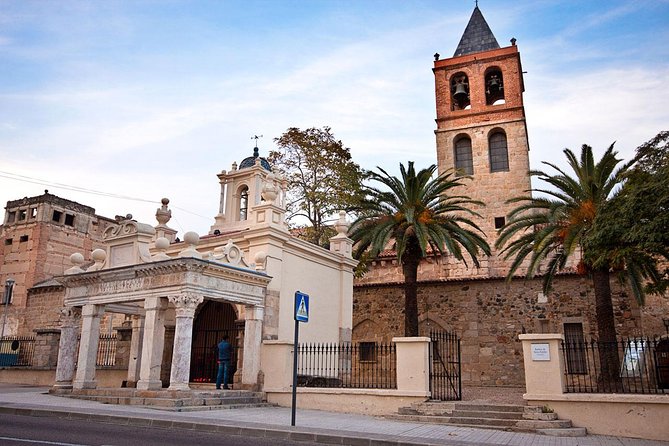
Your day starts at Ayuntamiento de Badajoz, where the Arab Alcazaba (a fortress within the city’s ancient defensive system) sets the tone. Even if you only get a short visit, you’re seeing the big idea: this was a defensive city layout, not just a random collection of old buildings.
You’ll also notice that fortified spaces here have been repurposed. The stop highlights how restored areas now host cultural uses, including places like MEIAC and other museum sites such as the Archaeological Museum and a Carnival Museum.
A quick 30-minute window can feel tight, but for Badajoz that’s actually a strength. It’s enough time to grasp the “fortress to culture” transformation, then you’re ready for the heavier Roman monuments waiting in Mérida.
Mérida’s National Museum: mosaics and artifacts with context
Next you move into Mérida’s historic core with a stop at the National Museum of Roman Art. This is one of those stops I genuinely like on a day like this because it slows things down before you hit the outdoor ruins.
Inside, the museum focuses on Roman mosaics, sculptures, and artifacts, including items connected to local Roman entertainment spaces like the nearby theater and amphitheater. That matters because when you later stand in front of the monuments, you already have a visual anchor for what you’re looking at.
It’s listed as about 1 hour, and that’s a good length. Long enough to see highlights without exhausting you before the outdoor walking and heat of the afternoon.
Roman Theater of Mérida: Marco Vipsanius Agrippa and the feel of imperial scale
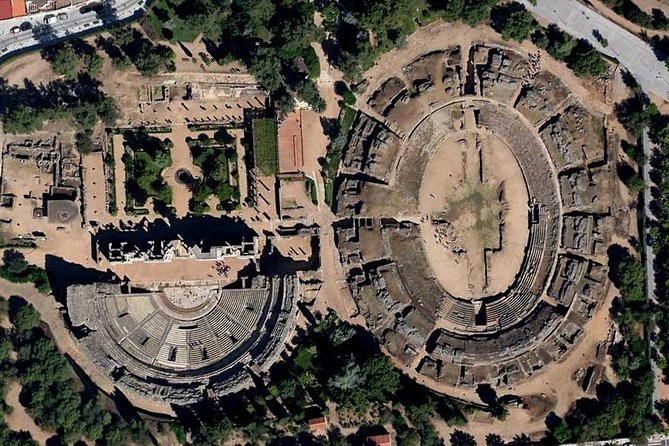
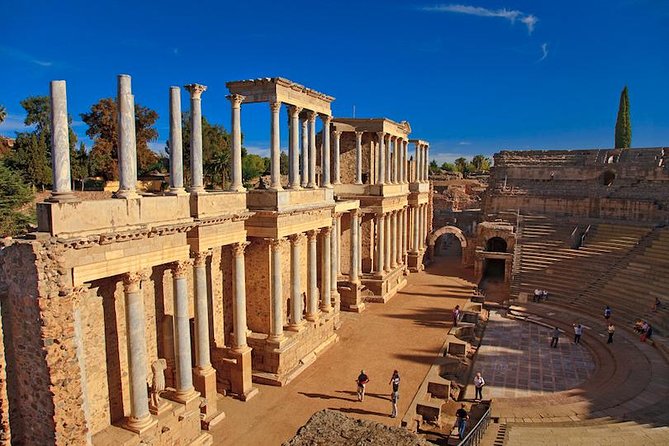
After the museum, you head to the Roman Theater of Mérida. The standout detail here is the connection to Roman leadership: it was built by the consul Marco Vipsanius Agrippa, and it’s believed the theater may have opened between 16–15 AD.
You get about 1 hour at this stop, and this is where the tour’s guiding style really shows. In at least one experience, guide Hugo was praised for bringing the history to life and explaining what you’re seeing without turning it into a lecture.
Even if you’re not a hardcore Roman ruins person, theaters tend to be easy to read. You can sense the crowd layout, the purpose of the space, and why the acoustics would matter in a Roman city that liked public spectacle.
Worth a look before you lock anything else in around Lisbon:


The Temple of Diana: a Roman landmark tied to Lusitania
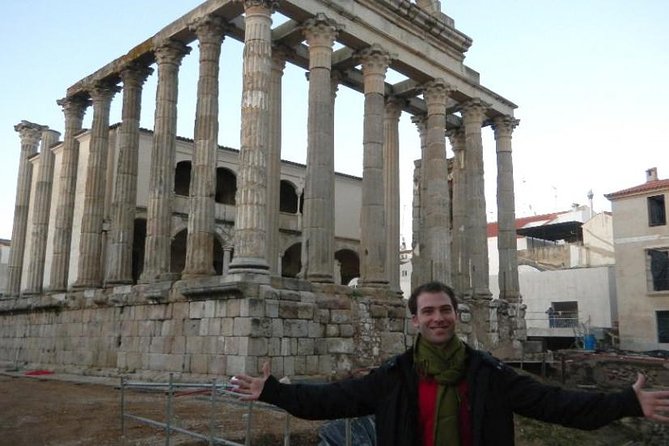
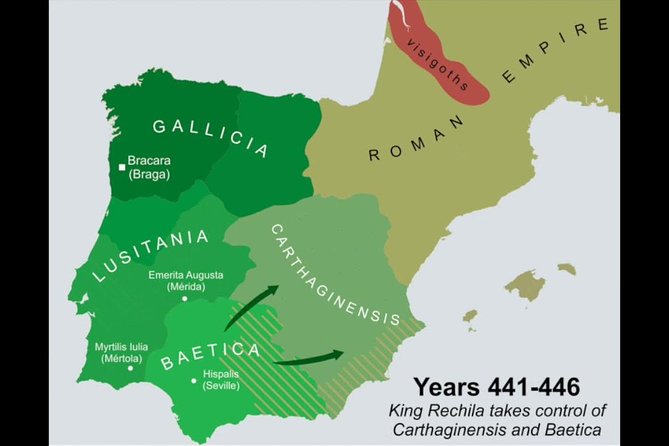
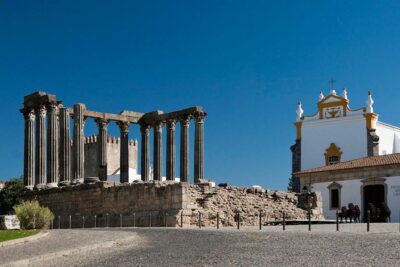
Then it’s off to Templo De Diana, the Roman temple at Emerita Augusta. It’s described as being built up to the late 1st century BC, and it later connects to the role of Emerita Augusta as the capital of the Roman province of Lusitania—the region that lines up with present-day Mérida.
This stop is about 30 minutes, so think of it as a concentrated moment. You’re not going to wander for hours, but you do get the key symbolism: this is Roman architecture meant to last and to signal importance.
If you like when a place has a timeline, this one gives it to you quickly. From Roman construction dates to the later provincial capital role, the temple helps you understand Mérida as more than a scenic set of ruins.
The Roman circus plus aqueduct ruins: entertainment and engineering in the same breath
Your Mérida loop keeps moving with two short, high-impact stops.
First is the Roman circus, listed as the Roman circus built in Emerita Augusta, a city founded in 25 BC by Augustus. The details get specific here: it was built for licensed Roman Army soldiers of two veteran legions linked to the Cantabrian Wars—Legio V Alaudae and Legio X Gemina.
Even if the legions sound like alphabet soup, the point is clear once you hear it: this wasn’t just for civilians. Roman military communities were part of the city’s identity, and the circus was a public entertainment expression of that power.
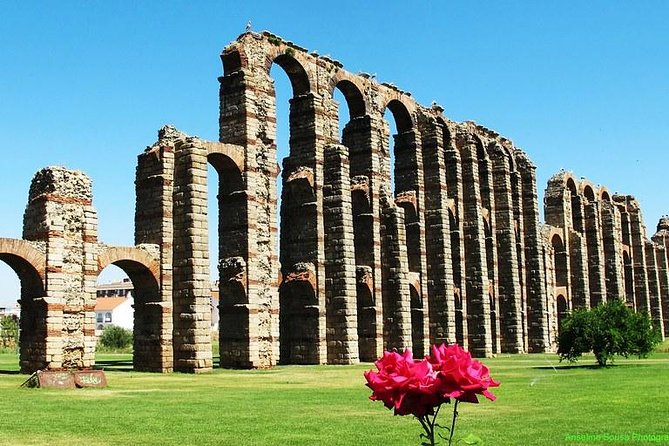
You’ll have about 30 minutes for the circus, then you quickly shift to engineering with a stop at the Acueducto de los Milagros. It’s described as the ruins of a Roman aqueduct bridge that supplied water to the Roman colony of Augusta Emerita, today Mérida.
This second mini-stop is only about 10 minutes, so don’t expect a deep dive. Expect a quick visual punch. When you see aqueduct remains, you get an immediate sense of why Roman cities could thrive—water wasn’t optional, and their infrastructure was built like it mattered.
Évora: Romans and Moors, then a bone chapel that stops the day
After Mérida, the tour heads to Évora, and this is where the mood changes. Évora is described as a Portuguese town founded by the Romans, later fortified by the Moors, and flourishing during the 15th century. That layered history is part of why Évora feels like more than a Roman ruins bonus stop.
You get about 2 hours in Évora, including time at the town’s key sights:
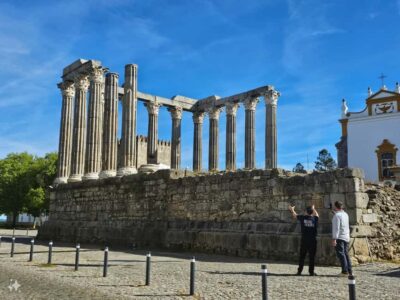
- the preserved Roman Diana Temple (a name you’ll recognize from the Roman world)
- Évora castle
- Praça do Giraldo, tied to 16th-century Gothic architecture
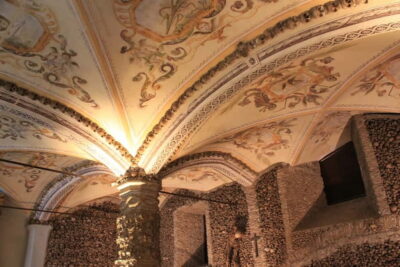
- and the famous bone chapel, decorated with human remains
The bone chapel is the one you’ll remember later. It’s described as a ghoulish sight and one of the most memorable monuments of Portugal, and the decoration with human remains is exactly what makes it emotionally intense. It’s a place where you’ll probably slow your pace without anyone needing to tell you.
This is also the stop where you can balance “ruins facts” with real atmosphere. You’re in a working Portuguese town with medieval street energy, not just a protected excavation site.
Time on the road: how to make the most of a full 10-hour loop
This is a 10-hour day, and the value comes from what it packs in. The route is ambitious: Badajoz, Mérida, then Évora. That’s great if you want a strong hit of Roman sites without planning three separate trips.
But you should go in with realistic expectations. The ride between cities matters, and you’ll feel it. If you’re prone to long-drive fatigue, plan to bring snacks and water and keep your pace easy.
The private setup helps. Pickup and drop-off are offered in the Lisbon region, including Cascais, Sintra, and Almada. That means less time figuring out transit connections and more time using the day for the monuments themselves.
There’s also a practical travel comfort element: transport is by an air-conditioned minivan, and the tour notes defensive driving and safety focus from the guide.
Private tour value: why the price can make sense
At $423.25 per person, it’s not a cheap day trip. Still, the pricing makes more sense when you match it with what’s included.
You’re paying for:
- a private driver/guide
- hotel/port pickup and drop-off
- transport in an air-conditioned minivan
- and all taxes/fees/handling charges
On top of that, the stops you’re shown are listed with admissions marked free for multiple highlights, with at least one site marked as included (the Roman Theater of Mérida). That matters because you’re not juggling ticket queues for every stop.
Also, the tour mentions group discounts, which could improve value if you’re traveling with friends or family and can keep the group size strong. Since it’s private, you control your group dynamic instead of getting swept into random pacing.
Finally, it’s a style of tour that’s often booked fairly early—on average 17 days in advance—so if this sounds like your kind of Roman-and-Portugal mix, you’ll want to lock it in rather than hoping for last-minute availability.
Guided history that changes ruins from rocks to places
One review praised how the guide Hugo explained the history well, and that’s exactly where tours like this earn their keep. Roman monuments can look like “just stones” if you don’t get a framework for what each place was for.
Here, you get that framework repeatedly:
- a fortress system turned into cultural spaces in Badajoz
- Roman entertainment and public life in Mérida, from theater to circus
- Roman religious architecture tied to provincial importance
- then Évora’s layered evolution into a Portuguese town with medieval landmarks and the bone chapel
That repeated “why it matters” approach is what makes this kind of day travel satisfying. You’re not just checking boxes—you’re learning what each stop represented in daily life.
Small practical tips before you go
- Wear shoes you can move in. The day includes several stops in historic centers, and not all the ground will feel even.
- Expect a lot of short stops. Timing is tight at Mérida’s circus and aqueduct, so focus on what you want to see rather than trying to photograph everything.
- If the bone chapel is going to affect you, give yourself a moment. It’s built around human remains, so mentally set expectations before you walk in.
- If you’re sensitive to long days, treat this as an intense sampler, not a slow sightseeing plan.
Who should book this tour
This tour is a good fit if you want:
- a Roman Empire day with multiple top monuments in Mérida
- a stop in Évora that includes more than one attraction, including the bone chapel
- the convenience of pickup and drop-off across Lisbon-area locations
It may not be the best fit if you prefer slow, deep exploring with lots of downtime. It’s designed to move, connect history, and hit highlights efficiently.
Should you book Private Tour to Evora and Merida?
Yes—if you want a high-efficiency day that still makes sense. The pairing of Mérida’s Roman sites with Évora’s layered Portuguese monuments, plus the added cultural stop in Badajoz, gives you a full picture of how Iberia can feel when you trace power and belief through time.
Skip it only if you strongly dislike long driving days or you prefer to spend half a day alone in one town rather than sampling three. Otherwise, this is the kind of trip that leaves you with both images in your head and a clearer story in your mind.
FAQ
How long is the tour?
The tour is listed as approximately 10 hours.
Is this tour private, and is it in English?
Yes. It’s a private tour, and it’s offered in English.
Where does the tour pick up and drop off?
Pickup and drop-off are offered in the Lisbon region, including Lisbon, Cascais, Sintra, and Almada. You’ll need to provide your address for pickup/drop-off.
What are the main places you visit?
You’ll visit Badajoz, Mérida (including Roman sites such as the Roman Theater, Temple of Diana, the Roman circus, and the aqueduct bridge ruins), and Évora (including the bone chapel, Roman temple, castle, and Praça do Giraldo area).
Are admission tickets included?
Admission is marked as free for multiple stops, and the Roman Theater of Mérida is marked as included.
Can I cancel, and is the tour okay for children?
Cancellation is free if you cancel up to 24 hours in advance for a full refund. Children must be accompanied by an adult.
More Tours in Lisbon
- Lisbon City Center Tour – The Unmissable Lisbon★ 5.0 · 22,234 reviews
- Lisbon: History, Stories and Lifestyle Walking Tour★ 4.8 · 10,902 reviews
- True 4Hour Private Tuk Tuk Tour: Discover Lisbon with a Local!★ 5.0 · 8,008 reviews
- Winner 2025 Undiscovered Lisbon Food & Wine Tour by Eating Europe★ 5.0 · 6,390 reviews
- Lisbon: Sintra, Pena, Cabo da Roca, Cascais Tour with Pickup★ 4.8 · 5,445 reviews
More Tour Reviews in Lisbon
- Lisbon City Center Tour – The Unmissable Lisbon★ 5.0 · 22,234 reviews
- Lisbon: Sintra, Pena, Regaleira, Cabo da Roca & Cascais★ 4.7 · 19,656 reviews
- Lisbon Card: 24, 48, or 72-Hour Pass★ 4.5 · 17,944 reviews
- Lisbon: Jerónimos Monastery Entrance Ticket★ 4.1 · 14,164 reviews
- Lisbon: History, Stories and Lifestyle Walking Tour★ 4.8 · 10,902 reviews
Out to Évora and the Alentejo
- Évora and Megaliths Full-Day Tour from Lisbon★ 4.7 · 456 reviews
- From Lisbon: Évora and Monsaraz with Regional Wine Tasting★ 4.7 · 345 reviews
- Évora and Monsaraz with Regional Wine Tasting from Lisbon★ 4.5 · 229 reviews
- Private Day Tour With Guide to Évora and Monsaraz★ 5.0 · 134 reviews
- From Lisbon to Alentejo: Évora and Megaliths Full-Day Tour★ 4.5 · 131 reviews
Just in: fresh Lisbon reviews from the team





Évora Day Trips, compared.
 ★ 4.7Évora and Megaliths Full-Day Tour from LisbonFrom $94456 reviews
 ★ 4.7From Lisbon: Évora and Monsaraz with Regional Wine TastingFrom $97345 reviews
 ★ 4.5Évora and Monsaraz with Regional Wine Tasting from LisbonFrom $132229 reviews
 ★ 5.0Private Day Tour With Guide to Évora and MonsarazFrom $212134 reviews
 ★ 4.5From Lisbon to Alentejo: Évora and Megaliths Full-Day TourFrom $108131 reviews
 ★ 5.0Tour Évora and Alentejo in a private tourFrom $169124 reviews
 ★ 4.5From Lisbon to Alentejo: Évora and Megaliths Full-Day Group TourFrom $96111 reviews
 ★ 4.7Évora (w/ Cathedral & Bones), Cartuxa & Cork FactoryFrom $10597 reviews
Browse the lists this tour appears in