
Reviewed · ÉVORA DAY TRIPS
Tour Évora and Alentejo in a private tour
Évora can feel like a whole world. This private day trip gives you a tight, guided hit of the Alentejo’s UNESCO old town plus a behind-the-scenes look at Portugal’s cork business.
I especially loved the cork factory stop at Corticarte – Arte em Cortica. You see the full process, not just the finished souvenirs, and it reframes every wine cork you’ve ever handled.
One thing to plan for: it’s a long day with a meaningful drive each way from Lisbon, and a couple of key entries (like the Chapel of Bones and the cathedral) aren’t included.
In This Review
- Key things to know before you go
- The cork stop that makes Évora click (Corticarte – Arte em Cortica)
- Évora’s UNESCO walls: getting your bearings fast (Centro Histórico de Évora)
- Chapel of Bones: a short visit with a big mood shift
- Gothic-Manueline São Francisco: Portugal’s maritime symbols in stone
- Praça do Giraldo: where the city’s center pulls you in
- Aqueduto da Água da Prata: Renaissance water engineering you can spot
- Igreja and garden moments: Graça and the calm endgame
- Temple of Diana and the cathedral area: Roman-to-Gothic continuity
- Cathedral of Évora: granite towers and a dome that steals the show
- Air-conditioned transport, WiFi, and hotel pickup: why the private format works
- What to expect from the pacing (and how to get the most from it)
- Should you book this Évora and Alentejo private tour?
- FAQ
- What time does the private tour start, and how long is it?
- Where does pickup happen for this Lisbon to Évora tour?
- What’s included in the price?
- Are entrance fees included for all monuments?
- Is lunch included?
- Is this tour private or shared with other people?
- What language is the tour offered in?
- Is free cancellation available?
Key things to know before you go
- Corticarte – Arte em Cortica teaches cork harvesting and production, from cork oak bark to the final product
- Évora’s Historic Center is a UNESCO World Heritage site with medieval walls over 3 km long
- Chapel of Bones is the face-melting stop: human bones and skulls, around 5,000 monks referenced
- Manueline Gothic at Igreja de São Francisco links architecture to Portugal’s maritime expansion
- Temple of Diana and the Aqueduto da Água da Prata connect Roman engineering to Renaissance water needs
- Private pacing means you can move at your speed instead of getting herded
The cork stop that makes Évora click (Corticarte – Arte em Cortica)
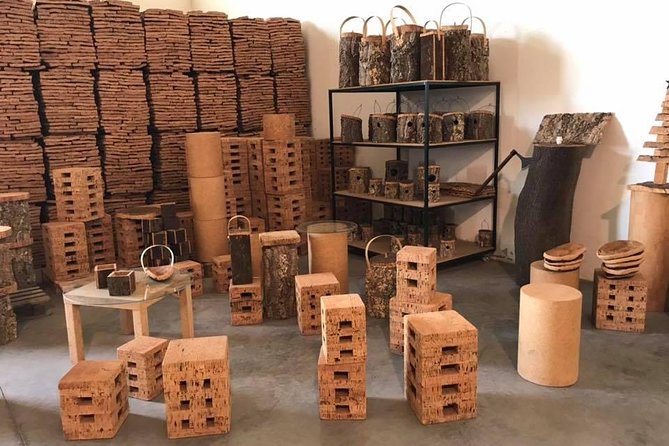
The first stop is Corticarte – Arte em Cortica, a traditional cork factory where you learn the cork story from the tree up. The guide explains cork oak biology—how the bark grows back and why harvesting happens about every nine years. You also hear what makes cork such a practical material: it’s naturally resistant to heat, cold, and fire.
What I like about this stop is that it turns a tiny object into a real industry. You learn why Portugal is central to global cork production and how cork is used beyond wine stoppers—decorative wall and floor coverings, sports goods, and even everyday items that people don’t think about.
The factory visit is about an hour, and admission there is listed as free. You’ll also see cork products you can buy, and the shop makes a lot more sense after you understand the process. If you’re traveling with anyone who loves food, wine, crafts, or simple “how it’s made” tours, this part is a win.
Out to the plains: more Évora and Alentejo trips
- Évora and Megaliths Full-Day Tour from Lisbon
★ 4.7 · 456 reviews - From Lisbon: Évora and Monsaraz with Regional Wine Tasting
★ 4.7 · 345 reviews - Évora and Monsaraz with Regional Wine Tasting from Lisbon
★ 4.5 · 229 reviews - Private Day Tour With Guide to Évora and Monsaraz
★ 5.0 · 134 reviews
Évora’s UNESCO walls: getting your bearings fast (Centro Histórico de Évora)
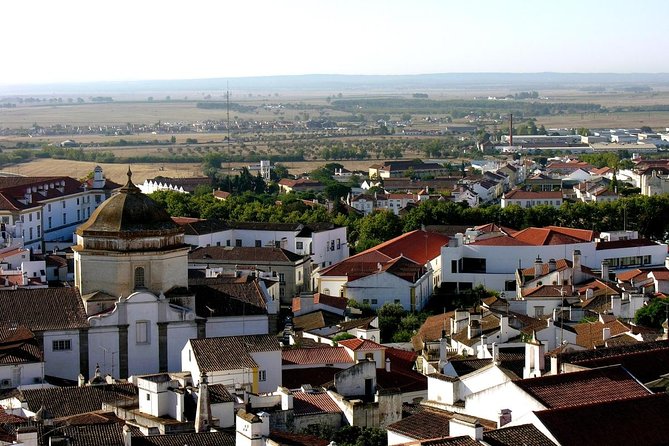
After the cork lesson, you step into Évora’s historic center—the walled, inside-the-walls “city-museum” area recognized by UNESCO since 1986. This is the sort of place where you feel the layers: Roman roots, then Celts, Arabs, Jews, and Christians shaping what you see today. It even reached a high point in the 15th century, when it became a residence for Portuguese kings.
You’re not expected to do a scavenger hunt. The private guide takes you through the medieval layout—narrow lanes, courtyards, and wide open bits—so you can start placing monuments without feeling lost. The historic center stop is listed at 45 minutes, and admission is listed as free.
Here’s the practical value: even if you only have one day, you get the main geography right away. Once you understand the walls and the central core, the later stops—churches, Roman remains, and the cathedral—feel connected instead of random.
If you like photo stops, you’ll be doing more than just posing. One review highlights that the guide helped capture pictures of the group, which is a small thing that makes a big difference in a day packed with stops.
Chapel of Bones: a short visit with a big mood shift
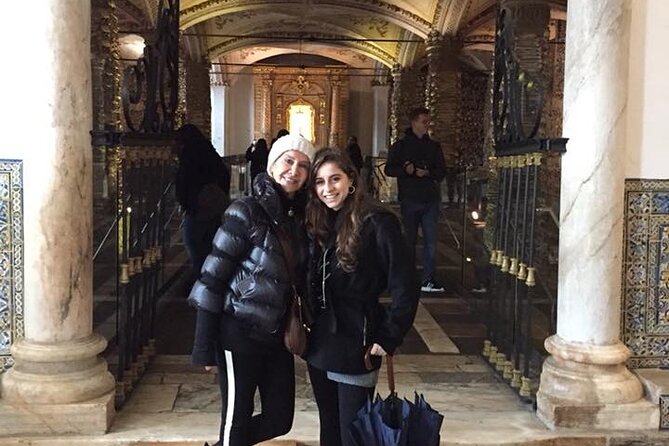
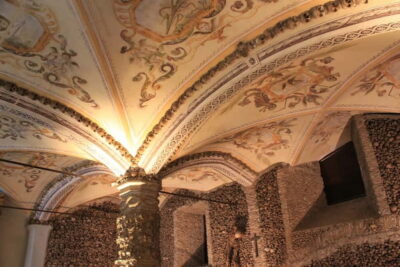
Next comes one of Europe’s most unusual reflections on mortality: the Chapel of Bones. The description is direct—walls and pillars lined with human bones and skulls—and it’s estimated to involve the remains of over 5,000 monks.
This is not a long stop (about 30 minutes), and admission is listed as not included. The chapel itself is essentially the “message.” You walk in, read the wording about waiting among bones, and then you’re left to think about what life means—especially after you’ve been learning about crafts and history outside.
My advice: treat it like a moment of stillness in a busy day. Don’t rush it. Give yourself time to look, then step back out and let your brain reset before you move on to the lighter parts—church facades, squares, and views.
Gothic-Manueline São Francisco: Portugal’s maritime symbols in stone
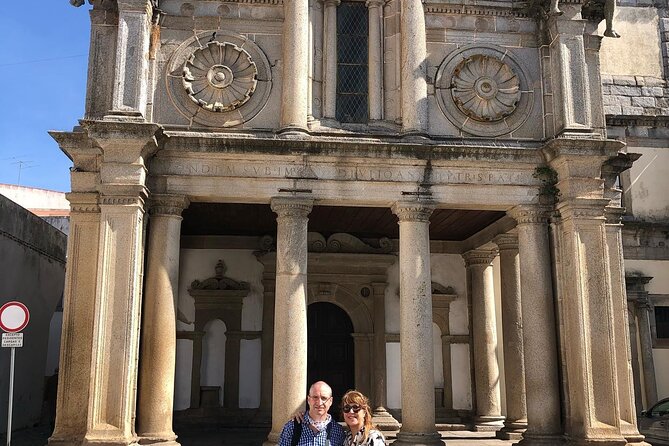
After the Chapel of Bones, you’ll shift into a very different architectural mood at Igreja de São Francisco. This church is described as Gothic-Manueline, built between 1480 and 1510. The work is credited to stone masters Martim Lourenço and Pero de Trilho, and its decoration is linked to royal painters Francisco Henriques, Jorge Afonso, and Garcia Fernandes.
What I find useful here is how the guide can connect style to story. The church is tied to Portugal’s maritime expansion, and you can see it in the symbols inside—like the cross of the Order of Christ and emblems tied to King João II and King Manuel I.
Admission here is listed as free, and your stop is about 20 minutes. That’s short, but it’s enough if you’re not trying to do “museum mode” in every room. The guide’s job is to point out what’s worth noticing so you don’t miss the key elements while you’re still absorbing the overall vibe.
Worth a look before you lock anything else in around Lisbon:

Praça do Giraldo: where the city’s center pulls you in
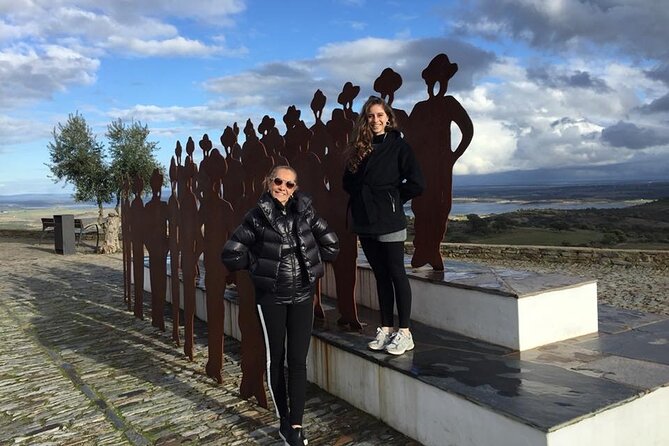
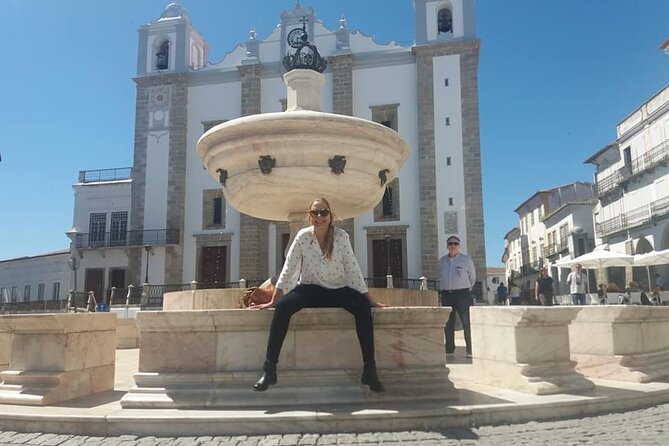
If Évora has a “meeting point,” it’s Praça do Giraldo. It’s described as an icon of homage to Geraldo Geraldes, Sem Pavor, the figure credited with conquering Évora from the Moors in 1167. The square’s construction is placed around 1571 to 1573, and it’s one of those places that instantly feels like the heart of daily life—even if you’re mostly there for sightseeing.
This is a quick stop: about 15 minutes, and admission is listed as free. It’s also a great moment to orient yourself. You’ll see how the city’s walking paths and monument cluster around this kind of central open space.
If you’re traveling with someone who gets tired of “one more church,” this square helps break the rhythm. It gives your feet a rest and gives you a mental reset.
Aqueduto da Água da Prata: Renaissance water engineering you can spot
Then you get the Aqueduto da Água da Prata (also called Aqueduto da Prata). This is a Renaissance hydraulic engineering complex built to supply Évora with water. It was inaugurated in 1537 during the reign of King João III and designed and built by royal architect Francisco de Arruda.
The aqueduct spans about 18 km, moving water from springs in Graça do Divor (within the São Bento de Castris Convent grounds) to Évora. Even if you don’t walk the entire structure, the stop helps you see how past cities solved basic needs. It’s a reminder that these monuments aren’t only about power or faith. They’re also about infrastructure.
This part of the day is especially good for travelers who like engineering, city planning, and the practical side of history. It also helps explain why Évora could grow and flourish with stable water access.
Igreja and garden moments: Graça and the calm endgame
Later, you’ll visit the Church of Graça, also described as the Convent of Nossa Senhora da Graça. It’s a Renaissance religious monument founded in 1511 and associated with hermit monks of Saint Augustine. The façade is noted for famous “Atlantean figures” called Meninos da Graça, which locals have been naming for centuries.
Even better: the tour plans time to connect this monument with the Diana Garden area (Diana’s Garden in Évora). The garden sits near Largo do Conde de Villa Flor and is placed in harmony with the nearby Roman Temple. This makes it a smart final stretch—nice sightlines, a bit of quiet, and a chance to take in the old-town setting around the major landmarks.
In a day like this, a garden moment matters. It’s when your brain stops collecting facts and starts appreciating the place.
Temple of Diana and the cathedral area: Roman-to-Gothic continuity
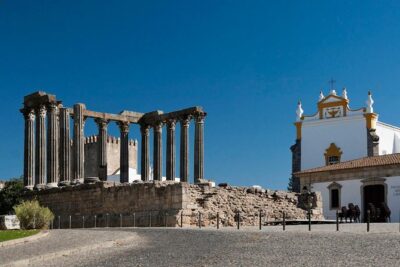
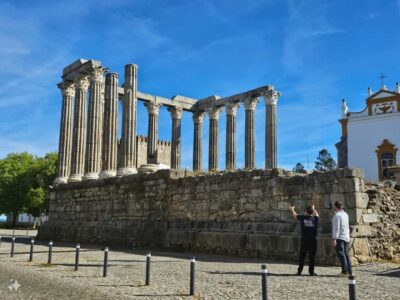
One of the strongest “big ticket” sights on the route is the Templo Romano de Évora, commonly called the Temple of Diana. It’s described as one of the most valuable monuments, positioned next to the cathedral. The Roman presence here matters because Évora wasn’t just medieval. The Romans saw value in this city long before Gothic towers and Renaissance engineering took over later.
From this area, you can also see the aqueduct of the Water of the Silver outside the walls and with some arches still visible inside town. The aqueduct is linked to 16th-century transportation of water, built to keep supplies flowing even as the city changed.
Your time here is about 15 minutes, with admission listed as free. That’s a quick photo-and-fact window—perfect for a one-day itinerary.
Cathedral of Évora: granite towers and a dome that steals the show
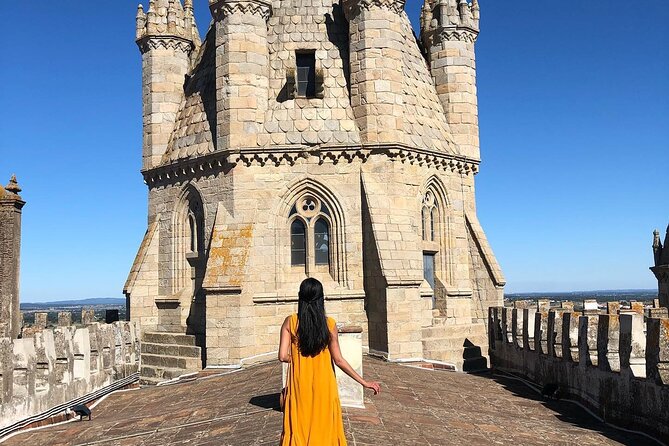
The day’s last major landmark is Se Catedral de Évora. Construction started in 1186 and the cathedral was consecrated in 1204, with completion taking until about 1250. It’s an imposing building made in granite, showing the transition from Romanesque to Gothic styles.
Look for the two medieval towers framing the façade. The south tower is the bell tower. The portals feature 14th-century sculptures of apostles credited to Mestre Pêro. And then there’s the dome. The description highlights it as the most spectacular architectural element outside the façade, topped with a lantern tower shaped like a ship’s cruise element, crowned by a stone needle.
This is the part where you’ll likely pay an entry fee—admission is listed as not included. Time on the site is about 45 minutes, and it’s a good use of that chunk of the day because the cathedral rewards slow looking.
Air-conditioned transport, WiFi, and hotel pickup: why the private format works
This tour is built for comfort and focus. You get pickup and drop-off at your accommodation or Porto de Cruzeiros, plus an air-conditioned vehicle and WiFi onboard. There’s also compulsory insurance, which is one of those boring details you’ll be happy exists when you’re tired and the roads are long.
The private guide aspect is what keeps the day from feeling like a checklist. In reviews, guides like João and Anastasiya are praised for being punctual, patient, and good at adjusting timing to your interests. One review even mentions that a guide helped arrange a traditional Portuguese lunch spot (though lunch itself isn’t listed as included). Another says the guide could explain sights in a simple, relatable way and still cover serious history.
For context, Évora is farther from Lisbon than many first-timers expect. Some reviewers describe roughly 1.5 hours of driving each direction. That’s why the private format can feel like good value: you spend the travel time reading the story instead of staring at the window, and you arrive with the guide ready to turn monuments into understanding.
The price is $169.31 per person for about nine hours, and it includes private transportation, the guide, and monument accompaniment. Compared to doing this on your own—renting a car, figuring out parking, and paying for a guide separately—this structure can add up fast, especially if you value smooth logistics.
Just remember: you’ll also likely add small entry fees. Chapel of Bones and the cathedral are not included, and museum tickets are listed at €10 per person.
What to expect from the pacing (and how to get the most from it)
The itinerary is packed, but it’s not reckless. You’ll move through key stops in a logical order: cork processing, UNESCO historic core, a major “wow” chapel, then church and square highlights, followed by the Roman and cathedral area.
The best way to use this day is to pick your priorities before you go:
- If you love hands-on learning, lean into the cork factory.
- If you love architecture, spend extra attention at Igreja de São Francisco and the cathedral.
- If you love atmosphere, take your time with Praça do Giraldo and the Diana Garden area.
Because it’s private, you can often adjust the schedule to your group’s energy level. Reviews mention guides working with what people want, including giving time for lunch in a calmer way rather than rushing into a set meal.
If you want fewer museum-type stops and more wandering time, you’ll be able to ask. If you want more explanation for the Roman and Renaissance engineering, your guide can usually slow down and point out what matters.
One more practical tip: wear shoes that can handle cobblestones and lots of standing. The stops are short, but the walking adds up.
Should you book this Évora and Alentejo private tour?
I’d book it if you want a high-signal day: cork, Roman leftovers, big churches, and the UNESCO walled center—all with a guide to connect the dots. It’s also a strong choice if your group wants to avoid long lines and move at your own pace.
Skip it or adjust expectations if you hate long drives. Lisbon to Évora is a commitment, and the day can feel like travel plus sightseeing rather than “slow countryside wandering.” Also budget for extra entry fees at places labeled not included and any paid museum tickets.
For couples, families, and anyone who likes getting practical context (how things work, not just what they look like), this is a fun and smart way to see Évora without scrambling.
FAQ
What time does the private tour start, and how long is it?
The tour starts at 8:30 am and runs for about 9 hours.
Where does pickup happen for this Lisbon to Évora tour?
Pickup and drop-off are offered at your hotel or apartment, or at Porto de Cruzeiros.
What’s included in the price?
The tour includes a private guide, air-conditioned vehicle, private transportation, hotel/accommodation pickup and drop-off, compulsory insurance, and WiFi onboard.
Are entrance fees included for all monuments?
Not all entries are included. Museum tickets are listed as €10 per person, and admission for the Chapel of Bones and the Cathedral of Évora is listed as not included. Several other stops in the route are listed as free.
Is lunch included?
Lunch is not included.
Is this tour private or shared with other people?
This is a private tour/activity, and only your group participates.
What language is the tour offered in?
The tour is offered in English.
Is free cancellation available?
Yes. You can cancel up to 24 hours in advance for a full refund. The experience can also be canceled if the minimum number of travelers isn’t met, in which case you’ll be offered another date or a full refund.
More Tours in Lisbon
- Lisbon City Center Tour – The Unmissable Lisbon★ 5.0 · 22,234 reviews
- Lisbon: History, Stories and Lifestyle Walking Tour★ 4.8 · 10,902 reviews
- True 4Hour Private Tuk Tuk Tour: Discover Lisbon with a Local!★ 5.0 · 8,008 reviews
- Winner 2025 Undiscovered Lisbon Food & Wine Tour by Eating Europe★ 5.0 · 6,390 reviews
- Lisbon: Sintra, Pena, Cabo da Roca, Cascais Tour with Pickup★ 4.8 · 5,445 reviews
More Tour Reviews in Lisbon
- Lisbon City Center Tour – The Unmissable Lisbon★ 5.0 · 22,234 reviews
- Lisbon: Sintra, Pena, Regaleira, Cabo da Roca & Cascais★ 4.7 · 19,656 reviews
- Lisbon Card: 24, 48, or 72-Hour Pass★ 4.5 · 17,944 reviews
- Lisbon: Jerónimos Monastery Entrance Ticket★ 4.1 · 14,164 reviews
- Lisbon: History, Stories and Lifestyle Walking Tour★ 4.8 · 10,902 reviews
Out to Évora and the Alentejo
- Évora and Megaliths Full-Day Tour from Lisbon★ 4.7 · 456 reviews
- From Lisbon: Évora and Monsaraz with Regional Wine Tasting★ 4.7 · 345 reviews
- Évora and Monsaraz with Regional Wine Tasting from Lisbon★ 4.5 · 229 reviews
- Private Day Tour With Guide to Évora and Monsaraz★ 5.0 · 134 reviews
- From Lisbon to Alentejo: Évora and Megaliths Full-Day Tour★ 4.5 · 131 reviews
Just in: fresh Lisbon reviews from the team




Évora Day Trips, compared.
 ★ 4.7Évora and Megaliths Full-Day Tour from LisbonFrom $94456 reviews
 ★ 4.7From Lisbon: Évora and Monsaraz with Regional Wine TastingFrom $97345 reviews
 ★ 4.5Évora and Monsaraz with Regional Wine Tasting from LisbonFrom $132229 reviews
 ★ 5.0Private Day Tour With Guide to Évora and MonsarazFrom $212134 reviews
 ★ 4.5From Lisbon to Alentejo: Évora and Megaliths Full-Day TourFrom $108131 reviews
 ★ 4.5From Lisbon to Alentejo: Évora and Megaliths Full-Day Group TourFrom $96111 reviews
 ★ 4.7Évora (w/ Cathedral & Bones), Cartuxa & Cork FactoryFrom $10597 reviews
 ★ 5.0From Lisbon: Évora + Chapel of Bones + Monsaraz + Alentejo WinesFrom $8373 reviews
Browse the lists this tour appears in