

Reviewed · HALF-DAY
Private Half-Day Tour of Historic Lisbon
Lisbon’s past doesn’t feel distant. This private half-day packs major eras into a tight route, with free access at every stop and viewpoint breaks that help you get your bearings fast. You also get the comfort of a pickup option and a guide who shapes the story as you walk.
What I like most: you’ll see Lisbon through a chain of landmarks that connect Roman, Visigothic, Moorish, monarchy, and the 1755 earthquake without needing museum time. And the pace works—short, focused stops where you can look, ask questions, and move on. One possible downside: with stop times around 30 minutes (and one hour at the start), it’s not a “linger all day” tour, and good weather matters for enjoying the miradouros.
In This Review
- Key highlights
- How the private tour works (pickup, timing, and your guide)
- Praca do Comercio: starting in Olissipo’s big-history square
- Miradouro das Portas do Sol: Alfama’s neighborhoods in one quick view
- Miradouro da Senhora do Monte: monarchy, revolutions, and earthquake survival
- Marques de Pombal statue: power, reform, and 18th-century Lisbon
- Convento do Carmo ruins: seeing the 1755 earthquake in stone and silence
- Assembly of the Republic and Basilica da Estrela: politics and faith in Estrela
- Assembleia da Republica
- Basilica da Estrela
- Price and value: is $108.37 worth four hours?
- What to wear and bring for a miradouro-heavy route
- Who this tour suits best
- Should you book this private Lisbon historic tour?
- FAQ
- How long is the private half-day tour?
- Is this a private tour?
- Does the tour include pickup?
- What language is the tour in?
- Are there admission tickets to pay during the stops?
- Is there a mobile ticket?
- What is the typical booking window?
- Is the tour weather-dependent?
- Are service animals allowed?
Key highlights
- Terreiro do Paço / Praca do Comercio as a fast history map of Lisbon’s deep layers
- Miradouro das Portas do Sol for quick orientation over São Vicente, Castelo, Judiaria, and Mouraria
- Miradouro da Senhora do Monte for monarchy-era context and dramatic skyline views
- Convento do Carmo ruins to understand how the 1755 earthquake reshaped Lisbon’s story
- Estrela area hits: Assembly of the Republic plus the Basilica da Estrela’s white dome and interior details
How the private tour works (pickup, timing, and your guide)
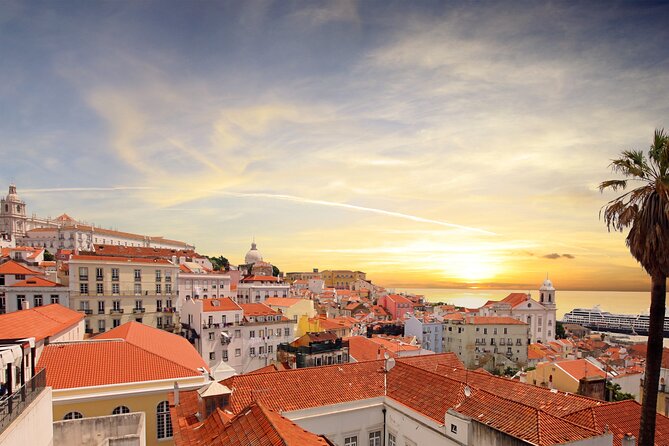
This is a private experience, meaning only your group joins in. That matters in Lisbon, where small decisions—where you pause, which street you use, when you stop for photos—can make the difference between a quick look and real comprehension.
The schedule is built around walking plus viewpoint moments. Most stops are about 30 minutes, with one longer opening stop of around one hour at Praca do Comercio. In a four-hour window, that structure keeps the tour energetic but still thoughtful.
Pickup is offered, but you’ll need to confirm your pickup location. From there, you’re set with a mobile ticket and a guide who coordinates the route. Reviews for this tour highlight guides who are personable and enthusiastic—names that show up include Mr. Mezzadri and Diogo—and that energy helps the time feel well spent. When a guide ties the city’s eras to what you can actually see, Lisbon clicks faster.
Worth a look before you lock anything else in around Lisbon:
- True 4Hour Private Tuk Tuk Tour: Discover Lisbon with a Local!
★ 5.0 · 8,008 reviews - Lisbon: Private Guided Tuk-Tuk Tour with Hotel Pickup
★ 4.9 · 4,552 reviews - Private Lisbon Sightseeing Tuk-Tuk Tour: Alfama, Belém & More
★ 5.0 · 4,277 reviews - Lisbon Highlights: Private Tuk Tuk Tour Adventure Sightseeing
★ 5.0 · 3,284 reviews
Praca do Comercio: starting in Olissipo’s big-history square
Your tour begins at Praca do Comercio, also known as Terreiro do Paco. This is a smart opener because it’s one of those places where you can stand and understand Lisbon as a trading city at the water’s edge—then pull that idea backward through time.
You’ll hear how the square relates to the display of Lisbon’s earlier periods: Roman, Visigothic, and Moorish. Even if you can’t “see” every period literally in the pavement, the point is to give your eyes a storyline. When you later look at different neighborhoods from the viewpoints, you’ll recognize the city’s logic: where power sat, where communities clustered, and why the coastline mattered.
Time on this stop is around one hour, which gives you breathing room. If you’re the type who hates rushed starts, this longer first stop helps. Also, the admission at this stop is listed as free—so you’re not spending time figuring out tickets while the city’s energy is right there.
Practical tip: arrive ready for standing and walking. This start is the “setup chapter” for the rest of the route.
Miradouro das Portas do Sol: Alfama’s neighborhoods in one quick view
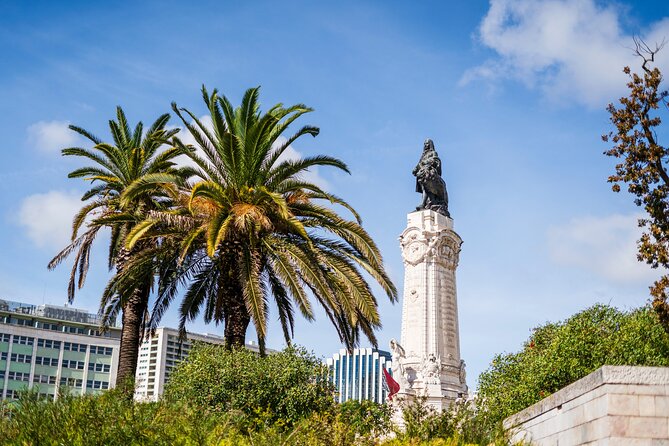
Next up is Miradouro das Portas do Sol. This viewpoint is a classic because it gives you an instant sense of structure in Alfama, the older maze of streets where different communities formed over centuries.
From here, you’ll look toward areas described on the route: São Vicente, Castelo dos Mouros, the Judiaria, and Mouraria. The magic is in seeing how those names connect to the real geography—castle, old quarters, and layered history. At this stop you’ll have about 30 minutes, which is perfect for photos plus a few guided questions.
Admission is listed as free, so your time goes to looking, not ticketing. The short duration also keeps the itinerary from turning into a slow sightseeing loop. If you’ve ever felt overwhelmed in Lisbon—too many hills, too many streets—this is the sort of pause that helps you breathe.
Possible consideration: viewpoints mean steps and uneven terrain. If you’re sensitive to walking comfort, bring shoes you trust.
Miradouro da Senhora do Monte: monarchy, revolutions, and earthquake survival
The tour’s “apex” moment is Miradouro da Senhora do Monte. This stop is shorter—around 30 minutes—but it’s framed as the peak of the route for a reason: it ties the sweeping view to Portugal’s political and dramatic past.
You’ll connect the view to the historic center and the story of the monarchy through four dynasties. The explanation also includes Lisbon’s role in revolutions and military attacks, and how the city endured after the earthquake. That last part is especially relevant because it becomes the bridge to the later stop at Convento do Carmo, where the earthquake isn’t just a mention—it’s visible in the ruins.
This is the kind of stop that’s great even if you’re not a museum person. You look out over Lisbon and understand why people fought, governed, rebuilt, and worshiped in this exact setting.
Admission is free here too, so you can spend your time absorbing what you’re seeing. If you’re traveling with someone who says they only want “the important stuff,” this is usually where that mindset shifts.
Worth a look before you lock anything else in around Lisbon:
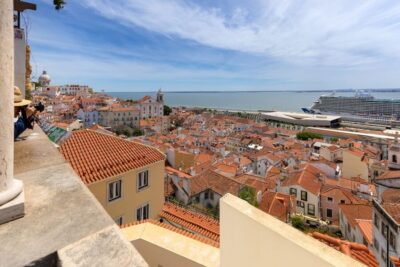



Marques de Pombal statue: power, reform, and 18th-century Lisbon
After the viewpoints, the route adds an in-the-streets landmark: the Estatua do Marques de Pombal. This stop is around 30 minutes, and it focuses on an 18th-century figure tied to the reign of D. José I.
This part of the tour is useful because it gives you a recognizable thread. Instead of Lisbon history feeling like separate chapters, you start to see how reform and authority shaped the city’s rebuilding and direction. Even from a statue, a good guide can connect the dots: what reforms meant for ordinary life, how the court’s decisions echoed outward, and why the name matters when you hear it later in Lisbon.
Admission is listed as free, so you can treat this stop as a short “context boost.” It’s also a helpful moment to regroup if the hills have started to feel in your legs.
Convento do Carmo ruins: seeing the 1755 earthquake in stone and silence
The tour then moves to Convento do Carmo, with about 30 minutes dedicated here. The big idea is the Gothic ruins and what they recall: the 1755 earthquake.
This is one of the most meaningful stops on the route because it’s not just a story you hear. It’s a physical result you can walk up to. You get that “history you can point at” feeling, which is what makes earthquake-era Lisbon hit differently than a generic overview.
Right next to the ruins is Plaza do Carmo, described as a quiet, charming space with historic palaces nearby, plus picturesque cafes. That layout matters: it gives you a chance to slow down right after a heavy moment. You’re not stuck staring at ruins without a break.
The combination of ruins plus an inviting square makes this stop both emotional and practical. You might even use the time here for a snack break—just know you’re on a schedule.
Admission at this stop is listed as free, so you’re not paying to feel the weight of 1755. The value comes from interpretation and atmosphere.
Assembly of the Republic and Basilica da Estrela: politics and faith in Estrela
In the last stretch, the tour shifts into Estrela, hitting two major landmarks that show different sides of Lisbon’s life: governance and religious art.
Assembleia da Republica
You’ll see the Assembleia da Republica installed in the old Monastery of St. Benedict. The key theme here is Portuguese democracy, explained through the building’s history and architectural presence. The stop is listed at about 30 minutes.
This is a clever pairing with the morning’s story. You start with ancient layers and viewpoints, then you end in a place tied to modern national identity. Even if you only catch parts of the exterior story, the guide’s framing helps you understand why the setting matters—government housed in older religious space is a strong visual reminder of how Lisbon reuses and reshapes.
Admission at this stop is listed as free.
Basilica da Estrela
Then comes Basilica da Estrela, one of Lisbon’s most recognizable white-dome silhouettes. This stop is also around 30 minutes, and it’s described as a blend of Baroque and Neoclassical work built in the 18th century under Queen D. Maria I.
What I like about this stop is the mix of exterior and interior detail you’re encouraged to notice. Inside, the route highlights the cork basin of Machado de Castro and colorful marble that covers floors and walls. The exterior also feeds into the view-and-rest vibe with the Garden of the Star in front of the basilica.
Admission is listed as free, so again: time goes to seeing, not ticket wrangling.
If you’re a photo person, you’ll appreciate that this is an ending stop where Lisbon’s architecture gives you something clean and iconic.
Price and value: is $108.37 worth four hours?

At $108.37 per person for about 4 hours, this tour sits in the “pay for time and guidance” category. Lisbon can be cheap if you wander on your own, but you also risk spending that time piecing together the story and fighting for orientation on hills.
Here, the value comes from a few concrete things you don’t get as easily on your own:
- Private format: you’re not sharing with strangers, which helps with pacing and questions.
- Frequent, free stops: the tour is structured so you can focus on learning and viewing rather than managing admissions at each location.
- A guided storyline: the stops connect—Olissipo origins to Alfama districts, monarchy context, the 1755 earthquake, then governance and a grand church. That chain helps your brain store what you see.
If you’re short on days in Lisbon, a focused half-day can be the best use of your time. If you’re staying longer and love slow museum hours, you might prefer a longer multi-part plan. But for first-timers who want the city’s “why” as well as the “what,” this is a reasonable investment.
One more practical point: private tours usually cost more, but in this case the route reduces extra costs because the listed admissions are free across the stops.
What to wear and bring for a miradouro-heavy route
You’ll be spending a good chunk of the time looking out from hill viewpoints—so set yourself up for comfort. I’d plan for:
- Shoes with grip for uneven sidewalks and hillside approaches
- Water, especially if the weather is warm
- A light layer, because hill air can feel cooler even when the city center is sun-baked
- Your camera or phone charged, since the viewpoints are the photographic payoff
The tour notes it’s best with good weather. That doesn’t mean it’s canceled for a cloudy sky, but the miradouros are where you’ll notice the difference. If visibility is poor, the route can still teach history, but the panoramic angle will be less satisfying.
Who this tour suits best
This private half-day tour is a good fit if you:
- Want a history-forward Lisbon route without committing to a full day
- Prefer viewpoints and landmark context over long museum time
- Like the idea of learning how neighborhoods connect: castle area, old quarters, monarchy era, and earthquake impact
- Appreciate a guide who talks like a real person and adjusts the pace when questions come up (that’s a repeated theme in guide feedback, including Diogo and Mr. Mezzadri)
It may be less ideal if you want long sit-down time inside buildings or you dislike walking and standing. The stops are intentionally short, because the goal is coverage plus clarity, not all-day lingering.
Should you book this private Lisbon historic tour?
I’d book it if you want the kind of Lisbon overview that actually sticks: free landmarks, a smart sequence, and a guide who ties what you’re seeing to what happened to the city.
Skip it if you already know Lisbon’s history well and you don’t care about viewpoints or architecture context. In that case, you might get similar comfort from a self-guided walk and a good map app—especially since these are mostly open, free-to-view locations.
One final decision helper: if your ideal trip includes a few perfect stops where you feel oriented and informed, this half-day format is made for you. Four hours is enough time to understand the city’s major chapters, but short enough that you’ll still have energy for dinner, a pastry, and wandering.
FAQ
How long is the private half-day tour?
It’s listed as approximately 4 hours.
Is this a private tour?
Yes. Only your group will participate.
Does the tour include pickup?
Pickup is offered, and you’ll be asked to confirm your pickup location.
What language is the tour in?
The tour is offered in English.
Are there admission tickets to pay during the stops?
The listed admission for all stops is free.
Is there a mobile ticket?
Yes, a mobile ticket is included.
What is the typical booking window?
On average, it’s booked about 101 days in advance.
Is the tour weather-dependent?
Yes. It requires good weather, and if it’s canceled due to poor weather, you’ll be offered a different date or a full refund.
Are service animals allowed?
Yes, service animals are allowed.
More Private in Lisbon
- True 4Hour Private Tuk Tuk Tour: Discover Lisbon with a Local!★ 5.0 · 8,008 reviews
- Lisbon: Private Guided Tuk-Tuk Tour with Hotel Pickup★ 4.9 · 4,552 reviews
- Private Lisbon Sightseeing Tuk-Tuk Tour: Alfama, Belém & More★ 5.0 · 4,277 reviews
- Lisbon Highlights: Private Tuk Tuk Tour Adventure Sightseeing★ 5.0 · 3,284 reviews
- Welcome Lisbon Tour with Local Guide in Private Eco Tuk Tuk★ 5.0 · 1,691 reviews
More Tours in Lisbon
- Lisbon City Center Tour – The Unmissable Lisbon★ 5.0 · 22,234 reviews
- Lisbon: History, Stories and Lifestyle Walking Tour★ 4.8 · 10,902 reviews
- True 4Hour Private Tuk Tuk Tour: Discover Lisbon with a Local!★ 5.0 · 8,008 reviews
- Winner 2025 Undiscovered Lisbon Food & Wine Tour by Eating Europe★ 5.0 · 6,390 reviews
- Lisbon: Sintra, Pena, Cabo da Roca, Cascais Tour with Pickup★ 4.8 · 5,445 reviews
More Tour Reviews in Lisbon
- Lisbon City Center Tour – The Unmissable Lisbon★ 5.0 · 22,234 reviews
- Lisbon: Sintra, Pena, Regaleira, Cabo da Roca & Cascais★ 4.7 · 19,656 reviews
- Lisbon Card: 24, 48, or 72-Hour Pass★ 4.5 · 17,944 reviews
- Lisbon: Jerónimos Monastery Entrance Ticket★ 4.1 · 14,164 reviews
- Lisbon: History, Stories and Lifestyle Walking Tour★ 4.8 · 10,902 reviews
Just in: fresh Lisbon reviews from the team





Half-Day, compared.
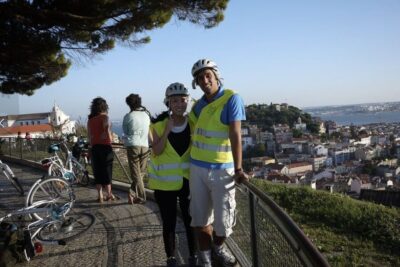 ★ 4.97 Hills Half-Day Electric Bike TourFrom $271,592 reviews
 ★ 5.0Lisbon Private And Customizable Half-Day TourFrom $142633 reviews
 ★ 5.0Sintra Half-Day Private Tour – A Journey through WonderlandFrom $175601 reviews
 ★ 4.9Half-Day Sintra Tour with Pena Palace and RegaleiraFrom $93570 reviews
 ★ 4.9Half-Day Private Guided Tuk-Tuk TourFrom $99532 reviews
 ★ 5.0Sintra Half-Day Guided Tour with Pena Palace TicketsFrom $96496 reviews
 ★ 5.0Private Half-Day Eco Tuk Tuk Tour in LisbonFrom $135336 reviews
 ★ 5.0Half-Day Sintra and Pena Palace Tour from Lisbon with Small-GroupFrom $92306 reviews
Browse the lists this tour appears in