

Reviewed · HORSES
Lisbon: Portuguese Riding School Trainig with Lusitano Horse
Classical horsemanship has a smell of leather. This Lisbon experience is interesting because you’re not only seeing finished work—you’re watching Lusitano horses and riders prepare in real time, in period costume, with music and court-like staging.
I especially like the chance to get close to the stable routine: handlers care for the horses at Henrique Calado Riding Ring, and the training stays focused on rhythm and the animals’ health needs (not just showy moments). A possible drawback: you may find the live spoken guiding lighter than you expect, since the audio guide does a lot of the heavy lifting.
In This Review
- Key things to notice before you go
- A Portuguese riding school morning that teaches how the work is made
- Henrique Calado Riding Ring: where you see the care side up close
- Warm-ups and resourcefulness exercises in period costume
- Nora Patio and the 18th-century court vibe
- Equestrian Art rehearsals: how the complex work gets made
- Alter Real Stud Farm connection: why it matters
- Price and value: what $17 gets you in a Lisbon morning
- Timing tips for the 10am–1pm window (and the best slot)
- What to bring (and what will annoy you if you forget it)
- Should you choose a horse-training experience like this?
- Should you book this Portuguese Riding School training session?
- FAQ
- How long is the experience?
- What time should I go for the best experience?
- What’s included with my ticket?
- What’s not included?
- What languages are available for the audio guide?
- What should I bring?
- How do I access my ticket at the meeting point?
- Can I cancel for a full refund?
Key things to notice before you go
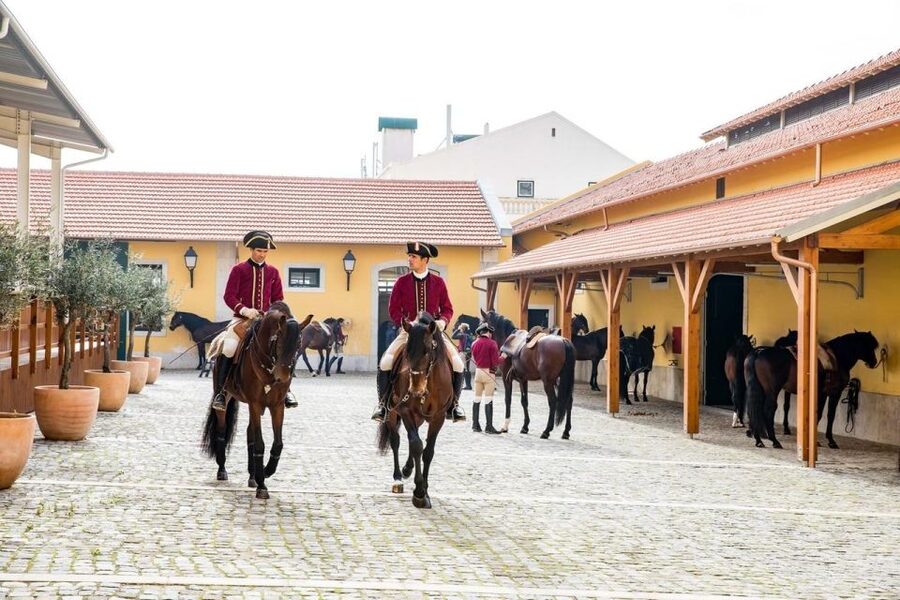
- Stable time that’s actually the point: you spend real time in the ring area and the horse-handling workflow, not just a quick look.
- Warm-ups and resourcefulness drills: the morning shows the build-up process, not only the final choreography.
- Henrique Calado Riding Ring behind the scenes: handlers prepare and care for the Lusitano in view.
- Nora Patio feels like a period court: 18th-century atmosphere comes through via the setting and the period music.
- Audio guide explains what you’re seeing: it covers the stables and introduces the different horses.
A Portuguese riding school morning that teaches how the work is made
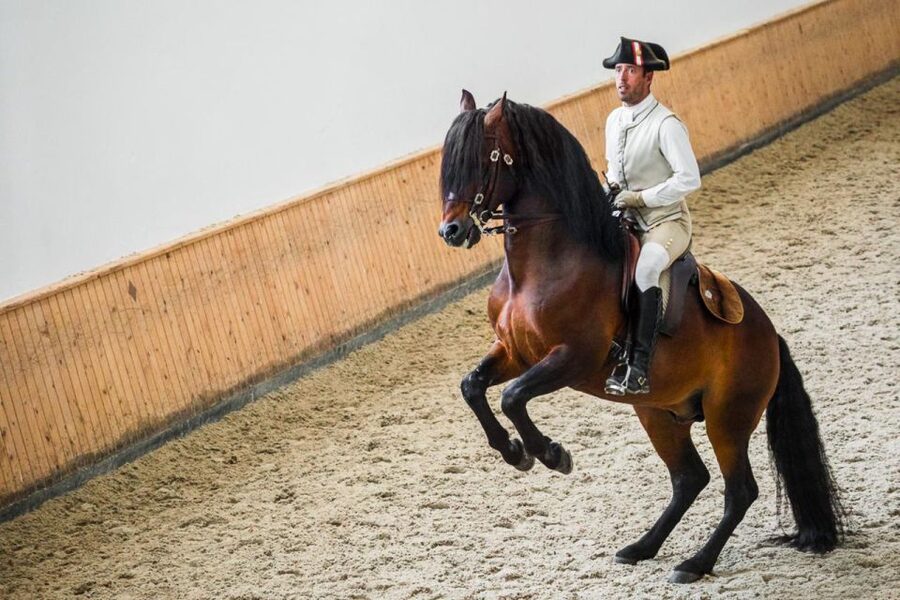
If you like horses, you’ll enjoy this for the obvious reason: Lusitano horsemanship is disciplined, precise, and clearly built on communication. But what makes this feel worth your time in Lisbon is the structure. Instead of arriving, watching, and leaving, you get a morning that moves from prep to rehearsal—so you understand how the day’s high-level performance gets built.
Think of it like watching athletes warm up, not just the final medal ceremony. You see riders in period costume working with the horses in a way that respects the animal’s pace and needs. And you’re guided through it with an included audio guide, available in English, Portuguese, and French.
The whole session runs in the morning, from 10am to 1pm, with the most popular window being 11am to 12:30pm. That timing matters because you’ll want to catch the transition between the stable work and the court-style rehearsal without feeling rushed.
Worth a look before you lock anything else in around Lisbon:
- From Lisbon: Comporta and Setúbal Trip with Horseback Riding
★ 4.3 · 90 reviews - Lisbon: Morning of Equestrian Art with Lusitano Horses
★ 4.4 · 87 reviews - Lisbon: Portuguese Riding School Trainig with Lusitano Horse
★ 4.4 · 50 reviews - Setubal & Comporta Trip with Horseback Riding from Lisbon
★ 4.5 · 38 reviews
Henrique Calado Riding Ring: where you see the care side up close
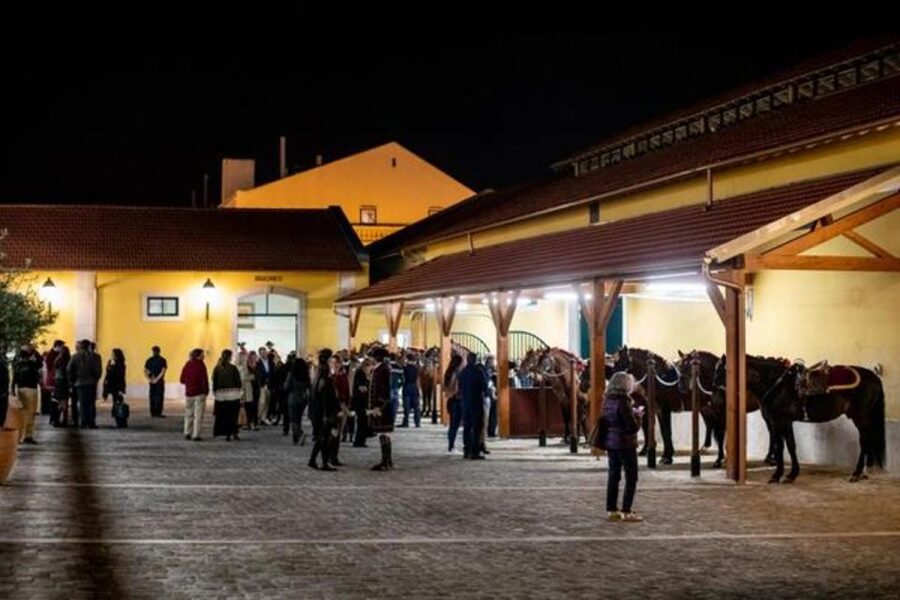
The day centers on Henrique Calado Riding Ring, the place where you get a behind-the-scenes look at how horses are cared for and readied for training. This is one of the best parts if you’re the type of person who thinks the stable is interesting even when nobody’s performing.
You’ll be able to watch the handlers take care of the Lusitano horses while the training is underway. That’s not just a nice extra. It changes how you interpret everything you’ll later see in the Nora Patio. You start noticing that the work isn’t only about movement—it’s also about comfort, routine, and making sure the horse is in the right state to train.
This ring-based viewpoint also helps you understand something important in classical riding: the horse’s physical well-being is built into the process. The program explicitly focuses on rhythm, health, and physical needs, and you’ll feel that emphasis in how the session is paced.
Warm-ups and resourcefulness exercises in period costume
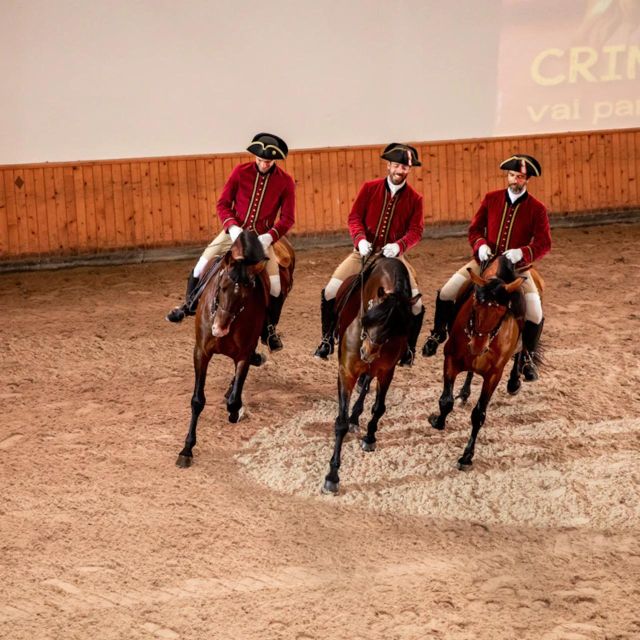
A big highlight is the warm-up and “resourcefulness” exercises. That might sound abstract until you’re watching it in context. In plain terms, these drills show you how riders test responsiveness and control while keeping the horse’s workload sensible.
You’ll see riders dressed in period costume, and the session uses period music during the broader training and rehearsal portion. The costume detail isn’t just for looks; it reinforces the idea that this is a historical art form with a performance tradition that’s treated seriously.
What I like about this part is that it sets expectations. You stop assuming every classical moment is dramatic. Some of the most valuable training is calm, repetitive, and carefully timed—because it protects the horse and builds the precision needed for the later complex Equestrian Art exercises.
If you’re hoping for nonstop action, plan instead for a steady rhythm: watch, reset your eyes, then watch again. The learning is in the repetition and the relationship between horse and rider.
Nora Patio and the 18th-century court vibe
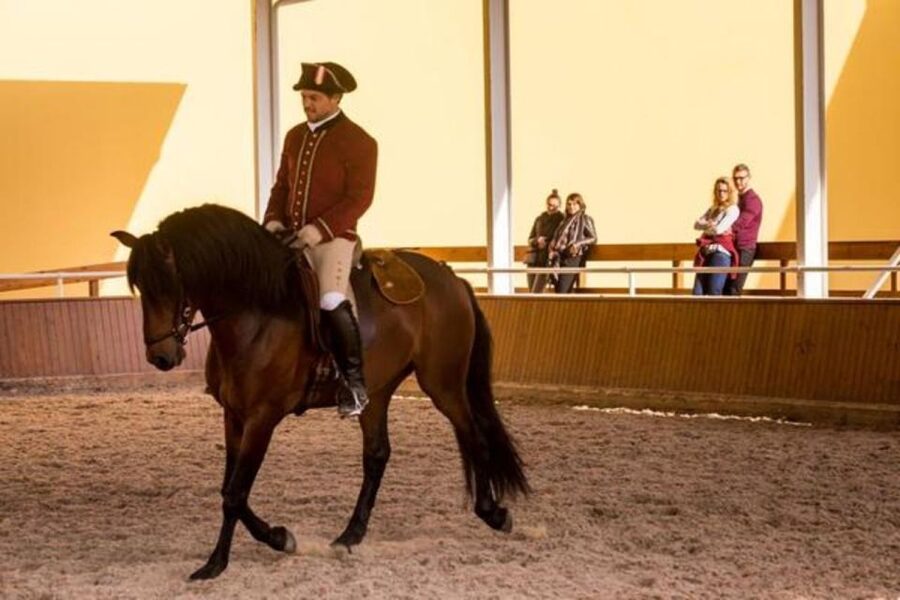
Then comes the setting shift. You’ll attend rehearsals and training that recreate the feeling of an 18th-century court. The Nora Patio is where that charm really shows.
This is where the experience turns theatrical, but in a way that still feels connected to training rather than pure spectacle. The choreography and exercises you watch are meant to recreate that period court atmosphere, and the period music adds a layer of atmosphere that makes the whole morning feel like a living performance workshop.
If you’re a first-timer, this is also where you’ll likely understand why people get excited about this kind of equestrian art. You’re not just watching horses move. You’re watching a full concept: music, timing, staging, and how riders and horses interact inside a designed space meant to evoke another era.
One practical note: because the focus alternates between stable work and patio-style rehearsal, you’ll benefit from being mentally ready to switch gears. Comfortable shoes help more than you’d think.
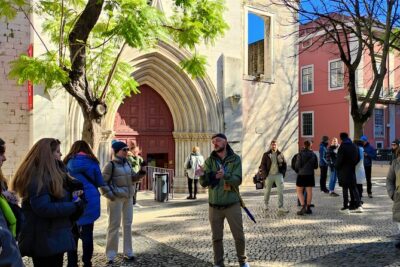



Equestrian Art rehearsals: how the complex work gets made
The heart of the morning is attending training and rehearsals of complex Equestrian Art exercises and choreographies. These aren’t random drills. They’re rehearsals connected to the high-level gala show of the Portuguese School of Equestrian Art, and you can see the intent behind the sequence-building.
The program also teaches what matters for horse welfare. It’s not only about what the horse can do; it’s about how the horse should be trained—while respecting rhythm and prioritizing health and physical needs.
I find that focus really helps visitors. If your riding knowledge is limited, the audio guide helps you follow the logic of the session instead of just watching movements without context. It also describes the stables and introduces the different horses, so you can start matching names and roles to what you’re seeing.
In addition, the sessions happen both in the Nora Patio and at Henrique Calado Riding Ring. That dual-location structure can be a plus: you’re not stuck in one viewing angle. You see how training shifts depending on where the work is happening.
A small caution: the audio guide is included, and one review noted that a fully detailed live guide presence may not be what you hope for. In other words, don’t plan on needing lots of live commentary. Bring your attention and let the audio guide do its job.
Alter Real Stud Farm connection: why it matters
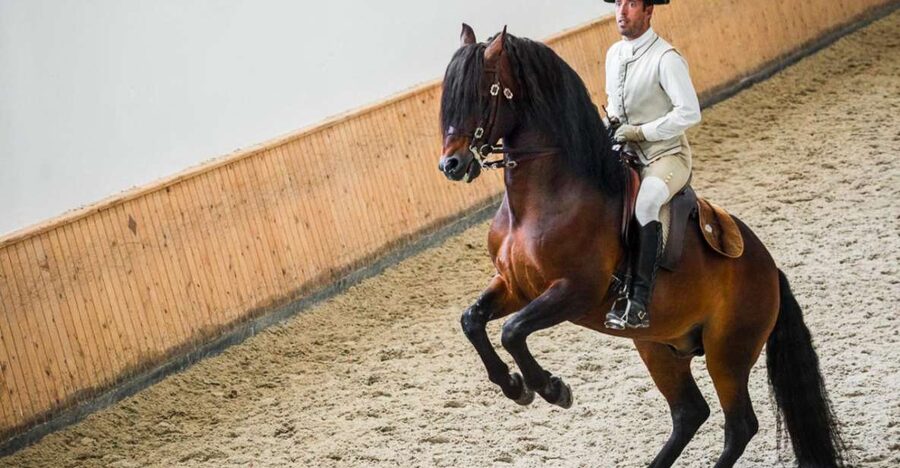
The experience specifically includes watching daily training of Lusitano horses from the Alter Real Stud Farm. That connection matters because it signals a serious breeding and horse-development background behind the horses you’re watching.
Even if you don’t know the Lusitano scene, you’ll get a more grounded experience by knowing you’re not watching generic horses in a random demo. The program frames the horses as part of a lineage and training tradition tied to the Portuguese School of Equestrian Art.
Practically, this also affects what you should expect. Training here looks intentional and paced. You’re not just seeing tricks. You’re seeing the kind of rehearsal that prepares horses for disciplined, high-level presentations.
Price and value: what $17 gets you in a Lisbon morning
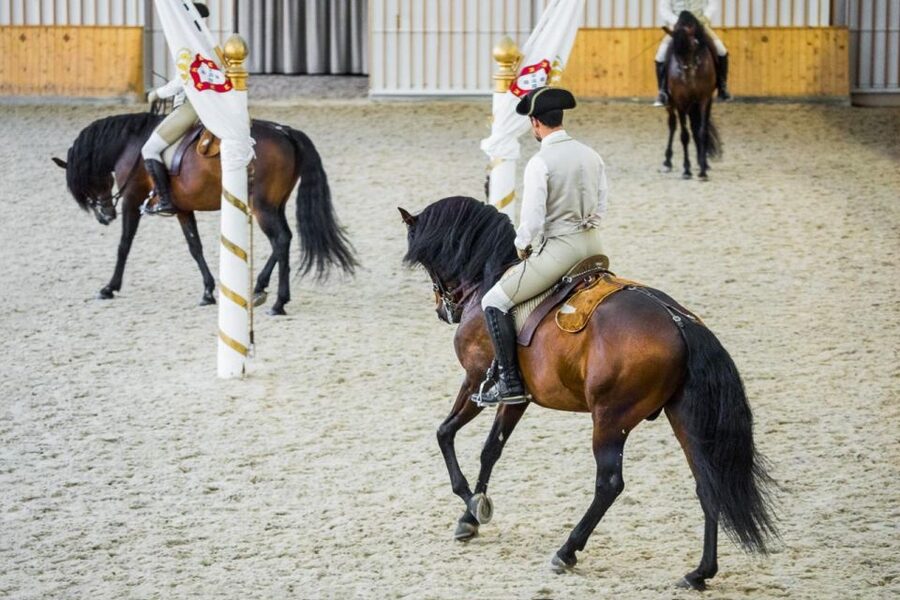
At about $17 per person, this is priced like a value ticket for a structured cultural experience. The key is what’s bundled in.
You get:
- entry ticket to The Portuguese School of Equestrian Art
- watching daily training of Lusitano horses from Alter Real Stud Farm
- an audio guide
You also get something that can be hard to measure: time and access. Many horse experiences in big cities are short and thin on process. Here, the session runs in the morning window (10am to 1pm), and the program design gives you time in the stable environment plus time for training and rehearsals.
What’s not included is also useful to know for budgeting:
- transport to the location
- headphones (you’ll want them since the audio guide is included)
- food and drinks
- photography
So your real cost isn’t only the ticket price. It’s also the practical stuff: how far you’re traveling, whether you’ll buy water/snacks nearby, and whether you need to bring headphones.
If you’re in Lisbon with limited time, this makes sense as a single-morning add-on—especially if you like understanding how art is produced rather than just watching the final performance.
Timing tips for the 10am–1pm window (and the best slot)
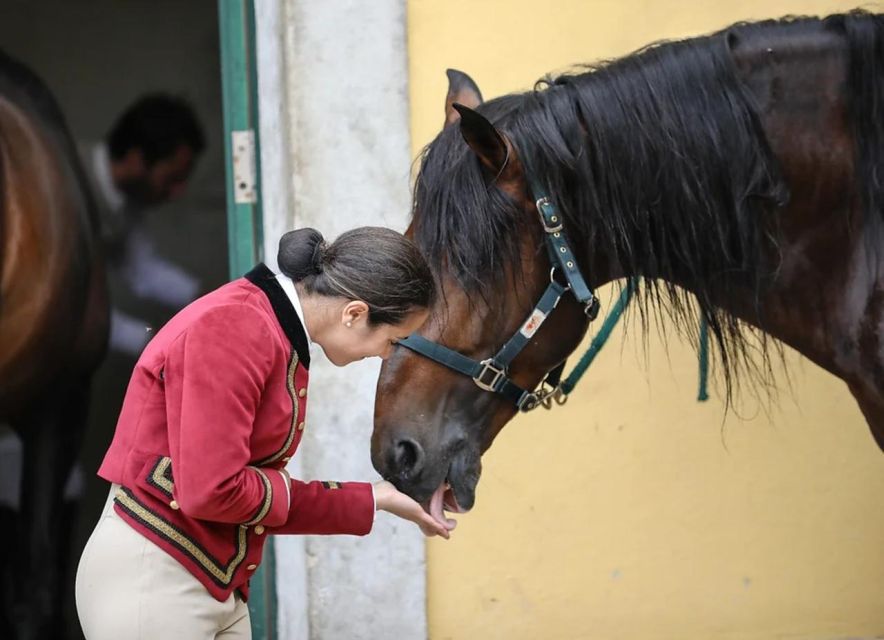
The activity runs from 10am to 1pm, with 11am to 12:30pm labeled as the best time to visit.
Here’s how to think about it. If you arrive toward the middle, you’re more likely to see the session at a fuller pace—stable activity plus rehearsals—without feeling like you’re watching the beginning of a ramp-up or the tail end of wrap-up.
Also, if you’re hoping to take in the patio setting properly, arriving in that best window helps you avoid a situation where you only catch a partial segment. This isn’t a long day. So pick the time window wisely.
What to bring (and what will annoy you if you forget it)
Bring:
- comfortable shoes (you’ll be on your feet for a while)
- headphones for the audio guide
- a charged smartphone (you’ll need it for the audio guide access instructions)
- internet access
Not allowed includes smoking, flash photography, and alcohol and drugs. Photography is listed as not included, which means you shouldn’t count on it being part of your experience the way it is on other tours.
If you’re the type of person who likes to capture details, adjust expectations early. Instead of relying on photos, plan to watch closely and use the audio guide to help you remember what you saw.
One more practical tip: you’ll receive a separate email with instructions to access and download your ticket and audio guide. Check your spam folder too, because that’s where these emails love to hide.
Should you choose a horse-training experience like this?
This is best for you if:
- you love horses and want to see training process, not only a performance moment
- you enjoy learning how rhythm, health, and physical needs shape what happens in the ring
- you like period atmosphere and court-style staging (Nora Patio delivers that look)
- you’re comfortable using an audio guide to fill in context
It might be less ideal if:
- you need constant live narration from a guide at every second (the structure relies heavily on the audio guide)
- you strongly prefer guided group storytelling over self-paced listening
- you want flexible plans. The session happens in the set morning window.
In short, it’s for people who appreciate craftsmanship and the work behind the art.
Should you book this Portuguese Riding School training session?
Yes, I think you should book this if you want a process-focused experience in Lisbon: stable care, warm-ups, and rehearsals tied to the Portuguese School of Equestrian Art. The included audio guide makes it easier to follow what you’re seeing, and the horse-centered rhythm/health emphasis gives the morning a purpose beyond entertainment.
Skip it if you’re only interested in a short, photo-friendly show format or if you dislike relying on audio guidance. But if you want a calm, instructive morning with Lusitano horses and real training context, this is one of the better uses of a few hours in Lisbon.
FAQ
How long is the experience?
It’s a 1-day activity focused on a morning session that runs from 10am to 1pm.
What time should I go for the best experience?
The best time to visit is 11am to 12:30pm.
What’s included with my ticket?
Your ticket includes entry to The Portuguese School of Equestrian Art, watching daily Lusitano horse training, and an audio guide.
What’s not included?
Transport, headphones, food and drinks, and photography are not included.
What languages are available for the audio guide?
The audio guide is available in English, Portuguese, and French.
What should I bring?
Bring comfortable shoes, headphones, a charged smartphone, and internet access.
How do I access my ticket at the meeting point?
You must show your Book N Tour Ticket to staff at the reception desk. The Getyourguide paper is not your ticket, and you should not use a GYG QR code or GYG voucher/ticket.
Can I cancel for a full refund?
Yes. You can cancel up to 24 hours in advance for a full refund.
More Horses in Lisbon
- From Lisbon: Horseback Riding on Comporta Beach★ 4.7 · 167 reviews
- From Lisbon: Comporta and Setúbal Trip with Horseback Riding★ 4.3 · 90 reviews
- Lisbon: Morning of Equestrian Art with Lusitano Horses★ 4.4 · 87 reviews
- Setubal & Comporta Trip with Horseback Riding from Lisbon★ 4.5 · 38 reviews
- Horse Riding on the Beach with private transfer from Lisbon★ 4.5 · 27 reviews
More Tour Reviews in Lisbon
- Lisbon City Center Tour – The Unmissable Lisbon★ 5.0 · 22,234 reviews
- Lisbon: Sintra, Pena, Regaleira, Cabo da Roca & Cascais★ 4.7 · 19,656 reviews
- Lisbon Card: 24, 48, or 72-Hour Pass★ 4.5 · 17,944 reviews
- Lisbon: Jerónimos Monastery Entrance Ticket★ 4.1 · 14,164 reviews
- Lisbon: History, Stories and Lifestyle Walking Tour★ 4.8 · 10,902 reviews
Just in: fresh Lisbon reviews from the team




Horses, compared.
 ★ 4.7From Lisbon: Horseback Riding on Comporta BeachFrom $165167 reviews
 ★ 4.3From Lisbon: Comporta and Setúbal Trip with Horseback RidingFrom $29490 reviews
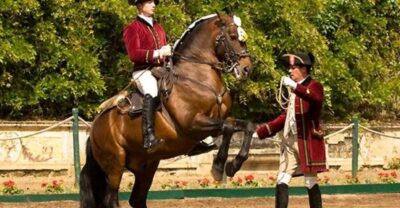 ★ 4.4Morning of Equestrian Art with Lusitano HorsesFrom $1787 reviews
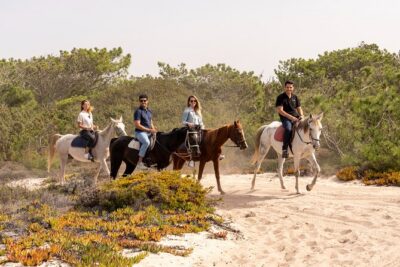 ★ 4.5Setubal & Comporta Trip with Horseback Riding from LisbonFrom $29938 reviews
 ★ 4.5Horse Riding on the Beach with private transfer from LisbonFrom $29127 reviews
 ★ 4.4Horseback Riding On The Beach At SunsetFrom $15315 reviews
 ★ 5.0PRIVATE Horseback Riding On The BeachFrom $23510 reviews
★ 4.3Horse riding on the beach, with private transfer from LisbonFrom $2756 reviews
★ 5.0PRIVATE Horseback Riding On The BeachFrom $23510 reviews
★ 4.3Horse riding on the beach, with private transfer from LisbonFrom $2756 reviews
Browse the lists this tour appears in