
Reviewed · HISTORICAL TOURS
Lisbon: Jewish History Tour of Lisbon
Medieval Lisbon hides a Jewish map. This private 3-hour walk threads Jewish life through Lisbon’s streets, starting at Praça do Comércio and climbing toward Alfama, with guides like Jose and Filipa bringing the centuries to life. I love how it gives you the geography fast, and I love how the guide ties each stop to what happened there.
You’ll cover the key neighborhoods tied to segregation, the forced-conversion era in Baixa, and the darker turn of Rossio history, including the 1506 Pessah massacre. The main thing to keep in mind is that Lisbon has few physical remains from the medieval Jewish community, so you’ll be working mostly with stories, context, and place memory rather than standing in front of tons of artifacts.
In This Review
- Key things that make this Lisbon Jewish history tour worth your time
- Meeting at Praça do Comércio: the orientation you’ll feel for the rest of the day
- Rua do Comércio to Casa dos Bicos: early stops that set the tone
- Resistance museum and Mouraria: when Lisbon’s neighborhoods carry memory
- Alfama Jewish quarter: segregation told through streets, not just dates
- A quick reality check: artifacts are scarce
- Baixa District and forced conversions: when the city starts feeling complicated
- Rossio and the 1506 Pessah massacre: a brutal episode placed in context
- Lisbon’s wider Jewish story: diaspora routes and 1940s refugee passage
- Price and value: what $106 gets you (and what it doesn’t)
- Who this tour fits best
- Practical tips so your day goes smoothly
- Should you book the Lisbon Jewish History Tour?
- FAQ
- How long is the Lisbon Jewish History Tour?
- Where does the tour meet?
- What sites and areas does the tour cover?
- Is food included in the price?
- What languages are available?
- Is hotel pickup or drop-off included?
- Is the group private?
- What should I bring?
Key things that make this Lisbon Jewish history tour worth your time
- You start at Praça do Comércio and build an origin story from there, not a random street corner.
- Alfama is the backbone of the route, including the way medieval segregation shaped daily life.
- Baixa shows the forced-conversion reality in a way that feels tied to specific streets, not vague history.
- Rossio connects religion to power through the 1506 Pessah massacre context.
- You get a wider timeline that includes Jewish life reaching into the 1940s with WWII refugees.
- You’re with a live guide in English or Portuguese, and many guides are praised for staying engaging for the full walk.
Meeting at Praça do Comércio: the orientation you’ll feel for the rest of the day
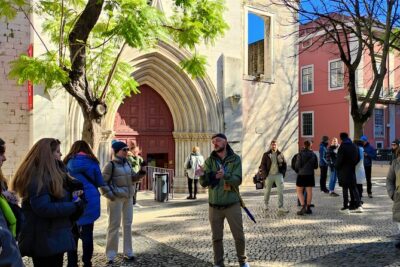
The tour begins at Praça do Comércio, under the big triumph arch. Look for the guide with an orange backpack or a Lisbon Walker tote. This matters more than it sounds: Praça do Comércio is where you can mentally “reset” your bearings, and the tour uses that to set up what comes next.
From there, you move through central Lisbon’s layers—streets that look ordinary until your guide starts linking them to the Jewish story. I like that the route doesn’t treat history like a lecture. It treats it like a walking route through the city’s changing eras.
In particular, the tour frames Praça do Comércio with an origin narrative tied to the Exodus. Whether you’re arriving with lots of background or none at all, that opening helps you understand why Lisbon’s Jewish history is not a side note—it’s part of a wider Atlantic, Mediterranean, and European story.
Worth a look before you lock anything else in around Lisbon:
- Lisbon: History, Stories and Lifestyle Walking Tour
★ 4.8 · 10,902 reviews - Lisbon: Daytime or Sunset Boat Cruise with History and Wine
★ 5.0 · 1,053 reviews - Explore Lisbon by Tuk Tuk: History and Viewpoints
★ 5.0 · 840 reviews - Private Tuk Tuk Tour Through Lisbon’s Historical Streets
★ 5.0 · 734 reviews
Rua do Comércio to Casa dos Bicos: early stops that set the tone
One of the practical joys of this tour is pacing. You start in the most “walkable” mindset—moving from Rua do Comércio toward the riverfront areas—before the tour turns heavier.
You’ll pass spots like Praça do Município and Casa dos Bicos, plus areas around Ribeira as the guide builds the city’s medieval and later connections. These aren’t just scenic pauses. They’re used to explain how Lisbon’s geography, commerce, and city life created conditions where Jewish communities could flourish, and later face pressure.
If you’re the type who hates tours that jump straight to tragedy with no setup, this route tends to work better. The early stops give you context, so when the guide gets to segregation, forced conversions, and massacres, you can follow the cause-and-effect chain.
Resistance museum and Mouraria: when Lisbon’s neighborhoods carry memory
As the route continues, you reach the Resistance museum area and then the Mouraria district. This is where the tour widens its timeline beyond medieval Lisbon.
The tour includes the story of WWII refugees and their passage in the 1940s. That shift changes the feel of the walk. You stop treating Lisbon as only a place of medieval events and start seeing it as a crossroads city—one that repeatedly becomes relevant during Europe’s turning points.
Mouraria is also where neighborhoods feel personal on a history tour. Even if you don’t see “Jewish” landmarks at every step, the guide can connect the dots between where people lived, what the city allowed, and what the wider world was doing at the time.
This is a good moment to ask questions. If your guide is Jose or Sofia, or anyone else with a strong storytelling style, this tends to be where the conversation gets sharp: Lisbon’s Jewish history is about movement, restrictions, identity shifts, and the long shadow of major events.
Alfama Jewish quarter: segregation told through streets, not just dates
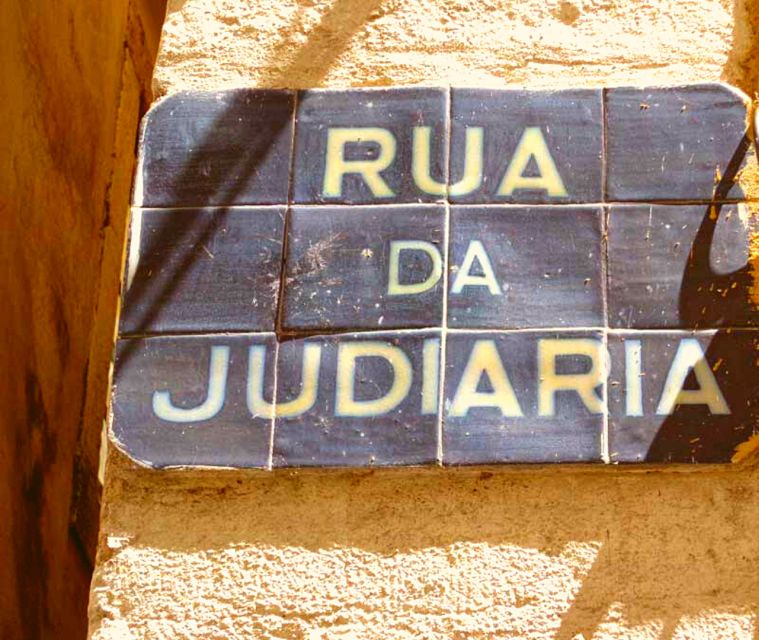
Alfama is the tour’s emotional core. The route covers the Alfama Jewish quarter and medieval segregation—the way communities were physically and socially separated. This is exactly the kind of topic that can become abstract in a typical tour, but here it stays tied to how you’re walking through the city.
You’ll spend time in the castle hill / Alfama zone, following the pattern of historical presence and the city’s medieval organization. The big value is that the guide uses specific locations to explain how segregation worked in everyday terms—where people went, how the city structured neighborhoods, and how power shaped movement.
It’s also where I think the tour is strongest for first-timers. If you’re only going to pick one guided Jewish history experience in Lisbon, this is the section that makes the tour feel uniquely Lisbon. Alfama has that “read the city carefully” vibe, and the guide helps you do exactly that.

A quick reality check: artifacts are scarce
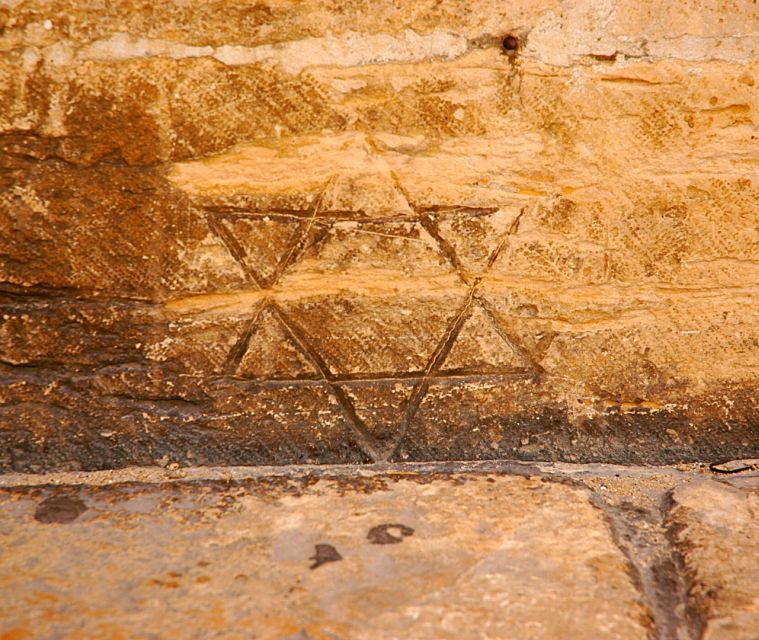
Here’s the honest part. Many guides can talk for hours because so much of the story survives in documentation and oral tradition, not in visible remains. If you’re expecting a museum tour with major ruins to point at, you might be disappointed.
But if you come for understanding—how a community could exist, be targeted, adapt, and leave traces in the city’s story—you’ll likely find it satisfying. Several participants specifically noted that physical evidence is limited, and the best response is to let the guide do the heavy lifting of interpretation.
Baixa District and forced conversions: when the city starts feeling complicated
The tour moves into Baixa and covers the period of forced conversions. This is where Lisbon’s Jewish history stops being only about community life and becomes about survival under pressure.
Baixa is a perfect stage for this theme because it’s the center of Lisbon’s urban story. When you walk it with a guide, it’s easier to grasp how conversion wasn’t just a religious shift—it changed how people could live, work, practice, and be seen.
The tour’s focus on forced conversions is especially important because Portuguese Jewish history doesn’t end when persecution intensifies. It morphs. The guide frames how the legacy continued through what followed.
If you like history that explains how people adapted, this part has real payoff. And it’s practical too: the guide points out what to notice in the street layout and how the city’s structure reflects different eras and pressures.
Rossio and the 1506 Pessah massacre: a brutal episode placed in context
Rossio is not an abstract stop. It’s a place name that the tour uses to anchor the 1506 Pessah massacre context. This is the kind of topic that can feel overwhelming without framing, so I appreciate that the guide connects it to the surrounding historical pressures rather than listing events like a timeline dump.
Standing around Rossio with a guide, you can understand how fear and power can collide with religious identity. The guide’s job is to help you see that this wasn’t random cruelty—it was tied to the politics of the period and the vulnerability of minority communities.
This is also a good stretch of the walk to slow down mentally. Give yourself time to absorb what you’re hearing. If your guide asks if you have questions, take them up on it. The group is private, and the format makes that back-and-forth possible.
Lisbon’s wider Jewish story: diaspora routes and 1940s refugee passage
One of the standout strengths of this tour is how it doesn’t freeze Lisbon in the Middle Ages. The tour also covers the spread of Jewish diaspora that moved out from Lisbon across the Atlantic, to the Mediterranean area, Asia, and northern Europe.
That part is valuable because it helps you connect Lisbon to patterns you may already know from other places—trade networks, migration waves, and the way communities re-form under new circumstances. It’s not just “Lisbon mattered.” It’s “Lisbon helped shape a wider map.”
Then, you come full circle with the WWII refugees passage in the 1940s. Even if you don’t know Portuguese Jewish history well, the timeline makes a point: Lisbon repeatedly becomes a doorway for people in motion, especially during crises.
Price and value: what $106 gets you (and what it doesn’t)
At $106 per person for a 1-day experience, you’re paying for a 3-hour guided tour. That’s not cheap, but it’s also not a museum ticket price. You’re buying time with a live guide, plus a structured route that helps you turn Lisbon’s neighborhoods into history you can actually place.
Because it’s listed as a private group, the experience tends to feel less rigid. The pace can be influenced by how your guide is responding to your questions, and multiple guides (Jose, Filipa, Sofia, Rita, Jorge) are praised for keeping people engaged and handling topics clearly.
What you should expect not included: hotel pickup/drop-off and food or drinks. So the value math here depends on whether you’re able to meet at Praça do Comércio easily and whether you’ll plan a snack or meal outside the tour.
In plain terms: if you like city walking tours that give you street-level understanding and you’re okay with limited visible ruins, this price is more like paying for a guide’s brain than paying for an attraction with big props.
Who this tour fits best
This Lisbon Jewish history tour works best if you fall into one of these buckets:
- You want an organized way to learn Jewish Lisbon history without needing to research every neighborhood yourself.
- You prefer guides who explain how the story changed across centuries, not just one time period.
- You’re okay with an interpretive tour where the evidence is mostly in context and place memory, not lots of remaining artifacts.
It’s also a good fit for travelers who appreciate a steady walking pace and don’t want a stop-and-start tour. Reviews repeatedly highlight that the time passes quickly because the guide keeps people interested.
Practical tips so your day goes smoothly
- Wear comfortable shoes. The tour is built around walking key historical areas, including Alfama and the Baixa zones.
- Bring water or plan a drink stop on your own. Food and drinks are not included.
- Be ready to ask questions. The format supports it, and the topic range is broad: medieval Jewish life, segregation, forced conversions, the 1506 Pessah massacre context, plus the WWII refugee thread.
- If you’re short on time, you can look for the tour to be tailored to different time frames and starting points. That flexibility can help you stack this with other Lisbon sights.
Should you book the Lisbon Jewish History Tour?
I’d book this if you want a focused, guided route through Lisbon neighborhoods that actually connect to major moments: Alfama’s segregation, Baixa’s forced conversions, and Rossio’s 1506 Pessah massacre. The tour also gives you a useful long view, including diaspora movement out from Lisbon and the 1940s refugee passage during WWII.
I’d hesitate if you’re expecting a “ruins and artifacts” experience where you can point at lots of physical remains all day. This is more about story, context, and how the city’s streets reflect centuries of change.
If that trade-off sounds fair to you, this tour is a strong way to understand Lisbon beyond postcard Lisbon—and to leave with a clearer mental map of Jewish history in Portugal.
FAQ
How long is the Lisbon Jewish History Tour?
The guided tour lasts 3 hours.
Where does the tour meet?
Meet at Praça do Comércio, looking for the guide under the big triumph arch. The guide wears an orange backpack or a totebag with the Lisbon Walker big logo.
What sites and areas does the tour cover?
It covers key Jewish-history-linked areas including Praça do Comércio, Alfama (Jewish quarter), Baixa (forced conversions), Rossio (including the 1506 Pessah massacre context), and other stops such as Praça do Município, Rua do Comércio, Casa dos Bicos, Ribeira, the Resistance museum area, Mouraria, and Praça da Figueira.
Is food included in the price?
No. Food and drinks are not included.
What languages are available?
The tour is available in English and Portuguese.
Is hotel pickup or drop-off included?
No. Hotel pickup and drop-off are not included.
Is the group private?
Yes. It’s listed as a private group.
What should I bring?
Wear comfortable shoes for walking.
More Historical Tours in Lisbon
- Lisbon: History, Stories and Lifestyle Walking Tour★ 4.8 · 10,902 reviews
- Lisbon: Daytime or Sunset Boat Cruise with History and Wine★ 5.0 · 1,053 reviews
- Explore Lisbon by Tuk Tuk: History and Viewpoints★ 5.0 · 840 reviews
- Private Tuk Tuk Tour Through Lisbon’s Historical Streets★ 5.0 · 734 reviews
- Lisbon Sunset Sailing with Portuguese Wine and History★ 5.0 · 668 reviews
More Tours in Lisbon
- Lisbon City Center Tour – The Unmissable Lisbon★ 5.0 · 22,234 reviews
- Lisbon: History, Stories and Lifestyle Walking Tour★ 4.8 · 10,902 reviews
- True 4Hour Private Tuk Tuk Tour: Discover Lisbon with a Local!★ 5.0 · 8,008 reviews
- Winner 2025 Undiscovered Lisbon Food & Wine Tour by Eating Europe★ 5.0 · 6,390 reviews
- Lisbon: Sintra, Pena, Cabo da Roca, Cascais Tour with Pickup★ 4.8 · 5,445 reviews
More Tour Reviews in Lisbon
- Lisbon City Center Tour – The Unmissable Lisbon★ 5.0 · 22,234 reviews
- Lisbon: Sintra, Pena, Regaleira, Cabo da Roca & Cascais★ 4.7 · 19,656 reviews
- Lisbon Card: 24, 48, or 72-Hour Pass★ 4.5 · 17,944 reviews
- Lisbon: Jerónimos Monastery Entrance Ticket★ 4.1 · 14,164 reviews
- Lisbon: History, Stories and Lifestyle Walking Tour★ 4.8 · 10,902 reviews
Just in: fresh Lisbon reviews from the team





Historical Tours, compared.
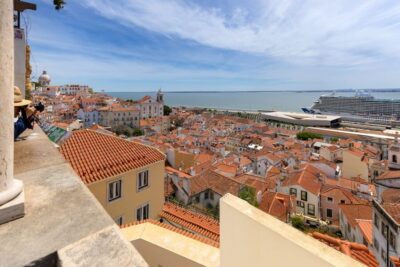 ★ 4.8History, Stories and Lifestyle Walking TourFrom $2910,902 reviews
 ★ 5.0Daytime or Sunset Boat Cruise with History and WineFrom $471,053 reviews
 ★ 5.0Explore Lisbon by Tuk Tuk: History and ViewpointsFrom $19840 reviews
 ★ 5.0Private Tuk Tuk Tour Through Lisbon’s Historical StreetsFrom $27734 reviews
 ★ 5.0Lisbon Sunset Sailing with Portuguese Wine and HistoryFrom $54668 reviews
 ★ 4.8Live Fado Show in Historic Alfama with Port WineFrom $17572 reviews
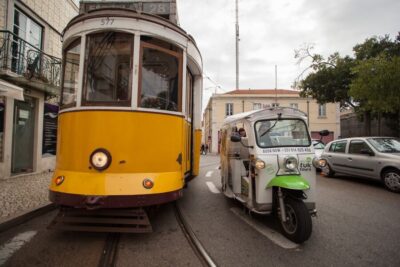 ★ 4.8Guided Tuk-Tuk Tour Along the Historic Tram Line 28From $147475 reviews
 ★ 5.0Private Lisbon-Arrábida Wine Tour: 3 Wineries, Coast & HeritageFrom $156450 reviews
Browse the lists this tour appears in