
Reviewed · HISTORICAL TOURS
Lisbon: Jewish History Private Tour
Lisbon has layers under the sidewalks, and this tour tracks them. It’s a private 4-hour walk-and-drive through Lisbon’s Jewish story—from Sephardic influence and Crypto Judaism to the Inquisition era—guided with real context so the city makes more sense. I love how it starts with big-picture orientation from Miradouro da Senhora do Monte, then turns into close-up streets in Alfama and Baixa. I also like that the pacing mixes viewpoints, monuments, and museum stops, so you don’t just hear facts—you can actually see how Lisbon’s neighborhoods evolved.
One thing to think about: physical evidence of Jewish Lisbon is limited in places. You’ll lean heavily on symbols, locations, and archaeology (not intact synagogues), so this works best if you’re curious about how history survives through traces.
In This Review
- Key takeaways before you go
- Lisbon Jewish History, in a city-sized story
- Getting oriented at Miradouro da Senhora do Monte
- Alfama: where the Jewish past still echoes in small signs
- Baixa and Commerce Square: Lisbon’s big spaces meet the Jewish story
- Money Museum and a medieval wall with “a thousand years of secrets”
- Rossio Square and the 1506 Jewish Massacre Memorial
- Chiado: influential families and the Portuguese Kingdom
- Largo do Carmo and the Carmo Convent: archaeology you can stand beside
- Crypto Judaism, World War II, and why Lisbon became a sanctuary
- Private guide energy: how Daniel, Diogo, and Vasco make it click
- Practical planning: shoes, pace, and when daylight matters
- Value for $137: what you’re really paying for
- Should you book the Lisbon Jewish History private tour?
- FAQ
- How long is the Lisbon Jewish History Private Tour?
- Is this a private tour?
- Is hotel pickup included?
- Are entrance fees included?
- Are there days when certain museums can’t be visited?
- Is this tour wheelchair accessible?
Key takeaways before you go
- Start high, understand the map with the view from Miradouro da Senhora do Monte before heading into the older quarters
- Alfama’s street-level history in Europe’s second-oldest district, where Jewish presence still shows in small ways
- “Small Jerusalem” and the 1755 earthquake explained through places tied to Lisbon’s former Jewish quarter
- Money Museum’s medieval wall and the idea that Lisbon’s Jewish story is built into everyday infrastructure
- Rossio Square to the 1506 Memorial for the Inquisition-era story in a place you can stand in
- Carmo Convent/Museum artifacts from the 14th–15th centuries that connect faith, daily life, and archaeology
Lisbon Jewish History, in a city-sized story
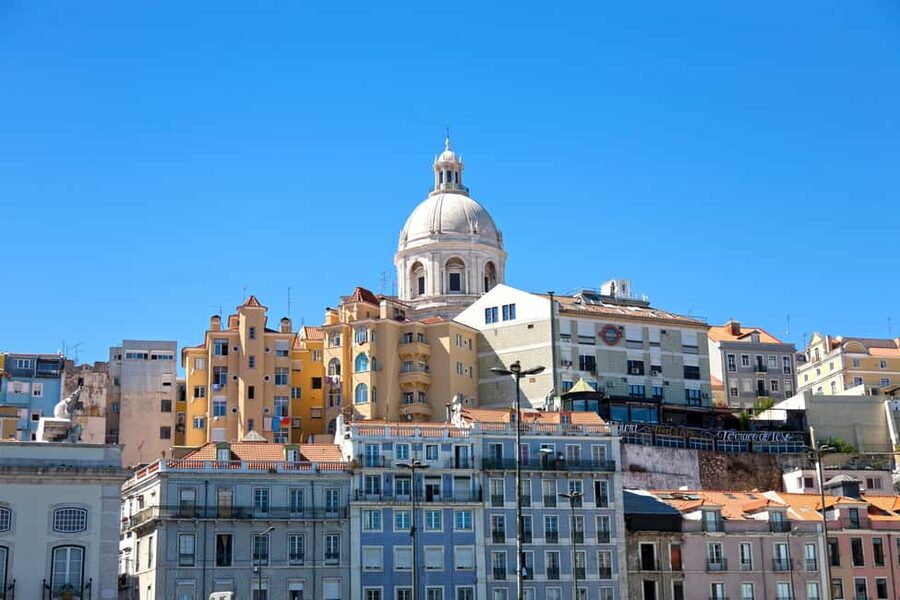
This is the kind of tour where you quickly stop thinking in terms of one neighborhood and start thinking in terms of time. Lisbon isn’t laid out to make Jewish history easy to spot. Instead, you’re shown how the city’s Jewish presence changed shape—sometimes visible, sometimes hidden, often written into stone, street plans, and later memorials.
What makes it work is the structure. You begin with a viewpoint that helps you “read” Lisbon from above. Then you move into Alfama and Baixa, where the geometry of narrow streets and older buildings gives you a real sense of where communities lived and moved. After that, you shift into key symbolic sites—Money Museum, Rossio Square, and the 1506 Jewish Massacre Memorial—before ending with archaeological material at the Carmo Convent.
If you care about Lisbon beyond postcards, this tour gives you a tighter, more human city story. And if you’re Jewish or Sephardic, it’s especially moving because it links medieval life, persecution, and survival into a longer Portuguese narrative rather than treating it as a single event.
Worth a look before you lock anything else in around Lisbon:
- True 4Hour Private Tuk Tuk Tour: Discover Lisbon with a Local!
★ 5.0 · 8,008 reviews - Lisbon: Private Guided Tuk-Tuk Tour with Hotel Pickup
★ 4.9 · 4,552 reviews - Private Lisbon Sightseeing Tuk-Tuk Tour: Alfama, Belém & More
★ 5.0 · 4,277 reviews - Lisbon Highlights: Private Tuk Tuk Tour Adventure Sightseeing
★ 5.0 · 3,284 reviews
Getting oriented at Miradouro da Senhora do Monte
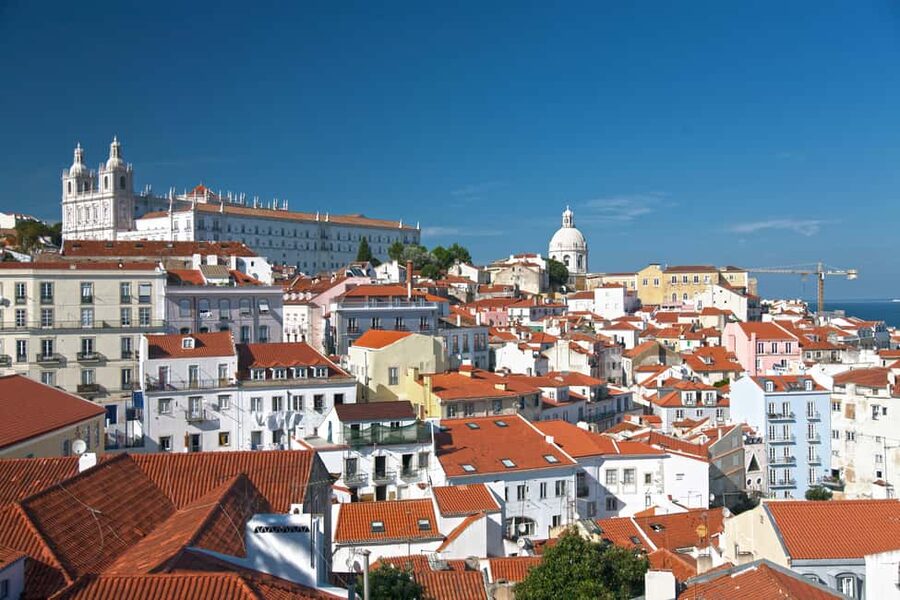
The tour kicks off at Miradouro da Senhora do Monte, one of Lisbon’s higher vantage points. The value here is practical: from up there, you can make sense of why Alfama and Baixa feel like different worlds. You see the old neighborhoods, monuments, and the color-and-terrace look Lisbon does so well.
This first stop isn’t just scenic. It sets the framework for everything that follows. Your guide uses the panorama to explain Lisbon’s evolution and how Jewish quarters fit into that city structure. You’re essentially building a map in your mind before you start walking it.
Practical tip: wear comfortable shoes even though this is a short guided stop. After a viewpoint, you’re usually in transition mode—lots of turning, short walks, and getting in and out of the vehicle.
Alfama: where the Jewish past still echoes in small signs
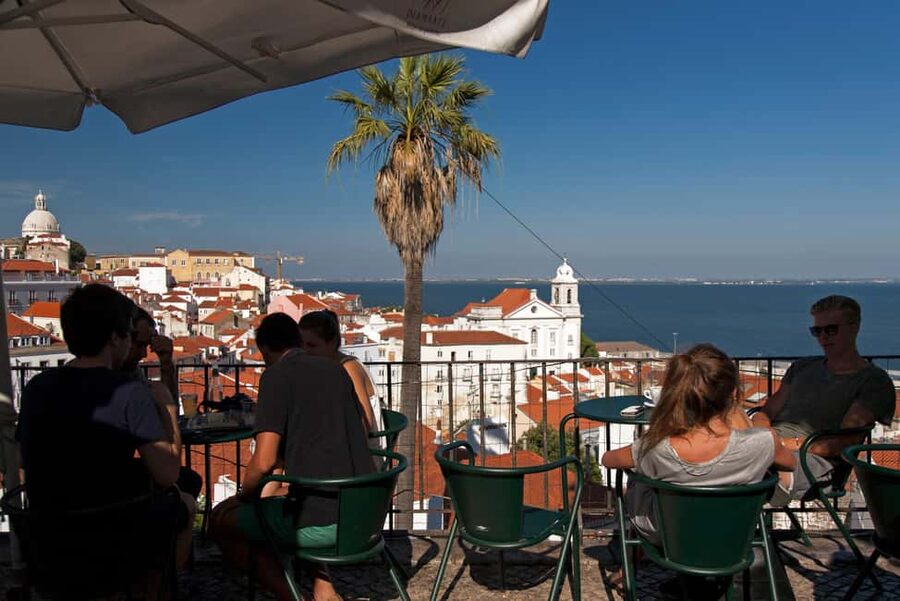
Next comes Alfama, Lisbon’s older heart and the setting for some of the most atmospheric parts of Jewish Lisbon. Alfama is described as the second-oldest district in Europe, and the streets back up that claim with their narrow lanes and aged buildings.
This is where the tour becomes more physical. You’re not just hearing that Jewish communities lived here. You’re walking through the kind of urban fabric that shaped daily life: tight streets, long-established structures, and a neighborhood feel that still holds memory.
You’ll also hear about the “Small Jerusalem” idea—the largest Jewish quarter in Europe before it was devastated by the 1755 earthquake. Even though the earthquake changed everything, the tour focuses on how traces remain visible. That’s important because it changes your expectations. You’re not hunting for one perfect, intact monument. You’re learning how history can survive through location, fragments, and later references.
What I like about this stop: it gives weight to the idea that identity isn’t only about buildings. It’s about streets, routines, neighbors, and a community’s relationship to the wider city.
Baixa and Commerce Square: Lisbon’s big spaces meet the Jewish story
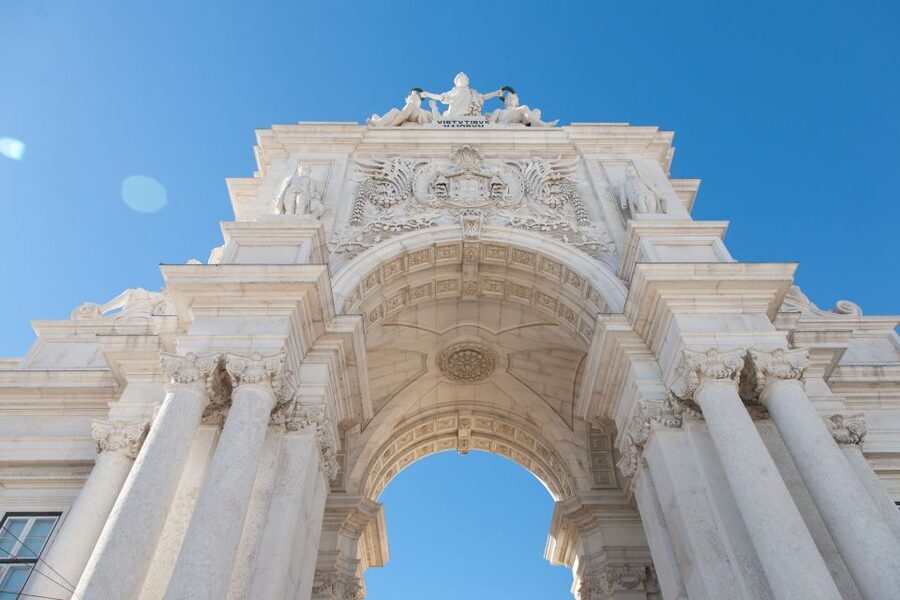
From the older lanes of Alfama, you shift to Baixa and near Commerce Square. These areas help you understand Lisbon’s growth and rebuilding—especially relevant when discussing major historical disruption like the 1755 earthquake.
The tour uses these wider spaces to connect neighborhood history to the city’s broader story. You’re shown how Jewish life related to Lisbon’s commercial and institutional layers, not only its residential quarters. That matters because it keeps the narrative grounded in how people actually lived and worked within the Portuguese Kingdom.
One drawback to keep in mind: in these more central areas, you may not see obvious Jewish markers. That doesn’t mean the story is thin—it means your guide has to translate the city layout for you. If you enjoy interpretation and learning how to “read” a place, you’ll like this segment.
Worth a look before you lock anything else in around Lisbon:
Money Museum and a medieval wall with “a thousand years of secrets”
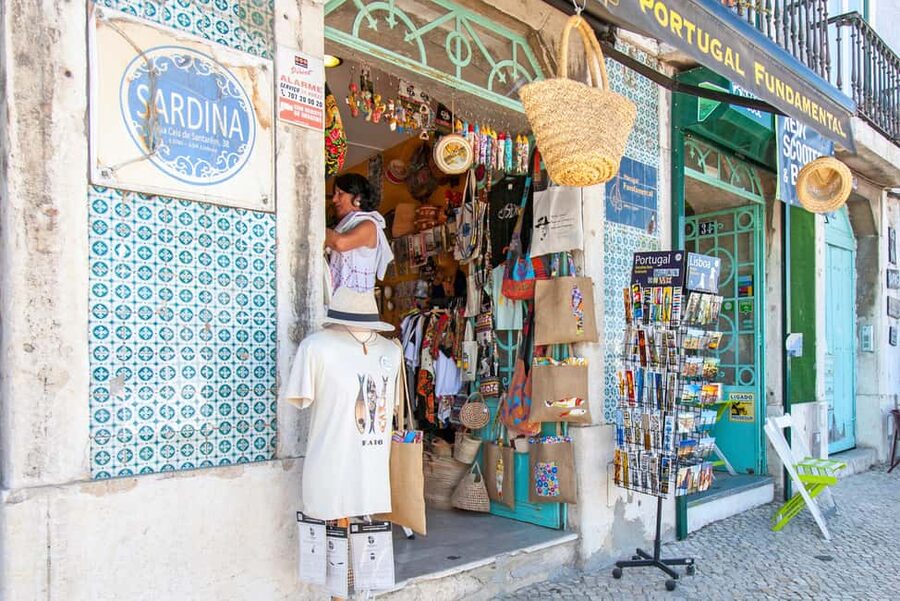
The Money Museum is a standout stop because it changes the lens. Instead of focusing only on community life, it looks at Lisbon through artifacts and architecture tied to financial and civic history.
A key detail here: the museum reveals a medieval wall that holds 1000 years of secrets. That phrasing may sound dramatic, but the underlying point is solid. Structures like walls and defensive or civic infrastructure often outlast the people who built them. By the time you’re looking at these remains, you can see how long Lisbon’s layers have been stacked—one era’s stone becoming the next era’s background.
For Jewish Lisbon, this kind of stop helps you connect the Jewish story to the city’s physical evolution. You start to understand why community history can feel both personal and institutional: the Jewish experience in Lisbon is interwoven with the broader systems of the kingdom.
Rossio Square and the 1506 Jewish Massacre Memorial
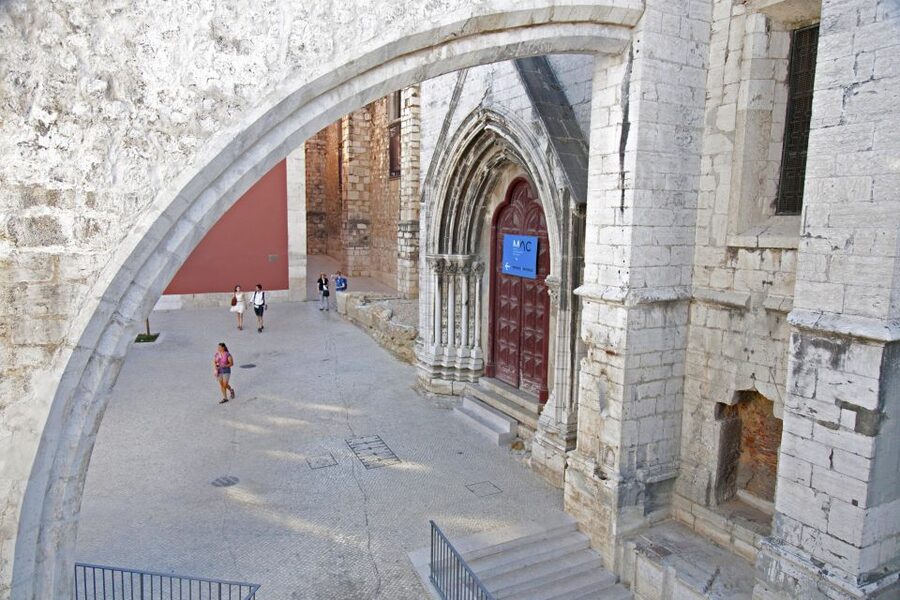
Then you’re at Rossio Square, where the tone turns darker. This is where the Portuguese Inquisition becomes part of the walk-in-the-world story, not just a lesson title. You learn how it operated and the events that led to the Jewish Memorial’s establishment at the site.
The practical value of this stop is emotional clarity. Memorials work best when you understand what they’re responding to. The tour focuses on context so you don’t simply read names on stone without knowing what they represent in real historical terms.
You also get a sense of how Lisbon chooses to remember. The memorial isn’t just for the past. It’s part of how the city publicly frames Jewish persecution and survival.
If you want a tour that doesn’t try to soften the hardest chapters, this is one reason people rank this experience highly.
Chiado: influential families and the Portuguese Kingdom
After Rossio, you move toward Chiado, a district that mixes historical and modern Lisbon. Here, the tour turns to the most influential Jewish families of the Portuguese Kingdom.
This segment is important because it shifts you from tragedy toward complexity. Jewish life in Lisbon wasn’t only about persecution. There were periods where Sephardic Jews contributed to Portuguese intellectual and practical life—mentioned in the tour as involvement with Renaissance-era intellectual pursuits, including mathematicians and cabalists.
Even if you know a bit about Sephardic history, you’ll likely appreciate how the tour ties it to Portugal’s specific social structure rather than keeping it generic.
Tip: this stop is shorter (a visit rather than a long guided wander), so if you want extra time, ask your guide about what the families’ influence looked like in daily life versus court and institutions.
Largo do Carmo and the Carmo Convent: archaeology you can stand beside
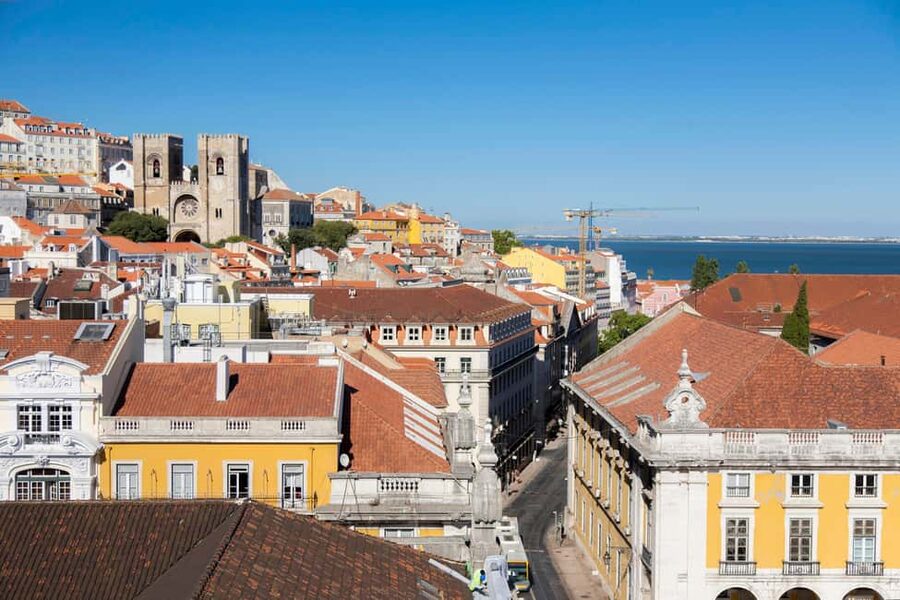
The ending shift is to Largo do Carmo Square and then the Carmo Convent and its museum spaces. The Carmo Convent dates to the 14th–15th centuries, and that age matters because you’re not just looking at commemorative plaques. You’re seeing archaeological finds connected to Jewish presence.
The big idea here is tangible connection. The tour uses the museum’s collections to connect the Jewish past to everyday life and spiritual practice in Lisbon. This is one of the best moments for understanding how culture survives when buildings and communities change—or disappear.
Important timing note: the Carmo Archaeological Museum cannot be visited on Sundays. Also, Money Museum is closed on Mondays and Tuesdays. If you’re planning around a specific day of week, check the dates before you commit so you don’t lose the strongest museum portion of the route.
Crypto Judaism, World War II, and why Lisbon became a sanctuary
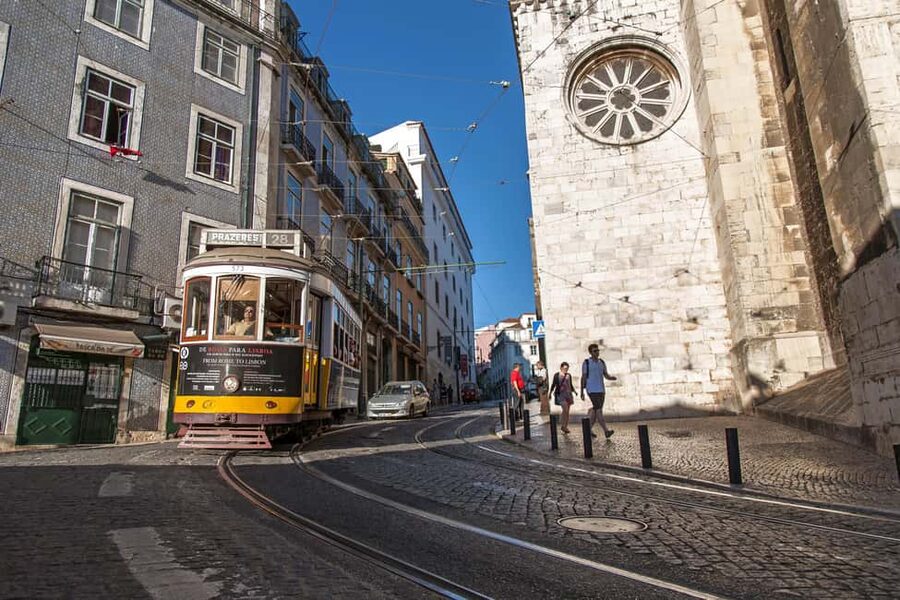
The tour’s story doesn’t end in medieval Lisbon. It moves forward into the long shadow of Crypto Judaism—when Jews practiced faith in secret for centuries—and how this became part of Portuguese identity.
This part of the experience is valuable because it reframes Jewish history in Portugal as an ongoing thread, not a closed chapter. You start seeing how names, practices, and community memory can survive under pressure, then re-emerge later.
The narrative also reaches the 20th century, including Lisbon’s role during World War II as a sanctuary for European Jews seeking refuge from the Holocaust. That pairing—centuries of secrecy followed by wartime refuge—gives the tour a full arc.
Private guide energy: how Daniel, Diogo, and Vasco make it click
The tour is private, and the guide quality shows. Names you may meet include Daniel, Diogo, and Vasco, and the recurring theme is teaching that feels both organized and personal.
With Daniel, the standout notes are how he answers questions patiently, connects Lisbon history to world events, and tells it in a way that makes dates stick. With Diogo, the emphasis comes through as passion and strong historical recall, with adaptations depending on your interests (architecture and language were mentioned as priorities in at least one case). Vasco brings a personable delivery and a driving approach that helps you reach multiple Jewish neighborhood areas even when physical traces are scarce.
Why this matters for you: this isn’t a “point at the sign” tour. Your guide is the translation layer between Lisbon’s limited visible remains and the full story behind them. If you ask questions, you’ll get specifics rather than vague answers.
Practical planning: shoes, pace, and when daylight matters
This is a 4-hour tour that mixes walking and vehicle time. The itinerary is built around neighborhood transitions, plus several guided museum or memorial stops. That means good shoes are not optional—comfortable footwear helps you handle uneven sidewalks and the short stretches between points.
Also note the seasonal daylight detail: from October to March, it starts to get dark from 6pm onwards. If your start time is later in the day, you’ll want to factor that in so you’re not rushing while it’s getting dim.
Group size is kept small (maximum 8 participants), so it stays calm and you can actually hear your guide without fighting crowds. The tour includes water and hotel pickup/drop-off in central Lisbon, which is genuinely useful if you want this to feel like a guided day rather than a logistics puzzle.
Value for $137: what you’re really paying for
At $137 per person for a 4-hour private experience, the price makes sense if you count what’s included. You get:
- private guide/driver service
- hotel pickup and drop-off in central Lisbon
- transportation in an air-conditioned vehicle
- water
- entrance fees
Food and drinks are not included, so you’ll need to plan for a snack or lunch after the tour. But overall, what you’re paying for is time saved and access provided: multiple guided stops, plus museum entries that you’d otherwise have to coordinate yourself.
Is it for everyone? It’s best when you want context and interpretation. If you only want quick photo stops, you may feel the cost is higher than you need. But if you want the story to land—especially the shift from visible traces to memorials and archaeology—private service is where the money goes.
Should you book the Lisbon Jewish History private tour?
I’d book it if you want Lisbon viewed through Jewish Sephardic history, not as a side note. The combination of viewpoint orientation, Alfama’s street setting, Money Museum’s medieval wall connection, Rossio Square’s Inquisition context, and Carmo Convent’s archaeological finds gives you a complete experience in one morning/afternoon.
You might skip it (or consider another format) if you’re expecting lots of intact synagogues or clearly marked Jewish landmarks at every stop. This tour works because it teaches you to read small signs, fragments, and locations. If that style of learning fits you, you’ll leave with a much clearer mental map of Lisbon—and a story that doesn’t flatten the hard parts.
FAQ
How long is the Lisbon Jewish History Private Tour?
The tour lasts 4 hours.
Is this a private tour?
Yes. It’s a private group, with a maximum of 8 participants per tour.
Is hotel pickup included?
Yes. Pickup and drop-off are included for hotels in central Lisbon.
Are entrance fees included?
Yes. Entrance fees are included in the tour price.
Are there days when certain museums can’t be visited?
Yes. The Carmo Archaeological Museum cannot be visited on Sundays, and the Money Museum is closed on Mondays and Tuesdays.
Is this tour wheelchair accessible?
No. It is not suitable for wheelchair users.
More Private in Lisbon
- True 4Hour Private Tuk Tuk Tour: Discover Lisbon with a Local!★ 5.0 · 8,008 reviews
- Lisbon: Private Guided Tuk-Tuk Tour with Hotel Pickup★ 4.9 · 4,552 reviews
- Private Lisbon Sightseeing Tuk-Tuk Tour: Alfama, Belém & More★ 5.0 · 4,277 reviews
- Lisbon Highlights: Private Tuk Tuk Tour Adventure Sightseeing★ 5.0 · 3,284 reviews
- Welcome Lisbon Tour with Local Guide in Private Eco Tuk Tuk★ 5.0 · 1,691 reviews
More Tours in Lisbon
- Lisbon City Center Tour – The Unmissable Lisbon★ 5.0 · 22,234 reviews
- Lisbon: History, Stories and Lifestyle Walking Tour★ 4.8 · 10,902 reviews
- True 4Hour Private Tuk Tuk Tour: Discover Lisbon with a Local!★ 5.0 · 8,008 reviews
- Winner 2025 Undiscovered Lisbon Food & Wine Tour by Eating Europe★ 5.0 · 6,390 reviews
- Lisbon: Sintra, Pena, Cabo da Roca, Cascais Tour with Pickup★ 4.8 · 5,445 reviews
More Tour Reviews in Lisbon
- Lisbon City Center Tour – The Unmissable Lisbon★ 5.0 · 22,234 reviews
- Lisbon: Sintra, Pena, Regaleira, Cabo da Roca & Cascais★ 4.7 · 19,656 reviews
- Lisbon Card: 24, 48, or 72-Hour Pass★ 4.5 · 17,944 reviews
- Lisbon: Jerónimos Monastery Entrance Ticket★ 4.1 · 14,164 reviews
- Lisbon: History, Stories and Lifestyle Walking Tour★ 4.8 · 10,902 reviews
Just in: fresh Lisbon reviews from the team





Historical Tours, compared.
 ★ 4.8History, Stories and Lifestyle Walking TourFrom $2910,902 reviews
 ★ 5.0Daytime or Sunset Boat Cruise with History and WineFrom $471,053 reviews
 ★ 5.0Explore Lisbon by Tuk Tuk: History and ViewpointsFrom $19840 reviews
 ★ 5.0Private Tuk Tuk Tour Through Lisbon’s Historical StreetsFrom $27734 reviews
 ★ 5.0Lisbon Sunset Sailing with Portuguese Wine and HistoryFrom $54668 reviews
 ★ 4.8Live Fado Show in Historic Alfama with Port WineFrom $17572 reviews
 ★ 4.8Guided Tuk-Tuk Tour Along the Historic Tram Line 28From $147475 reviews
 ★ 5.0Private Lisbon-Arrábida Wine Tour: 3 Wineries, Coast & HeritageFrom $156450 reviews
Browse the lists this tour appears in