
Reviewed · HISTORICAL TOURS
Jewish Sephardic history in Lisbon
Lisbon doesn’t keep its Jewish past on a plaque.
That’s exactly why this tour works so well: you follow the story through Shaare Tikva Synagogue and then connect Jewish life to the streets where it once lived and where it was violently erased. I love that the synagogue visit is inside (not just a photo stop), and I love how the guide uses real Lisbon locations—squares, churches, and old booksellers—to explain what happened when Jews and New Christians were pushed, protected, and persecuted. One thing to keep in mind: you do a lot of walking on uneven streets, so you’ll want moderate fitness and good shoes.
The price also feels fair for what you get. Entrance costs for key stops are included, and line-skipping helps you spend time learning instead of waiting. Just note that the synagogue interior is only visitable Tuesdays and Thursdays, and the tour includes a specific dress code.
In This Review
- Key points to know before you go
- Why Sephardic Lisbon feels like following clues
- Shaare Tikva Synagogue: the visit that sets the whole tone
- Principe Real to Chiado: neighborhoods become a timeline
- Bertrand Bookstore in Chiado: an old shop with a Jewish thread
- Terreiro do Paço: the biggest square where Portugal’s story turns
- Rossio Square and the Soldier King column: Inquisition-era change made visible
- Igreja de São Domingos and Lisbon’s 1506 massacre
- Pace, group size, and what to expect during the 4-hour walk
- Price and value: $84.10 is mostly about saved time and included entrances
- Who should book this Sephardic Lisbon tour (and who might prefer a different style)
- Should you book this Jewish Sephardic history tour?
- FAQ
- What is the duration of the Lisbon Jewish Sephardic history tour?
- Is this tour offered in English?
- How many people are in the group?
- Can I visit Shaare Tikva Synagogue inside?
- Are entrance fees included?
- Do I need to bring my passport details?
- Is lunch included?
- What is the dress code?
- Where does the tour start and where does it end?
- Is there free cancellation?
Key points to know before you go
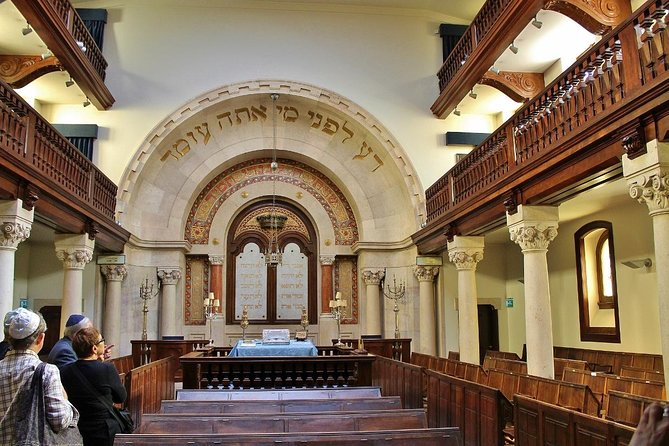
- Inside Shaare Tikva Synagogue: tickets are included, and the guide helps you make sense of what you’re seeing.
- A tight group (max 8): you get more back-and-forth questions instead of a cattle-herd stroll.
- Sephardic story through Lisbon streets: neighborhoods become a timeline, not random sightseeing.
- Multiple history layers: you’ll connect Jewish life, then the Inquisition-era changes, then 1506 violence.
- A real pace: expect a longer walk than a casual stroll, with steps and narrow streets.
- Passport + dress code: you’ll be asked for passport details for security and to dress modestly for the synagogue.
Why Sephardic Lisbon feels like following clues
When people think of Lisbon history, they often picture the famous monuments and viewpoints. But Jewish Sephardic history in Portugal doesn’t survive the way some other heritage sites do. Much of what once existed was destroyed by earthquake, fire, and centuries of forced religious change. So the value here isn’t in seeing a perfectly preserved medieval Jewish quarter. The value is in learning how to read the city anyway.
This tour turns “where are we?” into “here’s what mattered.” The guide links the long arc: Jews move through places after major historical events, communities form, disappear, reappear, and then face pressure that changes daily life. If you like history that feels grounded in real streets—stairs, corners, and squares—this is a strong match.
Worth a look before you lock anything else in around Lisbon:
- Lisbon: History, Stories and Lifestyle Walking Tour
★ 4.8 · 10,902 reviews - Lisbon: Daytime or Sunset Boat Cruise with History and Wine
★ 5.0 · 1,053 reviews - Explore Lisbon by Tuk Tuk: History and Viewpoints
★ 5.0 · 840 reviews - Private Tuk Tuk Tour Through Lisbon’s Historical Streets
★ 5.0 · 734 reviews
Shaare Tikva Synagogue: the visit that sets the whole tone
The tour starts at Sinagoga Shaare Tikva at R. Alexandre Herculano 59. This synagogue matters because it’s the first synagogue built in Portugal since the late 15th century. That alone sets expectations: you’re not just looking at architecture. You’re walking into a living marker of continuity after long disruption.
You’ll go inside for about 45 minutes, and entrance is included. You also benefit from skip-the-line arrangements, which is a practical win in Lisbon where schedules can change fast. The guide (and staff at the synagogue) will explain what you’re seeing, including how the community developed over time.
Two practical notes that really matter:
- The inside synagogue visit is only possible on Tuesdays and Thursdays. If you book on another day, you likely won’t get this same interior experience.
- There’s a dress code: no uncovered shoulders and no shorts or mini-skirts. If you show up dressed casually for Lisbon summer heat, you could get turned away at the door. Bring a light layer.
Principe Real to Chiado: neighborhoods become a timeline
After Shaare Tikva, you walk down through Principe Real Park and toward Chiado. This is one of those stretches where the route matters almost as much as the content. Instead of switching your brain every few minutes, you keep hearing the same themes—belonging, displacement, and how communities shape city life.
This segment is about 30 minutes and is mostly a transition, but it’s not a dead gap. You’re moving from the synagogue area into the older urban fabric where story details land better once your guide starts pointing out cultural connections.
This is also where good shoes pay off. Lisbon streets around here can be narrow with steps and slight slopes. If you’re traveling with knee issues or you hate uneven ground, this is the part where you’ll feel it.
Bertrand Bookstore in Chiado: an old shop with a Jewish thread
You then reach Chiado and one of Lisbon’s famous old institutions: the Bertrand bookstore. It’s credited as the oldest bookstore in the world since 1732, founded by Pedro Faure. The tour gives context around a famous Jewish writer tied to Lisbon, plus how ideas, publishing, and public life connected to Jewish communities and their influence.
Stop 3 also includes admission, so plan to spend real time inside rather than treating it like a quick photo break. Expect about 30 minutes here.
One small caution: a bookstore stop can go two ways—either you actually learn something, or you get a “look around” moment. Based on the way guides are praised for connecting the dots, you should get more than just browsing time. Still, if you’re the type who hates standing still in shops, you may want to treat this as a focused stop, not a free-time visit.
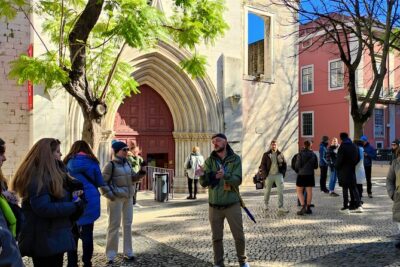



Terreiro do Paço: the biggest square where Portugal’s story turns
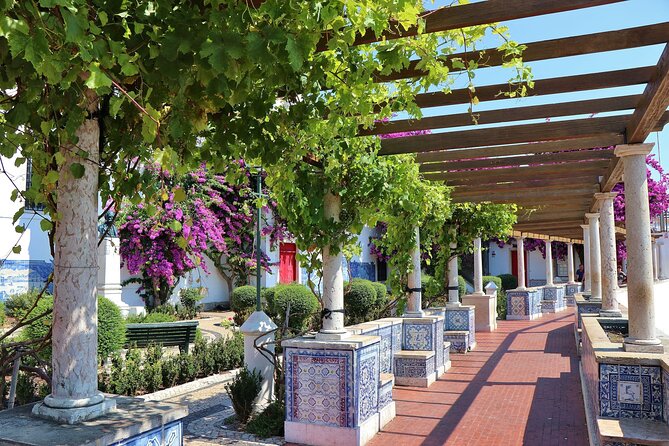
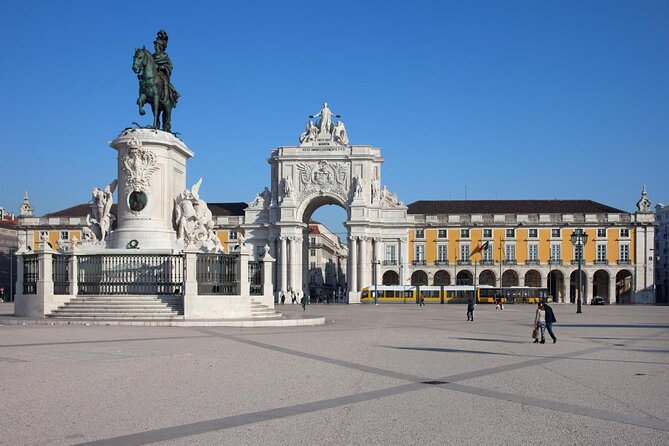
From Chiado you head to Praca do Comercio in Baixa, also known as Terreiro do Paco—the biggest square in Portugal. This is a major shift: you’re moving from tighter neighborhood streets to open space, and your guide uses that contrast well.
This stop is about 30 minutes, and it’s admission-free. It also tends to focus on major turning points in Portugal’s history. The Jewish Sephardic story doesn’t exist in isolation; it sits inside bigger national events that changed who had power, who had safety, and who was targeted.
Even if you’re not a square-and-statues person, Terreiro do Paço helps you understand the scale of Lisbon’s public life. Think of it as the city’s stage. Then your guide brings you back to how real people lived behind the scenes.
Rossio Square and the Soldier King column: Inquisition-era change made visible
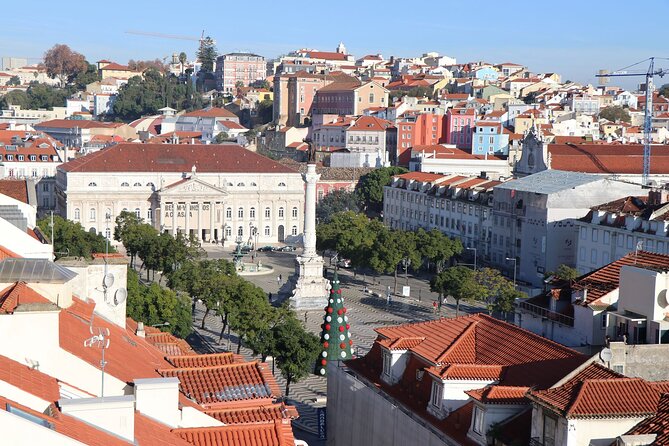
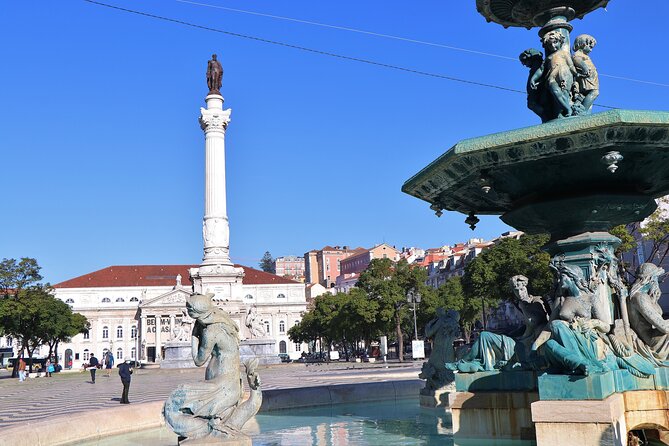
Next you walk to the center of Rossio Square, where you’ll see the Column of Pedro IV, nicknamed the Soldier King. At its base are four female figures representing qualities: Justice, Wisdom, Strength, and Moderation.
This stop is about 1 hour, and it’s free. It can feel long if you’re expecting only Jewish-specific stops, but it’s historically useful because it helps show how Lisbon’s power structures evolved. Nearby, you’ll also hear about the D. Maria II National Theatre, founded in 1842, replacing the Estaus Palace, which had served as headquarters for the Portuguese Inquisition since the mid-15th century.
That pairing—monument + theatre + Inquisition-era building footprint—helps you grasp how symbols shift over time. You’re not just learning dates. You’re learning how the city reuses space and stories.
Igreja de São Domingos and Lisbon’s 1506 massacre
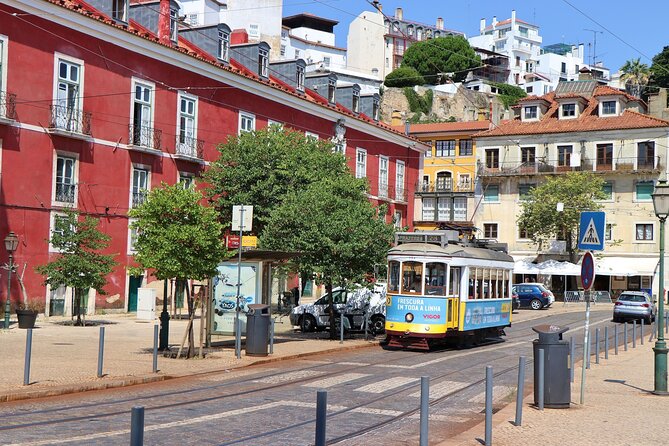
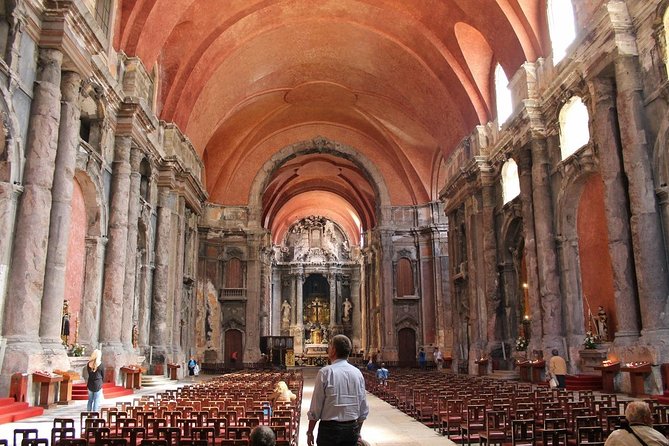
The final stop brings you to Igreja de S Domingos. Your guide connects what happened on April 19, 1506, the day of the Lisbon Massacre. The tour explains that more than 3,000 New Christians were murdered in the streets, and that the royal army intervened to stop the killings. The epicenter described is the Sao Domingo Church.
This is about 30 minutes and free, but it’s emotionally heavy. It’s also the part where the Sephardic story lands hardest. You’ll see how quickly religious tension turned into public violence, and why Lisbon’s surviving Jewish story can feel fragmented.
If you’re sensitive to difficult history, go in knowing this is not a light walking tour. But if you want context for the marks left on Lisbon streets, it’s one of the most important segments.
Pace, group size, and what to expect during the 4-hour walk
This is a 4-hour small-group walk, with a maximum group size of 8 travelers. That cap is more than marketing. It usually means your guide can adjust pace, pause for questions, and keep the story coherent instead of reading bullet points at speed.
In practice, you should prepare for walking more than you might expect from a half-day tour. One guide-led walk was described as covering roughly 4 miles, plus narrow streets and steps. If you’re not used to uphill-with-stairs city walking, plan to take breaks when your guide offers them.
Also, timing can be affected by the synagogue’s schedule since the inside visit is limited to certain days. If the group starts later or you’re visiting near sunset, the tour can feel tighter. You still get the points covered, but your comfort level matters.
Price and value: $84.10 is mostly about saved time and included entrances
At $84.10 per person for about 4 hours, this can be good value in Lisbon—if you care about the story enough to justify paid entry and guided interpretation. Here’s why the math tends to work:
- The synagogue interior requires tickets, and those are included.
- The tour includes admission for other stops (like Bertrand) where relevant.
- You get guaranteed skip-the-ticket-line for the places where it matters, which can save more than just minutes when you’re on a schedule.
- Group size stays small, which usually improves the quality of explanations.
Lunch is not included, though many people end up finding an authentic Portuguese meal afterward. If you want to stay flexible, you can ask your guide what’s nearby and simple to book on the same afternoon.
Who should book this Sephardic Lisbon tour (and who might prefer a different style)
I’d send you on this if:
- You want a guided way to understand Jewish Sephardic history in a city where many physical sites are missing or altered.
- You enjoy story-driven walking with historical context, not just sightseeing.
- You like small-group tours where you can ask questions.
I’d suggest a different option if:
- You’re looking for a high density of preserved Jewish monuments. Lisbon’s Jewish past is harder to see on the street, so this tour is more about interpretation than intact ruins.
- You dislike walking on uneven ground or you struggle with stairs.
Also, check the day you’re traveling. If your dates aren’t Tuesday or Thursday, you might not get the synagogue interior experience described as the highlight.
Should you book this Jewish Sephardic history tour?
If you’re the type who likes to understand a city through how people lived—not just what’s still standing—then yes, book it. The Shaare Tikva inside visit plus the story-led route through Principe Real, Chiado, Baixa, Rossio, and São Domingos makes this feel like a coherent narrative, not a list of stops.
For best results, come with:
- Comfortable walking shoes
- A layer for your shoulders (dress code is real)
- Real interest in how history changes buildings, symbols, and public life
If you want a straightforward history lecture with minimal walking, this may feel like too much street time. But if you want Lisbon to make sense, the route and the guide’s connections are the payoff.
FAQ
What is the duration of the Lisbon Jewish Sephardic history tour?
It lasts about 4 hours.
Is this tour offered in English?
Yes, it is offered in English.
How many people are in the group?
The tour has a maximum of 8 travelers.
Can I visit Shaare Tikva Synagogue inside?
Yes, but only on Tuesdays and Thursdays.
Are entrance fees included?
Yes. The synagogue ticket is included, and other admissions mentioned in the route are included as well. The tour also includes skip ticket lines.
Do I need to bring my passport details?
Yes. The booking requires passport details (name, number, expiry, and country) for security reasons.
Is lunch included?
No. Lunch and any other items not mentioned are not included.
What is the dress code?
You need to dress modestly: no uncovered shoulders, no shorts, and no mini-skirt.
Where does the tour start and where does it end?
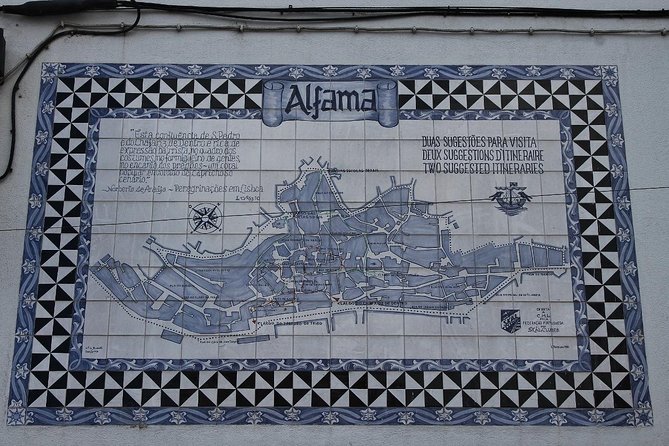
It starts at Shaare Tikvah Synagogue (R. Alexandre Herculano 59, 1250-010 Lisboa). The end point is in Lisbon’s Old Town and may not be Alfama, depending on the group and conditions.
Is there free cancellation?
Yes. You can cancel for a full refund up to 24 hours before the experience starts. If you cancel less than 24 hours before, the amount paid is not refunded.
More Historical Tours in Lisbon
- Lisbon: History, Stories and Lifestyle Walking Tour★ 4.8 · 10,902 reviews
- Lisbon: Daytime or Sunset Boat Cruise with History and Wine★ 5.0 · 1,053 reviews
- Explore Lisbon by Tuk Tuk: History and Viewpoints★ 5.0 · 840 reviews
- Private Tuk Tuk Tour Through Lisbon’s Historical Streets★ 5.0 · 734 reviews
- Lisbon Sunset Sailing with Portuguese Wine and History★ 5.0 · 668 reviews
More Tour Reviews in Lisbon
- Lisbon City Center Tour – The Unmissable Lisbon★ 5.0 · 22,234 reviews
- Lisbon: Sintra, Pena, Regaleira, Cabo da Roca & Cascais★ 4.7 · 19,656 reviews
- Lisbon Card: 24, 48, or 72-Hour Pass★ 4.5 · 17,944 reviews
- Lisbon: Jerónimos Monastery Entrance Ticket★ 4.1 · 14,164 reviews
- Lisbon: History, Stories and Lifestyle Walking Tour★ 4.8 · 10,902 reviews
Just in: fresh Lisbon reviews from the team





Historical Tours, compared.
 ★ 4.8History, Stories and Lifestyle Walking TourFrom $2910,902 reviews
 ★ 5.0Daytime or Sunset Boat Cruise with History and WineFrom $471,053 reviews
 ★ 5.0Explore Lisbon by Tuk Tuk: History and ViewpointsFrom $19840 reviews
 ★ 5.0Private Tuk Tuk Tour Through Lisbon’s Historical StreetsFrom $27734 reviews
 ★ 5.0Lisbon Sunset Sailing with Portuguese Wine and HistoryFrom $54668 reviews
 ★ 4.8Live Fado Show in Historic Alfama with Port WineFrom $17572 reviews
 ★ 4.8Guided Tuk-Tuk Tour Along the Historic Tram Line 28From $147475 reviews
 ★ 5.0Private Lisbon-Arrábida Wine Tour: 3 Wineries, Coast & HeritageFrom $156450 reviews
Browse the lists this tour appears in