
Reviewed · BELÉM TOURS
Half Day Private Tuk Tuk Tour in Lisbon and Belém
Tuk-tuks and tile views in Lisbon, in four hours. This private tour strings together hilltop viewpoints, big-name churches, and Belém’s famous monuments with pickup and a guide who keeps the route logical instead of random. I love the feel of a true private group (up to 6), and I also like how the itinerary stops for standout scenes like Miradouro das Portas do Sol without turning the day into a long slog.
I also like that many of the listed sights are marked as free admission, which helps you budget with less guesswork. One consideration: the route is packed, so several stops are short, and a few major sights list admission as not included—like the National Pantheon, the Santa Justa lift, Belém Tower, and the Monument to the Discoveries.
In This Review
- Key things that make this tuk tuk tour worth your time
- Private tuk tuk, tight route, smart pacing
- Starting at St. Anthony and Lisbon Cathedral
- Quick practical tip
- Portas do Sol: tiles and a view that does the work
- São Vicente de Fora and the shortcut to art inside churches
- Feira da Ladra: Lisbon’s swap-and-sell personality
- National Pantheon: big figure tombs, ticketed
- Senhora do Monte: save your breath for the best views
- Mouraria (Moorish Quarter): fado’s home base
- Martim Moniz and Praça da Figueira: squares that keep Lisbon moving
- Rossio to Santa Justa: the lift with views
- Terreiro do Paço (Praca do Comercio): Lisbon at full scale
- Chiado and Bairro Alto: a hillside stroll with two vibes
- Church of São Roque: early Jesuit roots, earthquake-era survival
- São Pedro de Alcântara: terraced gardens and river/castle sightlines
- Príncipe Real: a garden pause and an organic market on Saturdays
- São Bento Palace area and Basilica da Estrela
- Heading toward Belém: where Lisbon’s story reaches the water
- Pastéis de Belém: the one food stop you can’t fake
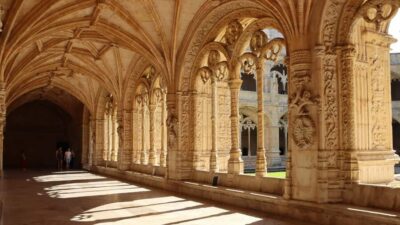
- Jerónimos Monastery: Portugal’s monument mood
- Belém Tower: medieval keep meets artillery logic
- Monument to the Discoveries: viewing balcony and exhibitions if you want more
- What you’ll take away after 4 hours in Lisbon and Belém
- So, should you book this private tuk tuk tour?
- FAQ
- How long is the Half Day Private Tuk Tuk Tour?
- How many people are in a private group?
- Is pickup included?
- Do I need a ticket in advance?
- Are entrance fees included for all stops?
- Does the tour cover both Lisbon and Belém?
- What are the operating hours?
- Is there free cancellation?
- Are service animals allowed?
Key things that make this tuk tuk tour worth your time
- Private, up to 6 people: you move as one small group and can ask questions as you go
- Miradouro time is real: Portas do Sol, Senhora do Monte, and São Pedro de Alcântara get their moments
- Mouraria and fado context: you’ll pass through the heart of fado, tied to Severa
- Belém highlights in one half-day: Jerónimos Monastery, Belém Tower, and the Monument to the Discoveries
- Pastéis de Belém included in the flow: the sweet stop happens on the way, not as an afterthought
- Most entries are free: many stops list admission as free, which keeps value strong
Private tuk tuk, tight route, smart pacing

This is the kind of Lisbon tour you book when you want a lot of variety in one half-day, without feeling like you’re spending half your time getting from place to place. You ride in a small private tuk tuk group (up to 6), and you get pickup offered, which helps a lot in Lisbon where hills and winding streets can slow you down.
The big tradeoff is time. Lisbon’s favorites and Belém’s top monuments can’t be enjoyed like a slow museum day when you’ve only got about 4 hours. Still, the stopping plan is well suited to travelers who want great photos, quick context at each stop, and a taste of different neighborhoods.
More mornings among the monuments of Belém
- Lisbon: Jerónimos Monastery Entrance Ticket
★ 4.1 · 14,164 reviews - Private Lisbon Sightseeing Tuk-Tuk Tour: Alfama, Belém & More
★ 5.0 · 4,277 reviews - Age of Discoveries Walking Tour in Belém
★ 5.0 · 1,513 reviews - Lisbon: Bike Tour from Lisbon to Belém + Liquor & Pastry
★ 4.7 · 688 reviews
Starting at St. Anthony and Lisbon Cathedral
You kick off at the Church of St. Anthony, placed next to the house where St. Anthony was born. Even if you’re not a deep religious-history person, it gives you an easy “why is this important” start that sets the tone for the day.
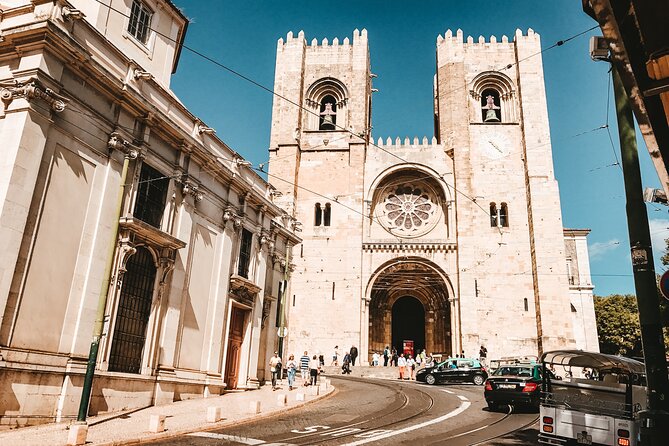
Next is Lisbon Cathedral, one of the city’s most iconic churches. You get a chance to focus on the chapels and cloister, and on the fact that this place reflects different eras and styles built over time. The best value here is how quickly a major landmark helps you understand the city’s layered feel.
Quick practical tip
Keep your phone ready. Cathedrals and cloisters reward you with close details, and you often only get a short window at each stop.
Portas do Sol: tiles and a view that does the work
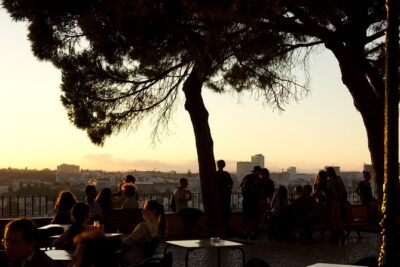
Miradouro Das Portas Do Sol is one of those viewpoints where the scene is the souvenir. It’s popular not only for the look at the city and river, but for its decorative tiles, which make the spot feel like an open-air gallery.
This stop is about orientation. Lisbon’s viewpoints can make you feel like you finally get the geography—where the city drops toward the Tagus and where the neighborhoods begin to stack up behind one another.
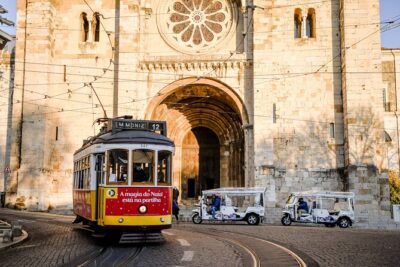
The hills done the easy way, more tuk-tuk runs


São Vicente de Fora and the shortcut to art inside churches
At Igreja de São Vicente de Fora, you’re in for a quick stop that’s still meaningful. This church is described as must-see during a Lisbon stay, and the focus is less on big exterior spectacle and more on the art inside.
If you like stepping away from the “photo-only” vibe, this is a good choice. You get a short time window, but churches like this often reward attention to altars, chapels, and internal artwork.
Feira da Ladra: Lisbon’s swap-and-sell personality
Feira da Ladra is Lisbon market energy in a single block of time. It’s described as a place to discover original, kitsch, or vintage finds—utilities, clothes, books, collectibles, antiques, and plenty of new and used stuff.
Two details make this stop feel uniquely Lisbon. First, it’s not framed as a curated craft market; it’s more chaotic and personal, which tends to generate better human moments. Second, it runs on Tuesday and Saturday, so it’s worth timing your day to match if you’re hoping to catch the full market buzz.
National Pantheon: big figure tombs, ticketed

Panteão Nacional (Santa Engrácia) is where the tour acknowledges a more “serious monument” stop. It’s a grand Baroque building housing tombs of Portugal’s distinguished figures, and the vibe here tends to feel monumental even if you only have a short visit.
Admission for this stop is listed as not included, so plan for that if you want to go inside. If you’re the kind of traveler who likes to spend money only where it matters most, this is a good one to decide on based on your interests.
Senhora do Monte: save your breath for the best views
Miradouro Da Senhora Do Monte is the viewpoint stop where you’re meant to slow down and take it in. The day’s earlier viewpoints set you up, but this one is highlighted as one of the best views of Lisbon.
You’re likely to enjoy this most if you like panoramic framing—seeing castle areas, downtown streets, and the way the city spreads. This is also a good moment to ask your guide what you’re looking at, since viewpoints are easier when you can identify landmarks.
Mouraria (Moorish Quarter): fado’s home base
Then comes Mouraria, Lisbon’s traditional neighborhood tied directly to fado. The key detail here is that Severa—the first known fado singer—lived and performed there.
This stop is short, but it helps you connect music to a place, not just a style. Lisbon often gets explained through buildings; this gives you a cultural anchor that makes the streets feel lived-in.
Martim Moniz and Praça da Figueira: squares that keep Lisbon moving
Praca Martim Moniz honors the nobleman connected to the 1147 conquest of the castle by D. Afonso Henriques. It’s a quick historical marker, but it gives you a sense of how Lisbon remembers power and turning points.
Then you roll into Baixa Pombalina for Praça da Figueira and Rossio Square. Praça da Figueira is one of the key center squares, and Rossio (Praça de D. Pedro IV) is one of Lisbon’s oldest and liveliest squares. These stops are ideal for perspective: you start to see how Lisbon works at street level, not just from above.
Rossio to Santa Justa: the lift with views
Elevador de Santa Justa is an iconic lift, and the top view is part of why it’s famous. But here’s the practical point: admission is listed as not included.
This is also a “choose-your-own-adventure” moment in your day. If you’re already seeing viewpoints repeatedly, you might decide whether the lift experience is worth extra entry time. If you love vertical Lisbon angles, it’s likely a highlight.
Terreiro do Paço (Praca do Comercio): Lisbon at full scale
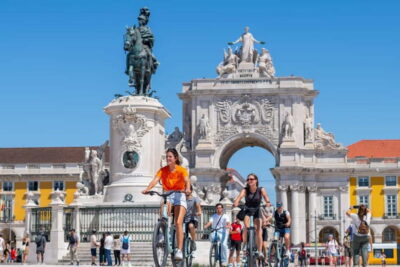
Praca do Comercio (Terreiro do Paco) is described as the most famous square in the country and a place with noble grandeur. It’s also framed as requiring a longer stop, which makes sense because the space is huge and you need a minute to let it register.
There’s also a built-in context boost: locals connect the name Terreiro do Paço to the Paço da Ribeira area until the 1755 earthquake. Even without a deep lecture, that little fact makes the square feel like more than a photo spot.
Chiado and Bairro Alto: a hillside stroll with two vibes
From Terreiro do Paço, the tour keeps moving through Chiado and Bairro Alto. Chiado is known as a best-known area next door to Bairro Alto, and the hilltop setting explains the ups and downs in the streets.
Bairro Alto gets a nightlife reputation, but the plan also points out that there are interesting attractions to discover during the day. This pair of stops works well because it shows you Lisbon’s contrast: elegant streets and then the neighborhood that turns lively after dark.
Church of São Roque: early Jesuit roots, earthquake-era survival
Igreja de São Roque is the earliest Jesuit church in the Portuguese world, and it’s tied to the Society’s home church in Portugal for over 200 years—before the Jesuits were expelled. After the 1755 earthquake, it’s described as being given to the Lisbon Holy House of Mercy.
This is a stop where the details matter, because the story explains why the church became part of a different heritage pathway. It’s also a good reminder that Lisbon’s landmarks often have “what happened next” chapters.
São Pedro de Alcântara: terraced gardens and river/castle sightlines
Miradouro Sao Pedro de Alcântara is easy to reach from the Baixa metro stop and the Glória Funicular, and the viewpoint is described as one of the most visited. It’s popular for the terraced gardens, statues, and fountain, plus the long views that include São Jorge Castle and the Tagus.
This is where the tour can feel especially fun if you like sitting or strolling at lookout-level instead of just snapping a quick picture. The plan notes seasonal outdoor markets and art vendors too, so depending on timing you might catch a more lively scene here.
Príncipe Real: a garden pause and an organic market on Saturdays
Praca do Principe Real points you toward the Príncipe Real Garden area. The key detail is the weekly organic market held on Saturdays, plus the fact that other events can happen there.
Even if you don’t plan to shop, this is a nice change of pace from nonstop sightseeing. Gardens add a reset button, especially in a half-day schedule.
São Bento Palace area and Basilica da Estrela
The route also includes the São Bento Palace area, which houses Portugal’s parliament. It began as a Benedictine monastery, giving the building an extra layer beyond politics.
Then you reach Basilica da Estrela, described as one of Lisbon’s most impressive churches, with time to admire the architecture and the area around it. This pairing helps you move from civic symbolism into a more strictly architectural stop, which keeps the pacing from getting too “samey.”
Heading toward Belém: where Lisbon’s story reaches the water
As you transition toward Belém, the tour brings you into the Lisbon story’s maritime chapter. Belém is tied to Portugal’s explorers, riverside power, and the kind of monument building that makes a town feel national.
One stop in this stretch is Belém Palace, described as the current official residence of the president of the Portuguese Republic. Even if you don’t tour interiors, having it on the route helps connect the district to modern governance.
Pastéis de Belém: the one food stop you can’t fake
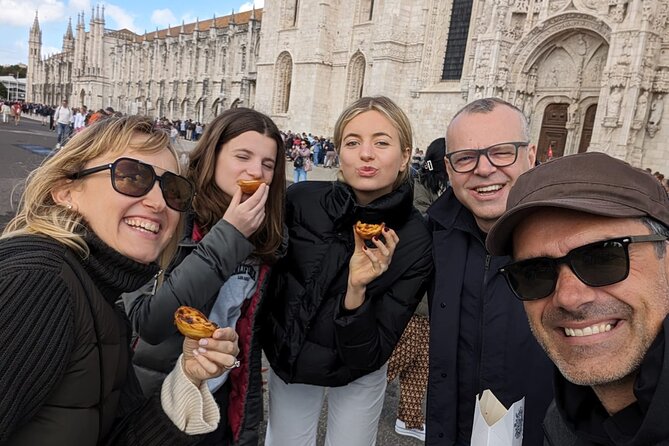
Pastéis de Belém is where you get one of Portugal’s calling cards: pastel de nata (pastéis de Belém). The plan frames it as a great gastronomic attraction, and the logic is simple—this is the kind of food stop that turns a sightseeing morning into a memory.
Admission is listed as free for this stop, but it’s still something you’ll likely want to pay for on the spot. If you care about getting the timing right, this is a good moment to eat earlier rather than later, so you don’t end up chasing pastry while tired.
Jerónimos Monastery: Portugal’s monument mood
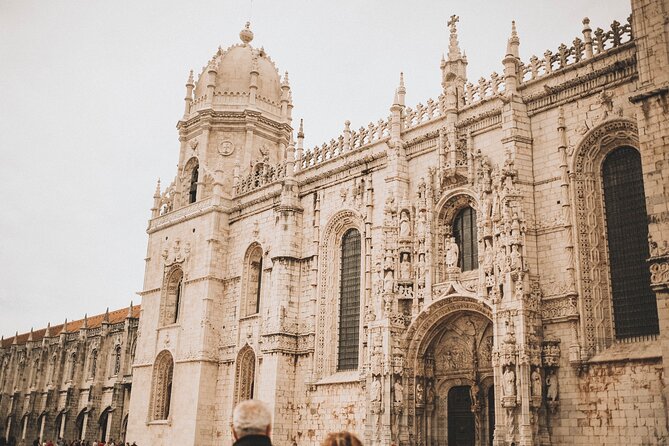
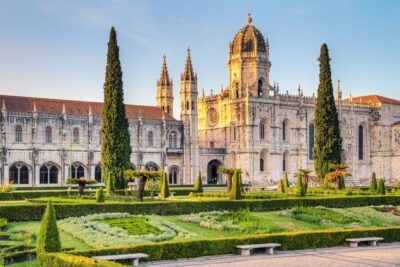
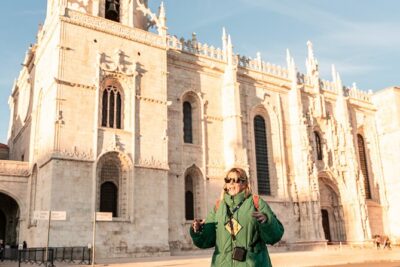
Most Belém tours have one “main church” stop, and here it’s the Mosteiro dos Jerónimos. The description explains that Manuel I established the monastery near the Tagus, connected to Henry and devotion to Our Lady and St. Jerome.
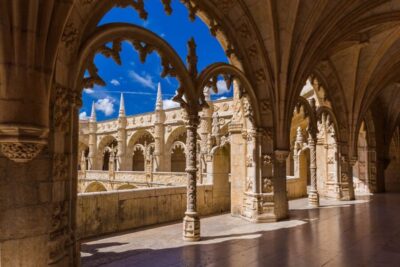
The tour highlights why this place matters: it’s a cultural reference point that attracted artists and chroniclers across centuries, it became a burial place for kings and later poets, and today it’s admired as part of Portuguese identity. Even with a short time window, Jerónimos tends to land because the architecture is meant to be experienced slowly, and your guide can point you toward the most important details.
Admission is marked as free for this stop, which boosts the value if you’re choosing where to spend your attention.
Belém Tower: medieval keep meets artillery logic
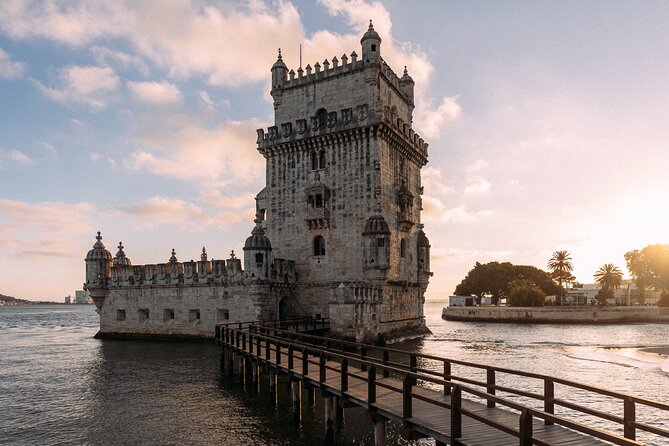
Belém Tower is one of the reign of Manuel I’s architectural jewels, built between 1514 and 1520 as part of the defense system of the Tagus estuary. The tour’s description also points out the two distinct volumes and the mix of medieval keep and modern bulwark, including artillery levels and long-distance cannon firing.
Belém Tower’s admission is listed as not included. So if you want the inside experience, check ahead so you don’t get surprised when the time comes.
Still, even a short look helps you understand why explorers and maritime power shaped Portugal’s coastline.
Monument to the Discoveries: viewing balcony and exhibitions if you want more
The Monument to the Discoveries is tied to the 1960 fifth centennial of Henry the Navigator’s death, and it notes renovations that added public access areas like a viewing balcony, auditorium, and exhibition rooms. The plan also mentions the reinforced concrete structure clad in Rosal limestone and the mosaic crosses and coats of arms.
Admission for this stop is listed as not included. If you’re the kind of traveler who likes turning monuments into stories, this is one you might want to pay for. If you’d rather keep your budget tight, you can still get the feel of the place from outside and move on.
What you’ll take away after 4 hours in Lisbon and Belém
This tour works best when you see it as a sampler with purpose. You get church exteriors and interiors, viewpoints that show you the city’s geography, squares that explain Lisbon at street level, and Belém landmarks that connect Portugal to the sea.
The value becomes clearer when you look at the stop list: many admissions are marked as free, and you still cover big-ticket sights like Jerónimos and Belém Tower (even if tower and a few others have admission not included). Add a private tuk tuk ride—plus the fact that the tour includes a food icon—and the price starts to make sense for families or small groups.
One more note: the guide experience seems to be a major part of why people rate this so highly. Names like Carlos Ventura and João show up in the stories, with praise for being on time, friendly, and fun, and for mixing mainstream stops with more local-feeling streets.
So, should you book this private tuk tuk tour?
Book it if you want a half-day that hits Lisbon’s best viewing moments and Belém’s core monuments without overplanning. It’s especially good for small groups (up to 6) who want pickup, a private setup, and a plan that moves efficiently.
Skip it or adjust expectations if you’re the type who wants long, slow time inside ticketed sites. This schedule includes several short stops, and key entries like the National Pantheon, Santa Justa, Belém Tower, and the Monument to the Discoveries may cost extra.
If you like variety—churches, viewpoints, squares, and pastry—this is a strong way to spend your time.
FAQ
How long is the Half Day Private Tuk Tuk Tour?
It runs for about 4 hours.
How many people are in a private group?
It’s a private tour/activity, and the group size is up to 6 people.
Is pickup included?
Yes, pickup is offered.
Do I need a ticket in advance?
You’ll receive a mobile ticket.
Are entrance fees included for all stops?
Not all stops include admission. Stops with admission listed as not included include Panteao Nacional (National Pantheon), Elevador de Santa Justa, Belém Tower, and the Monument to the Discoveries. Many other listed stops are marked free.
Does the tour cover both Lisbon and Belém?
Yes. The route begins in Lisbon and then includes major sights in Belém.
What are the operating hours?
The experience is listed as running daily from 7:30 AM to 8:00 PM.
Is there free cancellation?
Yes. You can cancel up to 24 hours in advance for a full refund.
Are service animals allowed?
Yes, service animals are allowed.
More Tour Reviews in Lisbon
- Lisbon City Center Tour – The Unmissable Lisbon★ 5.0 · 22,234 reviews
- Lisbon: Sintra, Pena, Regaleira, Cabo da Roca & Cascais★ 4.7 · 19,656 reviews
- Lisbon Card: 24, 48, or 72-Hour Pass★ 4.5 · 17,944 reviews
- Lisbon: Jerónimos Monastery Entrance Ticket★ 4.1 · 14,164 reviews
- Lisbon: History, Stories and Lifestyle Walking Tour★ 4.8 · 10,902 reviews
More Hills by Tuk-Tuk
- True 4Hour Private Tuk Tuk Tour: Discover Lisbon with a Local!★ 5.0 · 8,008 reviews
- Lisbon: Private Guided Tuk-Tuk Tour with Hotel Pickup★ 4.9 · 4,552 reviews
- Private Lisbon Sightseeing Tuk-Tuk Tour: Alfama, Belém & More★ 5.0 · 4,277 reviews
- Lisbon Highlights: Private Tuk Tuk Tour Adventure Sightseeing★ 5.0 · 3,284 reviews
- Welcome Lisbon Tour with Local Guide in Private Eco Tuk Tuk★ 5.0 · 1,691 reviews
Belém: More Monuments and Pastéis
- Lisbon: Jerónimos Monastery Entrance Ticket★ 4.1 · 14,164 reviews
- Private Lisbon Sightseeing Tuk-Tuk Tour: Alfama, Belém & More★ 5.0 · 4,277 reviews
- Age of Discoveries Walking Tour in Belém★ 5.0 · 1,513 reviews
- Lisbon: Bike Tour from Lisbon to Belém + Liquor & Pastry★ 4.7 · 688 reviews
- Bike Tours Lisbon – Center of Lisbon to Belém★ 5.0 · 686 reviews
Just in: fresh Lisbon reviews from the team




Belém Tours, compared.
 ★ 4.1Jerónimos Monastery Entrance TicketFrom $2114,164 reviews
 ★ 5.0Private Lisbon Sightseeing Tuk-Tuk Tour: Alfama, Belém & MoreFrom $524,277 reviews
 ★ 5.0Age of Discoveries Walking Tour in BelémFrom $31,513 reviews
 ★ 4.7Bike Tour from Lisbon to Belém + Liquor & PastryFrom $46688 reviews
 ★ 5.0Bike Tours Lisbon – Center of Lisbon to BelémFrom $19686 reviews
 ★ 3.7Jerónimos Monastery E-Ticket and Audio GuideFrom $33660 reviews
 ★ 4.9Belém Walking Tour with Jerónimos Monastery TicketFrom $69637 reviews
 ★ 4.0MAAT Gallery and MAAT Central Entry TicketsFrom $17559 reviews
Browse the lists this tour appears in