
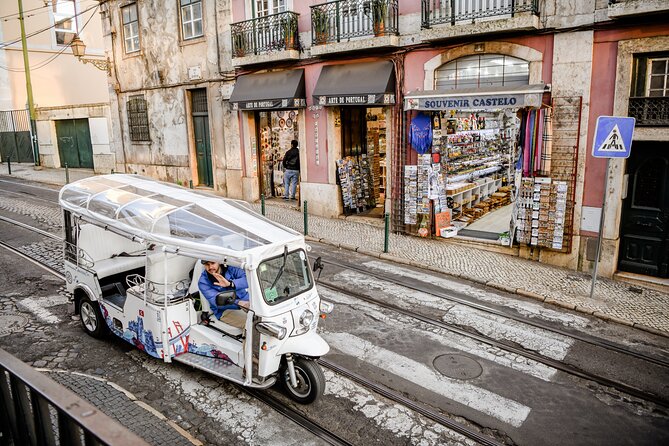
Reviewed · LISBON TUK-TUK TOURS
Food & Wine Lisbon Tour with Local Guide in Private Eco Tuk Tuk
Lisbon tastes better at tuk-tuk speed. This private, 100% electric tour ties together food tastings, short history stops, and Lisbon viewpoints without the usual queue stress, and I especially like the vegetarian-adaptable menu. One possible drawback: the food is more of a sampler than a sit-down meal, and the exact items can shift a bit depending on what’s available.
You’ll also get practical extras that make the ride easier—blankets for wind or rain, protective covers for the tuk-tuk, and planned photo pauses so you’re not constantly stopping and starting. Guides can make or break a tour, and this one has a solid track record; if you can, request Arthur.
In This Review
- Key things to know before you ride
- A 3-hour Lisbon food-and-wine run by electric tuk-tuk
- The private eco tuk-tuk format (and what it means for value)
- Food and wine tastings: what’s included and what to expect
- What you’ll likely taste
- Cais do Sodré and Chiado: markets, cafés, and fado-adjacent Lisbon
- Bairro Alto to Baixa: from cobblestone nightlife lanes to the post-1755 grid
- Sé de Lisboa and Alfama’s Portas do Sol: church roots and big sunset views
- Graça viewpoints and São Vicente de Fora: pantheons, chapels, and water history
- Chafariz de El-Rei: Lisbon’s fountain history, explained on the ground
- Praça do Comércio: finishing by the Tagus and the palace-era square
- Guide quality: Arthur versus Thiago and why it matters here
- Who this tour suits best (and who might want something else)
- Should you book this Lisbon Food & Wine Private Eco Tuk Tuk Tour?
Key things to know before you ride

- Private eco tuk-tuk for your group, with 100% electric comfort
- Starts fast with no queues or waiting times
- Food and wine tastings with snacks, including vegetarian adaptation
- Preset photo stops so the timing works (and you get decent angles)
- Major Lisbon viewpoints like Portas do Sol and Senhora do Monte
- Weather support with blankets and wind/rain covers during the 3-hour loop
A 3-hour Lisbon food-and-wine run by electric tuk-tuk
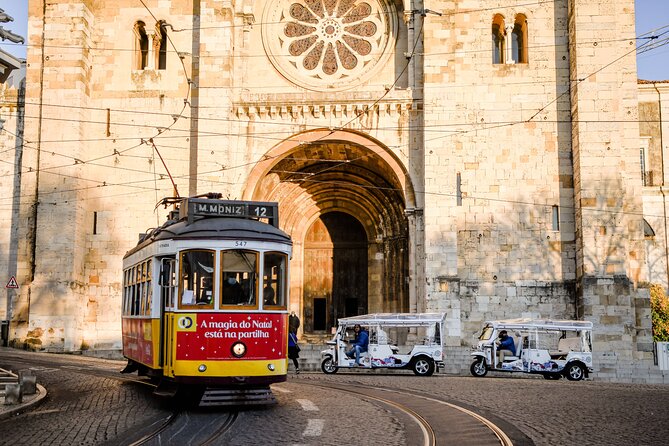
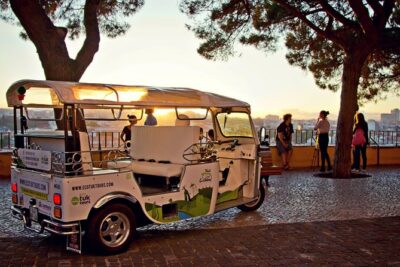
This tour is built for getting your bearings quickly. Lisbon has hills, tight lanes, and lots of stairs, so the tuk-tuk changes the whole feel—you glide between areas instead of burning time in lines or slow walking.
The plan is roughly three hours, and the pacing is designed to keep you moving while still giving you real stops. You’ll trade some of the slower, meandering “see everything” style for a tighter loop that mixes food, viewpoints, and landmark context.
The hills done the easy way, more tuk-tuk runs
- True 4Hour Private Tuk Tuk Tour: Discover Lisbon with a Local!
★ 5.0 · 8,008 reviews - Lisbon: Private Guided Tuk-Tuk Tour with Hotel Pickup
★ 4.9 · 4,552 reviews - Private Lisbon Sightseeing Tuk-Tuk Tour: Alfama, Belém & More
★ 5.0 · 4,277 reviews - Lisbon Highlights: Private Tuk Tuk Tour Adventure Sightseeing
★ 5.0 · 3,284 reviews
The private eco tuk-tuk format (and what it means for value)
The biggest value play here is simple: you’re not sharing your ride with strangers. It’s a private experience, meaning your guide can shape the rhythm around your group, and the tuk-tuk is booked for your party only.
A few practical points matter:
- The legal maximum is 4 passengers per tuk-tuk, so larger groups require more than one tuk-tuk.
- The tour begins without queues or waiting time, which is a big deal in Lisbon, where popular spots can get crowded.
- Photo stops are pre-selected. You can’t change them, but they’re chosen to reduce wasted time.
You’ll also get the comfort stuff many city tours skip. There are blankets and protective covers against rain and wind, which helps a lot if you’re riding in cooler months or you hit a sudden drizzle.
Food and wine tastings: what’s included and what to expect
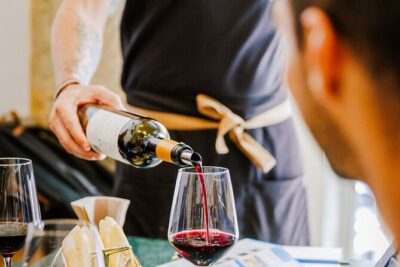
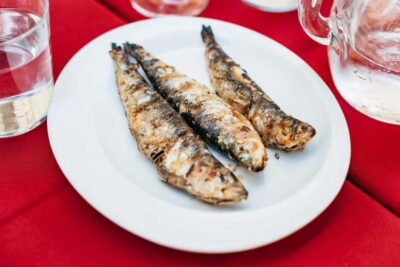
This is a food-and-wine experience, not just a sightseeing tour with a tiny snack. Included in the tour are snacks and multiple tastings—think wine alongside cheese and other small bites.
Vegetarian diners have an important option: the menu can be adapted. That’s not just a polite checkbox. It changes the tour experience, because it affects what you actually taste during the stops instead of leaving you with a workaround.
Here’s the one consideration I’d flag based on what tends to happen in tasting-menu style tours: the exact lineup can vary. Even when something sounds specific in a description, the practical tasting plan may shift to what’s on hand that day. In one case, the tastings leaned more toward olive oils, bread, cheeses, and a cooked Iberian pork sample plus wine and port—very enjoyable, just different from a more sandwich-forward expectation. If you have a must-eat item, it’s worth checking with your guide before you roll.
What you’ll likely taste
From what’s included, expect a mix of:
- Wine tastings (typically more than one style)
- Cheese tastings
- Snack bites that connect to Portuguese flavors
- Small food samples served during the route
If you’re the type who wants a full plated lunch, you may feel slightly hungry afterward. But if you love tasting your way through neighborhoods and want the meal parts to come with stories, this format usually lands well.
Still hungry? More tastings around Lisbon

Cais do Sodré and Chiado: markets, cafés, and fado-adjacent Lisbon
Your loop starts in and around Cais do Sodré, a riverside district known for food and nightlife energy. The big draw here is getting close to the action at Ribeira Market. It’s a 19th-century-style market area and a food court vibe where you can connect the dots between local staples and international choices.
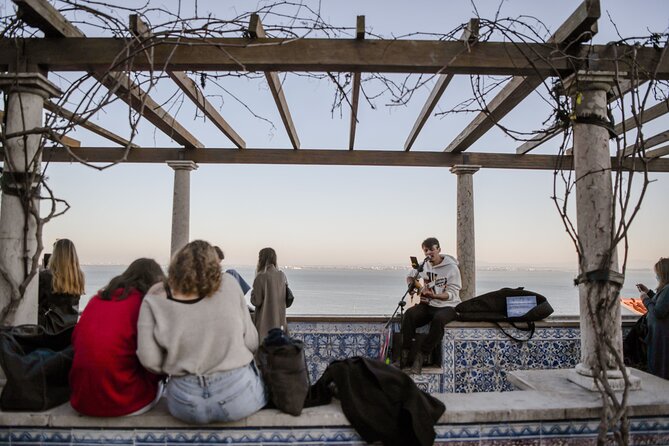
Then you’ll head toward Pink Street, a bar-and-restaurant pocket where fado often shows up. Even if you don’t sit for a full fado night, you get the feeling of the place—this is where music, late dinners, and people-watching blend.
After that, the tour shifts into Chiado, the central neighborhood that mixes classic institutions with elegant café culture. Here, landmarks matter because they explain Lisbon’s modern-and-old overlap. You’ll pass by:
- Café A Brasileira, a historic café
- Livraria Bertrand, noted as the world’s oldest operating bookstore
- São Carlos Theater
A drawback to know: Chiado and the central streets can be busy at peak times. The tuk-tuk helps you thread through without getting stuck, but you’ll still feel the city’s center when you stop.
Bairro Alto to Baixa: from cobblestone nightlife lanes to the post-1755 grid

Next comes Bairro Alto, set on one of Lisbon’s seven hills. The streets are narrow and cobblestoned, and the neighborhood feels like a maze by design—bars, restaurants, boutique shops, and plenty of places associated with fado.
This is also a spot where timing matters. By day, it feels calmer and more shop-and-café oriented. In the evening, it shifts into nightlife mode. Your tour timing will largely determine how much of that late-night energy you catch.
Then you drop into Baixa, Lisbon’s downtown core and the architectural heart of the city. After the 1755 earthquake, this area was rebuilt into a planned grid under the Marquis of Pombal. That fact isn’t academic—it shows up in the wide, organized street layout compared with the older maze-like quarters.
Baixa is where you’ll connect the dots to major downtown landmarks:
- Praça do Comércio, by the Tagus River
- Rossio Square as a central meeting hub
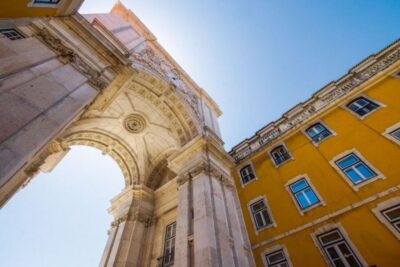
- The Arco da Rua Augusta, a monumental arch toward the river
- Santa Justa Lift, the wrought-iron elevator that’s an icon for a reason
The practical upside of hitting Baixa on a tuk-tuk: you get the overview without spending your legs on long stretches. The downside: this area is popular, so your photo stops can feel tight if other groups are nearby. The tour’s preset timing helps, but it won’t make the center empty.
Sé de Lisboa and Alfama’s Portas do Sol: church roots and big sunset views
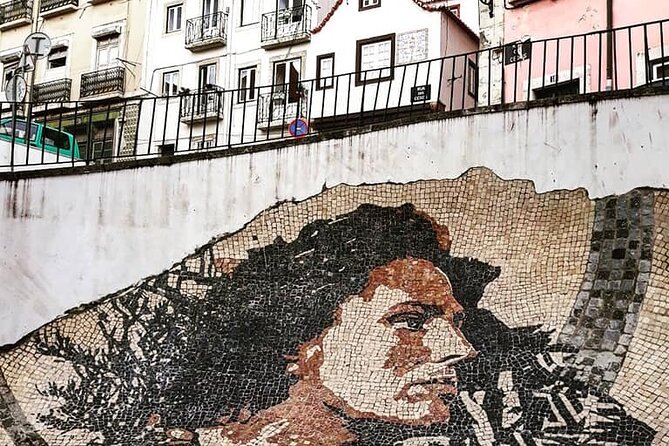
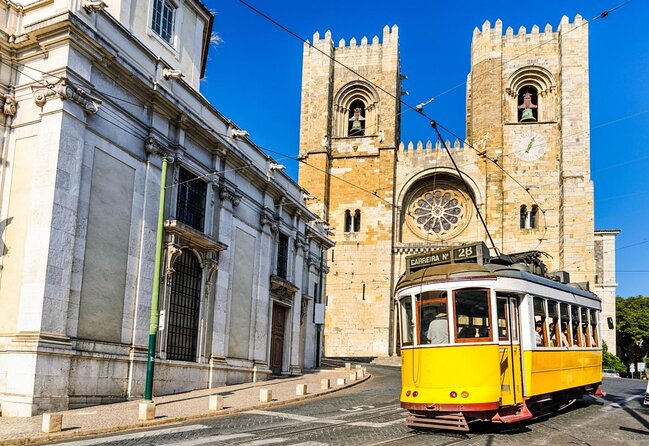
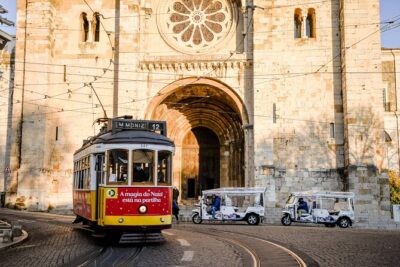
From downtown planning, you head into deeper old-Lisbon territory with Sé de Lisboa, the metropolitan cathedral and patriarchal seat. Construction began in 1148, which places this site right after the period when Afonso Enriques conquered the city. If you like seeing how Lisbon’s Christian-era power and old city life show up in stone, this stop is a strong anchor.
Right after that, the route moves into Alfama, especially Largo das Portas do Sol. This square is famous for one of Lisbon’s classic panorama views—Tagus River in front, Baixa Pombalina stretching out, and the Castelo de São Jorge in the picture.
Portas do Sol has a simple reason for its name: an old city gate faced east so morning sunlight could enter. In practical terms, you’re not just looking at a view. You’re standing on a place that helped shape daily city life long ago.
A consideration: this is a viewpoint square. If you’re traveling in warmer months, it can be busy. If you’re sensitive to crowds, go in with realistic expectations and focus on the view angles you can get during your scheduled stop.
Graça viewpoints and São Vicente de Fora: pantheons, chapels, and water history
Next up is Miradouro Nossa Senhora do Monte in the Graça neighborhood. It’s one of the city’s most iconic viewpoints, with sweeping panoramas over Lisbon and the Tagus.
This spot also includes a chapel and older layers of meaning. The viewpoint connects to a pilgrimage tradition tied to the 12th-century reconquest period and later renovations after the 1755 earthquake. The point here isn’t just the postcard view—it’s the way Lisbon places faith and rebuilding into the same skyline.
Then you’ll explore the Graça area around its church-and-café energy. Graça is often less tour-clogged than some central landmarks, which makes it feel more local. You’ll also pass by important nearby religious sites like the Monastery of São Vicente de Fora. It’s on high ground and linked to the way Lisbon’s parishes sat beyond the city walls at the time.
From there, the route takes you to the National Pantheon of Portugal, located in the Church of Santa Engrácia. The church was erected in 1568 and later became a pantheon in 1916. If you like architecture that signals how a nation remembers itself, this stop has that built-in story.
Chafariz de El-Rei: Lisbon’s fountain history, explained on the ground
Another highlight in the Alfama/Graça orbit is Chafariz de El-Rei, described as the first public ornamental fountain in Lisbon. It dates back to the 13th century and is tied to groundwater management—water from springs routed to city supply.
This isn’t just trivia. Understanding the fountain explains why Lisbon’s Age of Discovery energy had a practical side too, including ship supply connections. And the fountain layout once had gutters reserved for different social groups, which adds a social history layer to something most people would otherwise ignore.
If you’re the kind of traveler who enjoys these small details, this is where the guide’s storytelling really matters.
Praça do Comércio: finishing by the Tagus and the palace-era square

You’ll end in Praça do Comércio, the riverside square next to the Tagus. It’s massive, with 79 arches bordering the square, and it marks the area that was once the palace zone for Portugal’s kings.
This is a strong finale because it’s open compared with Lisbon’s narrow lanes. Your eyes get a reset—river, sky, long lines of architecture—so the three-hour loop doesn’t end with you still stuck in tiny streets.
If it’s clear out, you’ll get nice light for photos. If weather shifts, the tour’s earlier blankets and covers help keep you comfortable before you reach this final stop.
Guide quality: Arthur versus Thiago and why it matters here
The driver-guide role matters more on this tour than on some others, because you’re moving fast between neighborhoods. Two names stand out from guide feedback: Arthur and Thiago.
Arthur is described as especially kind and tuned into Lisbon, making the experience feel personal. Thiago is noted for being enthusiastic and strong on history. Both traits help, because you’re learning in short bursts—so the guide needs to connect the dots quickly and make the stops feel worth the time.
If you care about food details, ask your guide how they handle tasting explanations. One experience leaned heavily toward the food sampling (oils, cheeses, sausage, wine and port) rather than a more step-by-step food origin story. You can’t control what’s on the tasting menu that day, but you can often steer how much the guide talks through the pieces.
Who this tour suits best (and who might want something else)
This private eco tuk-tuk tour works well if you:
- Want a 3-hour plan that hits major areas without exhausting walking
- Like viewpoints and landmark context paired with tastings
- Need a group-only experience (not a shared tour)
- Appreciate an easy pace with comfort gear for weather
You might want a different style of food tour if you:
- Expect a sit-down meal with a set menu you’ll definitely receive
- Have only one or two dietary needs you want handled with full replacement courses
- Prefer a long, slow wander where you control the route moment by moment
Should you book this Lisbon Food & Wine Private Eco Tuk Tuk Tour?
If you want Lisbon in one organized, high-comfort loop—food tastings plus viewpoints plus practical history—this is a strong yes. The private electric tuk-tuk format gives you speed without feeling rushed, and the planned photo stops plus warm covers mean fewer logistics headaches.
My go/no-go advice:
- Book it if you like sampler-style tastings and want your time to count in three hours.
- If food is your top priority, ask the guide to confirm how the tastings will run that day and whether any specific items you’re hoping for are likely.
- If you’re sensitive to crowds at viewpoints, plan to focus on the view moments during your scheduled pauses.
Overall, this is the kind of tour that helps you understand why Lisbon feels layered—river districts, downtown planning, hilltop viewpoints, and church-and-palace-era stories all stitched into one ride.
More Tour Reviews in Lisbon
- Lisbon City Center Tour – The Unmissable Lisbon★ 5.0 · 22,234 reviews
- Lisbon: Sintra, Pena, Regaleira, Cabo da Roca & Cascais★ 4.7 · 19,656 reviews
- Lisbon Card: 24, 48, or 72-Hour Pass★ 4.5 · 17,944 reviews
- Lisbon: Jerónimos Monastery Entrance Ticket★ 4.1 · 14,164 reviews
- Lisbon: History, Stories and Lifestyle Walking Tour★ 4.8 · 10,902 reviews
More Lisbon Plates and Pours
- Winner 2025 Undiscovered Lisbon Food & Wine Tour by Eating Europe★ 5.0 · 6,390 reviews
- Lisbon: Food and Wine Small Group Walking Tour★ 4.9 · 4,082 reviews
- Lisbon Small-Group Portuguese Food and Wine Tour★ 5.0 · 3,972 reviews
- Lisbon: Baixa District Food Tour with Dinner and Drinks★ 4.9 · 1,997 reviews
- Lisbon Small-Group Food Tour with 18 Tastings in Alfama District★ 5.0 · 1,967 reviews
More Hills by Tuk-Tuk
- True 4Hour Private Tuk Tuk Tour: Discover Lisbon with a Local!★ 5.0 · 8,008 reviews
- Lisbon: Private Guided Tuk-Tuk Tour with Hotel Pickup★ 4.9 · 4,552 reviews
- Private Lisbon Sightseeing Tuk-Tuk Tour: Alfama, Belém & More★ 5.0 · 4,277 reviews
- Lisbon Highlights: Private Tuk Tuk Tour Adventure Sightseeing★ 5.0 · 3,284 reviews
- Welcome Lisbon Tour with Local Guide in Private Eco Tuk Tuk★ 5.0 · 1,691 reviews
Just in: fresh Lisbon reviews from the team





Lisbon Tuk-Tuk Tours, compared.
 ★ 5.0True 4Hour Private Tuk Tuk Tour: Discover Lisbon with a Local!From $1088,008 reviews
 ★ 4.9Private Guided Tuk-Tuk Tour with Hotel PickupFrom $1534,552 reviews
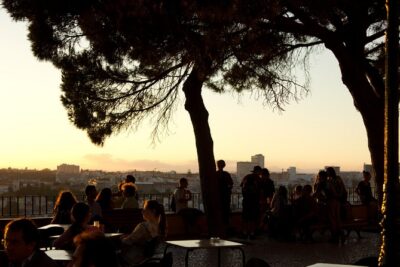 ★ 5.0Private Lisbon Sightseeing Tuk-Tuk Tour: Alfama, Belém & MoreFrom $524,277 reviews
 ★ 5.0Lisbon Highlights: Private Tuk Tuk Tour Adventure SightseeingFrom $843,284 reviews
 ★ 5.0Welcome Lisbon Tour with Local Guide in Private Eco Tuk TukFrom $171,691 reviews
 ★ 4.9Private City Tour by Eco Tuk TukFrom $281,215 reviews
 ★ 5.0Old Town TukTuk Tour and Scenic Viewpoints in AlfamaFrom $35974 reviews
 ★ 5.0Explore Lisbon by Tuk Tuk: History and ViewpointsFrom $19840 reviews
Browse the lists this tour appears in