
Ancient stones and a university town in one day. This private Alentejo outing from Lisbon links Évora’s layered streets with prehistoric sites like Almendres Cromlech, guided by a driver/guide who keeps the story clear and the pace workable. I especially like that it’s truly private, so you’re not stuck waiting for a big group before you can ask questions or linger where something clicks.
Two other big wins: you get door-to-door pickup from central Lisbon/Sintra and fresh water in the van, and the megalith stops are built into a full plan instead of a rushed drive-by. The one drawback to plan around is that entrance fees and food and drinks are not included (and the tour has a set start time—miss it by too much and it’s a no-show).
In This Review
- Quick hits you’ll care about
- Why Évora and the megalith circuit makes sense from Lisbon
- Price and what you actually get for $288.70 per person
- Pickup, the van, and how to make the day feel smooth
- Évora historic center: Roman Temple of Diana, the Gothic Cathedral, and Capela dos Ossos
- What to watch for
- Almendres Cromlech and the interpretive center: from 6000 BCE to solstice stories
- A simple tip
- Anta Grande do Zambujeiro: short stop, real prehistoric engineering
- If you like extra details
- Monsaraz: finishing with Alentejo atmosphere (and guide-led history)
- Lunch in the Alentejo: a windmill stop that feels like part of the trip
- How long is long enough, and how to avoid rushing
- Who this tour is best for
- Should you book this Évora and megalithic circuit from Lisbon?
- FAQ
- How long is the private tour?
- What time does the tour start, and do you pick up from hotels?
- Is this tour private or shared?
- Which stops are included?
- Are entrance fees included?
- Is lunch or drinks included?
- What’s the cancellation rule for a refund?
Quick hits you’ll care about
- Private guide + air-conditioned minivan for the full day, not just transfers
- Évora’s Roman-to-Gothic mix, including time at the Cathedral and Capela dos Ossos
- Almendres Cromlech is free to visit and comes with an interpretive center stop
- Megalith time is intentional, with both Cromlech and Anta Grande do Zambujeiro
- Guide-led pacing means you can focus on what interests you instead of ticking boxes
- Lunch is a real stop (usually at a standout local restaurant), but you pay for food yourself
Why Évora and the megalith circuit makes sense from Lisbon
If you’ve only got one day away from Lisbon, this route does a clever job of mixing “big famous sights” with older, stranger places. Évora gives you a compact historic center where Roman, medieval, and university life all sit in the same walkable area. Then the day tilts out into the countryside, where megaliths turn the drive into a history lesson you can actually see.
This works well because the two halves of the day answer each other. In Évora, you’re looking at buildings that were designed for public life—religion, learning, civic pride. Out in the fields, you’re dealing with prehistoric sites whose purpose still sparks debate. Put together, you get a stronger sense of how people in this region lived across thousands of years, not just what they built.
The private format also matters. You’re not forced into a rigid “everyone at the same photo angle” rhythm. With a guide like Diogo or Daniel (both mentioned for their strong storytelling), you can ask follow-ups and adjust your time without derailing the whole schedule.
Out to the plains: more Évora and Alentejo trips
- Évora and Megaliths Full-Day Tour from Lisbon
★ 4.7 · 456 reviews - From Lisbon: Évora and Monsaraz with Regional Wine Tasting
★ 4.7 · 345 reviews - Évora and Monsaraz with Regional Wine Tasting from Lisbon
★ 4.5 · 229 reviews - Private Day Tour With Guide to Évora and Monsaraz
★ 5.0 · 134 reviews
Price and what you actually get for $288.70 per person
At $288.70 per person, the price is not “grab-and-go.” You’re paying for a day that includes private transportation, a full-time trip leader, and pickup/drop-off from central hotel areas and key arrival points like the Lisbon cruise terminal or the airport.
Here’s the value math that helps: if you don’t rent a car, you’re saving yourself the stress of driving rural roads for multiple stops. You’re also paying for context—having someone explain what you’re looking at while you’re there. That matters most at megalith sites, where the biggest payoff is usually understanding the layout, the timing, and the questions people still ask about them.
The only extra costs you should mentally budget for are entrance fees at Évora and your own food and drinks. Water is included, but lunch isn’t bundled into the price. Still, the reviews point to restaurant quality as a plus, so it may cost you, but it isn’t just a random place to eat.
Pickup, the van, and how to make the day feel smooth
This tour starts at 9:00 am, with pickup available for Lisbon/Sintra central hotels and also the Lisbon Cruise Terminal or Lisbon airport. Since it’s private, the van logistics are simpler than shared tours—you’re not waiting on other routes, and you’re not splitting attention between multiple groups.
One practical limit: baggage transport is limited to 4 medium-sized suitcases. If you’re traveling with a lot of luggage, plan to pack efficiently. Comfort matters too: dress code is smart casual, and you’ll be on your feet. I’d prioritize comfortable walking shoes over anything fancy—Évora’s streets and the countryside stops are not built for stiff soles.
You’ll also want to know the tour rules: no smoking or eating inside the vehicle. That’s common on day tours, but it’s good to remember if you’re the snack-on-the-road type.
Évora historic center: Roman Temple of Diana, the Gothic Cathedral, and Capela dos Ossos
Évora is the anchor of the day. You get about 3 hours in the historic center, which is plenty for a focused walk if you don’t try to do everything in frantic mode.
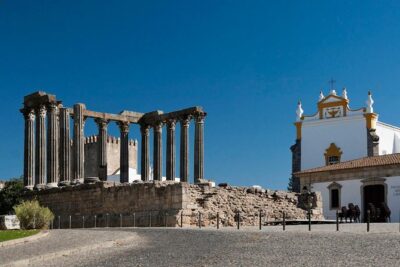
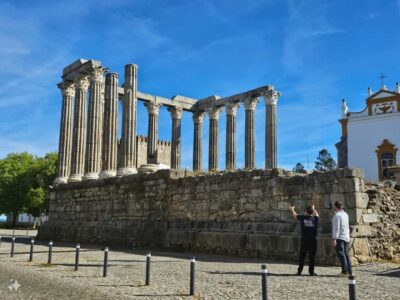
The Roman piece is a must. Évora was known in Roman times as Liberalitas Julia, and the Temple of Diana is one of the best-preserved reminders of that era. Even if you’re not a Roman-architecture superfan, it’s a strong “how did they pull this off?” moment.
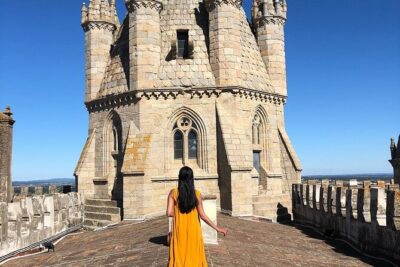
Then you shift into the medieval/religious core. The Cathedral you’ll visit is a 13th-century structure and a notable example of Gothic architecture. This is where the day’s tone changes: instead of “look how old this is,” it becomes “look how the city organized belief and public life.”
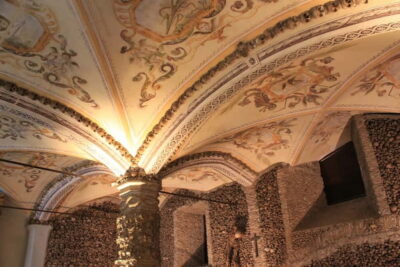
And yes, you’ll also visit Capela dos Ossos (the Bones Chapel). It’s not the kind of sight you forget quickly. The point isn’t shock for shock’s sake—it’s a direct, unsettling reminder of how human life was framed in the past. If you’re comfortable with reflective, intense places, you’ll find this stop adds a real emotional layer to the day.
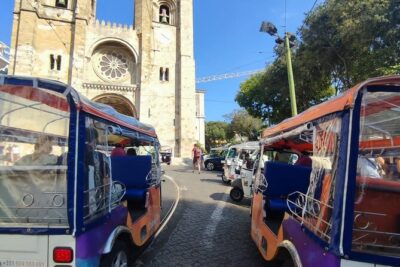
Worth a look before you lock anything else in around Lisbon:



What to watch for
Give yourself time to slow down around the Cathedral area. Évora rewards unhurried walking. If you rush, you’ll miss the “details you can only notice up close,” like how the city blends ancient structures with everyday life tied to the university.
Almendres Cromlech and the interpretive center: from 6000 BCE to solstice stories
After Évora’s streets, the tour shifts to the Almendres Cromlech, one of the oldest megalithic sites in Portugal. You’re looking at stones dated to roughly 6000 to 5000 BCE, which is about 2,000 years earlier than Stonehenge. That scale alone changes how you think about the day.
You also stop at the Centro Interpretativo dos Almendres, which gives you a framework before you go out to the stones. You’ll learn the big idea: the exact purpose of these structures isn’t fully known, but they likely served ceremonial or religious functions. And because of the way the stones are arranged, people believe there may be an astronomical connection—marking solstices and equinoxes.
The time here is about 1 hour, and admission is free for this stop. That’s a nice bonus because it keeps the budget steady while still giving you a meaningful experience. I like this setup because it prevents the common megalith problem: you can either stand there impressed but confused, or you can understand what you’re looking at first.
A simple tip
Wear sun protection if you’re going on a bright day. Even when it’s not hot, megaliths are often exposed, and you’ll do more standing and looking around than you might expect.
Anta Grande do Zambujeiro: short stop, real prehistoric engineering
Next comes Anta Grande do Zambujeiro, another key piece of Portugal’s megalith heritage. This stop is shorter—around 30 minutes—but it’s not just a quick photo break. The site is often discussed as evidence of advanced social organization and engineering skill from prehistoric communities.
Admission is free, so again, it’s a good value move inside the overall day. The payoff is getting a second megalith viewpoint. One site teaches the idea; two sites help you see patterns. It’s easier to wrap your head around how these sites fit into a wider megalithic culture when you’re not only seeing one example.
If you like extra details
Some guides and itineraries may also factor in other standing stones and menhir-style landmarks in this general area. If your main interest is megaliths, tell the guide early in the day what you want to see more of. That’s where a private format really earns its keep.
Monsaraz: finishing with Alentejo atmosphere (and guide-led history)
Monsaraz is included as part of the full-day Alentejo circuit. Even without turning it into a checklist town, this stop helps complete the “city + countryside + megalith” arc, and it gives you a different rhythm at the end of the trip.
What I like about finishing with Monsaraz is that it lets the day breathe. Évora can feel dense and textured—stone, churches, university corners. Monsaraz tends to feel more open and slow, which helps if you’re the type to keep thinking about what you’ve learned while you walk.
If you’re history-minded, use this segment to ask your guide how the earlier periods connect to what people were building and valuing later. The guide’s job here is to stitch the day together: Roman-era influence in the city, medieval power in Évora, and deep-time continuity in the countryside.
Lunch in the Alentejo: a windmill stop that feels like part of the trip
Food is not included, but you do get a lunch stop option led by the guide. What stands out from reviews is the reputation of the meal stop—often described as a restaurant in a windmill, with some of the best food people had in Portugal.
Even if you’ve got dietary limits, plan to handle lunch the same way you would on your own: choose what fits you at the restaurant, not the driver. But the value here is that you’re not left guessing where to eat in the middle of nowhere. Your guide can point you toward a place that matches the day’s vibe.
I also like that the van includes fresh water. On a full-day outing, it prevents that tired, headache-y slump that can happen when you forget to drink.
How long is long enough, and how to avoid rushing
This is about a 10-hour day from a 9:00 am start. That’s long enough to feel satisfying, but not so long that you’re trapped in a van until nightfall.
The key is how you use the time you have:
- Give Évora the full attention block, since it’s the most packed with architecture and emotionally intense sights.
- Treat the megalith stops as interpretation time, not sightseeing time. If you rush, you’ll miss the “why this matters” element.
- Keep your shoes comfortable and your expectations realistic: this is a full day, not a relaxed walk in a park.
Also, because it’s private, you can usually ask for slight timing adjustments. If you want more time at Capela dos Ossos or less time browsing side streets, a good guide can help manage it.
Who this tour is best for
This tour fits best if you:
- Want a car-free way to see Évora and megalith sites in one day
- Like history that connects different eras—Roman and medieval in Évora, prehistoric in the countryside
- Enjoy guided storytelling, especially at sites where the purpose isn’t obvious
- Prefer private pacing over crowded group schedules
It’s also a solid pick for couples and small groups, especially if you value getting close to sights within normal rules rather than just staring from afar.
If you’re traveling with kids, note that children must be accompanied by an adult. Since the day is long, it’s worth thinking about whether your child can handle a mostly seated-in-a-van morning followed by walking in Évora.
Should you book this Évora and megalithic circuit from Lisbon?
I’d book this if you want a day that mixes famous architecture with real “how old is this?” archaeology—without the headache of coordinating transport. The price is fair for what you get: private van, pickup, a full-time guide/driver, and water, plus a route that includes both Évora’s core sights and major megalith stops.
Skip it—or at least plan differently—if you hate paying extra for entrance fees and prefer meals that are already built into the ticket. You’ll need to budget for those add-ons and keep an eye on the start time.
If you care about guidance quality, this tour is the kind where names like Diogo and Daniel come up for a reason: they help the day make sense, not just look impressive.
FAQ
How long is the private tour?
The tour runs about 10 hours.
What time does the tour start, and do you pick up from hotels?
It starts at 9:00 am. Pickup and drop-off are included for Lisbon/Sintra central hotels, and also for the Lisbon Cruise Terminal or Lisbon airport.
Is this tour private or shared?
It’s private. Only your group participates.
Which stops are included?
You’ll visit Évora’s historic center, the interpretive center at Almendres Cromlech, Anta Grande do Zambujeiro, and you’ll also stop in Monsaraz.
Are entrance fees included?
No. Entrance fees aren’t included overall. Évora’s Cathedral stop is not included, while Almendres Cromlech’s interpretive center stop and Anta Grande do Zambujeiro are listed as free.
Is lunch or drinks included?
Food and drinks are not included. Fresh water is provided in the vehicle.
What’s the cancellation rule for a refund?
You can cancel for a full refund up to 24 hours in advance of the experience’s start time.
More Tours in Lisbon
- Lisbon City Center Tour – The Unmissable Lisbon★ 5.0 · 22,234 reviews
- Lisbon: History, Stories and Lifestyle Walking Tour★ 4.8 · 10,902 reviews
- True 4Hour Private Tuk Tuk Tour: Discover Lisbon with a Local!★ 5.0 · 8,008 reviews
- Winner 2025 Undiscovered Lisbon Food & Wine Tour by Eating Europe★ 5.0 · 6,390 reviews
- Lisbon: Sintra, Pena, Cabo da Roca, Cascais Tour with Pickup★ 4.8 · 5,445 reviews
More Tour Reviews in Lisbon
- Lisbon City Center Tour – The Unmissable Lisbon★ 5.0 · 22,234 reviews
- Lisbon: Sintra, Pena, Regaleira, Cabo da Roca & Cascais★ 4.7 · 19,656 reviews
- Lisbon Card: 24, 48, or 72-Hour Pass★ 4.5 · 17,944 reviews
- Lisbon: Jerónimos Monastery Entrance Ticket★ 4.1 · 14,164 reviews
- Lisbon: History, Stories and Lifestyle Walking Tour★ 4.8 · 10,902 reviews
Out to Évora and the Alentejo
- Évora and Megaliths Full-Day Tour from Lisbon★ 4.7 · 456 reviews
- From Lisbon: Évora and Monsaraz with Regional Wine Tasting★ 4.7 · 345 reviews
- Évora and Monsaraz with Regional Wine Tasting from Lisbon★ 4.5 · 229 reviews
- Private Day Tour With Guide to Évora and Monsaraz★ 5.0 · 134 reviews
- From Lisbon to Alentejo: Évora and Megaliths Full-Day Tour★ 4.5 · 131 reviews
Just in: fresh Lisbon reviews from the team





Évora Day Trips, compared.
 ★ 4.7Évora and Megaliths Full-Day Tour from LisbonFrom $94456 reviews
 ★ 4.7From Lisbon: Évora and Monsaraz with Regional Wine TastingFrom $97345 reviews
 ★ 4.5Évora and Monsaraz with Regional Wine Tasting from LisbonFrom $132229 reviews
 ★ 5.0Private Day Tour With Guide to Évora and MonsarazFrom $212134 reviews
 ★ 4.5From Lisbon to Alentejo: Évora and Megaliths Full-Day TourFrom $108131 reviews
 ★ 5.0Tour Évora and Alentejo in a private tourFrom $169124 reviews
 ★ 4.5From Lisbon to Alentejo: Évora and Megaliths Full-Day Group TourFrom $96111 reviews
 ★ 4.7Évora (w/ Cathedral & Bones), Cartuxa & Cork FactoryFrom $10597 reviews
Browse the lists this tour appears in