
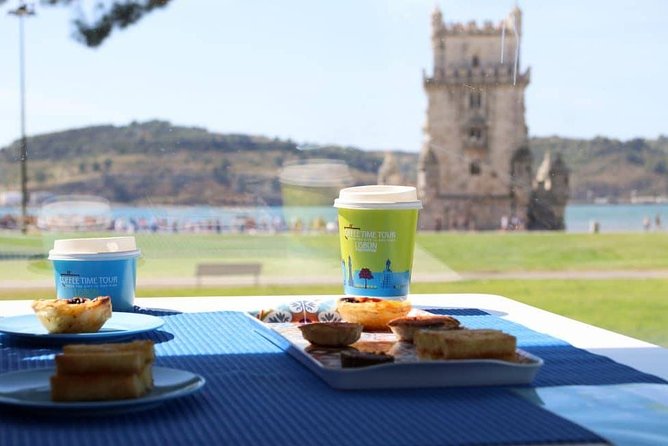
Reviewed · BELÉM TOURS
City Center – Belém
Lisbon in one hour is doable. This city-center bus tour strings together major sights with onboard commentary, moving you from classic central squares out toward Belém’s famous riverfront. I especially like the onboard Wi‑Fi that keeps you connected while you’re rolling, and the included Portuguese pastries plus tea/coffee/juice, so you feel looked after without hunting for a café first.
One thing to consider: it’s short, so you’ll mostly see highlights from the bus rather than doing long stops inside buildings.
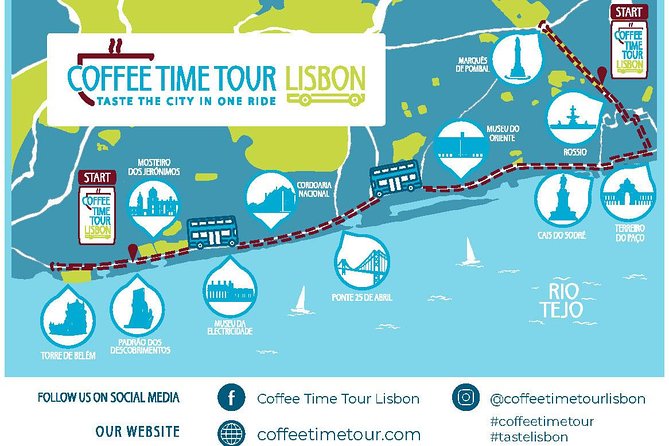
As the vehicle heads past landmarks like the Marquis of Pombal area, Rossio, Praça do Comércio, and onward over the Tagus, you get a running explanation of what you’re seeing. I also like that the tour doesn’t just point at monuments; it’s meant to give you practical tips on where to eat, drink, and explore once you’re on your own. The main drawback is simple: there’s no restroom on board, and with a one-hour ride, timing matters.
Your ride starts at Restauradores and ends near Jerónimos in the Belém area, right in front of the Planetarium. A small but important caution: there’s at least one report of the provider being closed in the recent past, so before you travel, make sure your booking confirmation is active for your exact dates with Coffee Time Tour Lisbon.
In This Review
- Key things to know before you go
- How This One-Hour Lisbon City-Center Bus Loop Feels
- Price and what you really get for about $15.43
- Your Route: Restauradores and Avenida da Liberdade first
- Rossio Square: where Lisbon’s timeline is told in public space
- Praça do Comércio: that huge open space in Europe
- Cais do Sodré, Praça dos Remolares, and Lisbon as a merchant city
- The Christ the Redeemer link and why it fits Lisbon’s storytelling
- Crossing the Tagus: 25 de Abril Bridge and Lisbon’s engineering pride
- Cordoaria Nacional: a former Portuguese Navy rope factory
- MAAT and Tejo Central: contemporary architecture meets old industry
- Belém’s official-residence story: Palace of Belém
- Jerónimos area: monastery, kings, poets, and later cultural programming
- Torre de São Vicente and the Monument of Discoveries: maritime Portugal in stone
- Snacks, Wi‑Fi, and the tips that help after the ride
- Comfort notes that matter: air-con, group size, and no restroom
- Should you book City Center – Belém? My take
- FAQ
- How long is the City Center – Belém bus tour?
- What’s the price per person?
- Is Wi‑Fi included on the bus?
- Are snacks and drinks included?
- Where does the tour start and end?
- Is there a restroom on board?
- Are children allowed?
Key things to know before you go
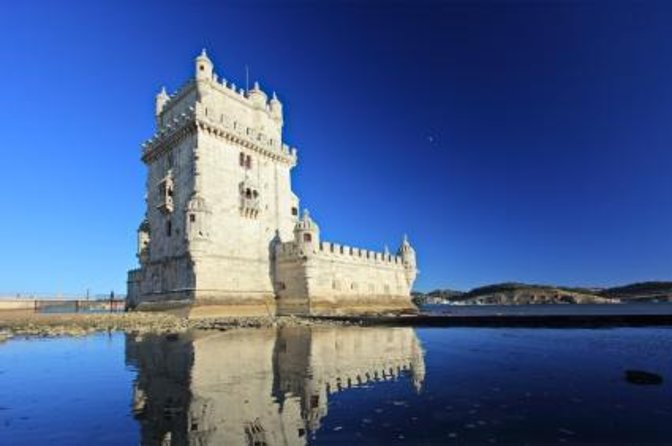
- Onboard Wi‑Fi helps you map your next move while you ride.
- Snacks and drinks are included, so you’re not planning around hunger.
- Air-conditioned vehicle makes the sightseeing more comfortable.
- A tight one-hour loop focuses on big-picture highlights, not slow museum time.
- No restroom on board, so use facilities before you meet up.
- Max group size is 44, which keeps the experience from feeling like a total cattle drive.
How This One-Hour Lisbon City-Center Bus Loop Feels
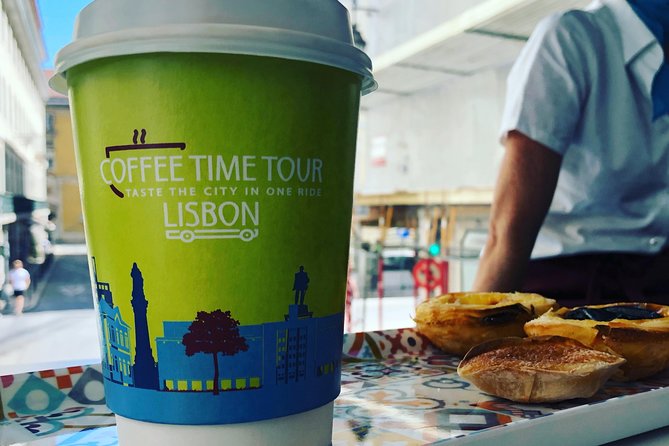
This is a fast, practical way to get your bearings in Lisbon. You’re on a bus for about an hour, and the whole point is to cover a lot of ground quickly while commentary explains what matters about each place. If your Lisbon schedule is tight, this kind of overview tour helps you decide what to chase later on.
The route is designed like a story that moves outward from the center. You’ll start around Restauradores, pass through major squares such as Rossio and Praça do Comércio, cross into the Belém zone, and end near Jerónimos/Planetarium. Even if you don’t get off the bus much, you’ll come away with a mental map of where things sit along the central axis and the Tagus river corridor.
One more practical note: the bus has mobile ticketing, so you’ll want your phone charged for check-in. And with a cap of 44 people, you’ll usually get a decent viewing experience for photos, especially at the iconic landmarks that the city uses as visual anchors.
More mornings among the monuments of Belém
- Lisbon: Jerónimos Monastery Entrance Ticket
★ 4.1 · 14,164 reviews - Private Lisbon Sightseeing Tuk-Tuk Tour: Alfama, Belém & More
★ 5.0 · 4,277 reviews - Age of Discoveries Walking Tour in Belém
★ 5.0 · 1,513 reviews - Lisbon: Bike Tour from Lisbon to Belém + Liquor & Pastry
★ 4.7 · 688 reviews
Price and what you really get for about $15.43
At roughly $15.43 per person, the best value here isn’t just the transport. It’s the package-style extras: Portuguese pastries plus coffee and/or tea (and also juice), along with onboard Wi‑Fi and air-conditioning. For many visitors, the included refreshment alone offsets part of the cost you’d otherwise spend on a quick stop.
You’re also paying for interpretation. The tour’s commentary is built around the landmarks you pass: the Monumento dos Restauradores, the big central squares, the bridge over the Tagus, and the Belém set pieces like Jerónimos and the Monument of Discoveries. If you’re the kind of traveler who likes knowing what you’re looking at, this format is efficient.
The one tradeoff is your time. Because it’s only about an hour, you won’t get the slow, step-by-step experience of a guided walk, and you shouldn’t expect long stops for photos at every stop. Think of it as a curated “greatest hits” sampler that sets up the rest of your days.
Your Route: Restauradores and Avenida da Liberdade first

You begin at Restauradores (address: Restauradores 1249-970 Lisbon). The first major landmark you’ll hear about is the Monumento dos Restauradores, known for a high obelisk about 30 meters tall. The monument is tied to Lisbon’s liberation story: it was inaugurated April 28, 1886, and the text behind it points to December 1, 1640, when the country was liberated from Spanish rule. You also get an explanation of the bronze figures on the pedestal, described as representing victory, with a palm and a crown, and Liberty.
From there, the tour moves along Avenida da Liberdade, one of Lisbon’s main avenues linking Restauradores Square to Marquês de Pombal Square. This section matters because it’s where you start to see Lisbon’s layout change from historic squares into a broader, more boulevard-like rhythm. If you’re trying to understand how the city organizes movement, this avenue gives you that “spine” feeling.
Next, you’ll pass the Marquês de Pombal area, tied to Sebastião José de Carvalho e Melo’s legacy (presented in the tour as Marquês de Pombal being born in 1699). The commentary frames him as responsible for major architectural changes in Lisbon. Even without stepping out, it helps to connect a name you’ll hear often with what the city claims about its reshaping.
A practical perk of starting this way: you’re easing into the day’s sights with landmarks that are easy to recognize later from postcards and maps.
Rossio Square: where Lisbon’s timeline is told in public space

As you continue, you reach Rossio Square, described as one of Lisbon’s oldest and most beautiful squares. The tour commentary emphasizes that it’s been the stage for important events for more than six centuries. That kind of framing is helpful. You’re not just seeing a pretty square; you’re getting a sense of where key moments accumulated over time.
If you’re the type who gets overwhelmed by too many monuments, Rossio is a strong “anchor” stop. It’s central. It’s easy to return to. And because the tour positions it as a long-running events hub, you’ll likely recognize it later even if you’ve already moved on.
The potential drawback here is timing. Since the tour is only about an hour, you’ll want your photo expectations realistic. Treat Rossio as a place to absorb the atmosphere and learn what it represents, not as a spot to set up for a long photo session.
Worth a look before you lock anything else in around Lisbon:

Praça do Comércio: that huge open space in Europe
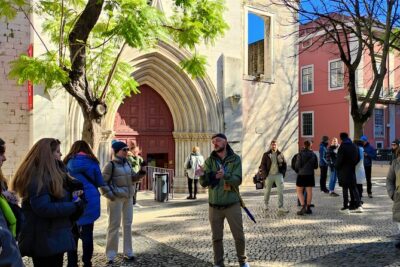
Then comes Praça do Comércio, also called Terreiro do Paço. The tour describes it as one of the largest squares in Europe, with about 36,000 square meters (roughly 180 by 200 meters). Hearing that size while you approach is useful because it changes how you interpret Lisbon’s scale. This isn’t a small plaza that disappears on you; it’s a wide, ceremonial space.
The practical value of Praça do Comércio on this tour is orientation. It’s a visual hinge between central Lisbon and the direction you’ll head next toward the Tagus. Even if you’ve never been to Lisbon before, you’ll start to understand why people point to this area as a reference point.
One caution: this is also the kind of place where light and angles can make photos tricky from inside a vehicle. If you care about crisp pictures, take a moment when you get the clearest sightline and don’t wait too long.
Cais do Sodré, Praça dos Remolares, and Lisbon as a merchant city
Lisbon’s identity shows up clearly in the next cluster: the tour connects Cais do Sodré and Praça dos Remolares through older names and older jobs. The commentary says those designations were common for a long time before the statue of the Duke of Terceira was built in 1877. It also explains why the area was known as remolares: it was a place for workers tied to oars and tugboats.
Then you get a detail that’s small but memorable: the Regulador clock, built in 1906, marked the legal hour of Lisbon for many years. That’s the sort of info that makes a city feel lived-in rather than just scenic.
From there, the tour shifts into the merchant story. Lisbon is framed as a city of merchants, where street vendors sold a little of everything. With the rise in trade after the discoveries in the sixteenth century, the tour explains that the city reorganized where merchants operated, leading to the creation of the Ribeira Velha Market, located in front of Casa dos Bicos.
Why I think this matters for you: it gives you a lens. If you’re walking later, you’ll see Lisbon differently. You’ll understand why certain streets and market-adjacent spots matter beyond their architecture.
The Christ the Redeemer link and why it fits Lisbon’s storytelling
There’s an unexpected detour in the commentary that can be fun if you enjoy cultural crossovers. The tour explains that the statue of Christ the Redeemer in Rio de Janeiro inspired a similar monument in Lisbon. The key detail provided is that in 1934, during a visit to Rio by the Cardinal-Patriarch of Lisbon, Mons. Manuel Gonçalves Cerejeira, the idea took shape.
Even though this is one of the shorter “story beats” in the ride, it’s a great example of how the tour commentary connects Lisbon to broader world history. It’s also a good reminder to keep an eye out for references you might otherwise miss when you’re just looking at buildings.
Crossing the Tagus: 25 de Abril Bridge and Lisbon’s engineering pride

The ride over the 25 de Abril Bridge is one of the big moments. The tour describes it as a suspension bridge on the Tagus River (Rio Tejo), connecting Lisbon on the north bank to Almada on the south bank. You also get the phrase Tejo bottleneck for the final and narrowest section of crossing.
The bridge also gets an engineering comparison: the project is said to be similar to the Golden Gate bridge in San Francisco, and the tour highlights that structural calculations were conceived ahead of time for the later addition of the train. For many visitors, this is the kind of detail that turns a famous bridge from a silhouette into something you can picture with real substance.
Photo note: if you’re sensitive to motion, take your photos quickly and then watch instead. The best part of bridge sightseeing is sometimes just seeing the city and the river align in your mind.
Cordoaria Nacional: a former Portuguese Navy rope factory
Back on the Lisbon side of the story, you’ll hear about Cordoaria Nacional, tied to the Portuguese Navy. The tour describes it as a factory establishment that made key maritime materials: cables, sisal ropes, sails, and flags. The building was built in 1771 and is currently described as a national monument.
This stop is valuable because it adds texture. Lisbon isn’t only towers and tiles. This is a reminder that it built and maintained its ships and systems too. Even if you don’t stop to walk around, the commentary helps you recognize this kind of industrial heritage as part of the city’s bigger maritime identity.
MAAT and Tejo Central: contemporary architecture meets old industry
You’ll also pass by the Museum of Art, Architecture and Technology (MAAT), described as a contemporary art museum with a design that emphasizes its river-facing facade. The tour says the building’s back portion was meant to blend with the urban space. It’s positioned as one of Lisbon’s most important architectural pieces of recent years.
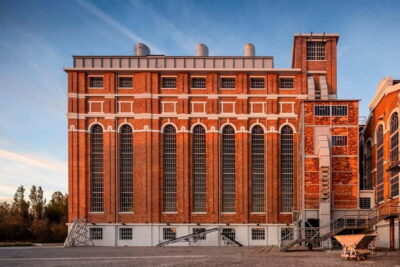
Then the tour touches another major site: what was originally Tejo Central, built between 1908 and 1951, with multiple expansion stages during that period. The tour describes the structure as western iron architecture with bricklaying that decorates the sides with artistic styles ranging from new art to classicism.
Even if art museums aren’t your top priority, this pairing works because it shows a timeline: industrial Lisbon gives way to modern culture. You can spot why Belém attracts so many photographers and architecture fans without needing to memorize dates beyond what the tour gives you.
Belém’s official-residence story: Palace of Belém
As you head deeper into Belém, you’ll hear about the Palace of Belém, described as the official residence of the President of the Republic. The tour says that in 1912, after the proclamation of the republic, it was designated as the presidential residence. It also adds that presidents of the First Republic had to pay income to the state to live there, rather than being accused of enjoying privileges from the previous regime.
That little detail turns a palace into something more human and political. It gives you a sense that governments and rules shaped even daily residence, not just grand ceremonies.
Jerónimos area: monastery, kings, poets, and later cultural programming
The tour’s Belém segment includes the Monastery as a cultural landmark spanning five centuries. The commentary frames it as a reception and burial place for kings and later poets. It also explains how the definitive project was decided at the beginning of 1988, and that it transformed into a cultural and conference center in 1993. The programming focus is described as music, theatrical arts, and photography.
This is one of the most meaningful stops for understanding why Belém feels different from the rest of Lisbon. Even without stepping inside, the narrative connects monarchy, literature, and modern arts programming into one continuous thread.
If your instinct is to see everything immediately, remember the tone of this tour: it’s an overview. You’ll get the context so later, when you choose what to explore more deeply, you’re making better decisions.
Torre de São Vicente and the Monument of Discoveries: maritime Portugal in stone
Near the end of the loop, you’ll hear about the Tour de Belém, officially Torre de São Vicente. The tour explains that it’s located where Belém beach once existed, originally surrounded by waters around its perimeter. Over the centuries it was surrounded by the beach until it became part of the mainland.
That geological/time-change idea is a great way to make you slow down mentally, even while you’re still traveling by bus.
Finally, you’ll reach the Monument of the Discoveries, described as built on the occasion of the Portuguese World Exhibition in 1940. The tour attributes the design to Cottinelli Telmo, as a tribute to Infante D. Henrique, celebrating not only him but also his collaborators and followers.
This finale works especially well for first-time visitors because it ties the earlier merchant and navigation stories to a visible, recognizable monument.
Snacks, Wi‑Fi, and the tips that help after the ride
This tour feels built for the practical traveler. You get a serving of Portuguese pastries, plus coffee and/or tea and even juice included. Since it’s a city-center to Belém format, that matters. You’re likely to arrive hungry after walking Lisbon’s slopes and squares, and you’ll appreciate having something waiting rather than trying to hunt down a snack mid-day.
The onboard Wi‑Fi also changes how you can use the tour. While you’re listening to commentary, you can check what’s nearby at the end point near Jerónimos/Planetarium and plan your next block. And because the route covers multiple major zones, it’s easier to decide what’s worth more time once you’ve got your bearings.
The tour also aims to give tips on where to eat, drink, and explore. Even if those suggestions are brief, they help you avoid the common trap of choosing your next meal purely by convenience.
Comfort notes that matter: air-con, group size, and no restroom
Comfort on this kind of sightseeing tour comes down to three details: air-conditioning, time, and restroom access.
- Air-conditioned vehicle: good news if you’re visiting during warmer months.
- About one hour: you’ll feel the ride more than the waiting, but it also means you can’t linger.
- No restroom on board: use facilities before you start, especially if you’re traveling with kids who can’t comfortably wait.
The tour caps at 44 travelers, which is a reasonable size for a one-hour overview. You’re less likely to feel boxed in compared with giant coach tours.
Also remember the age rule: children under 6 are not allowed on board, while children pricing applies for ages 6 to 14.
Should you book City Center – Belém? My take
Book it if you want a quick, story-driven introduction to Lisbon’s big landmarks, plus included snacks and drinks, plus Wi‑Fi so you can plan your next moves. It’s a good fit for first-timers, solo travelers who like structure, and anyone with limited time who still wants more context than just passing by monuments.
Skip it or think twice if you need frequent bathroom breaks, hate short rides where you mostly observe from the bus, or you’re traveling with very young kids who can’t join the tour. And before you go, treat your confirmation as important: the provider is listed as Coffee Time Tour Lisbon, and there’s at least one cautionary report about the tour no longer running at some point in the recent past. Your best protection is making sure your booking confirmation is valid for your dates.
If you decide to book, go in with the right mindset: this tour is about getting oriented, not ticking every site off in depth. Use it as the opening act, then pick your favorites for a slower follow-up.
FAQ
How long is the City Center – Belém bus tour?
It’s about 1 hour.
What’s the price per person?
The price is $15.43 per person.
Is Wi‑Fi included on the bus?
Yes. Wi‑Fi on board is included.
Are snacks and drinks included?
Yes. You’ll be offered Portuguese pastries and coffee and/or tea, plus juice.
Where does the tour start and end?
It starts at Restauradores 1249-970 Lisbon, Portugal and ends in the Belém area in front of the Planetarium, near Mosteiro Jerónimos (1400-206 Lisbon).
Is there a restroom on board?
No. A restroom on board is not included.
Are children allowed?
Children under 6 are not allowed on board. Children’s pricing applies for ages 6 to 14.
More City Tours in Lisbon
- Lisbon City Center Tour – The Unmissable Lisbon★ 5.0 · 22,234 reviews
- Lisbon: Daytime/Sunset/Night City Sailboat Tour with Drink★ 4.9 · 3,114 reviews
- Lisbon: City Highlights and Viewpoints E-Bike Tour★ 4.9 · 1,556 reviews
- Lisbon: City Sightseeing Hop-On Hop-Off Bus Tour★ 3.8 · 1,220 reviews
- Lisbon: Private City Tour by Eco Tuk Tuk★ 4.9 · 1,215 reviews
More Tour Reviews in Lisbon
- Lisbon City Center Tour – The Unmissable Lisbon★ 5.0 · 22,234 reviews
- Lisbon: Sintra, Pena, Regaleira, Cabo da Roca & Cascais★ 4.7 · 19,656 reviews
- Lisbon Card: 24, 48, or 72-Hour Pass★ 4.5 · 17,944 reviews
- Lisbon: Jerónimos Monastery Entrance Ticket★ 4.1 · 14,164 reviews
- Lisbon: History, Stories and Lifestyle Walking Tour★ 4.8 · 10,902 reviews
Belém: More Monuments and Pastéis
- Lisbon: Jerónimos Monastery Entrance Ticket★ 4.1 · 14,164 reviews
- Private Lisbon Sightseeing Tuk-Tuk Tour: Alfama, Belém & More★ 5.0 · 4,277 reviews
- Age of Discoveries Walking Tour in Belém★ 5.0 · 1,513 reviews
- Lisbon: Bike Tour from Lisbon to Belém + Liquor & Pastry★ 4.7 · 688 reviews
- Bike Tours Lisbon – Center of Lisbon to Belém★ 5.0 · 686 reviews
Just in: fresh Lisbon reviews from the team





Belém Tours, compared.
 ★ 4.1Jerónimos Monastery Entrance TicketFrom $2114,164 reviews
 ★ 5.0Private Lisbon Sightseeing Tuk-Tuk Tour: Alfama, Belém & MoreFrom $524,277 reviews
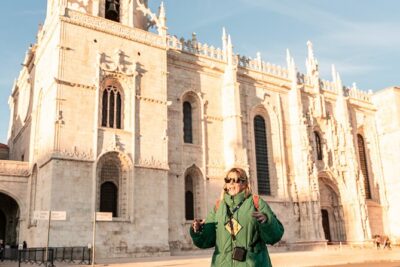 ★ 5.0Age of Discoveries Walking Tour in BelémFrom $31,513 reviews
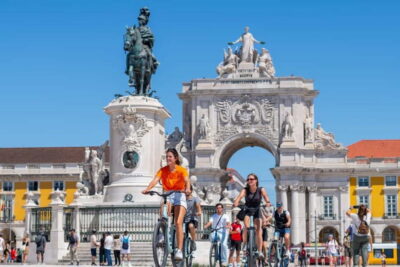 ★ 4.7Bike Tour from Lisbon to Belém + Liquor & PastryFrom $46688 reviews
 ★ 5.0Bike Tours Lisbon – Center of Lisbon to BelémFrom $19686 reviews
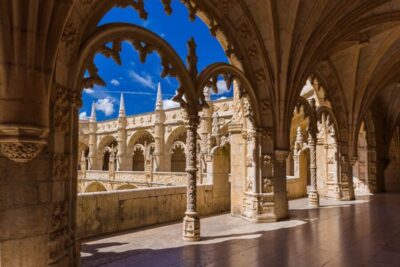 ★ 3.7Jerónimos Monastery E-Ticket and Audio GuideFrom $33660 reviews
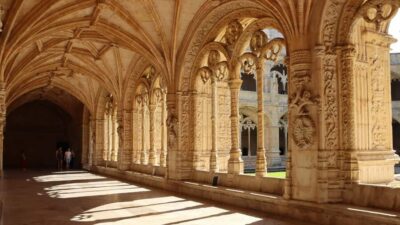 ★ 4.9Belém Walking Tour with Jerónimos Monastery TicketFrom $69637 reviews
 ★ 4.0MAAT Gallery and MAAT Central Entry TicketsFrom $17559 reviews
Browse the lists this tour appears in