
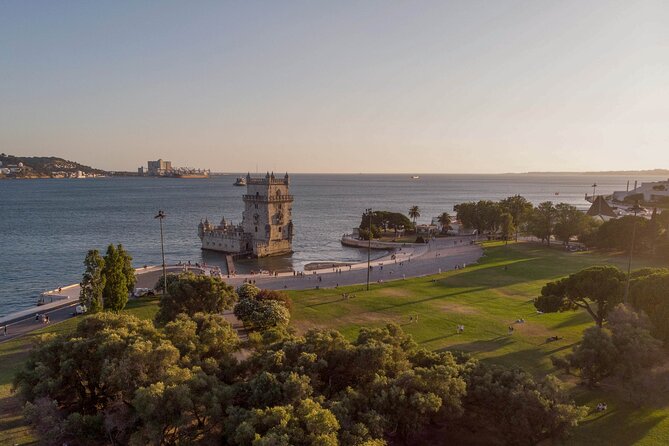
Reviewed · BELÉM TOURS
Authentic Lisbon: 4h Tuk Tuk Tour of Lisbon and Belém Secret Gems
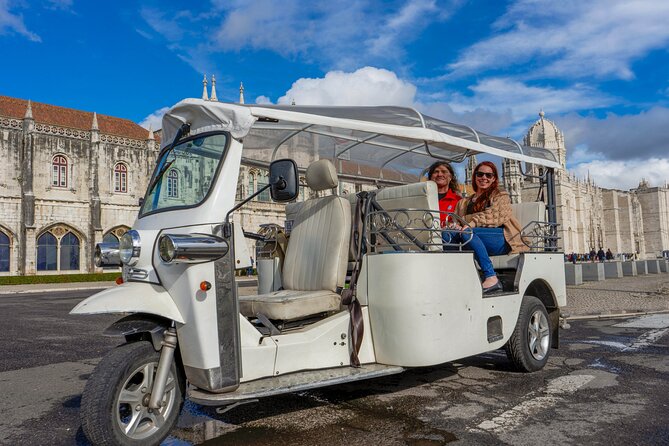
Lisbon feels bigger when you ride low and quiet. This 4-hour electric tuk tuk tour strings together Lisbon’s classic hills and Belém’s riverfront monuments, with guide Rui hopping out to point out photo angles cars can’t reach. You’ll get the kind of orientation that makes later self-guided exploring way easier.
I also like the 30-minute stop format. You’re in the neighborhoods long enough to breathe the atmosphere (Miradouro da Graça, Alfama, Mouraria/escadinhas), then you roll on to Belém for the big names and the view from above. One catch: entry tickets for the Padrão dos Descobrimentos, Mosteiro dos Jerónimos, and Torre de Belém are not included, so budget for add-on ticket time and cost if you go inside.
In This Review
- Key things I’d circle before you book
- Why an electric tuk tuk tour is a smart way to start Lisbon
- Rossio Square to the first viewpoint: a fast start that pays off
- Miradouro da Graça: traditional Lisbon with your first big photo angles
- Alfama in a tuk tuk rhythm: where you actually get lost (and it’s good)
- Belém’s Discovery monuments: Padrão dos Descobrimentos for the big top view
- Jerónimos Monastery: Manueline stone and UNESCO-level detail
- Escadinhas de São Cristóvão and Mouraria: traditional Lisbon with a multicultural edge
- Torre de Belém and the Tagus: your riverfront reality check
- Capela de Santo Amaro in Alcântara: azulejos plus a hillside view
- Ponte 25 de Abril: the red-orange icon and how it changes the view
- Price and value: what you’re paying for (and what you might pay extra)
- Who this tour fits best (and who might feel limited)
- Should you book this Lisbon and Belém electric tuk tuk tour?
- FAQ
- How long is the Lisbon and Belém tuk tuk tour?
- What does the tour cost?
- Is the tour offered in English?
- Is this a private tour or shared with other groups?
- Are entrance fees included for the main monuments?
- Where does the tour start and end?
- What is the cancellation policy?
Key things I’d circle before you book

- Electric tuk tuk for steep, car-unfriendly areas so you spend time looking, not commuting
- Rui’s on-the-ground guidance and his habit of pointing out corners where cars can’t go
- Photography-friendly route with strategic viewpoints across multiple parts of the city
- Mix of neighborhoods and Belém icons rather than only one side of town
- Short, timed stops that keep the day moving without turning it into a marathon
- Some monument entrances are extra (free viewpoints balance the paid ones)
Why an electric tuk tuk tour is a smart way to start Lisbon

Lisbon is gorgeous, but it can also be a hill-by-hill logistics puzzle. That’s where an electric tuk tuk helps. You glide through tight streets and get close to viewpoints without wrestling buses, long walks, or constant uphill detours. It’s a practical way to get your bearings in a short window.
This tour also does a good job mixing “place” with “story.” You’re not only seeing famous landmarks; you’re stopping in neighborhoods that feel lived-in. Barrio da Graça keeps that traditional rhythm, and Alfama still reads like an old village carved into stone. Then you pivot toward Belém, where Portugal’s Age of Discovery shows up in big monuments and river views.
Best of all, it feels flexible at the right times. Rui is repeatedly praised for being friendly and responsive, including handling special requests and keeping the ride fun. The tuk tuk itself is clean and electric, which makes the experience feel modern even while you’re cruising through old Lisbon.
More mornings among the monuments of Belém
- Lisbon: Jerónimos Monastery Entrance Ticket
★ 4.1 · 14,164 reviews - Private Lisbon Sightseeing Tuk-Tuk Tour: Alfama, Belém & More
★ 5.0 · 4,277 reviews - Age of Discoveries Walking Tour in Belém
★ 5.0 · 1,513 reviews - Lisbon: Bike Tour from Lisbon to Belém + Liquor & Pastry
★ 4.7 · 688 reviews
Rossio Square to the first viewpoint: a fast start that pays off
You meet at Rossio Square (Praça do Rossio, 1100-200 Lisboa), and that’s a smart anchor point. From here, you can later branch off on your own to wherever you liked most. Starting in the city center also keeps the day from feeling like a long preamble to get “somewhere else.”
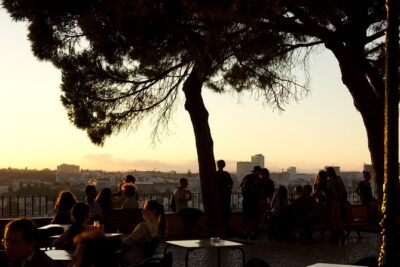
Your first stop is at Miradouro da Graça, the Sophia de Mello Breyner Andresen viewpoint. Graça is a traditional neighborhood, and the magic here is that you’re not just looking at Lisbon—you’re looking from Lisbon. Expect a calm, local-feeling setting where you can catch wide views without crowds pushing you forward.
Then you settle into the rhythm: about 30 minutes per stop, which is long enough to take photos, wander a little, and actually look up from the screen. Short tours can feel rushed. This one avoids that by giving you repeated moments to reset—view, street, view again.
Miradouro da Graça: traditional Lisbon with your first big photo angles
Miradouros are Lisbon’s unofficial superpower. These viewpoints are how locals experience the city’s scale—hills, rooftops, and the way light slides across tile and stone.
At Miradouro da Graça, you get an immediate sense of why Lisbon has that reputation for steep magic. You’ll likely notice how the neighborhood textures blend into the wider city. It’s a good first stop because it sets a visual map in your head before you step into the narrow streets.
Even if you don’t plan to go inside any museums, a viewpoint stop is still valuable. It gives you reference points for later. When you see Alfama’s maze of lanes, you’ll understand where you are in relation to the rest of Lisbon. That makes the day feel connected, not like random driving.
Alfama in a tuk tuk rhythm: where you actually get lost (and it’s good)

Next up is Alfama, one of Lisbon’s oldest neighborhoods, founded by Arabs long ago, with the name related to hot-water sources. The point of this stop isn’t just history dates. It’s the way Alfama feels: old, colorful buildings, tight alleyways, and that low-volume everyday life that makes you slow down.
This is where I love the format. The tuk tuk gets you close, then you spend enough time walking that you can do the classic thing—getting turned around on purpose. Alfama’s lanes can be cluttered and steep, but that’s part of the charm. You might hear fado drifting from staircases, and you’ll likely spot the Tagus in flashes between buildings.
Practical note: this is an area where comfy shoes matter. You don’t need hiking boots, but you do want something with grip. If your goal is photos, pause often. Alfama rewards stopping for one more turn.
The hills done the easy way, more tuk-tuk runs


Belém’s Discovery monuments: Padrão dos Descobrimentos for the big top view

After Lisbon’s hills, the tour moves to Belém, where the monuments get more monumental. First is the Padrão dos Descobrimentos (Monument to the Discoveries), a striking caravel-shaped structure built to honor Portuguese navigators. It was inaugurated in 1960 for the 500th anniversary of Prince Henry the Navigator’s death.
What makes this stop worth your time is the combination of scale and perspective. The monument isn’t just something to photograph at street level. From the top, you get panoramic views over Lisbon, the river, and nearby monuments. That’s the kind of shot you can’t easily recreate later without paying the hassle.
One detail to plan for: admission is not included. That doesn’t make it a bad stop, but it means your time and budget should account for a ticket process and possible lines. If you decide you want the viewpoint from above, this stop is the one where that decision matters most.
Jerónimos Monastery: Manueline stone and UNESCO-level detail

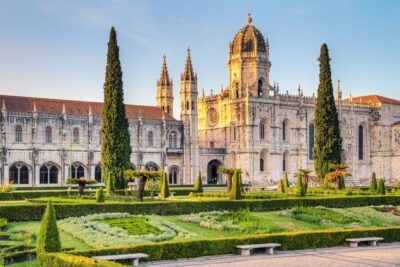
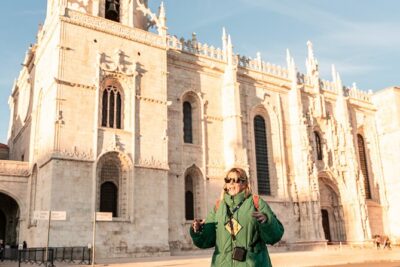
Next comes Mosteiro dos Jerónimos, a UNESCO World Heritage Site and one of Portugal’s key monuments. It’s famed for the Manueline style, with elaborate stone carving and the sense that every surface is trying to impress you.
This monastery is tied to the Age of Discovery and commissioned by King Manuel I to honor Vasco da Gama’s return from India. Translation: this isn’t just a church you pass by. It’s meant to be read in stone—careful ornamentation, dramatic architecture, and an interior that rewards a slower glance.
Like the Padrão, the Jerónimos Monastery admission is not included. That means you should decide in advance how much you want to spend on entrances for this half-day. If you care about architecture or you’re here for Discovery-era monuments, it’s usually worth it. If your priority is neighborhood texture and viewpoints, you might choose to focus more on the outside and the time around it—still a worthwhile stop either way.
Escadinhas de São Cristóvão and Mouraria: traditional Lisbon with a multicultural edge

Then you pivot back toward Mouraria, with a stop at Escadinhas de São Cristóvão. Mouraria is a traditional, multicultural neighborhood that still feels like Lisbon, not a theme park. It’s also a place where you can feel the neighborhood life in the way streets connect: stairs, corners, and the sense of daily movement.
This stop is shorter (about 30 minutes), but it’s designed to give you texture. The escadinhas—stairways—are built into how the neighborhood functions. If you’re trying to understand Lisbon beyond postcards, this is the kind of spot that teaches you how locals experience the city’s vertical layout.
What I like about placing this after Belém is contrast. Belém is monumental stone; Mouraria is human-scale street texture. By the time you reach Mouraria, you’ve already seen major icons, so you appreciate the smaller details more.
Torre de Belém and the Tagus: your riverfront reality check

Now you hit one of Belém’s headline monuments: Torre de Belém. This early 16th-century tower sits on the banks of the Tagus and mixes Manueline and Gothic elements. Originally it was meant for defense—protecting access to Lisbon’s port—and over time it served military, customs, and even prison functions.
Today it’s UNESCO-listed and a symbol of Portugal’s Age of Discovery. In other words: you’re looking at history that’s still physically anchored in the river’s edge.
This stop has an important planning detail: admission is not included. If you’re the type who wants the inside experience, keep that in mind so you aren’t surprised by extra tickets. If you’re mostly after views and photos, the tower’s river setting still delivers strong results even from the outside.
Capela de Santo Amaro in Alcântara: azulejos plus a hillside view
From Belém’s towers, the tour turns toward Alcântara for Capela de Santo Amaro. This chapel dates to 1549 and is known for its interior. The walls—and parts of the galilé—are covered in polychrome late-Manierist azulejos that depict scenes tied to Saint Amaro. The imagery sometimes includes symbolic representations like arms and legs connected to miracles attributed to the saint.
What I find practical here is that you get art and an immediate scenic payoff. The chapel sits on a hill, so even if you spend less time inside, the viewpoint over the Tagus and the Ponte 25 de Abril area is part of the value.
Here’s the budget-friendly part: admission is free. That makes this a good stop to balance the paid monument entries earlier.
Ponte 25 de Abril: the red-orange icon and how it changes the view
The tour ends with one of Lisbon’s most recognizable structures: Ponte 25 de Abril. It’s a suspension bridge linking Lisbon to Almada across the Tagus, about 2,277 meters long, with a central span over a kilometer.
Originally it opened in 1966 as Ponte Salazar, then it was renamed after the 1974 revolution to honor the end of the dictatorship. The bridge carries vehicles on the upper level and—since 1999—trains on the lower level, which is part of why it’s such a functional piece of infrastructure, not just a photo prop.
Visually, the bridge’s painted red-orange steel and elegant profile recall the Golden Gate Bridge look. Seeing it from this tour context is helpful: you’re not just viewing the bridge alone. You’re viewing it as part of the river corridor that connects Lisbon’s neighborhoods to Belém and beyond.
This final stop is great for wrapping up with one last wide shot before you head back to Rossio.
Price and value: what you’re paying for (and what you might pay extra)
At $144.49 per person for about 4 hours, the value comes from combining several things at once:
- Transportation that helps you cover steep neighborhoods without turning the day into nonstop walking
- A local guide who repeatedly gets credit for friendly service and smart photo guidance
- Time efficiency, since you’re seeing multiple areas—Graça, Alfama, Belém, Mouraria, Alcântara, and the bridge—in one loop
- Electric tuk tuk comfort, which makes short stops more pleasant
Where the value becomes a little less automatic is admissions. Several major monuments—Padrão dos Descobrimentos, Mosteiro dos Jerónimos, and Torre de Belém—have tickets not included. Other stops are explicitly free, like Miradouro da Graça, Alfama, Escadinhas de São Cristóvão, Capela de Santo Amaro, and Ponte 25 de Abril.
So I’d treat the listed price as the foundation, then decide on the spot which paid entrances you truly want. If you’re into architecture and want the top view, you’ll likely add tickets anyway. If you’re more about street life and viewpoints, you can choose a more budget-friendly approach.
One more planning detail: average booking timing is about 34 days in advance. That suggests this tour has steady demand, so booking ahead is a safe move.
Who this tour fits best (and who might feel limited)
This is a strong fit if you want an organized introduction with local context, without turning your day into a transportation chase. It also works well if you’re someone who likes photography and wants help finding view angles. Rui’s photo and drone use comes up in feedback, and even when drone flights aren’t guaranteed, you’ll still get pointed to strong viewpoints.
It also suits people who don’t want to commit to a full museum day. You get fast stops that make you feel like you’re learning the city, then you can follow up later.
The main limitation is time. With about 30 minutes per stop, you can’t do everything deeply. If you’re the type who wants an hour+ inside major sights, you’ll likely wish this were longer or you’d pair it with a second visit later.
Weather matters too. The experience runs best in good weather, and if conditions are poor, the operator offers a different date or a full refund.
Should you book this Lisbon and Belém electric tuk tuk tour?
I’d book it if you want to hit multiple neighborhoods plus Belém’s big monuments in one smooth half-day. The electric tuk tuk setup saves energy, and the route gives you both viewpoints and street life, not just one side of the city.
I wouldn’t book it as your only Lisbon plan if you want long, slow museum time at the paid sites. In that case, use this as the starter course, then return on your own to the places that pull you in.
One last tip: bring comfortable shoes for Alfama and Mouraria’s stairs and lanes, and keep your camera ready. This tour is built for quick photo moments, and the guide’s advice can make those moments noticeably better.
FAQ
How long is the Lisbon and Belém tuk tuk tour?
The tour lasts about 4 hours.
What does the tour cost?
It’s priced at $144.49 per person.
Is the tour offered in English?
Yes, the tour is offered in English.
Is this a private tour or shared with other groups?
This is private. Only your group participates.
Are entrance fees included for the main monuments?
Not all of them. Admission is not included for the Padrão dos Descobrimentos, Mosteiro dos Jerónimos, and Torre de Belém. Several other stops are free, such as Miradouro da Graça, Alfama, Escadinhas de São Cristóvão, Capela de Santo Amaro, and Ponte 25 de Abril.
Where does the tour start and end?
The tour starts at Rossio Square (Praça do Rossio, 1100-200 Lisboa) and ends back at the meeting point.
What is the cancellation policy?
You can cancel for a full refund up to 24 hours before the experience starts. If you cancel less than 24 hours before, the amount paid is not refunded. The experience also requires good weather, and in poor weather it may be offered a different date or a full refund.
More Tour Reviews in Lisbon
- Lisbon City Center Tour – The Unmissable Lisbon★ 5.0 · 22,234 reviews
- Lisbon: Sintra, Pena, Regaleira, Cabo da Roca & Cascais★ 4.7 · 19,656 reviews
- Lisbon Card: 24, 48, or 72-Hour Pass★ 4.5 · 17,944 reviews
- Lisbon: Jerónimos Monastery Entrance Ticket★ 4.1 · 14,164 reviews
- Lisbon: History, Stories and Lifestyle Walking Tour★ 4.8 · 10,902 reviews
More Hills by Tuk-Tuk
- True 4Hour Private Tuk Tuk Tour: Discover Lisbon with a Local!★ 5.0 · 8,008 reviews
- Lisbon: Private Guided Tuk-Tuk Tour with Hotel Pickup★ 4.9 · 4,552 reviews
- Private Lisbon Sightseeing Tuk-Tuk Tour: Alfama, Belém & More★ 5.0 · 4,277 reviews
- Lisbon Highlights: Private Tuk Tuk Tour Adventure Sightseeing★ 5.0 · 3,284 reviews
- Welcome Lisbon Tour with Local Guide in Private Eco Tuk Tuk★ 5.0 · 1,691 reviews
Belém: More Monuments and Pastéis
- Lisbon: Jerónimos Monastery Entrance Ticket★ 4.1 · 14,164 reviews
- Private Lisbon Sightseeing Tuk-Tuk Tour: Alfama, Belém & More★ 5.0 · 4,277 reviews
- Age of Discoveries Walking Tour in Belém★ 5.0 · 1,513 reviews
- Lisbon: Bike Tour from Lisbon to Belém + Liquor & Pastry★ 4.7 · 688 reviews
- Bike Tours Lisbon – Center of Lisbon to Belém★ 5.0 · 686 reviews
Just in: fresh Lisbon reviews from the team




Belém Tours, compared.
 ★ 4.1Jerónimos Monastery Entrance TicketFrom $2114,164 reviews
 ★ 5.0Private Lisbon Sightseeing Tuk-Tuk Tour: Alfama, Belém & MoreFrom $524,277 reviews
 ★ 5.0Age of Discoveries Walking Tour in BelémFrom $31,513 reviews
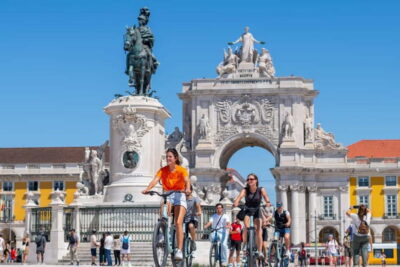 ★ 4.7Bike Tour from Lisbon to Belém + Liquor & PastryFrom $46688 reviews
 ★ 5.0Bike Tours Lisbon – Center of Lisbon to BelémFrom $19686 reviews
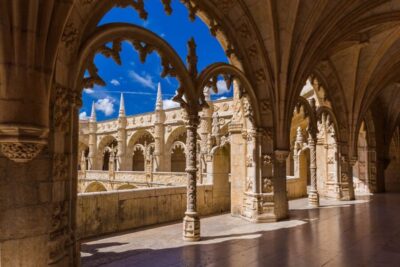 ★ 3.7Jerónimos Monastery E-Ticket and Audio GuideFrom $33660 reviews
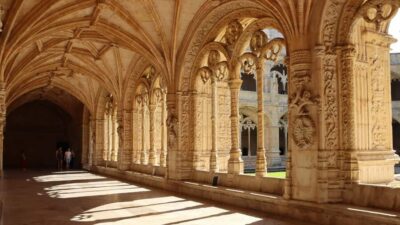 ★ 4.9Belém Walking Tour with Jerónimos Monastery TicketFrom $69637 reviews
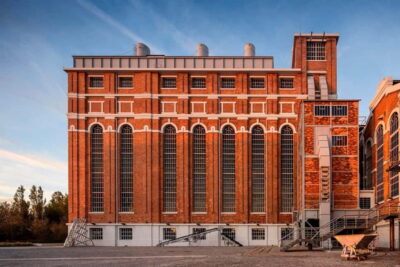 ★ 4.0MAAT Gallery and MAAT Central Entry TicketsFrom $17559 reviews
Browse the lists this tour appears in