

Reviewed · LISBON TUK-TUK TOURS
Tuk Tuk Lisbon: Made For You
Lisbon’s hills get an easy workout. This Made For You tuk tuk tour strings together fado-era streets, top viewpoints, and classic neighborhoods in just a few hours. You’ll see where Lisbon’s stories began and where they’re told best—then use the ride to plan the rest of your trip.
I especially like the panoramic stops at Miradouro Da Senhora Do Monte and Miradouro da Graça, where you get wide 360-degree views without climbing steep stairs. I also like the private guide angle—guides such as Adriana and Pedro bring the sights to life with clear explanations and practical photo spots.
One thing to watch: Lisbon’s cobblestones can make the ride a bit bumpy, and depending on the tuk tuk layout, not everyone will have the same sightlines while cruising.
In This Review
- Key highlights you’ll actually feel
- Why a tuk tuk tour fits Lisbon so well
- Alfama and Lisbon Cathedral: fado starts here
- Miradouro Da Senhora Do Monte: the 360-degree payoff
- Miradouro da Graça (Sophia de Mello Breyner Andresen): calmer, charming, still scenic
- One of Lisbon’s oldest monuments: quick look, big payoff
- Baixa Pombalina: Lisbon rebuilt after 1755
- Chiado: elegant streets, bookstores, and old cafés
- Bairro Alto: colorful lanes by day, nightlife at night
- Praça do Comércio (Terreiro do Paço): Lisbon’s grand waterfront square
- Belém: Discoveries-era Lisbon and the Pastéis de Belém moment
- How long is enough: choosing 2, 3, or 4 hours
- What’s included (and what you’ll pay separately)
- The guides make the difference (and you’ll notice it fast)
- Comfort and small realities: bumpy roads and seating
- Who should book this tour
- Should you book Tuk Tuk Lisbon: Made For You?
- FAQ
- How long is the Tuk Tuk Lisbon tour?
- Is this a private tour?
- What language is the tour guide?
- Are monument tickets included?
- Where does the tour go?
- Can I cancel for a full refund?
- Are children allowed?
Key highlights you’ll actually feel
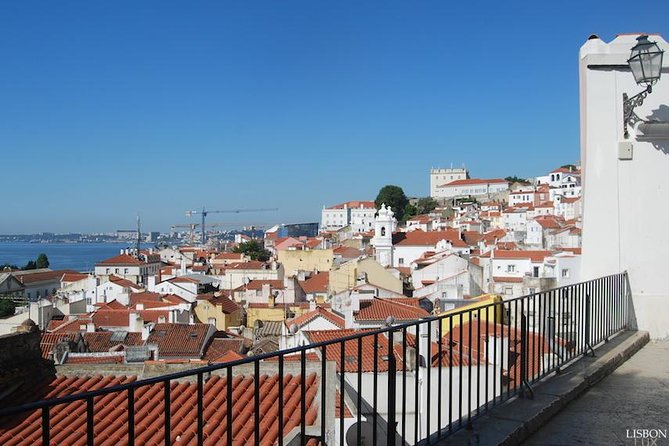
- Top viewpoints for photos fast: Senhora do Monte and Miradouro da Graça are built for quick, high-impact 360-degree panoramas.
- A private guide who sets the pace: stops are short, helpful, and tailored to what your group wants to see.
- Fado roots to waterfront grand square: you’ll connect Alfama/fado origins to Praça do Comércio without doing it all on foot.
- Classic neighborhoods in one sweep: Baixa Pombalina, Chiado, and Bairro Alto show different sides of Lisbon.
- Belém plus the sweet stop: you’ll reach the Discoveries-era area tied to Pastéis de Belém.
- Good value for a half-day plan: private transportation plus a guided visit can be a smart move when time is tight.
Why a tuk tuk tour fits Lisbon so well
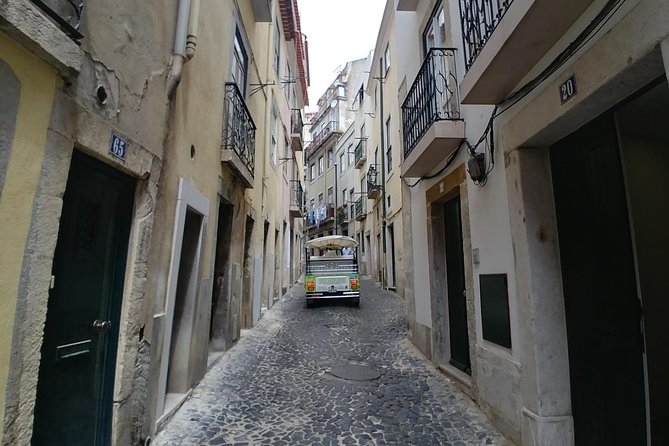
Lisbon is gorgeous, but it’s also built on steep hills. A tuk tuk cuts the “how do we get there?” problem down to size. Instead of burning energy on stairs and hauling your legs between neighborhoods, you focus on viewpoints, streets, and photo angles.
Another underrated advantage: this format is built for orientation. When your route includes Alfama/fado origins, the central rebuilt core (Baixa Pombalina), and the evening-life lanes (Bairro Alto), you start to understand Lisbon’s shape. After a ride like this, you’ll usually know what to repeat and what to skip when you have only a day or two.
The hills done the easy way, more tuk-tuk runs
- True 4Hour Private Tuk Tuk Tour: Discover Lisbon with a Local!
★ 5.0 · 8,008 reviews - Lisbon: Private Guided Tuk-Tuk Tour with Hotel Pickup
★ 4.9 · 4,552 reviews - Private Lisbon Sightseeing Tuk-Tuk Tour: Alfama, Belém & More
★ 5.0 · 4,277 reviews - Lisbon Highlights: Private Tuk Tuk Tour Adventure Sightseeing
★ 5.0 · 3,284 reviews
Alfama and Lisbon Cathedral: fado starts here
The tour begins in the area tied to the birthplace of fado, with narrow lanes, small viewpoints, and that atmospheric “Lisbon is stacked on top of itself” feeling. This is where you get the mood first—before the viewpoints even do their job.
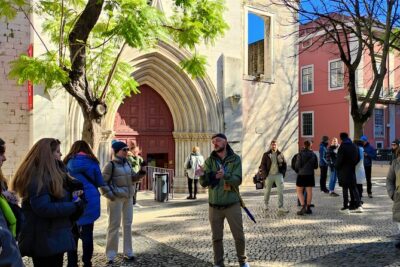
You’ll also pass the Lisbon Cathedral area, a key landmark that helps you place the old city in time. Even if you don’t go deep into every chapel, the exterior and surrounding streets set the tone: layers of Lisbon’s past, compact streets made for wandering, and viewpoints that feel earned.
What I like about this opener is how it sets expectations. Alfama isn’t about speeding through. It’s about understanding why Lisbon’s music and architecture belong together. If you’re the type who likes stories with your photos, you’ll appreciate the context your guide gives at the start.
Miradouro Da Senhora Do Monte: the 360-degree payoff
Next comes Miradouro Da Senhora Do Monte, one of the highest viewpoints in Lisbon, in the Graça neighborhood. This stop is built for impact: you get sweeping 360° views over São Jorge Castle, Baixa Pombalina, the Tagus River, and even the 25 de Abril Bridge.
You’ll stand high enough to see how the city’s layout connects—old walls, central streets, and the water line. It’s also a great place to settle your bearings. If you’re unsure where Belém sits relative to downtown, this viewpoint usually clarifies it fast.
Practical tip: it’s a short stop (around 10 minutes). Bring your patience for wind and sun, and make your photos early. Then listen to what your guide points out so your pictures mean something later.
Miradouro da Graça (Sophia de Mello Breyner Andresen): calmer, charming, still scenic
After the big reveal at Senhora do Monte, you’ll head to Miradouro da Graça (officially named Miradouro Sophia de Mello Breyner Andresen). It’s another Graça viewpoint, but with a more relaxed feel.
Here’s why it matters: you’re not just collecting view numbers. You’re seeing the same city from a slightly different angle, which helps you understand the “why” behind Lisbon’s layout. From one viewpoint you might recognize the river and downtown patterns, and from this one you start noticing how neighborhoods tuck into hills.
Again, it’s a short stop (about 10 minutes). That’s a feature, not a bug. You’ll get the look, then get moving before your group loses momentum.



One of Lisbon’s oldest monuments: quick look, big payoff

Mid-route you’ll make a stop at one of the city’s oldest monuments, described as a mix of architectural styles. The point here isn’t a long museum session. It’s a snapshot—enough to give the city depth without eating up your tour time.
If you’re wondering whether this will feel too quick: remember the structure of the tour. It’s an overview tour with guided photo pauses, so the guide spends time on context rather than long indoor time.
If you want more depth later, you’ll have a better idea of what to revisit after you’re back on your own. This stop is like a teaser trailer for the neighborhoods’ architectural story.
Baixa Pombalina: Lisbon rebuilt after 1755
From the hills and viewpoints, you’ll move toward downtown Lisbon—Baixa Pombalina, the historic and commercial heart of the city. This area was rebuilt after the 1755 earthquake under the direction of the Marquis of Pombal.
This is where Lisbon starts to feel more grid-like and “planned” compared to the older, twisty quarters you passed earlier. When your guide explains the rebuild, you understand why certain streets feel the way they do and how Lisbon balances old layers with newer structure.
Drawback to keep in mind: downtown is busy and can be crowded, so your best photos often come at planned photo moments rather than while wandering freely. The tuk tuk route helps, but you’ll still want to stay quick and watch your meeting points.
Chiado: elegant streets, bookstores, and old cafés

Next up is Chiado, known for culture, history, and modern life in the same walkable space. It’s a bohemian and intellectual center, with theaters, historic cafés, bookshops, and both local and international stores.
What makes Chiado a smart stop on a tuk tuk tour is contrast. After seeing viewpoints and classic squares, you get a neighborhood where Lisbon feels social and everyday. It’s the kind of place where you can imagine spending an afternoon, then stepping into a café to pause.
A short note: since this is an overview tour, you’ll likely get a look and a few key suggestions, but not a full neighborhood hangout. If Chiado clicks for you, plan a return after the tour.
Bairro Alto: colorful lanes by day, nightlife at night
Bairro Alto is one of Lisbon’s iconic neighborhoods, tied to bohemian life and picturesque streets. During the day it’s calmer for strolling. At night, it becomes a central hub for Lisbon’s nightlife.
This stop is useful even if you’re not going out at night. You’ll see the street geometry and the vibe—so later, when you’re searching for dinner or a bar, you’ll have a mental map.
Photo tip: Bairro Alto’s charm is in the side streets. If you want sharper shots, stand where your guide pauses and scan the lanes before the tuk tuk moves on.
Praça do Comércio (Terreiro do Paço): Lisbon’s grand waterfront square
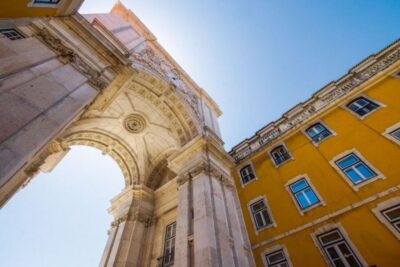
Then you reach Praça do Comércio, also known as Terreiro do Paço—one of Lisbon’s most emblematic squares and a key point in the city’s history and daily life.
Why it’s a must: it’s open, monumental, and connected to the water. If the hills and viewpoints are Lisbon’s “story on top,” this square is Lisbon’s “story unfolding at sea level.”
This is also a great place for a reset. After narrow streets and steep gradients, your group gets breathing room. Your guide can point out how the square functions as a central link between areas.
Belém: Discoveries-era Lisbon and the Pastéis de Belém moment
Finally, you’ll head to Belém, a neighborhood closely associated with the Portuguese Discoveries. It’s known for monuments, museums, and iconic food culture—especially Pastéis de Belém.
This is where the tour turns from views and neighborhoods into a broader “why Lisbon mattered” story. Belém is less about climbing and more about national significance and architecture. Even if you don’t step into every museum, getting there puts the rest of Lisbon’s story into context.
One practical note from real-world experience: guides often help you make time for a sweet stop. You might find a quick option to try Pastéis de Belém, and some guides have used a pass to reduce waiting when available.
Important: food and drink aren’t included, so come prepared to pay for your own snacks. Think of it as your reward for finishing the tour—plus a chance to taste the area’s signature treat.
How long is enough: choosing 2, 3, or 4 hours
The tour runs about 2 to 4 hours, depending on your time slot. Here’s how to think about it:
- 2 hours: best for a first-day orientation when you want big highlights fast.
- 3 hours: a good middle ground if you want more photo moments at viewpoints and neighborhoods.
- 4 hours: ideal if your group likes slow photos, short walks, and more back-and-forth with the guide.
Short stops at Miradouro points (about 10 minutes each) are built into the route, so the main “stretch factor” is how your guide handles time at each neighborhood and whether you pause for extra views.
What’s included (and what you’ll pay separately)
You get:
- Private guide
- Guided visit
- Private transportation by tuk tuk
You do not get:
- Monument tickets
- Food and drinks
This matters because some of what you’ll see may require separate tickets. Your guide can still help you plan smart choices, but you should expect to pay for monument entry if you want to go inside anything that charges.
Value math: at $99.16 per person, you’re paying for private transportation plus guided context over a half-day. If you’re short on time, it can be a cost-effective way to avoid multiple taxis and guesswork—especially in a city where getting from hill to hill can become a logistics puzzle.
The guides make the difference (and you’ll notice it fast)
One theme stands out from the guides you might get: they’re comfortable talking through Lisbon in a way that feels personal, not scripted. Names you could cross paths with include Adriana, Pedro, Magno (sometimes written as Mago), Beatriz, Paulo (also seen as Paolo), Thierry, João, Jefferson, Quellya, Vitor, and Nuno.
What you’re looking for in your own guide? The ability to:
- point out what to photograph from the road
- explain what you’re seeing in plain language
- suggest where to go next after the tour
If your guide is strong, the ride turns into more than driving around. It becomes a guided “map with stories.”
Comfort and small realities: bumpy roads and seating
A tuk tuk is fun, but it’s not a smooth sedan. Lisbon’s cobblestones can make the ride feel rough. If you’re sensitive to jostling, bring a little patience.
Another practical detail: some tuk tuk layouts may have seats that face backward, which can make it harder to see along the route. This isn’t a deal-breaker, but it’s worth knowing before you expect perfect views from every seat.
Also, consider sun protection. One useful tip from real experience: many tuk tuks have a transparent roof, so sunscreen can matter even when the ride feels cool.
Who should book this tour
Book it if:
- you want a fast overview across multiple neighborhoods
- you’re traveling with teens or anyone who dislikes steep walking
- you want guided context without committing to a full museum day
- you’d rather spend your time outside taking photos than stuck figuring routes
Skip it if:
- you want long stays inside monuments and churches (this tour is mostly photo stops and guided viewing)
- you hate any chance of a bumpy ride
- you prefer totally unstructured wandering without set stops
Should you book Tuk Tuk Lisbon: Made For You?
My take: this is a strong choice for first-timers or anyone with limited time who still wants the main neighborhoods connected in a single flow. The viewpoints at Senhora do Monte and Miradouro da Graça are worth it on their own, and the rest of the route helps you stitch Lisbon together—fado roots, rebuilt downtown, Chiado, Bairro Alto, and Belém.
If you book, set your goal as orientation plus highlights, not deep monument time. Bring sunscreen, expect some cobblestone bounce, and use the guide to ask what to revisit later. When you treat it like a planning tool for the rest of your trip, it earns its price.
FAQ
How long is the Tuk Tuk Lisbon tour?
It runs about 2 to 4 hours, depending on your chosen time slot.
Is this a private tour?
Yes. It’s a private tour/activity, so only your group participates.
What language is the tour guide?
The tour is offered in English.
Are monument tickets included?
No. Monument tickets are not included, and food and drinks aren’t included either.
Where does the tour go?
It covers several major Lisbon areas and viewpoints, including the fado birthplace area with Lisbon Cathedral, Miradouro Da Senhora Do Monte, Miradouro da Graça, Baixa Pombalina, Chiado, Bairro Alto, Praça do Comércio, and Belém.
Can I cancel for a full refund?
Yes. You can cancel up to 24 hours in advance for a full refund.
Are children allowed?
Children under 7 years old are not allowed.
If you tell me your travel dates and whether you want more photo time or more history talk, I can suggest the best tour length (2, 3, or 4 hours) for your pace.
More Tour Reviews in Lisbon
- Lisbon City Center Tour – The Unmissable Lisbon★ 5.0 · 22,234 reviews
- Lisbon: Sintra, Pena, Regaleira, Cabo da Roca & Cascais★ 4.7 · 19,656 reviews
- Lisbon Card: 24, 48, or 72-Hour Pass★ 4.5 · 17,944 reviews
- Lisbon: Jerónimos Monastery Entrance Ticket★ 4.1 · 14,164 reviews
- Lisbon: History, Stories and Lifestyle Walking Tour★ 4.8 · 10,902 reviews
More Hills by Tuk-Tuk
- True 4Hour Private Tuk Tuk Tour: Discover Lisbon with a Local!★ 5.0 · 8,008 reviews
- Lisbon: Private Guided Tuk-Tuk Tour with Hotel Pickup★ 4.9 · 4,552 reviews
- Private Lisbon Sightseeing Tuk-Tuk Tour: Alfama, Belém & More★ 5.0 · 4,277 reviews
- Lisbon Highlights: Private Tuk Tuk Tour Adventure Sightseeing★ 5.0 · 3,284 reviews
- Welcome Lisbon Tour with Local Guide in Private Eco Tuk Tuk★ 5.0 · 1,691 reviews
Just in: fresh Lisbon reviews from the team





Lisbon Tuk-Tuk Tours, compared.
 ★ 5.0True 4Hour Private Tuk Tuk Tour: Discover Lisbon with a Local!From $1088,008 reviews
 ★ 4.9Private Guided Tuk-Tuk Tour with Hotel PickupFrom $1534,552 reviews
 ★ 5.0Private Lisbon Sightseeing Tuk-Tuk Tour: Alfama, Belém & MoreFrom $524,277 reviews
 ★ 5.0Lisbon Highlights: Private Tuk Tuk Tour Adventure SightseeingFrom $843,284 reviews
 ★ 5.0Welcome Lisbon Tour with Local Guide in Private Eco Tuk TukFrom $171,691 reviews
 ★ 4.9Private City Tour by Eco Tuk TukFrom $281,215 reviews
 ★ 5.0Old Town TukTuk Tour and Scenic Viewpoints in AlfamaFrom $35974 reviews
 ★ 5.0Explore Lisbon by Tuk Tuk: History and ViewpointsFrom $19840 reviews