
Reviewed · FÁTIMA, NAZARÉ & ÓBIDOS DAY TRIPS
Take Battle Alcobaça and Óbidos The Templar and Medieval Legacy
Four UNESCO stops in one day—yes, really. This full-day loop strings together Templar legends, Cistercian Gothic masterpieces, and medieval street time, guided by Hugo so the history feels like a story you can walk through.
I especially like the way Hugo makes the day feel personal and easy to follow. I also love the mix of major sights plus quieter touches like Tomar’s oldest preserved Portuguese synagogue and a breather in Mata dos Sete Montes.
The main consideration is simple: it’s an 11–12 hour day with a lot of seated travel and walking at monuments. Also, lunch and entrance tickets may cost extra depending on how your booking covers them.
In This Review
- Highlights that make this day trip work
- Lisbon start: how the day gets going (8:30am, then a full loop)
- Tomar’s Convento de Cristo: the UNESCO anchor of the whole theme
- Tomar beyond the big monument: Templar leisure and a synagogue with deep roots
- Lunch break in Batalha: fuel for monasteries (not just a pause)
- Batalha Monastery and the Battle of Aljubarrota you can feel in the details
- Alcobaça Monastery: Cistercian Gothic and the lovers’ tombs
- Óbidos: walls, tiles, and the ginjinha moment
- Pace and timing: managing an 11–12 hour history sprint
- Price and value: what you pay for (and what to budget for)
- Getting the most out of it: practical tips that make a difference
- Should you book this Templar and Medieval Legacy day trip?
- FAQ
- What time does the tour start?
- Where is the meeting point in Lisbon?
- How long is the tour?
- What is the group size?
- Is pickup available?
- Is lunch included?
- Are entrance tickets to the monuments included?
- What language is the tour offered in?
- How do I coordinate with the operator before the tour?
- What’s the cancellation policy?
Highlights that make this day trip work
- Hugo’s story-led guiding style keeps even history-resistant people paying attention, rain or shine
- Convento de Cristo in Tomar brings together Templar roots and dramatic architecture in one visit
- Batalha Monastery connects the architecture to the 1385 victory at Aljubarrota
- Alcobaça Monastery is Cistercian Gothic at its best, plus the famous tombs of Pedro and Inês de Castro
- Óbidos on medieval walls with the chance to taste ginjinha served in a chocolate cup
- Small group size (max 16) plus air-conditioned transport and onboard WiFi for a long day
Lisbon start: how the day gets going (8:30am, then a full loop)
You meet in Lisbon at Av. da Liberdade 2, near the heart of the city, with a start time of 8:30am. From there, you head out by air-conditioned van with WiFi onboard, which matters because the schedule is heavy on sites and long distances.
If you opt for pickup, the tour can work in two ways: a shared pickup point is listed at Hard Rock Cafe for the group option, or private pickup/drop-off can be included from hotels, Airbnbs, the cruise terminal, or the airport. Either way, you end back at the meeting point.
This tour is built for people who like order and context. You’re not just “bus to monument, bus back.” You’re moving through a medieval storyline—Templars in Tomar, a 14th-century Portuguese victory at Batalha, Cistercian spirituality at Alcobaça, then medieval defense and local flavor in Óbidos.
The western circuit, a few more ways to ride it
- Three Cities in One Day: Porto, Nazare and Obidos from Lisbon
★ 4.5 · 3,572 reviews - Fátima, Nazaré and Óbidos Small-Group Day Trip from Lisbon
★ 4.5 · 3,444 reviews - From Lisbon: Fátima, Nazaré, Batalha, and Óbidos Guided Tour
★ 4.7 · 3,060 reviews - From Lisbon: Fatima Batalha Nazaré & Óbidos Small-Group Tour
★ 4.7 · 2,563 reviews
Tomar’s Convento de Cristo: the UNESCO anchor of the whole theme
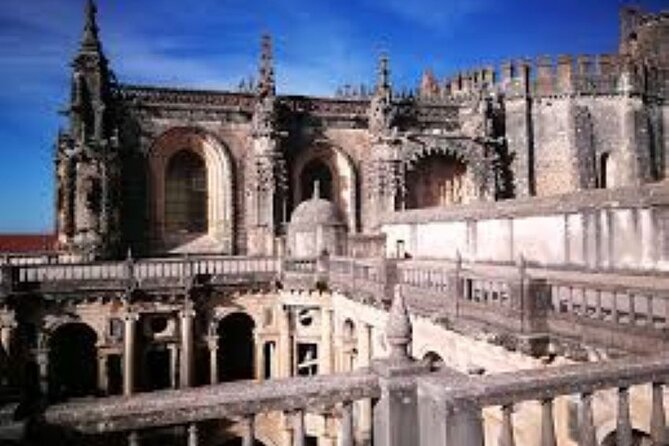
Tomar is where the trip really finds its spine. At Convento de Cristo, you’ll see why this place is so iconic in Portugal. The site is a UNESCO World Heritage Site and tied to the former headquarters of the Knights Templar in Portugal.
You’ll spend time inside major areas of the complex, including:
- the Charola, a circular oratory
- the Main Cloister
- the Manueline Window, one of the most impressive windows in the country
What I like about this stop is how the architecture shows time layers, not just one era. You get a mix of Gothic, Renaissance, Manueline, and Baroque touches in a single visit. It makes the history easier to grasp, because the building itself becomes the timeline.
Practical tip: this is a big “look up” monument. Expect you’ll spend more time observing details than moving quickly. If you’re sensitive to crowds, go slow in the most popular sections and let the guide set the pace.
Tomar beyond the big monument: Templar leisure and a synagogue with deep roots
After the Convento, you get a welcome change of tempo with Mata dos Sete Montes, a large forested park that served as a leisure area for the Templar monks. It’s short—about 30 minutes—but it’s a smart break in the middle of a long day.
Then you head into Tomar’s historic center for the Praça da República and the Igreja de São João Baptista. This is where you get that “real town” feel rather than only grand monuments.
Finally, you visit Tomar Synagogue, described as the oldest preserved Portuguese synagogue. This stop is valuable because it rounds out the medieval picture. It’s not only Christian military and church art; it’s also a window into Jewish life that survived through centuries.
This part of the day works best if you enjoy contrast: sacred spaces, then a park breather, then another kind of history. If your ideal sightseeing day is only big-ticket monuments, you might not realize how much you’ll appreciate the smaller stops until you’re there.
Lunch break in Batalha: fuel for monasteries (not just a pause)
Batalha is the next turn in the story. You’ll have lunch at a typical restaurant for about an hour. The day is long, and this is your chance to reset before the monastery.
The regional food focus is on meat dishes (like roast kid) and also fresh local fish, so you’re not stuck choosing among bland options. Since lunch isn’t included, I’d treat this as part of your planning. If you have dietary needs, it’s worth checking in advance or choosing the simplest, most straightforward items on the menu.
Timing matters here. You don’t want to use lunch as a long social break. Think of it as energy management so you can give the next stop your attention.
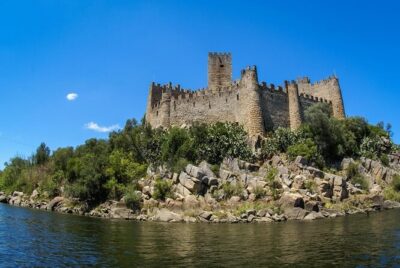
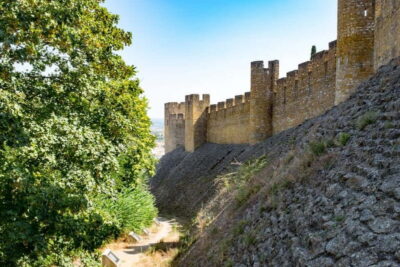
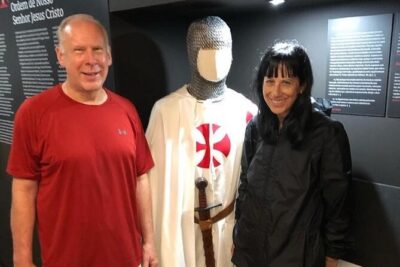
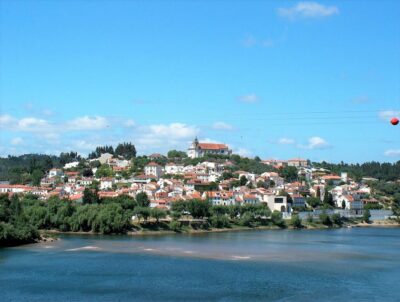
Following the Templars: more Tomar day trips
Batalha Monastery and the Battle of Aljubarrota you can feel in the details
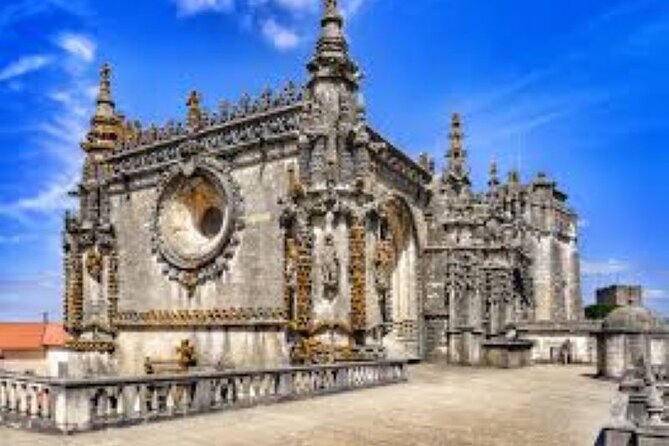
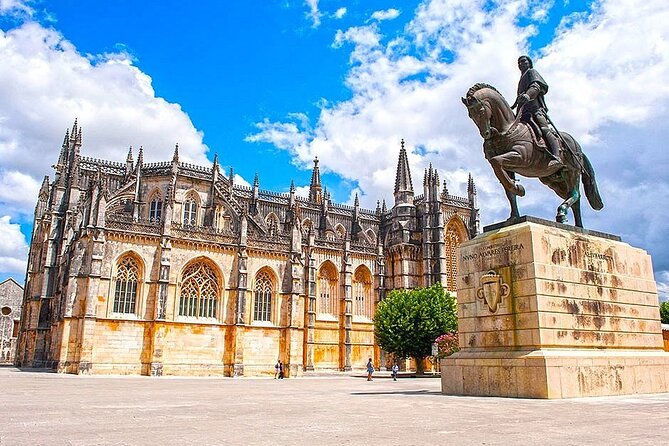
At Batalha Monastery (Santa Maria da Vitória), you visit one of Portugal’s major UNESCO monuments. The key hook is the connection to the Portuguese victory in 1385 at the Battle of Aljubarrota. That link keeps the visit from feeling like decoration-only sightseeing.
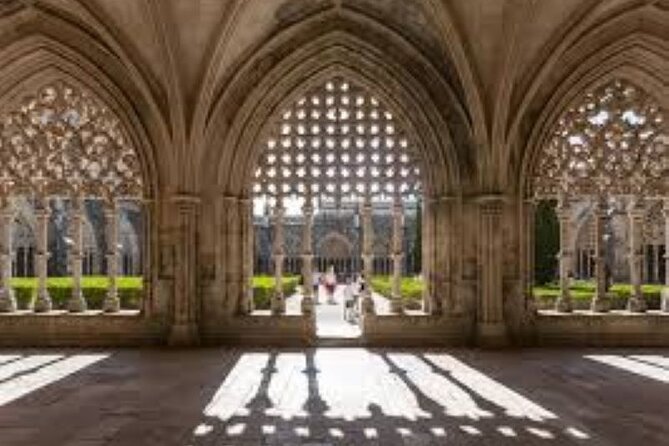
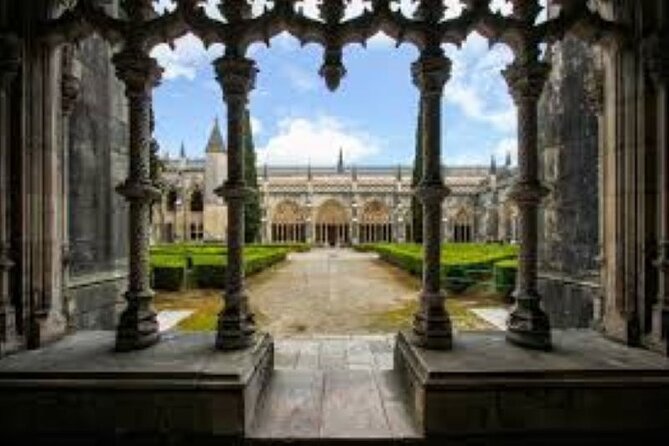
You’ll tour the church, cloisters, the Founder’s Chapel, and the Imperfect Chapels. You’ll also see stained glass windows and the tomb of Prince Henry the Navigator. Even if you know nothing about the period, the guide’s storytelling usually helps the significance click.
What makes this stop work well on a day tour is the combination of scale and narrative. Gothic architecture is impressive, but it’s even more satisfying when you understand why it was built and what it commemorates.
Practical consideration: this monument gets your legs involved. Wear shoes you don’t mind for long days. And if rain shows up, plan on a few extra minutes and slightly slower transitions—medieval stone can be slippery.
Alcobaça Monastery: Cistercian Gothic and the lovers’ tombs
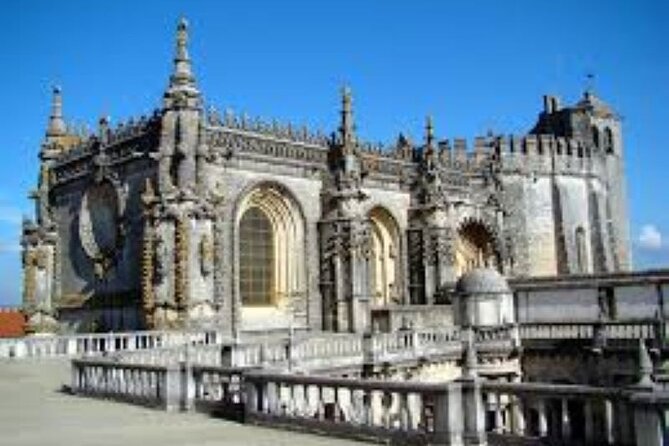
Next comes Alcobaça Monastery (Santa Maria de Alcobaça), another UNESCO World Heritage Site and one of the best-preserved Cistercian monastery complexes in Portugal. It was founded in 1153, and the visit is structured so you can appreciate not only the church but the living/work spaces tied to monastic life.
You’ll explore the grand church and the cloisters, plus stops like the refectory, the monumental kitchen, and the monks’ room. In other words, you see the monastery as a whole system, not just a single chapel.
The emotional headline is inside the church: the tombs of Pedro and Inês de Castro, known as the eternal Portuguese lovers. If you enjoy dramatic stories tied to monuments, this is a highlight that makes the architecture feel human.
Afterward, you’ll have time in Alcobaça’s historic center for a short walk around Praça 25 de Abril and surrounding streets. If there’s time, you may also get the chance to try typical convent sweets such as egg rolls or cornucopias. Even if you don’t buy a sweet, the brief center walk helps you cool down after a large monument.
Óbidos: walls, tiles, and the ginjinha moment
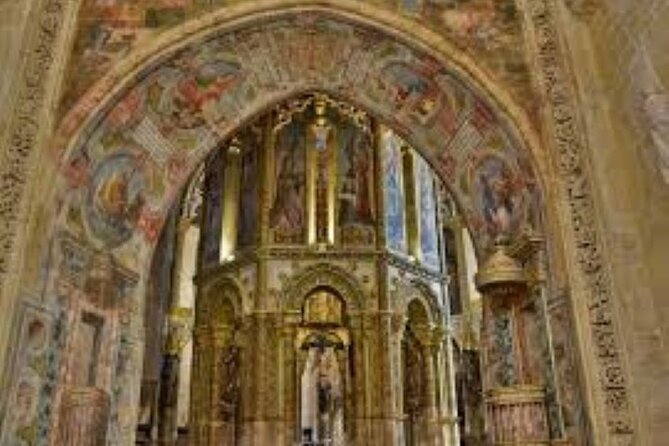
Óbidos is the fun, medieval-fairytale finish. You’ll start at the Church of Santa Maria, including Santa Maria Square, the heart of the village. The church has Renaissance architecture and famous tilework, and it’s connected to a royal wedding in 1441 when King Afonso V and Isabel were still children.
Then you move to Óbidos Castle and the surrounding walls—an area well suited to a slow wander because the views help you understand why towns like this were built to be defendable. The walls also give you that classic “picture your way through medieval Portugal” perspective.
Finally, you end with a ginjinha tasting, the cherry liqueur traditionally served in chocolate cups. This is short—about 15 minutes—but it’s a satisfying local ritual. It’s also one of those small experiences that makes the whole day feel less like an academic history lesson.
Pace and timing: managing an 11–12 hour history sprint

This is a long day, even though it’s well structured. You’ll likely spend many hours in transit between Lisbon, Tomar, Batalha, Alcobaça, and Óbidos, then concentrate your attention for set blocks at each key site.
The upside of this format: you cover a lot of medieval Portugal efficiently. The downside: you don’t get the luxury of lingering everywhere. If your sightseeing style is slow and flexible, you’ll need to be comfortable with moving as a group and using breaks smartly.
A good strategy is to pick one or two “priority details” per stop. For example:
- At Convento de Cristo, focus on the Charola and the Manueline Window
- At Batalha, focus on how the commemorative battle theme ties into the church and chapels
- At Alcobaça, focus on the tomb story and the monastery function areas
- At Óbidos, focus on the wall walk and the town squares
Do that, and the day feels intentional instead of rushed.
Price and value: what you pay for (and what to budget for)
The price is listed at $96.12 per person for roughly 11–12 hours. At that rate, you’re mostly paying for guided coordination, air-conditioned transportation, and entrance-time planning (even if actual monument entrance fees may be separate).
What’s included:
- air-conditioned vehicle (described as modern, like Mercedes Vito or similar)
- WiFi onboard
- all fees and taxes
- guided tour to monuments
- private transportation
- mobile ticket
- group size capped at 16
What’s not included:
- lunch
- snacks and personal expenses
- entrance tickets to monuments
So the value equation is this: if you want a guided day that hits major UNESCO sites plus Óbidos, this is a cost-efficient way to avoid solo navigation and to keep the story coherent. If you’d rather drive yourself and stay longer in each town, you might spend less, but you’ll lose the guide’s connective tissue.
Getting the most out of it: practical tips that make a difference
Here are the things that most affect your enjoyment on a day like this:
Bring comfortable shoes. Monuments and historic centers mean uneven ground and lots of standing and walking.
Plan for weather. The guide Hugo has shown up with the group even in rain, and you should expect conditions can change. If it rains, keep a small packable layer handy.
Use the guide’s storytelling as your time-saving tool. The best reviews highlight Hugo’s ability to engage people quickly, including teens. That matters because it helps you understand what you’re seeing without needing extra research between stops.
Don’t overpack your lunch expectations. Lunch is your reset, not the main event. Choose something filling, not fussy.
Keep the end goal in mind. Óbidos and the ginjinha tasting are the payoff for the long day. If you treat the middle stops as steps toward that reward, the schedule feels more manageable.
Should you book this Templar and Medieval Legacy day trip?
Yes, if you want a structured, story-driven day across multiple UNESCO sites and medieval towns without stress. This works especially well if you like history told in human terms, and if you appreciate seeing how different eras shaped the same places.
I’d skip it or think twice if:
- you dislike long days or you want lots of free time to roam independently
- you’re only interested in one or two monuments, not four major stops plus Óbidos
- entrance fees are a concern for your budget (since they’re listed as not included)
Given the guide factor—Hugo’s engaging, kind approach—and the tight focus on major sites, this is a strong value pick for a single “big medieval Portugal” day from Lisbon.
FAQ
What time does the tour start?
It starts at 8:30am in Lisbon.
Where is the meeting point in Lisbon?
The meeting point is Av. da Liberdade 2, 1250-144 Lisboa, Portugal.
How long is the tour?
The duration is approximately 11 to 12 hours.
What is the group size?
The maximum group size is 16 travelers.
Is pickup available?
Yes. Shared tour pickup is listed at Hard Rock Cafe in Lisbon, and private pickup/drop-off is available from hotels, Airbnbs, the cruise terminal, and the airport.
Is lunch included?
No. Lunch is not included, and you’ll have a lunch stop in Batalha.
Are entrance tickets to the monuments included?
No. Entrance tickets to monuments are listed as not included.
What language is the tour offered in?
The tour is offered in English.
How do I coordinate with the operator before the tour?
You can use WhatsApp through the contact provided to arrange the tour.
What’s the cancellation policy?
Free cancellation is available up to 24 hours in advance for a full refund. If you cancel less than 24 hours before the start time, you won’t get a refund.
More Tour Reviews in Lisbon
- Lisbon City Center Tour – The Unmissable Lisbon★ 5.0 · 22,234 reviews
- Lisbon: Sintra, Pena, Regaleira, Cabo da Roca & Cascais★ 4.7 · 19,656 reviews
- Lisbon Card: 24, 48, or 72-Hour Pass★ 4.5 · 17,944 reviews
- Lisbon: Jerónimos Monastery Entrance Ticket★ 4.1 · 14,164 reviews
- Lisbon: History, Stories and Lifestyle Walking Tour★ 4.8 · 10,902 reviews
On the Templar Trail to Tomar
- Templar Tour Convent of Christ & Almourol Castle from Lisbon★ 5.0 · 704 reviews
- From Lisbon: Tomar, Convent of Christ & Almourol Castle★ 4.8 · 663 reviews
- Tour of the Knights Templar’s of Tomar in Private Tour★ 5.0 · 138 reviews
- Lisbon: Tomar and Almourol Knights Templar Tour★ 4.8 · 126 reviews
- Knights Templar Castle, Nazaré & Óbidos️ Private Day Tour★ 5.0 · 91 reviews
The Western Circuit: Fátima, Nazaré, Óbidos
- Three Cities in One Day: Porto, Nazare and Obidos from Lisbon★ 4.5 · 3,572 reviews
- Fátima, Nazaré and Óbidos Small-Group Day Trip from Lisbon★ 4.5 · 3,444 reviews
- From Lisbon: Fátima, Nazaré, Batalha, and Óbidos Guided Tour★ 4.7 · 3,060 reviews
- From Lisbon: Fatima Batalha Nazaré & Óbidos Small-Group Tour★ 4.7 · 2,563 reviews
- Lisbon: Fátima, Batalha, Nazaré & Obidos Small-Group Tour★ 4.9 · 1,463 reviews
Just in: fresh Lisbon reviews from the team





Fátima, Nazaré & Óbidos Day Trips, compared.
 ★ 4.5Three Cities in One Day: Porto, Nazare and Obidos from LisbonFrom $1333,572 reviews
 ★ 4.5Fátima, Nazaré and Óbidos Small-Group Day Trip from LisbonFrom $773,444 reviews
 ★ 4.7From Lisbon: Fátima, Nazaré, Batalha, and Óbidos Guided TourFrom $473,060 reviews
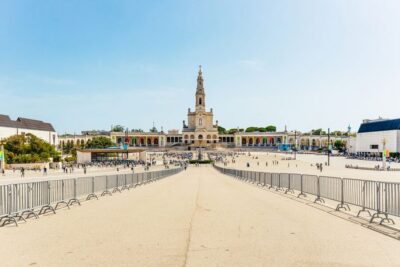 ★ 4.7From Lisbon: Fatima Batalha Nazaré & Óbidos Small-Group TourFrom $792,563 reviews
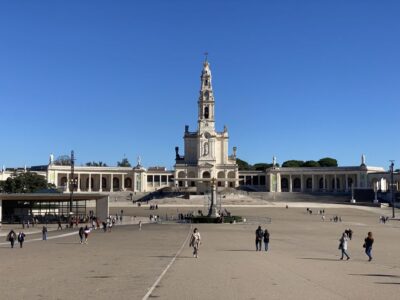 ★ 4.9Fátima, Batalha, Nazaré & Obidos Small-Group TourFrom $481,463 reviews
 ★ 4.5From Lisbon: Day Trip to Porto, Óbidos, and NazaréFrom $971,311 reviews
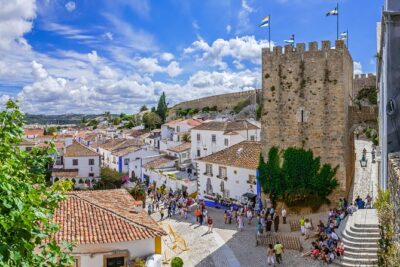 ★ 5.0Fatima, Nazare, Obidos 8-People Small Group, Day-Tour from LisbonFrom $71995 reviews
★ 5.0From Lisbon: Fátima, Nazaré, Batalha and Óbidos Guided TourFrom $55922 reviews
★ 5.0Fatima, Nazare, Obidos 8-People Small Group, Day-Tour from LisbonFrom $71995 reviews
★ 5.0From Lisbon: Fátima, Nazaré, Batalha and Óbidos Guided TourFrom $55922 reviews
Browse the lists this tour appears in