
Reviewed · CASCAIS & ESTORIL TOURS
Surf Lessons Cascais and Lisbon
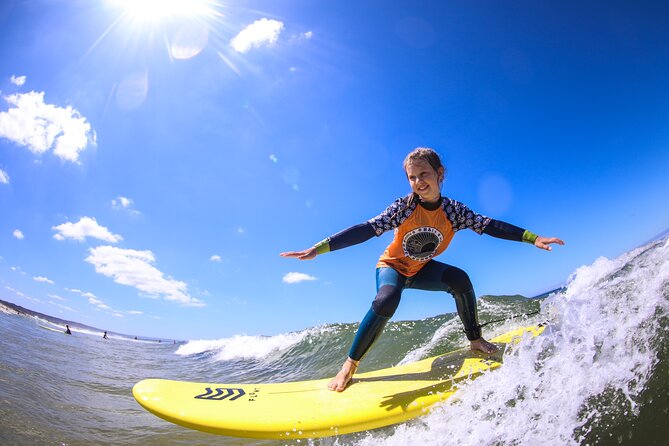
Surfing hits different when the teaching is solid. This 2-hour lesson through Kai Surf School pairs quick safety basics with hands-on coaching so you can actually catch waves on Portugal’s Atlantic coast. I like that it stays simple and practical, with instruction in English and a finish that feels like a mental reset.
Two things I really like: the patient, clear coaching (Manuel is singled out often for good English and calm instruction), and the brand-new boards and suits that make learning feel less sketchy. The only real consideration is weather: the session requires good conditions, so you may be offered a different date if the sea isn’t cooperating.
In This Review
- Key things to know before you go
- Finding MMH9+6Q in Carcavelos: the meeting point setup
- The 2-hour lesson arc: from safety rules to warm-up to first rides
- Warm-up and the sea swim: building comfort fast
- Manuel’s coaching style: patience, English, and technique that sticks
- Where you surf: Carcavelos first, then backups like Costa da Caparica and Guincho
- Boards, suits, and comfort: the value of brand-new gear
- Small group size (max 10): why it helps you progress
- Price and value: what $108.14 buys for 2 hours
- Weather reality: when the sea changes the plan
- Who this surf lesson fits best (and how to prep)
- Should you book Kai Surf School’s surf lesson in Carcavelos?
- FAQ
- How long is the surf lesson?
- What language is the experience offered in?
- Where do I meet for the lesson?
- Is this a small group experience?
- What’s included in the lesson?
- Do they provide equipment like boards and suits?
- What happens if the weather is bad?
- Are service animals allowed?
Key things to know before you go
- Safety-first start with a short intro to rules, board handling, and how to take off
- Small group size (max 10), which usually means you get more hands-on feedback
- Clear, supportive teaching praised for patience with first-timers and families
- Gear quality called out in reviews: brand-new boards and suits for learning comfort
- Flexible surf locations when Carcavelos conditions are off (other spots may be used)
- A relaxed ending after the swim and surf session so you don’t just crash afterward
Finding MMH9+6Q in Carcavelos: the meeting point setup
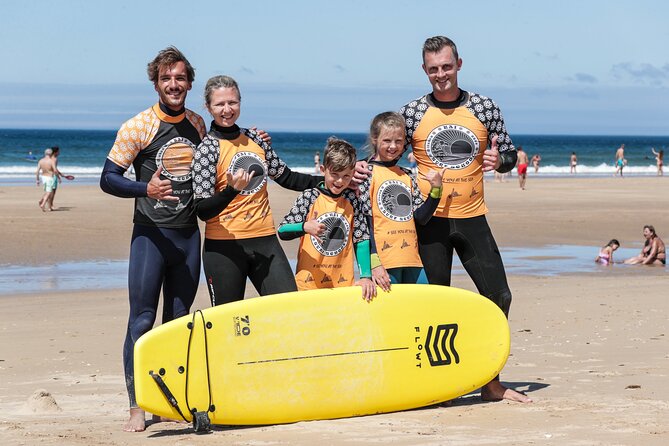
The action starts back at the meeting point in Carcavelos (listed as MMH9+6Q, Carcavelos, Portugal), and the activity ends there too. That round-trip setup matters more than you’d think. When you’re wet, sandy, and figuring out beach logistics, the last thing you want is a confusing end location.
It’s also described as near public transportation, which is useful if you’re coming in from Lisbon. If you’re using transit, give yourself a little buffer to account for walking time from the stop to the beach area—coastal meeting points can be spread out.
Group size is capped at 10, so you’re not being processed like a ticket number. In practice, that tends to mean the instructor can spot who needs extra help before you head into the water.
One more practical note: this is an Atlantic surf experience, not a pool. The “easy to show up anywhere” vibe doesn’t really apply—show up on time so you can go through the safety intro without rushing.
Down the coast: other Cascais and Estoril days
- Lisbon: Sintra, Pena, Regaleira, Cabo da Roca & Cascais
★ 4.7 · 19,656 reviews - Lisbon: Sintra, Pena, Regaleira, Cabo da Roca, and Cascais
★ 4.7 · 10,147 reviews - Sintra and Cascais Small-Group Day Trip from Lisbon
★ 5.0 · 7,018 reviews - Lisbon: Sintra, Pena, Regaleira, Cabo Roca Coast & Cascais
★ 4.8 · 6,499 reviews
The 2-hour lesson arc: from safety rules to warm-up to first rides
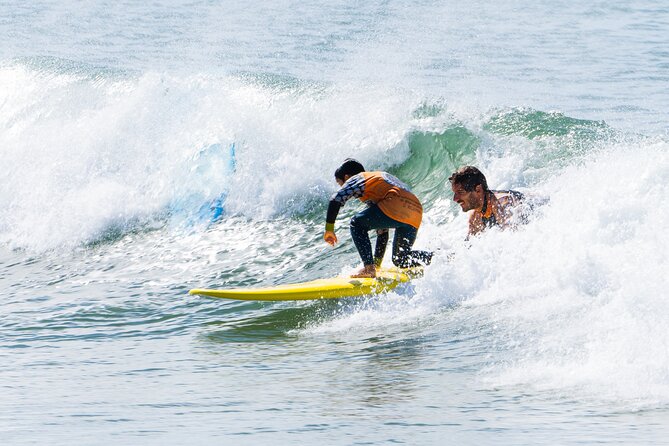
This lesson runs about 2 hours, and the structure is built for beginners: short intro, warm-up, swim, then SURF, followed by relaxation at the end. That timeline is short, but it’s set up to keep you moving. If you’re new to surf, boredom and cold become problems fast; this format fights both.
Before you hit the waves, there’s a safety briefing and an explanation of how to take off. It’s not just rules on paper. The coaching is meant to translate into what you do with your body: where your weight goes, how to approach the board, and what to watch for so you don’t get pulled into the wrong moment.
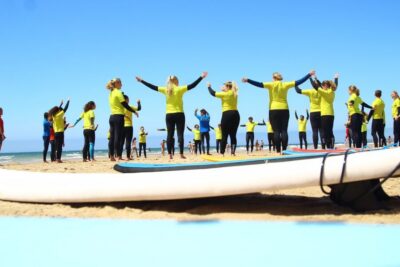
After that comes a warm-up, then a swim phase. This isn’t just time to get wet—it’s the in-between step where you practice comfort, positioning, and moving with the water instead of against it.
Then comes the surf portion. This is the part you came for: learning how to paddle, catch, and stand up when the wave offers you a fair shot. The payoff is usually faster when the early steps are clear, and the reviews emphasize that kind of teaching: patient, friendly, and very didactic.
You finish with a relaxation session. That’s a smart touch. Surf can leave your shoulders and core feeling cooked, and a calmer end helps you leave with more control over how you feel instead of just tumbling out exhausted.
Warm-up and the sea swim: building comfort fast
Warm-ups matter because surf is technical, but it’s also physical. If you start cold, you’ll get stiff, your paddling gets sloppy, and it’s harder to follow instruction. A dedicated warm-up before the swim phase helps you get your body ready for the repeated actions: lying on the board, paddling, popping up, and resetting.
The swim step also serves a practical goal. The instructors guide you through time in the water so the ocean doesn’t feel like a sudden jump scare. For first-timers, that mental adjustment is huge. Several reviews mention first-time surfers feeling comfortable quickly, including adults and children.
If you’re bringing kids, this kind of pacing helps. The lesson is described as good for adults and kids, and reviews praise teachers for being patient and not giving up. That patience is especially important when a child is learning to read the water and listen at the same time.
My advice: treat the warm-up like part of the training, not a prelude. Move through it actively, and you’ll do better when the water is moving you around.
Manuel’s coaching style: patience, English, and technique that sticks
Manuel is the name you’ll see mentioned most in the reviews. What stands out isn’t just that the instruction is good—it’s that it’s presented in a way you can understand. One review highlights very good English, which can make a big difference when you’re trying to interpret wave timing and body mechanics.
The teaching style is repeatedly described as patient and friendly, and that shows up in small details: clear safety explanations, adjustments to your pace, and supportive coaching rather than yelling over the noise. One person even noted the trainer adapted time for the class—again, that’s the difference between a conveyor-belt lesson and real teaching.
Another thing I appreciate is the way coaching balances structure with fun. Reviews describe instructors pushing you to your limit in a way that’s about your confidence and your feelings, not just stamina. That approach can help you progress without turning the session into a stressful workout.
If you want technique that sticks, pay attention to the moments right after the instructor demonstrates something. That’s when the lesson becomes personal. Surf improves fastest when you connect instruction to what you felt during the attempt.
More time in the water on the Lisbon coast
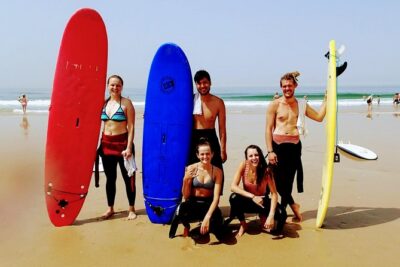

Where you surf: Carcavelos first, then backups like Costa da Caparica and Guincho
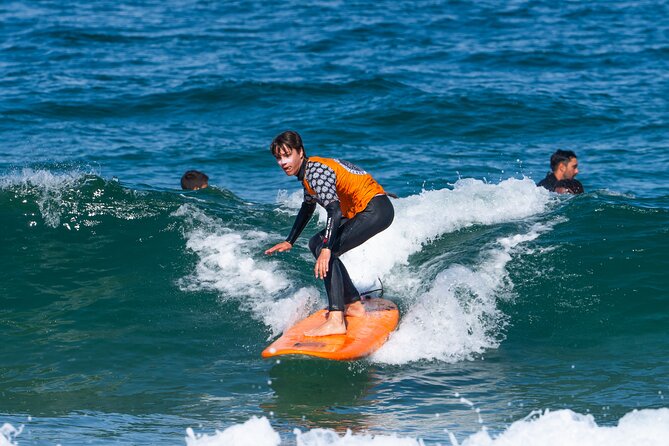
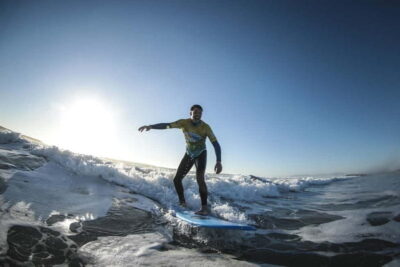
The lesson starts in Carcavelos, but there’s an important real-world element: surf conditions change. Reviews specifically say the instructors bring you to different spots if Carcavelos isn’t working. Names mentioned include Costa da Caparica, Guincho, and Praia Pequena.
This is one of the most valuable features of a surf school. If the waves at your first location are too weak, too rough, or just not offering safe teaching conditions, you need a plan B. A school that can switch beaches gives you a better chance at actually catching waves instead of just battling the ocean.
The downside? That flexibility can add uncertainty to your exact view and exact coastline. You might walk a little more, and you might feel like you’re not just settling into one spot. If you’re the kind of person who likes a set plan, be mentally prepared for some variation based on conditions.
But for learning, it’s usually a win. The ocean is the boss out here, and good surf schools treat conditions like data, not disappointment.
Boards, suits, and comfort: the value of brand-new gear
Learning surf is frustrating enough without fighting gear problems. One of the strongest signals from reviews is that you’ll use brand-new boards and suits. That matters because older equipment can be slower, less stable, or just plain annoying to handle—especially when you’re trying to stand up for the first time.
Another review mentions equipment being brought by the instructor, which suggests you’re not expected to scramble for rentals right before you start. Even if you’ve rented before, brand-new gear can feel like the difference between struggling and figuring it out.
For your comfort, bring practical expectations: you’ll want swimwear you’re okay getting salty and sandy, and you’ll want to keep your valuables protected. The session is short, so don’t pack like you’re going on a day-long beach trip—keep it simple.
If you’re sensitive to cold, Portugal can still feel chilly even when the sun is out. The suit helps, but dress like you’ll cool down between wave sets.
Small group size (max 10): why it helps you progress
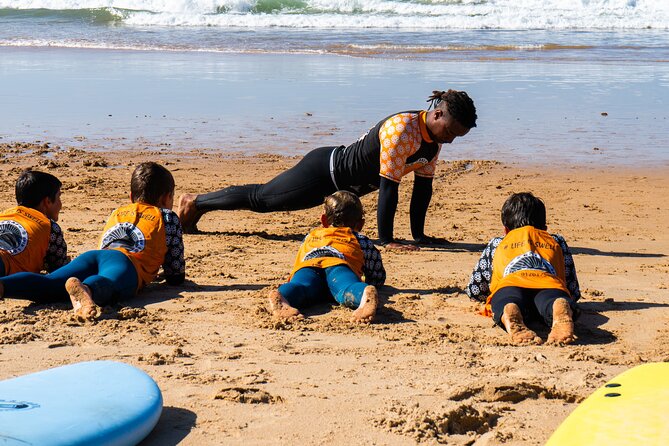
A max group size of 10 is a big deal for beginners. In larger groups, the instructor often only catches a few people during each wave moment. With a small class, you get more chances for corrections—like when you’re about to paddle wrong, pop up late, or lose balance right at the takeoff.
Reviews also describe teachers as attentive and dedicated. That kind of attention is easier when the class stays small. It’s the difference between learning the sport and surviving the sport.
Here’s how to use the small group to your advantage: ask questions during the safety and warm-up stage. If you’re unsure about how to take off or what to do when you fall, get clarity before the waves are working against your attention span.
Also, listen for the coaching cues that repeat. When instructors use the same correction with multiple people, you can treat it like a lesson point you should internalize.
Price and value: what $108.14 buys for 2 hours
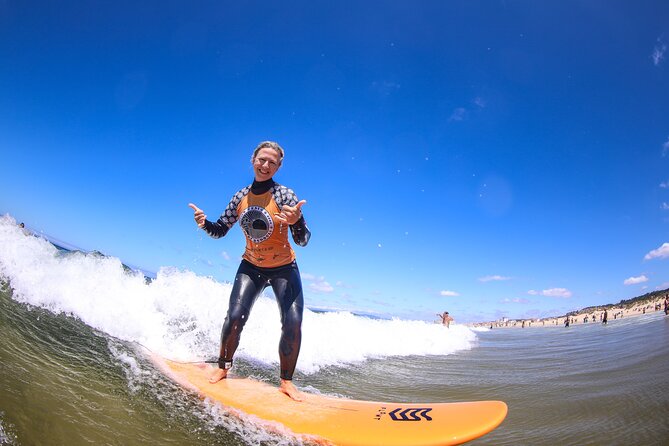
At about $108.14 per person for roughly 2 hours, the price feels fair when you compare it to the real costs of surf learning: instruction time, equipment, and the risk-reduction of being taught in the right sequence.
You’re not paying just for standing on a board. You’re paying for:
- A safety intro before you’re in real wave conditions
- Coaching through warm-up, swim, and the surf portion
- Access to brand-new equipment for the learning stage
- A small class structure (max 10) that supports real feedback
If you’ve tried learning surf on your own, you already know why guided lessons earn their keep. You can spend money renting gear and still come out with zero real wave progress because you missed the key technique pieces.
This is especially good value for first-timers and mixed groups (adults and kids), where progress depends heavily on how clear the instruction is.
Weather reality: when the sea changes the plan
This experience requires good weather. If conditions are poor, you’ll be offered a different date or a full refund. That’s the right kind of policy for surf, because the ocean doesn’t care about your calendar.
There’s also a practical twist: because the instructors may move to other beaches when Carcavelos isn’t ideal, you might not always end up in one fixed spot. That flexibility is tied to safety and wave quality, not convenience.
If you’re visiting Lisbon on a tight schedule, consider building in buffer time. Surf days can be weather-dependent. Even when you book for a specific time window, plan for the possibility of adjusting.
Who this surf lesson fits best (and how to prep)
This is a strong match if you want a beginner-friendly surf lesson without complicated steps. Reviews mention people progressing from true first attempts to more confident wave rides, including adults and kids. If you’re coming with zero surf background, the structure and patience make a difference.
It’s also a good fit if you care about instruction quality in English. Manuel’s English is specifically praised, which can help you follow technique cues while your brain is busy processing wind, water, and balance.
Service animals are allowed, and the meeting point is described as near public transportation. Those are both practical wins if you’re planning your day efficiently.
How to prepare so you get the most out of the session:
- Wear swimwear you’re comfortable with staying in
- Bring sunscreen and something simple to protect your hair and skin after
- Keep your phone and valuables secure, because sand and salt are relentless
- Arrive early enough to feel calm before the safety intro
If you go in with the right mindset—listen closely, try the technique, then try again—you’ll likely leave with more confidence than you expect from a 2-hour lesson.
Should you book Kai Surf School’s surf lesson in Carcavelos?
Book it if you want clear, patient coaching in a small group, plus brand-new gear and a lesson plan that actually follows a learning sequence. Manuel is a frequent standout name, and reviews highlight how he teaches in a way that makes beginners feel safe and capable.
Skip it only if you hate weather uncertainty. Surf is a conditions sport, and while the company works around it, you should still treat a surf booking as flexible.
For value, this is the kind of surf experience that makes sense even if you’ve been to other schools and felt they were more about renting boards than teaching technique. Here, the focus stays on safety, learning, and getting you onto the wave rhythm.
FAQ
How long is the surf lesson?
The lesson lasts about 2 hours.
What language is the experience offered in?
The surf lesson is offered in English.
Where do I meet for the lesson?
You start at the meeting point listed as MMH9+6Q Carcavelos, Portugal, and the activity ends back at the same meeting point.
Is this a small group experience?
Yes. The experience has a maximum group size of 10.
What’s included in the lesson?
You can expect a short safety introduction, a warm-up, a swim, and the SURF portion. The session ends with a relaxation time.
Do they provide equipment like boards and suits?
The reviews mention brand-new boards and suits used for learning.
What happens if the weather is bad?
If the experience is canceled due to poor weather, you’ll be offered a different date or a full refund.
Are service animals allowed?
Yes, service animals are allowed.
More Tour Reviews in Lisbon
- Lisbon City Center Tour – The Unmissable Lisbon★ 5.0 · 22,234 reviews
- Lisbon: Sintra, Pena, Regaleira, Cabo da Roca & Cascais★ 4.7 · 19,656 reviews
- Lisbon Card: 24, 48, or 72-Hour Pass★ 4.5 · 17,944 reviews
- Lisbon: Jerónimos Monastery Entrance Ticket★ 4.1 · 14,164 reviews
- Lisbon: History, Stories and Lifestyle Walking Tour★ 4.8 · 10,902 reviews
More Surf on the Lisbon Coast
- Lisbon Surf Experience★ 4.9 · 876 reviews
- The Surf Instructor in Costa da Caparica★ 5.0 · 403 reviews
- Lisbon: Surf Experience at Costa da Caparica★ 5.0 · 376 reviews
- Lisbon: 1.5-Hour Surf Lesson★ 4.8 · 275 reviews
- Lisbon Surf Guide – Surf class & Pick Up★ 5.0 · 210 reviews
Along the Coast to Cascais
- Lisbon: Sintra, Pena, Regaleira, Cabo da Roca & Cascais★ 4.7 · 19,656 reviews
- Lisbon: Sintra, Pena, Regaleira, Cabo da Roca, and Cascais★ 4.7 · 10,147 reviews
- Sintra and Cascais Small-Group Day Trip from Lisbon★ 5.0 · 7,018 reviews
- Lisbon: Sintra, Pena, Regaleira, Cabo Roca Coast & Cascais★ 4.8 · 6,499 reviews
- Lisbon: Sintra, Pena, Cabo da Roca, Cascais Tour with Pickup★ 4.8 · 5,445 reviews
Just in: fresh Lisbon reviews from the team





Cascais & Estoril Tours, compared.
 ★ 4.7Sintra, Pena, Regaleira, Cabo da Roca & CascaisFrom $2319,656 reviews
 ★ 4.7Sintra, Pena, Regaleira, Cabo da Roca, and CascaisFrom $2110,147 reviews
 ★ 5.0Sintra and Cascais Small-Group Day Trip from LisbonFrom $607,018 reviews
 ★ 4.8Sintra, Pena, Regaleira, Cabo Roca Coast & CascaisFrom $236,499 reviews
 ★ 4.8Sintra, Pena, Cabo da Roca, Cascais Tour with PickupFrom $585,445 reviews
 ★ 4.8Sintra, Pena, Regaleira, Cabo & Cascais TourFrom $644,326 reviews
 ★ 5.0Small Group Tour to Sintra, Pena Palace, Cabo Roca and CascaisFrom $673,559 reviews
 ★ 5.0Sintra to Cascais: 2 Palaces, 4 Sites, Small Group 10 Hour TourFrom $1203,105 reviews
Browse the lists this tour appears in