
Reviewed · EVENING EXPERIENCES
Sunset and Night Cruise with Champagne
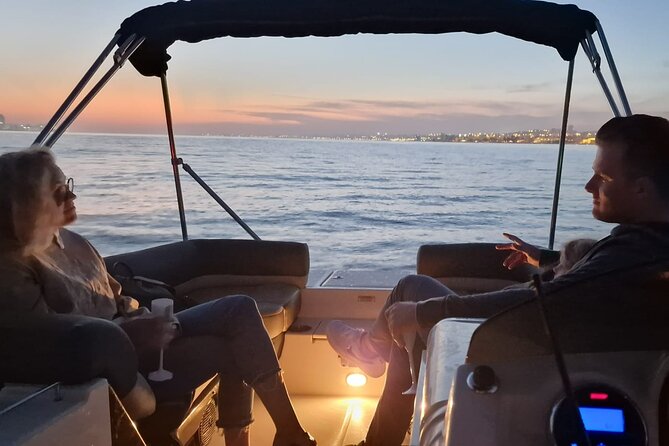
A sunset over the Tagus feels like a cheat code. This cruise pairs champagne onboard with a smooth, photo-friendly route from Belém toward Almada. You get big “Lisbon from Rio-distance” vibes, but with the comfort of a small vessel and quick, purposeful stops.
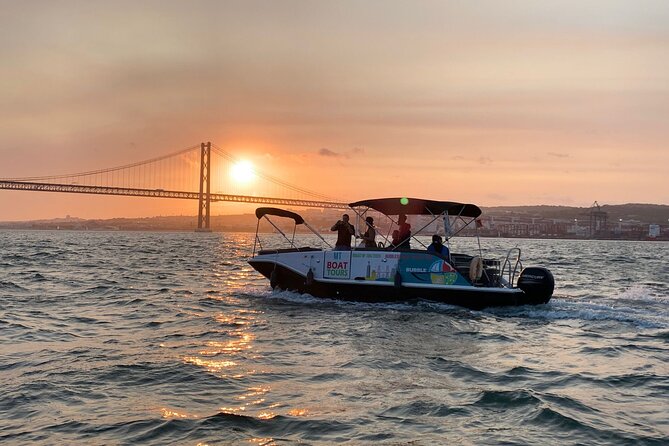
I especially like the small-group size (max 12), because the boat stays comfortable and the views feel uncrowded. I also like that the route is built around landmarks you can actually see and frame from the water: the 25 de Abril Bridge, Cristo Rei, and the Belém classics like Torre de Belém and Padrão dos Descobrimentos. One consideration: the stop times are brief, so if you want long museum time, this isn’t the right format.
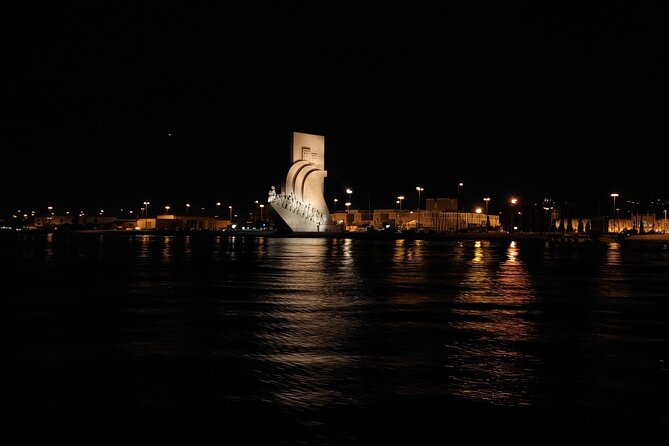
You’ll start at Marina Belém (right by the Padrão dos Descobrimentos). Then you’ll cruise the Tagus loop, grab photos at standout viewpoints, and end back near the start—full of sunset light and easy night energy.
In This Review
- Key things I’d bank on before you go
- Sunset on the Tagus from Marina Belém: what makes the route work
- Onboard comfort: champagne, a small boat, and an easy pace
- The 2-hour itinerary: Lisbon landmarks and Almada views in photo-sized moments
- 1) Ponte 25 de Abril: the Lisbon–Almada connector in sunset silhouette
- 2) Cristo Rei (Sanctuary of Christ the King): a Lisbon view mirror
- 3) Porto Brandão and Portuguese Fisheries Company ruins: the Tagus industrial layer
- 4) Ginjal and Jardim do Rio: green space on the riverfront
- 5) Pontal de Cacilhas: the south-bank facing city moment
- 6) Fragata D. Fernando II e Glória: a restored Portuguese sailing warship
- 7) Barracuda submarine: the surprise riverfront “wait, what is that?”
- 8) Praça do Comércio (Terreiro do Paço): the harbor-facing heart
- 9) Castelo de Sao Jorge: the hilltop that shaped Lisbon
- 10) Panteão Nacional (Church of Santa Engrácia): national names in a single building
- 11) Cais do Sodré: old rough edges, new night energy
- 12) MAAT: art, architecture, technology on the Tagus edge
- 13) Circuito Central Elétrica: the electricity museum thread
- 14) Padrão dos Descobrimentos: the Age of Discovery at river level
- 15) Torre de Belem: the most photo-friendly fortress on the river
- 16) Largo da Fundação Champalimaud: science and care in an unusual setting
- 17) Statue of Gago Coutinho and Sacadura Cabral: the seaplane that ties Portugal to Brazil
- What you’ll actually do with your time at each stop
- Price and value: why $62.23 can feel fair for a Lisbon sunset
- Who this cruise is best for (and who should skip it)
- Should you book this Sunset and Night Cruise with Champagne?
- FAQ
- How long is the sunset cruise?
- Where does the cruise start?
- How much does it cost?
- What’s included onboard?
- Is there a mobile ticket?
- How big is the group?
- What main sights will we see?
- Is it suitable for people with mobility needs?
- What if the weather is bad?
- What’s the cancellation policy?
Key things I’d bank on before you go
- Champagne + water are included: simple, no-fuss upgrade to make the sunset feel special.
- Max 12 passengers: a comfortable boat ride that keeps the experience from feeling like cattle-car sightseeing.
- Built for photos, not long museum runs: stopovers are short, with time for travel and quick picture moments.
- You’ll see both Lisbon and Almada: the cruise frames the river-city relationship from the most scenic angle.
- Belém’s golden-hour monuments are on the list: Torre de Belém and Padrão dos Descobrimentos are part of the route.
- Mobility-friendly setup: the vessel is described as allowing wheelchairs and reduced mobility.
Sunset on the Tagus from Marina Belém: what makes the route work
Lisbon is famous for viewpoints, but this cruise gives you something different: the river as a moving camera. Starting in Marina Belém near the Padrão dos Descobrimentos puts you in the right place for late-day light over the Tagus. And because the route heads toward Almada on the south bank, the city doesn’t just sit there. It slowly “turns” around you.
What makes this experience click for many people is the mix of iconic and scenic. You get grand structures (bridges, forts, major landmarks) and the softer riverfront mood (gardens, terraces, promenades). It’s a way to understand Lisbon’s geography fast: the Tagus is the main character.
Also, this is a real small-boat outing. One of the biggest praises here is the comfort of the vessel, which matters at sunset when you want people to stay settled and enjoy the changing sky.
Worth a look before you lock anything else in around Lisbon:
- Lisbon: Sunset Boat Party Cruise with DJ and Open Bar
★ 4.5 · 10,378 reviews - Lisbon: Sunset Boat Tour with Music and Drinks
★ 4.6 · 3,908 reviews - Lisbon: Tagus River Cruise with Welcome Drink
★ 4.2 · 3,717 reviews - Lisbon: Daytime/Sunset/Night City Sailboat Tour with Drink
★ 4.9 · 3,114 reviews
Onboard comfort: champagne, a small boat, and an easy pace
This is listed as a 2-hour experience, and the schedule is built around that. There’s travel time, plus short stopovers where you can photograph and look around. The “how long” detail matters: with a tight time window, the cruise format keeps you from spending the whole evening in lines or transit between far-apart sights.
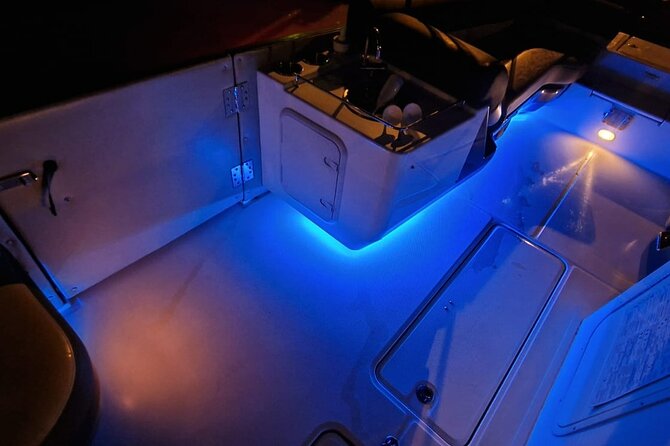
The included drinks are part of the value. You’ll have champagne and water onboard. That’s the kind of thoughtful touch that turns a scenic ride into a mini-occasion without needing extra spending on your own.
It’s also a good sign that the company is described as CLEAN & SAFE under health measures, and the activity carries a permit reference (190/2020). I like seeing operators that take basic safety and standards seriously, especially on evening trips.
Practical note: because the schedule is short, you’ll want to be ready with your camera and phone before the boat reaches the best angles. Think “snap, breathe, admire,” not “setup for 10 minutes every stop.”
The 2-hour itinerary: Lisbon landmarks and Almada views in photo-sized moments
Below is how the route “reads” in real time. Expect quick viewpoints rather than long stays. The tour explicitly says the remaining time is used for travel and stopovers for photos.
1) Ponte 25 de Abril: the Lisbon–Almada connector in sunset silhouette
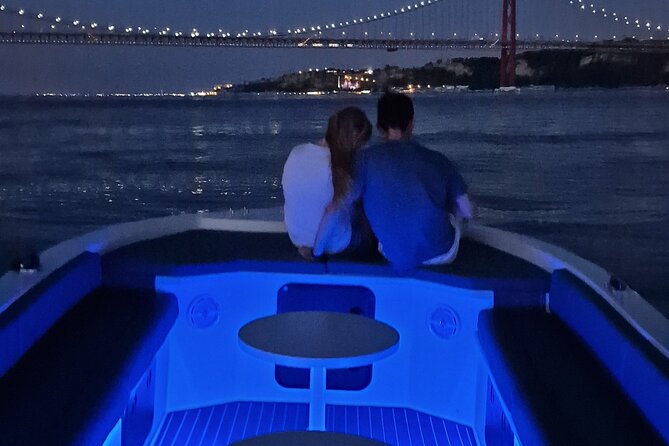
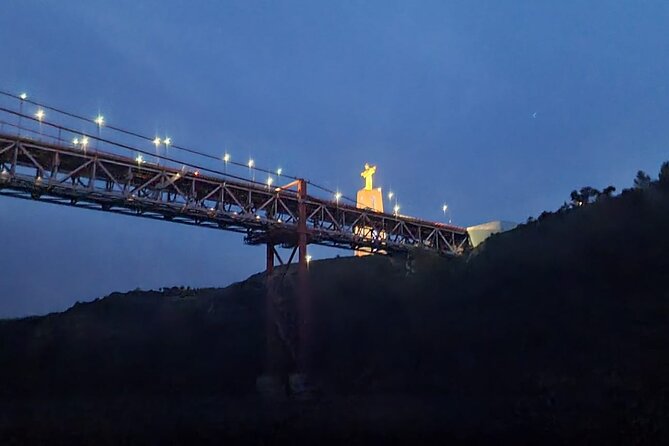
You start with the 25 de Abril Bridge, the long suspension bridge linking Lisbon to Almada. It’s 2,277 meters long, and it visually stretches across the river in a way that makes sunset lighting pop. Even a brief look gives you a sense of scale: you’re cruising through a major part of Lisbon’s daily geography.
Why it’s special: the bridge creates a strong “frame” for everything else behind it.
Time reality: this is fast. Use it as your first big photo anchor.
Worth a look before you lock anything else in around Lisbon:



2) Cristo Rei (Sanctuary of Christ the King): a Lisbon view mirror
Next is the Sanctuary of Christ the King in Almada. It overlooks Lisbon and was inspired by Rio’s Christ the Redeemer. The project was inaugurated 17 May 1959, and the giant statue was erected as a gesture of gratitude after Portugal was spared the direct destructive effects of World War II.
Why it’s special: it’s one of those monuments that feels instantly recognizable, even before you know the full story.
Photo tip: try to catch Cristo Rei from the river angle so it’s not just a distant dot—it will look solid against the skyline.
3) Porto Brandão and Portuguese Fisheries Company ruins: the Tagus industrial layer
You’ll pass the area connected to the Portuguese Fisheries Company ruins. The background detail here is the shift from trawler fishing support on the north bank to the south bank at Olho de Boi, in Almada. The notes mention a disused building that became mechanics space and the hub for factory structures, plus a wall that supported trawler docking later extended with more construction.
Why it’s special: this is Lisbon’s working-river history peeking through, not only the postcard monuments.
Time reality: don’t expect a deep site tour here—think exterior visuals and context.
4) Ginjal and Jardim do Rio: green space on the riverfront
Then comes Ginjal, associated with Jardim do Rio, between the cliff area of Almada and the Tagus. The route description highlights the panoramic elevator of Boca do Vento for access to the garden and viewpoint. It also names Fonte da Pipa, a fountain built by King João V in 1736, and describes how the leafy vegetation and modern urban furniture create a soothing riverfront feel.
Why it’s special: it’s a breather zone. When the cruise shifts from big monuments to greenery, your brain recalibrates.
What to look for: the layers—terraces, waterline, and the garden slope.
5) Pontal de Cacilhas: the south-bank facing city moment
You’ll also be near Cacilhas (Pontal de Cacilhas). Cacilhas sits on the south bank of the Tagus facing Lisbon. The notes mention it was a former civil parish and later merged in 2013 into Almada, Cova da Piedade, Pragal e Cacilhas.
Why it’s special: it’s one of those “you are definitely across the river” moments. The directionality matters on a cruise.
6) Fragata D. Fernando II e Glória: a restored Portuguese sailing warship
Next is Fragata D. Fernando II e Glória, a wooden-hulled Portuguese Navy frigate launched in 1843, with maiden voyage in 1845. The ship was built at the shipyard of Daman in Portuguese India and is described as Portugal’s last sailing warship built. It also served the Carreira da Índia route (the regular military line connecting Portugal to colonies in India).
The notes cover the rough chapter too: she was almost destroyed by a fire in 1963, and the burned wooden hull stayed beached in Tagus mud-flats for 29 years. Restoration is noted as happening in 1990.
Why it’s special: this is a history stop with real emotional weight, even if your time is short.
Photo tip: the ship reads best when you can line it up so it doesn’t just look like a random moored object.
7) Barracuda submarine: the surprise riverfront “wait, what is that?”
A fun add-on: you can see the Barracuda submarine in Cacilhas, Almada. The description says it served the Portuguese Navy for 40 years with more than 52,000 hours navigated.
Why it’s special: it’s the kind of detail that makes the cruise feel like more than “generic monuments.” You get a curveball.
8) Praça do Comércio (Terreiro do Paço): the harbor-facing heart
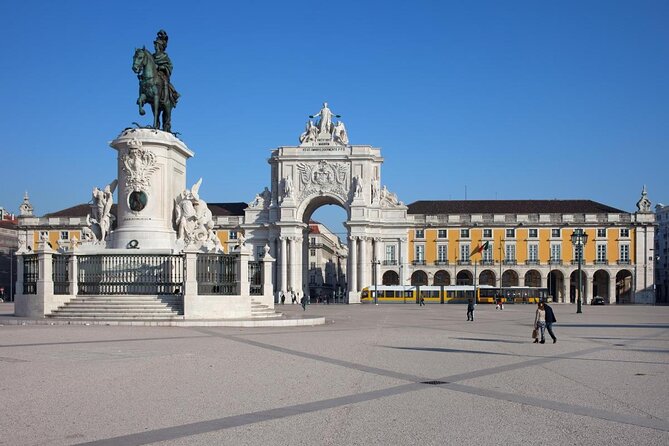
You’ll pass Praca do Comercio, still known as Terreiro do Paco. It’s a large harbor-facing plaza in Lisbon, facing the Tagus. The notes mention it hosted the Paço da Ribeira before the 1755 Lisbon earthquake, and that the area was remodeled during rebuilding of Pombaline downtown (Baixa) under the Marquis of Pombal.
Why it’s special: this is the old Lisbon “power center” vibe, but viewed from the water, it feels open and airy instead of enclosed.
9) Castelo de Sao Jorge: the hilltop that shaped Lisbon
Next is Saint George’s Castle. The hill has human occupation dating at least to the 8th century BC, and fortifications trace to the 1st century BC. The sequence of cultures is listed: Phoenicians, Carthaginians, Romans, Moors—then Portuguese conquest during the 1147 Siege of Lisbon. From the 12th century onward, it served as royal palace, barracks, and the Torre do Tombo National Archive before becoming a national monument and museum.
Why it’s special: it’s the “Lisbon stays on hills” proof. From the river, the castle feels like it’s holding the whole city in place.
Time reality: you’ll likely get viewpoint viewing more than ticket-time.
10) Panteão Nacional (Church of Santa Engrácia): national names in a single building
You’ll see the Church of Santa Engrácia, a 17th-century monument converted into the National Pantheon. It’s located in Alfama and the description says important Portuguese personalities are buried there.
Why it’s special: it’s a monument with layers of meaning—religious origins, then national recognition.
11) Cais do Sodré: old rough edges, new night energy
You’ll pass by Cais do Sodré. It’s described as historically tough and known as a red light area, while nearby Santos also had dock warehouses and factories that are now described as designers’ studios, plus cafes, shops, and galleries. It’s now portrayed as Lisbon’s trendier nightlife zone.
Why it’s special: sunset cruises often focus on the glittering center. This stop adds the “Lisbon actually changes” angle.
12) MAAT: art, architecture, technology on the Tagus edge
Then you hit the modern side with MAAT (Museu de Arte, Arquitetura e Tecnologia). The notes describe it as focused on Art, Architecture, and Technology, with exhibits by contemporary artists and thinkers. It sits on the river Tagus west of the city center, and the building is tied to the nearby Tejo Power Station and industrial architecture from the early 20th century.
The description also gives specifics: it’s a €20m museum and designed by Amanda Levete Architects. It’s described as one of Europe’s more lyrical new museums.
Why it’s special: the cruise isn’t just “old world.” It ends up showing Lisbon building forward.
13) Circuito Central Elétrica: the electricity museum thread
The route also includes the Electricity Museum integrated into MAAT under the Circuito Central Elétrica name. It’s described as presenting past, present, and future of energies, with themed and experimental exhibitions, plus science-and-industrial-archaeology style programming.
Why it’s special: it turns what could be a sleek modern museum into something grounded in how Lisbon powered its growth.
14) Padrão dos Descobrimentos: the Age of Discovery at river level
You’ll come back near Padrão dos Descobrimentos, the Monument of the Discoveries. It’s located along the river where ships departed to explore and trade with India and the Orient, and it celebrates Portugal’s Age of Discovery in the 15th and 16th centuries.
Why it’s special on a sunset cruise: the monument belongs to ships and water. Seeing it from the Tagus feels literal, not just educational.
15) Torre de Belem: the most photo-friendly fortress on the river
The cruise includes Belém Tower (Tower of Saint Vincent). It’s a 16th-century fortification, built as a point of embarkation and disembarkation for Portuguese explorers and as a ceremonial gateway to Lisbon. The tower is described as Manueline style with hints of other styles, built from lioz limestone and composed of a bastion plus a 30-metre, four-storey tower. The description notes UNESCO listing since 1983, alongside Jerónimos Monastery.
Why it’s special: this is the classic Belém silhouette. At sunset, the stone color and contrast often look fantastic.
16) Largo da Fundação Champalimaud: science and care in an unusual setting
Another quick stop is Largo da Fundação Champalimaud, a private biomedical research foundation. It was created according to the will of António de Sommer Champalimaud (notes say the foundation honors his mother and father by full name). The mission is listed as advanced biomedical research and clinical care excellence, focused on translating discoveries into improved quality of life.
Why it’s special: it’s Lisbon showing modern institutional ambition, not just tourism monuments.
17) Statue of Gago Coutinho and Sacadura Cabral: the seaplane that ties Portugal to Brazil
Finally, you’ll see the statue showing Gago Coutinho e Sacadura Cabral. The monument reproduces in life size the Lusitânia seaplane used for the first crossing of the South Atlantic to Brazil in 1922. It notes the statue was inaugurated 15 October 1991.
Why it’s special: it connects the Age of Discovery to modern exploration—Portugal’s long-distance story continues.
What you’ll actually do with your time at each stop
Because the stops are short (the tour frames stopovers as photo moments), you’ll want a strategy:
- Use the first pass of each cluster to get your wide photo (sky + river + monument).
- Then use one closer moment to grab the “tight” shot (monument detail and texture).
- Keep your phone/camera ready as the boat slows. The best angles usually happen in the few minutes the crew aligns you.
The tour description is clear that most of your “extra time” is for travel and photo stopovers. That means the experience is paced to keep the evening feeling smooth, not rushed.
Price and value: why $62.23 can feel fair for a Lisbon sunset
At $62.23 per person for roughly 2 hours, the value comes from a few combined things:
1) You’re getting a guided, structured river route across multiple major Lisbon and Almada landmarks.
2) Champagne and water are included, which is the kind of add-on that would normally cost extra elsewhere.
3) The group size caps at 12, and comfort matters during an evening cruise where you’re standing or sitting for long stretches.
4) It’s built to be easy: mobile ticket, near public transport, and you’re returned to the meeting point.
Is it the cheapest way to see the riverfront? No. But it’s also not trying to compete with free self-guided sightseeing. You’re paying for time saved, a curated route, and the small-boat feel.
Also, the tour is commonly booked about 13 days in advance on average. That usually signals it’s a popular evening option. If sunset weather matters to you (and it should), booking earlier gives you more options.
Who this cruise is best for (and who should skip it)
This is a great match if you want:
- a comfortable, small-group evening activity
- the best payoff for sunset photos without hopping between neighborhoods
- a simple “include me in the vibe” option thanks to included champagne
It might not be for you if you want long, in-depth museum time or if your travel style is very “wander for hours.” The format is built for quick viewing and photography, not deep inside-the-building exploration.
Good news: the vessel is described as allowing wheelchairs and reduced mobility, and service animals are allowed. That’s a meaningful practical plus if you need the flexibility.
Should you book this Sunset and Night Cruise with Champagne?
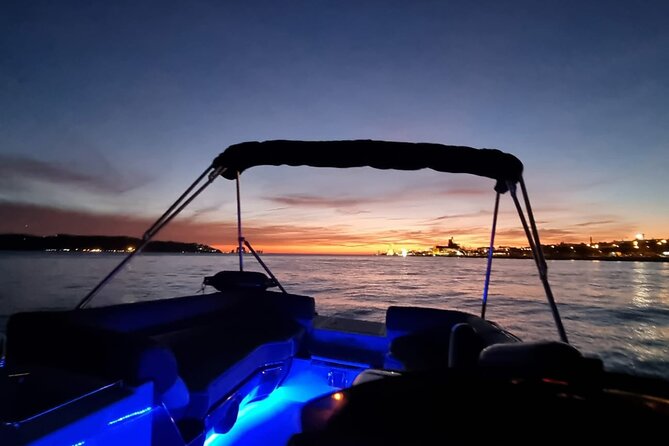
I’d book it if you’re going to be in Lisbon for a few days and you want one evening that turns the city into a river spectacle. The included champagne, the small group cap, and the mix of Belém classics with Almada viewpoints make this feel like a high-reward use of 2 hours.
If you’re choosing between lots of separate ticketed attractions, this is the opposite approach: you get many major sights in one glide, with your time protected by the route and a guide-style presentation. And if the sky cooperates, sunset on the Tagus is exactly the kind of moment worth paying for.
FAQ
How long is the sunset cruise?
The experience is listed as about 2 hours.
Where does the cruise start?
It starts at Marina Belém, next to the Padrão dos Descobrimentos, and ends back at the meeting point.
How much does it cost?
The price is listed as $62.23 per person.
What’s included onboard?
The tour includes champagne and water onboard.
Is there a mobile ticket?
Yes, it’s listed as mobile ticket.
How big is the group?
The activity has a maximum of 12 travelers.
What main sights will we see?
The route includes major stops and viewpoints such as the 25 de Abril Bridge, Cristo Rei, Torre de Belém, Padrão dos Descobrimentos, MAAT, and Castelo de Sao Jorge, among others listed on the itinerary.
Is it suitable for people with mobility needs?
The vessel is described as allowing rides for people in wheelchairs and with reduced mobility, and service animals are allowed.
What if the weather is bad?
The experience requires good weather. If it’s canceled due to poor weather, you’ll be offered a different date or a full refund.
What’s the cancellation policy?
You can cancel for a full refund up to 24 hours in advance. If you cancel less than 24 hours before the start time, the amount paid is not refunded.
More Wine Tours in Lisbon
- Winner 2025 Undiscovered Lisbon Food & Wine Tour by Eating Europe★ 5.0 · 6,390 reviews
- Lisbon: Live Fado Show with Port Wine at Lisboa em Fado★ 4.7 · 5,097 reviews
- Lisbon: Food and Wine Small Group Walking Tour★ 4.9 · 4,082 reviews
- Lisbon Small-Group Portuguese Food and Wine Tour★ 5.0 · 3,972 reviews
- Lisbon: Fado Show and Wine inside Medieval Walls★ 4.8 · 3,819 reviews
More Cruises & Boat Tours in Lisbon
- Lisbon: Sunset Boat Party Cruise with DJ and Open Bar★ 4.5 · 10,378 reviews
- Lisbon: Sunset Boat Tour with Music and Drinks★ 4.6 · 3,908 reviews
- Lisbon: Tagus River Cruise with Welcome Drink★ 4.2 · 3,717 reviews
- Lisbon: Daytime/Sunset/Night City Sailboat Tour with Drink★ 4.9 · 3,114 reviews
- Lisbon: Sunset Cruise with Welcome Drink and Snacks★ 4.4 · 3,021 reviews
More Tour Reviews in Lisbon
- Lisbon City Center Tour – The Unmissable Lisbon★ 5.0 · 22,234 reviews
- Lisbon: Sintra, Pena, Regaleira, Cabo da Roca & Cascais★ 4.7 · 19,656 reviews
- Lisbon Card: 24, 48, or 72-Hour Pass★ 4.5 · 17,944 reviews
- Lisbon: Jerónimos Monastery Entrance Ticket★ 4.1 · 14,164 reviews
- Lisbon: History, Stories and Lifestyle Walking Tour★ 4.8 · 10,902 reviews
Just in: fresh Lisbon reviews from the team




Evening Experiences, compared.
 ★ 4.5Sunset Boat Party Cruise with DJ and Open BarFrom $2710,378 reviews
 ★ 4.6Sunset Boat Tour with Music and DrinksFrom $183,908 reviews
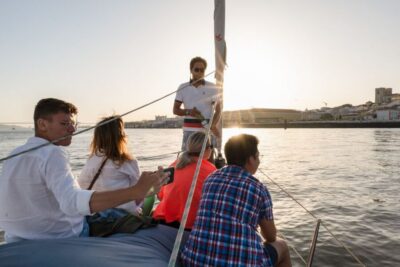 ★ 4.9Daytime/Sunset/Night City Sailboat Tour with DrinkFrom $413,114 reviews
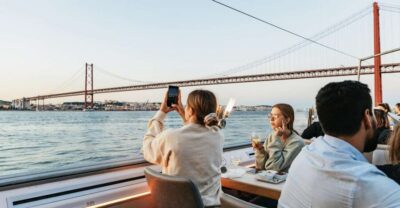 ★ 4.4Sunset Cruise with Welcome Drink and SnacksFrom $353,021 reviews
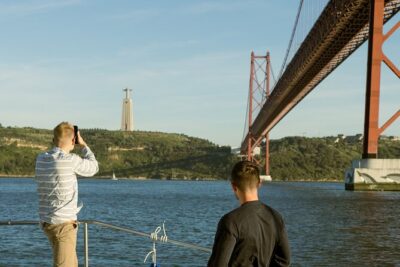 ★ 4.7Sunset Catamaran Boat Tour with Music and DrinksFrom $262,834 reviews
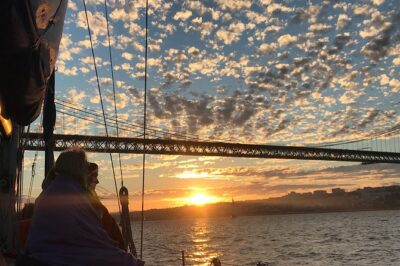 ★ 5.02 Hour Lisbon Sunset and Wine Sailing TourFrom $662,680 reviews
 ★ 4.2Tagus River Sunset Tour with Snacks and DrinkFrom $322,543 reviews
 ★ 4.52-Hour Lisbon Traditional Boats Sunset Cruise with White WineFrom $422,091 reviews
Browse the lists this tour appears in