
Reviewed · SINTRA DAY TRIPS
Sintra: Hispanic Moorish Tile Workshop
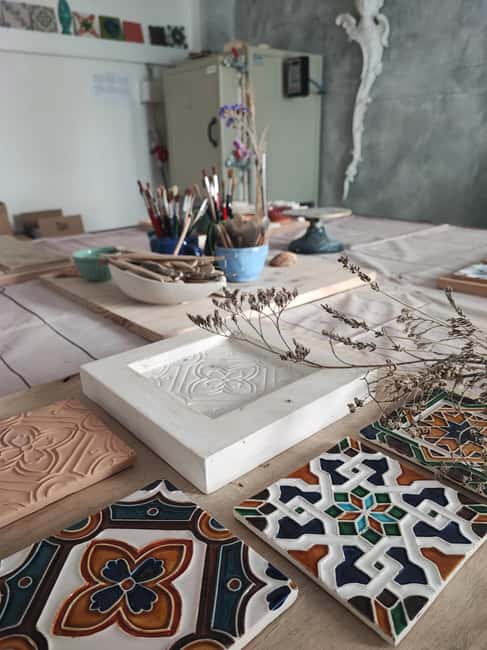
Sintra tiles, made by hand, feel oddly soothing. You roll a tile from fresh clay using a mold, then paint another with colored glazes, learning the Islamic-influenced Aresta style along the way. One thing to plan around: U.S. postal shipment is currently restricted, so you’ll likely need pickup or a courier option instead of mail.
I like this workshop because it’s not just watching. You get a real process—design choices, hands-on making, then a studio firing that turns your paint into a lasting souvenir. The class runs 3 to 5 pm at the Estudio Lazuli studio in Sintra with English instruction, and the studio is set up for small groups.
In This Review
- Key highlights you’ll actually care about
- Why the Hispano-Moresque tile look belongs in Sintra
- Your 3–5 pm studio session at Estudio Lazuli
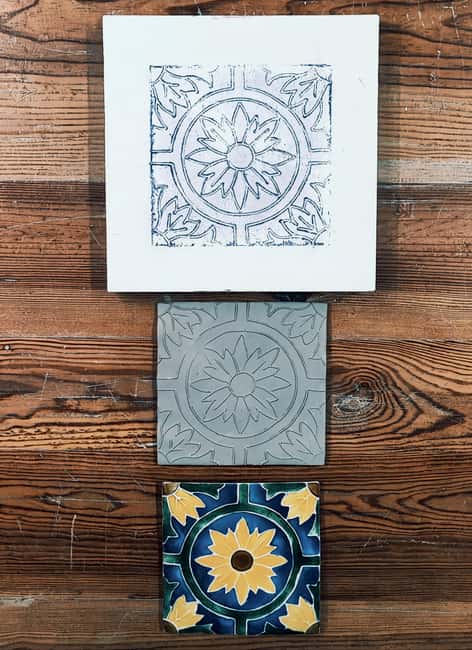
- Clay molds: how you shape the pattern before paint
- Painting with colored glazes using the Aresta technique
- From painted tile to fired keepsake: pickup vs delivery
- Price and value: is $58 worth it?
- What to do before and after class in Sintra
- Who should book this Hispanic Moorish tile workshop
- Should you book it?
- FAQ
- How long is the workshop?
- What will I make during the class?
- When do I get my finished tile?
- Can the studio ship the tile to my home?
- What’s included in the price?
- Is the workshop suitable for kids or wheelchair users?
Key highlights you’ll actually care about
- Clay + mold first, glaze painting second so you experience how the pattern takes shape.
- Aresta technique of Islamic influence, tied to the Hispano-Moresque style from Spain.
- Pick from many motifs on molds and on tile templates, so you’re not stuck with one option.
- One painted tile is fired for you, then you return for pickup or arrange delivery.
- Small group of 8 max, which makes the teacher’s feedback easier to get.
- U.S. shipping by post is temporarily unavailable, so plan for pickup or courier.
Why the Hispano-Moresque tile look belongs in Sintra
Portugal’s famous tile tradition, the azulejos you see on station walls and building fronts, often ties back to Moorish and Hispano-Moresque design ideas. In this workshop, you don’t just hear that in passing. You practice it with your hands and make something that looks right when placed next to the real Sintra and Lisbon tilework.
You’ll also hear the story behind the style: Hispano-Moresque is linked to a Spanish fashion from the 15th century, blending Spanish and Moorish influences. The point is not to memorize dates. It’s to understand why those tight geometric patterns and crisp outlines feel so distinctly Portuguese, even when they trace back to Islamic design traditions.
More runs up the hill to Pena and Regaleira
- Sintra: Pena Palace and Park Entrance Ticket
★ 4.2 · 17,410 reviews - Lisbon: Sintra, Pena, Regaleira, Cabo & Cascais Tour
★ 4.8 · 4,326 reviews - Quinta da Regaleira Skip-the-Ticket-Line Entry & Audioguide
★ 4.2 · 3,316 reviews - Sintra: Castle of the Moors Skip-the-Line Ticket
★ 4.6 · 2,893 reviews
Your 3–5 pm studio session at Estudio Lazuli
The workshop is timed for an easy afternoon in Sintra: it starts at 3 pm and finishes at 5 pm. That window works well if you want to do the Sintra basics first, then slow down for something creative. Also, transportation to and from the studio isn’t included, but the studio is conveniently located enough that train-day visitors can make it work.
Inside Estudio Lazuli, the vibe is practical and calm. The group is intentionally small (limited to 8 participants), which matters because tile work rewards careful attention. With fewer people in the room, you’re more likely to get answers to your questions before you commit to a design step.
Instruction is in English, and the studio is wheelchair accessible. Children under 7 aren’t suitable for this activity, which is a good sign if you’re aiming for a workshop that’s paced for adults and older kids.
Clay molds: how you shape the pattern before paint
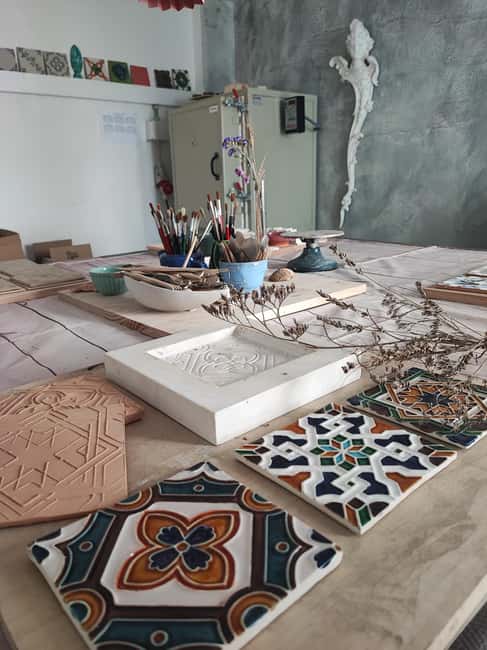
You’ll start by making a tile using fresh clay and a mold. This part is deceptively fun. Even if you’re not an artist, the mold gives you structure, so the result looks like tilework instead of craft-store pottery.
What you’re really learning here is process. Tiles aren’t only about color. They start as a relief pattern, and that pattern helps define the finished look. Once you see how the clay takes the motif from the mold, the later painting step makes much more sense.
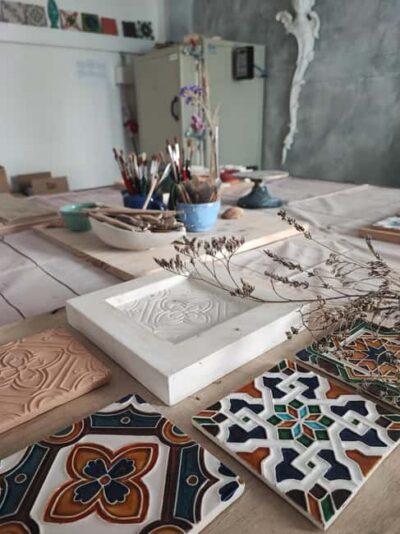
You’ll get a choice of designs. There’s a wide selection of motifs on molds and on tiles, so you can pick what appeals to you rather than accepting one default pattern. If you love geometric design, you’ll likely enjoy this moment most, because you’re selecting shapes that will read clearly once the tile is fired.
Painting with colored glazes using the Aresta technique
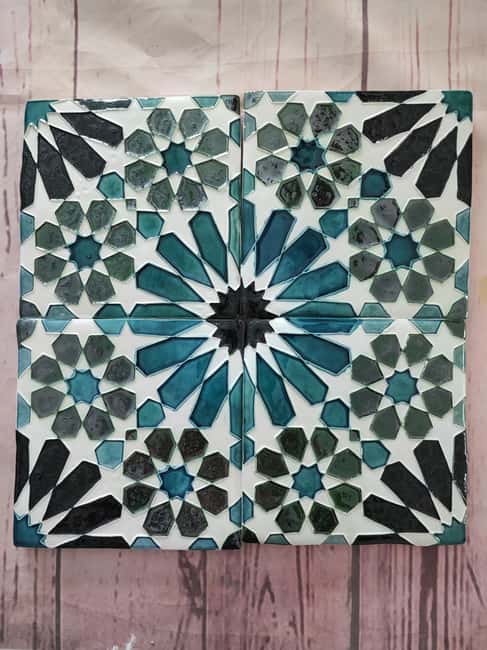
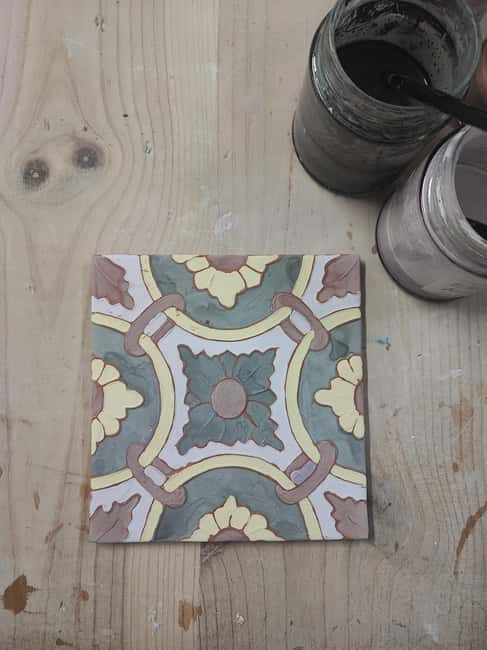
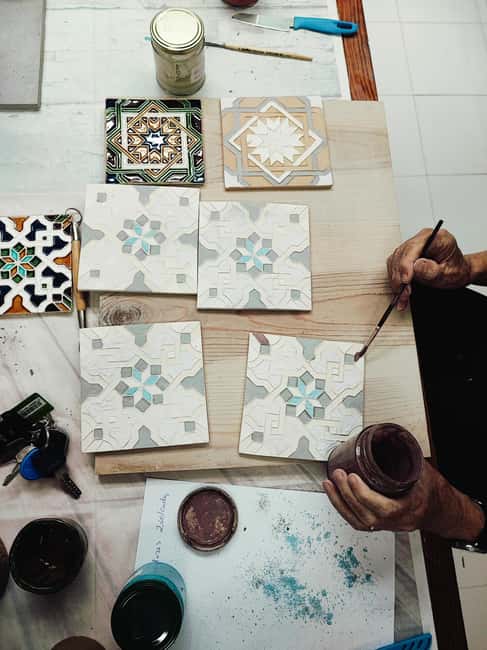
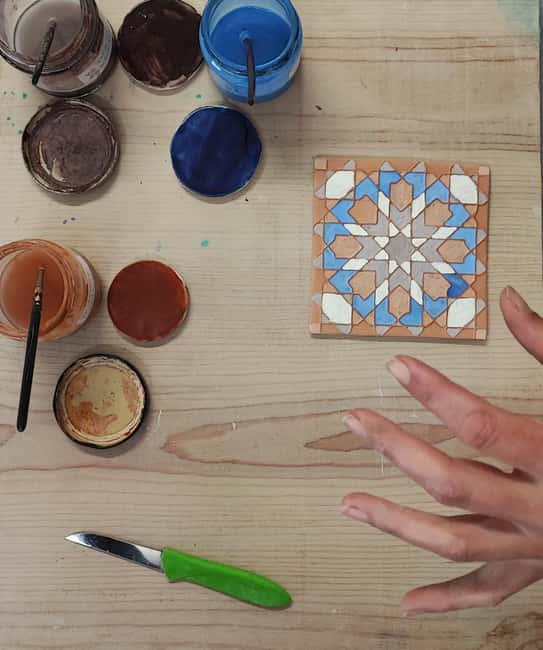
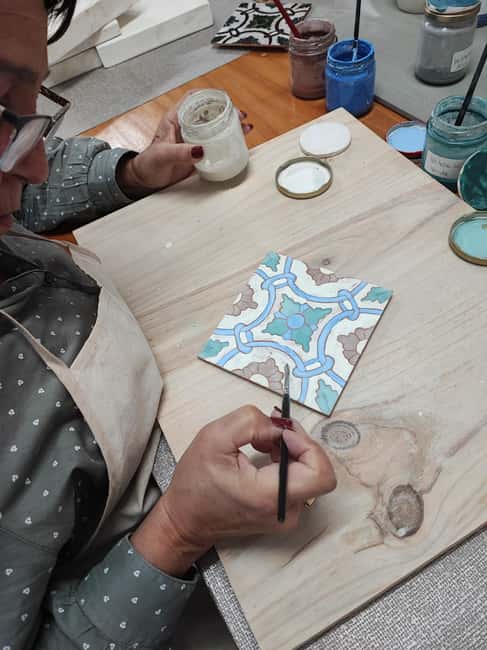
After the clay step, you move into the painting portion. This is where the workshop turns into a true souvenir moment: you paint a tile with colored glazes while learning the traditional Aresta decoration technique with Islamic influence.
The Aresta approach is all about how the design is separated and outlined. You’ll be guided on how to apply the decoration so the final tile keeps that “architectural” look—clean lines, controlled edges, and a strong geometric rhythm. If you’ve ever wondered how those intricate tile panels manage to stay crisp despite being hand-decorated, this is the answer: the technique is built to keep borders and pattern lines clear.
A practical tip: take your time choosing your motif before you start glazing. Since the workshop is only 2 hours total, picking confidently early helps you avoid rushing later. The teacher’s job is to help you execute your plan, not to rebuild it mid-stroke.
Worth a look before you lock anything else in around Sintra:

From painted tile to fired keepsake: pickup vs delivery
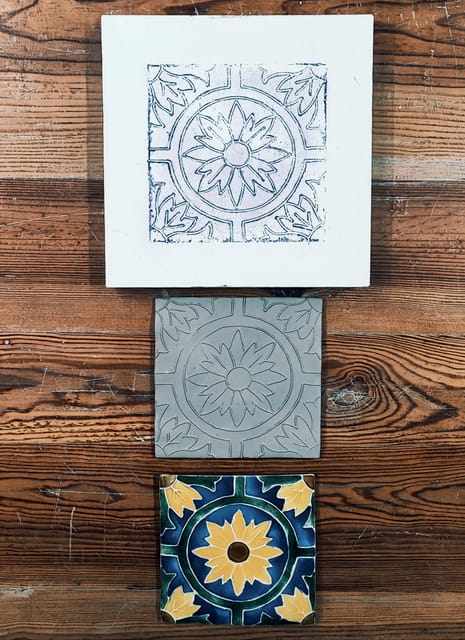
Here’s the part you’ll have to be patient about in the best way. Your painted tile stays in the studio so it can be fired. Plan on a short wait, because the fired tile is ready after 2 to 3 days.
At that point, you can either:
- Pick it up later at the studio, or
- Have it shipped (note: shipping fees apply separately in the studio).
There’s an important catch for U.S. plans. Due to temporary restrictions affecting Portugal’s postal shipments to the United States, the studio is currently unable to send tiles by mail. The good news is your tile will still be finished and ready in a few days, and if you can’t collect in person, you can arrange delivery to your hotel via courier for an additional fee. If you miss the window for courier pickup, the studio can also store your tile safely until international shipping becomes available again.
If you’re traveling lightly, this matters. A fired glazed tile is not something you want to transport unprotected in a bag for hours. The studio’s firing and storage plan is a big part of the value you’re paying for.
Price and value: is $58 worth it?
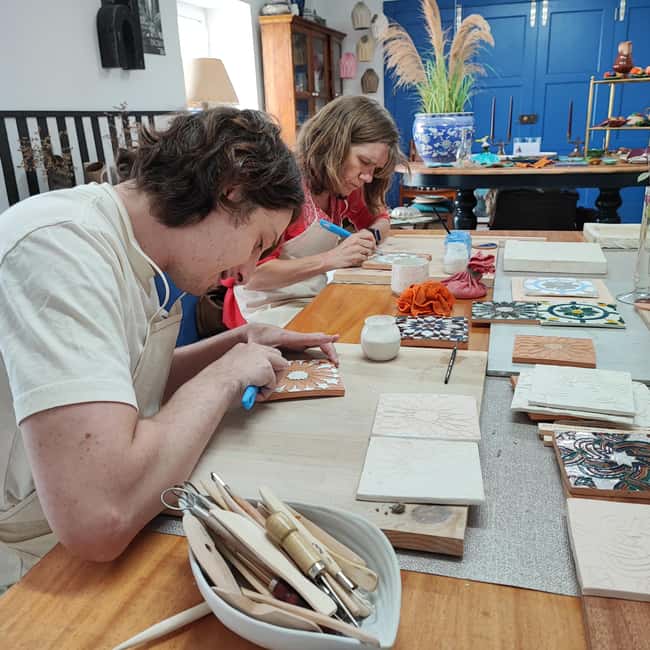
At $58 per person for a 2-hour workshop, it’s not the cheapest activity in Sintra, but it’s also not a “pay for the vibe” class. This price includes the core things you’d otherwise pay for separately: all materials and equipment, guidance from the instructor, and the firing service for your tile.
You also get one painted tile as your finished take-away. That turns the cost from an experience-only ticket into a lasting object you can hang or display. And because it’s a small group, you’re more likely to get hands-on help when you need it, rather than waiting your turn.
Food and drinks aren’t included. That’s normal for a workshop class, but it’s worth planning so you don’t end up hunting for snacks right before 3 pm. Also, transportation isn’t included, so build that into your day plan.
Finally, shipping costs (when offered) are extra, and U.S. mail shipping isn’t available right now. If you’re coming from the U.S., the “real” value becomes: will you be able to pick up, or should you budget for courier delivery?
What to do before and after class in Sintra
This is a great add-on to a Sintra afternoon because the workshop starts late enough for sightseeing. A simple rhythm is: train from Lisbon to Sintra, walk around town, then head to the studio for your 3 to 5 pm making session.
Because you’re leaving with a tile that won’t be fired until later, you’ll want to avoid making your entire day depend on fragile purchases near departure time. Instead, think of the workshop as the crafting anchor and treat everything else as flexible.
After class, you’ll probably want to browse the studio shop area if you’re into ceramics. The space has items for sale, and you can check them without pressure. If you’re the type who loves arts-and-crafts souvenirs that aren’t mass-produced, it’s worth a quick look while you still have the clay colors in your head.
Who should book this Hispanic Moorish tile workshop
I’d book this if you:
- Love geometric pattern design and want to understand where Portugal’s tile look comes from.
- Want a hands-on workshop that’s more guided than messy.
- Prefer a small group with 8 participants max rather than a crowded room.
- Like the idea of learning technique (Aresta) while making something you can keep.
I’d think twice if you:
- Need your souvenir instantly. Your painted tile needs firing and is ready later.
- Are counting on U.S. postal shipment. At the moment, you’ll need pickup or courier instead.
- Are traveling with very young kids. It isn’t suitable for children under 7.
If you’re staying near the train line or planning a Lisbon-to-Sintra day trip, this class can fit nicely. Just remember you’ll be committing to a specific time slot, and your finished tile pickup (or delivery plan) comes a couple of days later.
Should you book it?
Yes, if you want a hands-on Sintra experience that ends with a real, fired Hispanic Moorish tile you helped design. The small group setup, the clay mold step, the glazed painting practice, and the Aresta technique lesson add up to more than a simple craft souvenir.
Book it especially if you’re visiting for a few days and can handle the short wait for firing. If you’re U.S.-based, plan ahead for pickup or courier since mail shipping is temporarily not available. If that logistical piece fits your schedule, this workshop is one of the more rewarding ways to connect with Sintra’s tile culture without relying on luck or heavy shopping carts.
FAQ
How long is the workshop?
The workshop runs for 2 hours, from 3 pm to 5 pm in the studio.
What will I make during the class?
You’ll craft one tile using clay and a mold, and you’ll paint another tile with colored glazes using the Aresta technique. The studio fires your painted tile.
When do I get my finished tile?
Your painted tile is fired after the workshop, and it’s ready for pickup in about 2 to 3 days.
Can the studio ship the tile to my home?
Shipping is an option, but shipping costs are handled separately in the studio. For the United States specifically, postal shipment is temporarily restricted, so you’ll need to plan for pickup or courier delivery instead.
What’s included in the price?
The price includes the 2-hour workshop (3–5 pm), all materials and equipment, instruction in the technique, your fired painted tile, and the firing service. Food and drinks are not included.
Is the workshop suitable for kids or wheelchair users?
It is wheelchair accessible, but it isn’t suitable for children under 7.
More Workshops in Sintra
- Sintra: 2-Hour Private Surf Lesson at Praia Grande★ 4.9 · 6 reviews
- Sintra: Traditional Portuguese Tile Painting Workshop★ 5.0 · 3 reviews
More Tour Reviews in Sintra
- Sintra: Pena Palace and Park Entrance Ticket★ 4.2 · 17,410 reviews
- Lisbon: Sintra, Pena, Regaleira, Cabo & Cascais Tour★ 4.8 · 4,326 reviews
- Quinta da Regaleira Skip-the-Ticket-Line Entry & Audioguide★ 4.2 · 3,316 reviews
- Sintra: Castle of the Moors Skip-the-Line Ticket★ 4.6 · 2,893 reviews
- From Lisbon: Sintra & Cascais Group Tour with Pena Palace★ 4.8 · 2,237 reviews
Sintra, a Few More Fairy-Tale Days
- Sintra: Pena Palace and Park Entrance Ticket★ 4.2 · 17,410 reviews
- Lisbon: Sintra, Pena, Regaleira, Cabo & Cascais Tour★ 4.8 · 4,326 reviews
- Quinta da Regaleira Skip-the-Ticket-Line Entry & Audioguide★ 4.2 · 3,316 reviews
- Sintra: Castle of the Moors Skip-the-Line Ticket★ 4.6 · 2,893 reviews
- From Lisbon: Sintra & Cascais Group Tour with Pena Palace★ 4.8 · 2,237 reviews
Just in: fresh Sintra reviews from the team





Sintra Day Trips, compared.
 ★ 4.7Sintra, Pena, Regaleira, Cabo da Roca & CascaisFrom $2319,656 reviews
 ★ 4.2Sintra: Pena Palace and Park Entrance TicketFrom $1117,410 reviews
 ★ 4.7Sintra, Pena, Regaleira, Cabo da Roca, and CascaisFrom $2110,147 reviews
 ★ 5.0Sintra and Cascais Small-Group Day Trip from LisbonFrom $607,018 reviews
 ★ 4.8Sintra, Pena, Regaleira, Cabo Roca Coast & CascaisFrom $236,499 reviews
 ★ 4.8Sintra, Pena, Cabo da Roca, Cascais Tour with PickupFrom $585,445 reviews
 ★ 4.8Sintra, Pena, Regaleira, Cabo & Cascais TourFrom $644,326 reviews
 ★ 5.0Small Group Tour to Sintra, Pena Palace, Cabo Roca and CascaisFrom $673,559 reviews
Browse the lists this tour appears in