
Reviewed · SINTRA DAY TRIPS
3 Tours Private / Tour SINTRA Second Day Tour FÁTIMA Third day Tour LISBON
Three days, three Portugal icons. This private Sintra–Fátima–Lisbon route starts at 09:00 from Lisbon and strings together UNESCO Sintra, the quiet of Fátima, and Lisbon’s standout viewpoints, all in an air-conditioned van with Wi‑Fi and bottled water. I like the driver-led flexibility that lets you stretch or compress time at each stop. One thing to watch: ticket costs aren’t included for several top sights.
My favorite part is the way Sintra is tackled in one smooth day: the Moorish Castle history, the dramatic Pena Palace setting, and then the fairytale vibe of places like Quinta da Regaleira. You get a mix of medieval, romantic-era, and esoteric symbolism without feeling like you’re sprinting between unrelated areas.
The pace can still feel full, because Sintra and Lisbon viewpoints come with hills and walking. Plan for some stairs and uneven ground, and note there’s no restroom on board—so build in quick breaks when the driver pulls up.
In This Review
- Key highlights that make this tour worth your time
- Price and what you’re actually paying for
- The “Lisbon at 09:00” advantage (and why it helps)
- How the driver flexibility really works
- Day 1 in Sintra: Moorish roots, romantic palaces, and Regaleira’s mystery
- Moorish Castle: start with the views and the story
- Pena Park and National Palace: romantic architecture on a mountaintop
- Centro Histórico de Sintra: the town that connects it all
- Sintra National Palace: royal power in medieval form
- Quinta da Regaleira: symbolism and storybook landscaping
- Park and Palace of Monserrate: the romantic park angle
- Day 1 drawback to plan around
- Day 2 in Fátima: pilgrim routes, quiet chapels, and the main basilicas
- Valinhos Sanctuary: the Via-Sacra route and the Hungarian Calvary
- Basilica of the Holy Trinity: modern and round
- Capela das Aparições: the chapel tied to 1919
- Basilica of Our Lady of the Rosary: the big anchor basilica
- Day 2 travel note
- Day 3 in Lisbon: Belém monuments, pastry break, and viewpoint hopping
- Jerónimos Monastery (Mosteiro dos Jerónimos): Manueline masterpiece by the Tagus
- Torre de Belém: the riverfront defense with UNESCO status
- Pastéis de Belém: a quick local break
- Padrão dos Descobrimentos: Portugal’s sea-era memory
- Eduardo VII Park and Rossio Square: open air, then central Lisbon
- Lisbon Cathedral (Sé): layered religious architecture
- Miradouro Santa Luzia and Miradouro Senhora do Monte: Lisbon views that stick
- What’s included, what’s not, and how to plan your day
- Who should book this Sintra–Fátima–Lisbon private tour?
- Should you book it?
- FAQ
- How long is the tour?
- Where does the tour start and end?
- What does the tour include?
- Are attraction tickets included?
- Do I get pickup?
- Is this a private tour?
- Is there Wi‑Fi and air conditioning in the vehicle?
- Is there a restroom on board?
- Can I cancel for free?
- What’s the average booking window?
Key highlights that make this tour worth your time
- A true private format: only your group rides together, with a dedicated driver and vehicle.
- Driver-adjusted pacing: your time in each location can flex based on what your group wants that day.
- Sintra’s big three: Moorish Castle, Pena (Palace + park), and Sintra National Palace—plus Regaleira and Monserrate.
- Fátima beyond the main basilicas: Valinhos and the Via-Sacra stations are included, not just a quick visit.
- Lisbon in “layers”: Belém monuments first, then viewpoints and historic squares around central Lisbon.
- Comfort on the road: air conditioning, Wi‑Fi on board, and bottled water are included.
Price and what you’re actually paying for
At $581.78 per person for about 3 days, this is priced like a serious convenience package. The money goes toward a private vehicle (air-conditioned), Wi‑Fi, bottled water, and private transportation that gets you between Sintra, Fátima, and Lisbon efficiently.
Two details matter when judging value:
- Tickets aren’t included. Several major sites list admissions as not included, so your final trip cost depends on what you choose to enter.
- You’re buying time and smooth logistics, not just sightseeing. Starting at 09:00 and returning to your Lisbon accommodation means you’re not stitching together trains, buses, and transfers across three separate regions.
Also, the fact it’s often booked around 45 days in advance tells me people like this rhythm: Sintra on one day, Fátima on another, and Lisbon at the end while everything feels fresh rather than rushed.
More runs up the hill to Pena and Regaleira
- Sintra: Pena Palace and Park Entrance Ticket
★ 4.2 · 17,410 reviews - Lisbon: Sintra, Pena, Regaleira, Cabo & Cascais Tour
★ 4.8 · 4,326 reviews - Quinta da Regaleira Skip-the-Ticket-Line Entry & Audioguide
★ 4.2 · 3,316 reviews - Sintra: Castle of the Moors Skip-the-Line Ticket
★ 4.6 · 2,893 reviews
The “Lisbon at 09:00” advantage (and why it helps)
Starting from Lisbon at 09:00 is a smart choice for this itinerary. You get daylight for Sintra’s layered palaces and viewpoints, and you avoid losing half the day to early travel.
Then there’s the end point: the tour ends back at your Lisbon accommodation. That’s a big deal in Portugal, where getting back from a scenic area can eat up time. You also skip the hassle of figuring out public transport after long walking days.
The vehicle setup helps too. You’ll have air conditioning, Wi‑Fi on board, and bottled water. Not glamorous, but it makes a real difference when you’re hopping across hill towns and long distances.
How the driver flexibility really works
This tour isn’t just “arrive, rush, leave.” The schedule can be flexed in each location, based on a day plan with your driver and what you want.
That means:
- If your group wants extra time at Centro Histórico de Sintra, you can ask.
- If one palace feels like enough after the main highlights, you can trade that time for another viewpoint (or just breathe for 15 minutes).
I also like that the transport is privately yours. That’s how you get pacing that fits real people—especially if anyone in your group has mobility limits. In past experience with guides connected to this company (names like Margarida and Filipe come up for professional service), the common theme is adapting the day to your needs instead of forcing a one-size template.
Day 1 in Sintra: Moorish roots, romantic palaces, and Regaleira’s mystery
Sintra is one of those places where every turn feels like the start of a new movie scene. This day focuses on the kinds of sites you’ll remember later—because they’re visually dramatic and historically meaningful.
The western circuit, a few more ways to ride it
Moorish Castle: start with the views and the story
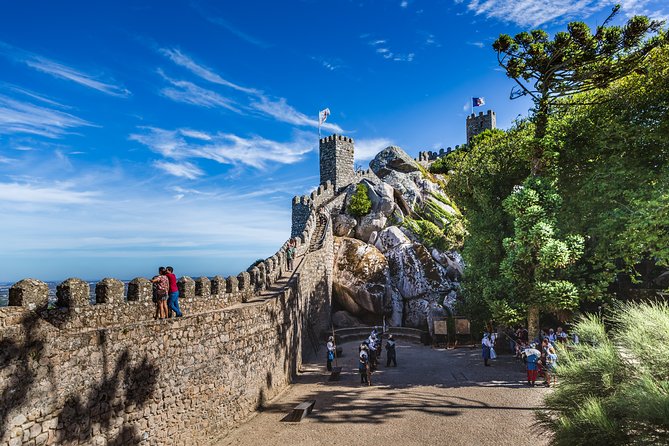
You begin at Moorish Castle, skirting two mountain ranges. It dates back to the early Moorish occupation (8th century), then was taken in 1147 by Portugal’s first king, Dom Afonso Henriques. This spot is a useful opener because it frames Sintra in layers: Moorish fortification, then Christian chapel-era changes, then romantic-era restoration under Dom Fernando II.
Practical tip: this is a “walk and look” stop. Even if you’re not into castles, the setting is the point.
Pena Park and National Palace: romantic architecture on a mountaintop
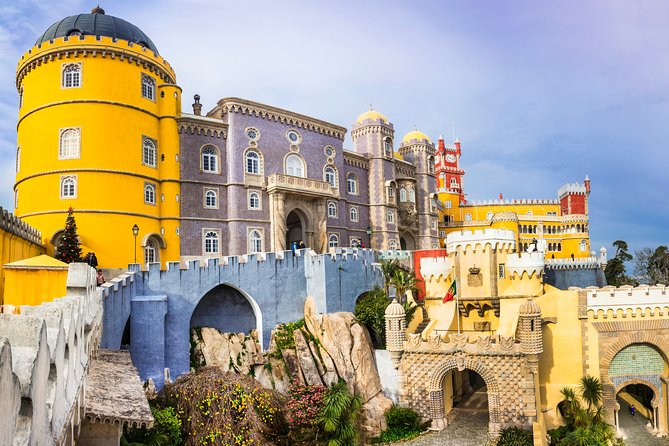
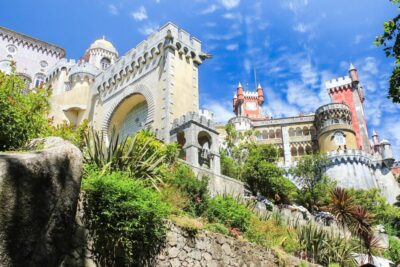
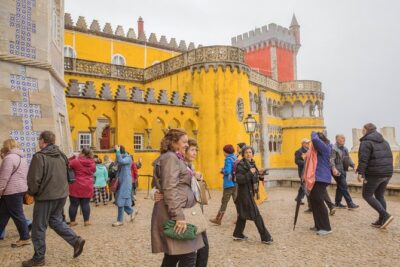
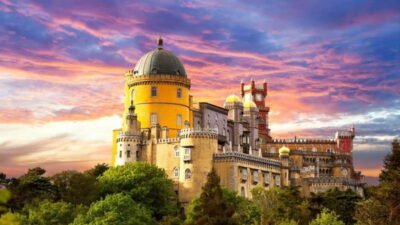
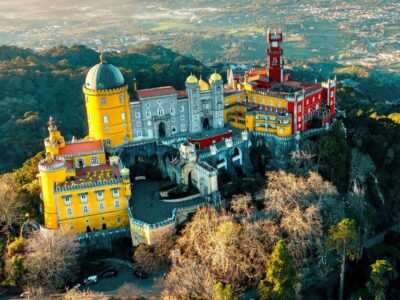
Next is Park and National Palace of Pena. This is the iconic Sintra palace perched on Monte da Pena, built on the site of a former monastery. The palace was linked to royal ambition when D. Fernando de Saxe Coburg-Gotha bought the convent and surrounding lands to create a summer palace after marrying Queen Dona Maria II in 1836.
Expect:
- Big panoramic views over the Sintra Mountains and toward the coast
- Strong “19th-century romanticism” energy
Note: admission is not included, so plan for that cost and time.
Centro Histórico de Sintra: the town that connects it all
Then you move to the Centro Histórico de Sintra. This is UNESCO-classified and free to visit. Here, you’re not just collecting photos—you’re getting the real setting that links palace land to everyday life: streets, buildings, and the feeling of a place that grew into importance over centuries.
Sintra National Palace: royal power in medieval form
You also visit the Sintra National Palace, described as unique among Portuguese royal medieval palaces. The palace you see today was rebuilt by Dom João I and enriched by Dom Manuel I, adding decorative character and a new wing.
If you only chose one interior palace, Pena often steals the spotlight. But the Sintra National Palace is valuable because it shows how royal life shaped the town’s identity over time.
Admission is not specified as free here, so treat it as another stop where you may need entry planning.
Quinta da Regaleira: symbolism and storybook landscaping
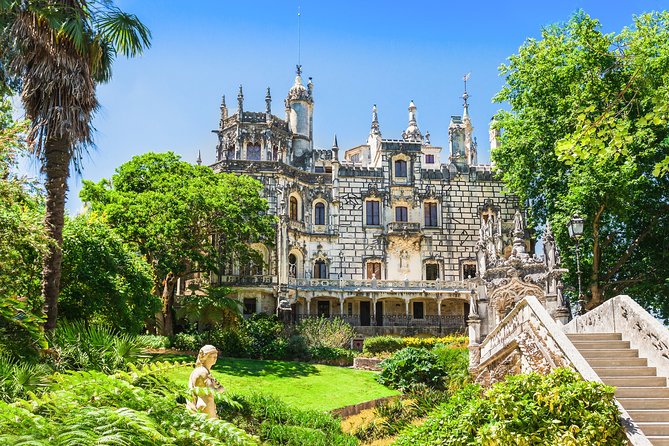
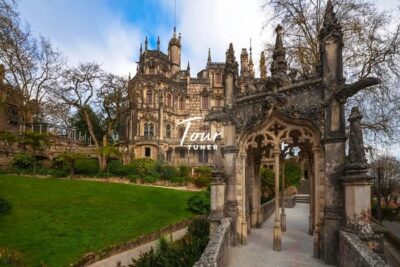
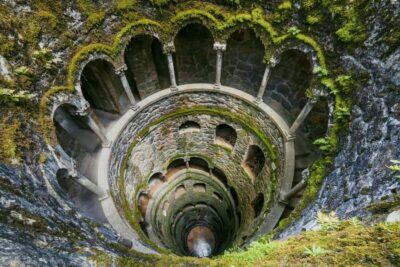
Quinta da Regaleira is one of the most “don’t-miss” stops for atmosphere. It was built in the early 20th century by millionaire Antonio Augusto Carvalho Monteiro, with scenographic architect Luigi Manini. The palace and grounds mix architectural styles—Gothic, Manueline, Renaissance—with mythical and esoteric symbolism.
The timing here is listed around 1 hour 30 minutes (tickets not included). I’d use that time to slow down. Regaleira is the kind of place where the details reward staying put.
Park and Palace of Monserrate: the romantic park angle
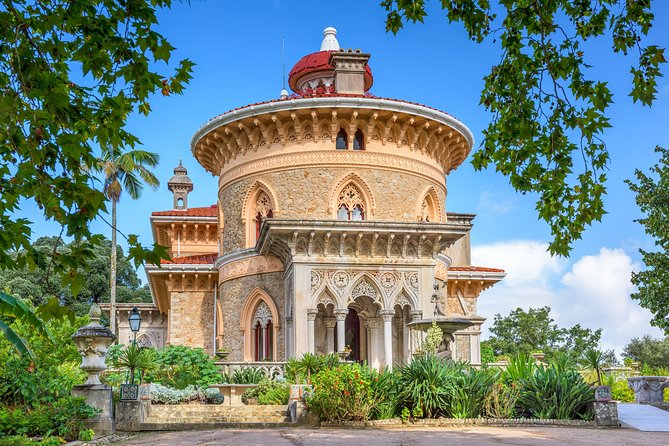
Finally, you visit Monserrate, a romantic park created by William Beckford, tied to his love for the Sintra Mountain setting. Even if you skip interiors, the gardens and overall mood help complete the day’s theme: Sintra as both history and theatrical landscaping.
Day 1 drawback to plan around
This is a lot for one day. The sites are close-ish geographically, but you still face walking, stairs, and viewpoint changes. If you want an easier pace, ask early for flexibility—so you’re not trying to power through fatigue.
Day 2 in Fátima: pilgrim routes, quiet chapels, and the main basilicas
Fátima shifts the tone. Instead of romantic palaces and castle ruins, you get a guided feel for the pilgrimage sites themselves—where the route matters as much as the buildings.
Valinhos Sanctuary: the Via-Sacra route and the Hungarian Calvary
The day starts at Valinhos Sanctuary. Thousands of pilgrims follow a route of the Via-Sacra to the Hungarian Calvary, including visits to the Chapel of St. Stephen of Hungary, plus the House of Lucy and the House of Francis and Jacinta Marto in Aljustrel.
You’ll also see the Angel of Portugal and Via-Sacra stations, created by Maria Amélia Carvalheira da Silva. This stop is free and gives context for Fátima as a pilgrimage landscape, not just a photo stop.
Basilica of the Holy Trinity: modern and round
Next is the Basilica of the Holy Trinity, inaugurated in 2007 but planned since 1973. It’s described as a modern, round, white building—built with a local stone known as white of the sea. It’s listed as 125 m in diameter with no intermediate support.
Even if you’re not into architecture, this one is visually distinctive. It also helps you see how Fátima has grown over time to meet pilgrim needs.
Capela das Aparições: the chapel tied to 1919
Then you visit Capela das Aparições, built by local people in 1919 after the request made by Our Lady during the apparitions. The first mass was in 1921. The chapel is modest in size with a rough design similar to a simple hermitage.
The chapel marks the spot of the holm-oak tree. Over time, the original tree disappeared, twig by twig, as believers took pieces. That detail makes this stop feel very human—less about monuments, more about lived devotion.
Basilica of Our Lady of the Rosary: the big anchor basilica
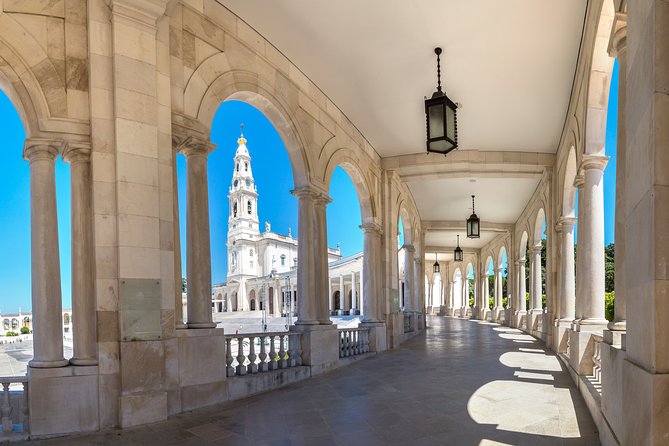
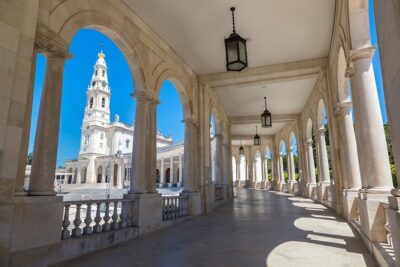
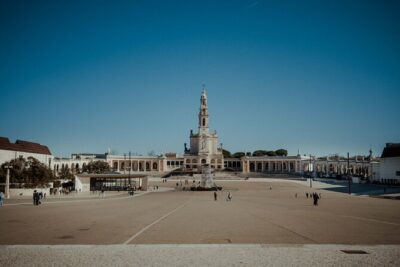
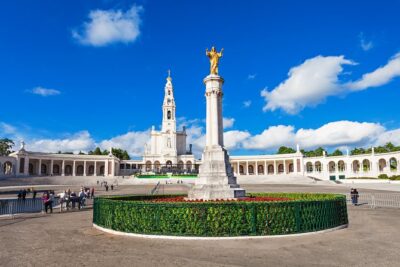
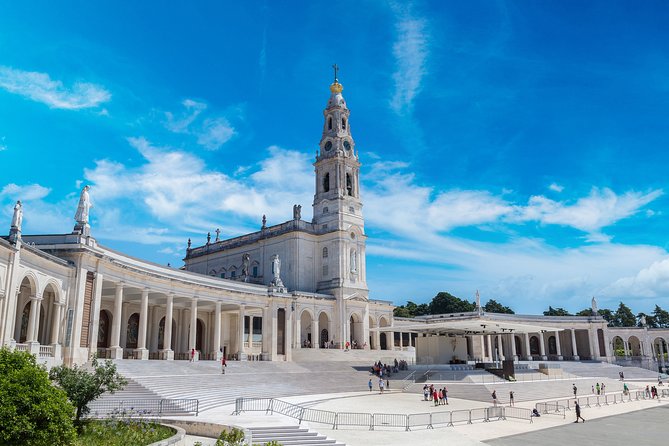
Finally, you visit the Basilica de Nossa Senhora do Rosario de Fátima. It’s located at the Cova da Iria within the Sanctuary of Fátima.
This is the emotional anchor for many people on this day. The basilica plus the smaller chapels around it is what makes the day feel complete: you go from route and context to the major spiritual centerpiece.
Day 2 travel note
The stops are mostly short blocks of time (many are around 30 minutes). That structure helps you stay mentally fresh. If your group is quieter or more reflective, this schedule tends to work well.
Day 3 in Lisbon: Belém monuments, pastry break, and viewpoint hopping
Lisbon is the “grand finale” day here. You start with the Belém monuments on the Tagus side, then shift into central Lisbon squares and viewpoints.
Jerónimos Monastery (Mosteiro dos Jerónimos): Manueline masterpiece by the Tagus
You visit Mosteiro dos Jerónimos, described as an apogee of Manueline architecture. It started as a hermitage for Santa Maria in 1452, and later became a major monastery connected to the Order of the Friars of St. Jerome.
This is one of those places where the stonework details are part of why it matters. Expect 1 hour here, with admission not included.
Torre de Belém: the riverfront defense with UNESCO status
Then come the Torre de Belém (Belém Tower). Ordered by King Manuel I and built between 1514 and 1521, it was intended as a formidable bastion defending the entrance to the Tagus.
You’ll hear the story that it was built on a basalt island, but over time the river’s course changed and the tower ended up nearly swallowed by the bank. UNESCO recognized it in 1983.
Admission not included, with about 1 hour planned.
Pastéis de Belém: a quick local break
After two major monument stops, you’re close to Pastéis de Belém. The tour data notes the pastries became known in the area in the early 19th century, when monasteries were shut down in 1834 and convent staff offered sweet pastries for sale.
This is a practical pause: grab something small, reset, and keep moving. It’s listed as free here, but the pastry purchase is obviously on you.
Padrão dos Descobrimentos: Portugal’s sea-era memory
Next is the Padrão dos Descobrimentos. It was designed in 1940 for a Portuguese World Exposition and built in 1960 for the 500-year commemoration of Prince Henry the Navigator’s death.
Think of this as the monument version of a sea-history headline—short and strong, with about 1 hour planned and admission not included.
Eduardo VII Park and Rossio Square: open air, then central Lisbon
After Belém, the tour shifts direction:
- Parque Eduardo VII for panoramic city views
- Rossio Square, described as reborn after the 1755 earthquake, and framed by the neo-classical D. Maria II Theatre
These stops help you see Lisbon not just as buildings, but as a city with spaces and sightlines.
Lisbon Cathedral (Sé): layered religious architecture
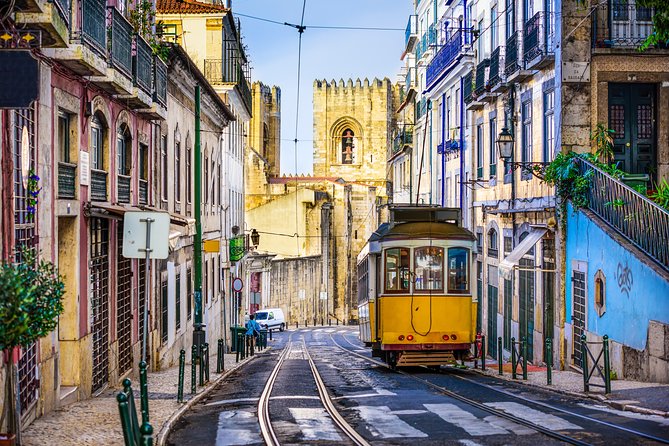
Then you visit Sé Catedral de Lisboa, dedicated to the Mother of God. Construction began in 1147 after Dom Afonso Henriques reconquered the city from the Moors. The tour description also notes archaeological evidence of a Muslim mosque built on an earlier Visigothic Christian temple—so you get a real timeline of re-use and rebuilding.
Admission is not included, and the planned time is about 30 minutes.
Miradouro Santa Luzia and Miradouro Senhora do Monte: Lisbon views that stick
You finish with viewpoint stops:
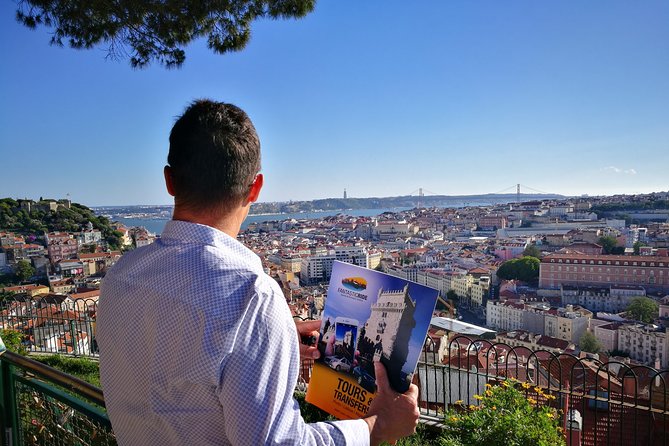
- Miradouro de Santa Luzia, with a wide view over Alfama and the Tagus
- Miradouro da Senhora do Monte, also in the São Vicente area (Graça), with views over the sea of roofs, São Jorge Castle, Baixa, and the Tagus estuary
These are the stops that make the day feel like Lisbon. You’ll see why people keep coming back for the angles: domes, rooftops, river bends, and church towers lined up like a map you can walk.
What’s included, what’s not, and how to plan your day
This tour includes:
- Bottled water
- Air-conditioned vehicle
- Private transportation
- Wi‑Fi on board
It does not include:
- Tickets for the sites marked as not included
- Food and drinks
- Restroom on board
That last point is more important than it sounds. With multiple palace and viewpoint stops across hilly areas, you’ll want to treat restroom breaks as part of your rhythm. Use the time at each stop to reset so you don’t rush at the next one.
Who should book this Sintra–Fátima–Lisbon private tour?
This is a great match if you want:
- One private driver handling the full route so you can focus on sights
- A day in Sintra that covers castle, multiple palaces, and Regaleira
- A Fátima day that includes Valinhos and not only the best-known basilicas
- A Lisbon finale that combines Belém monuments with central squares and miradouros (viewpoints)
It’s especially worth it if you’re traveling with anyone who benefits from pacing changes. If anyone in your group has walking limitations, this is the style of tour where you’ll want to ask your driver to slow down and prioritize the best-feeling stops.
Should you book it?
I’d book this tour if you want a clean, private structure for three of Portugal’s most “name-recognition” regions, without having to plan every transport leg. The comfort touches (Wi‑Fi, air conditioning, water) plus the driver flexibility make the day feel smoother than a DIY approach.
I’d think twice if you hate uncertainty around admissions and want one fixed price with no site-entry planning. Because tickets aren’t included for multiple key attractions, your total cost will rise depending on what you enter.
If you like guided pacing, big scenic payoffs, and a route that makes sense—Sintra first, Fátima second, Lisbon third—this is a strong pick.
FAQ
How long is the tour?
It’s listed as about 3 days.
Where does the tour start and end?
All tours start in Lisbon at 09:00 and end back at your accommodation in Lisbon.
What does the tour include?
The included items are bottled water, an air-conditioned vehicle, private transportation, and Wi‑Fi on board.
Are attraction tickets included?
No. Tickets are not included for the sights marked as not included in the itinerary.
Do I get pickup?
Yes, pickup is offered.
Is this a private tour?
Yes. It’s described as private transportation and only your group will participate.
Is there Wi‑Fi and air conditioning in the vehicle?
Yes. The vehicle includes Wi‑Fi on board and is air-conditioned.
Is there a restroom on board?
A restroom on board is not included.
Can I cancel for free?
Yes. There’s free cancellation up to 24 hours in advance for a full refund.
What’s the average booking window?
It’s listed as being booked on average 45 days in advance.
More Tour Reviews in Sintra
- Sintra: Pena Palace and Park Entrance Ticket★ 4.2 · 17,410 reviews
- Lisbon: Sintra, Pena, Regaleira, Cabo & Cascais Tour★ 4.8 · 4,326 reviews
- Quinta da Regaleira Skip-the-Ticket-Line Entry & Audioguide★ 4.2 · 3,316 reviews
- Sintra: Castle of the Moors Skip-the-Line Ticket★ 4.6 · 2,893 reviews
- From Lisbon: Sintra & Cascais Group Tour with Pena Palace★ 4.8 · 2,237 reviews
The Western Circuit: Fátima, Nazaré, Óbidos
- Discover Fátima: Private Pilgrimage Tour from Lisbon★ 5.0 · 50 reviews
- Best Fátima, Óbidos, Nazaré & Batalha Tour From Lisbon★ 5.0 · 18 reviews
- Fátima & Óbidos Private Tour (Includes Batalha & Nazaré)★ 5.0 · 10 reviews
- From Lisbon: Nazare and Sintra Private Tour★ 5.0 · 9 reviews
- Transfer Tour Lisbon/Porto with 2 stops options Óbidos, Nazaré, Fátima, Coimbra★ 5.0 · 5 reviews
Sintra, a Few More Fairy-Tale Days
- Sintra: Pena Palace and Park Entrance Ticket★ 4.2 · 17,410 reviews
- Lisbon: Sintra, Pena, Regaleira, Cabo & Cascais Tour★ 4.8 · 4,326 reviews
- Quinta da Regaleira Skip-the-Ticket-Line Entry & Audioguide★ 4.2 · 3,316 reviews
- Sintra: Castle of the Moors Skip-the-Line Ticket★ 4.6 · 2,893 reviews
- From Lisbon: Sintra & Cascais Group Tour with Pena Palace★ 4.8 · 2,237 reviews
Just in: fresh Sintra reviews from the team




Sintra Day Trips, compared.
 ★ 4.7Sintra, Pena, Regaleira, Cabo da Roca & CascaisFrom $2319,656 reviews
 ★ 4.2Sintra: Pena Palace and Park Entrance TicketFrom $1117,410 reviews
 ★ 4.7Sintra, Pena, Regaleira, Cabo da Roca, and CascaisFrom $2110,147 reviews
 ★ 5.0Sintra and Cascais Small-Group Day Trip from LisbonFrom $607,018 reviews
 ★ 4.8Sintra, Pena, Regaleira, Cabo Roca Coast & CascaisFrom $236,499 reviews
 ★ 4.8Sintra, Pena, Cabo da Roca, Cascais Tour with PickupFrom $585,445 reviews
 ★ 4.8Sintra, Pena, Regaleira, Cabo & Cascais TourFrom $644,326 reviews
 ★ 5.0Small Group Tour to Sintra, Pena Palace, Cabo Roca and CascaisFrom $673,559 reviews
Browse the lists this tour appears in