
Reviewed · SAILING
Sight Sailing in Lisbon
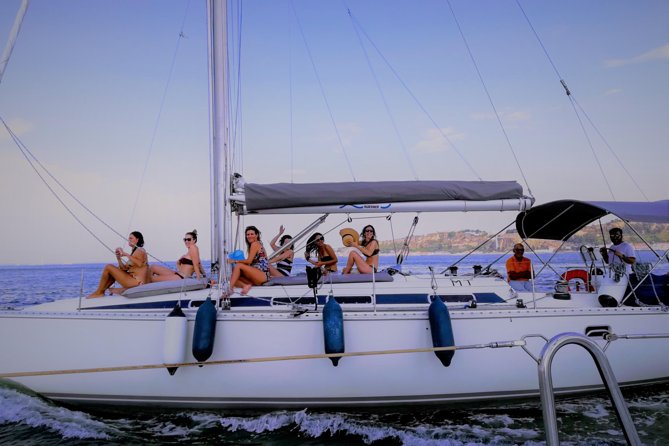
From the Tagus, Lisbon looks brand new. This private sailing outing pairs big skyline views with a local guide who turns landmarks into stories you’ll remember.
I love how the route hits the Lisbon classics from the water: Belem Tower, the Monument of the Discoveries, the April 25th Bridge, and all the way toward Almada for Christ-King. The other standout for me is the onboard food-and-drink setup—there’s a welcome drink, plus wine tasting and the chance to taste Portuguese gastronomy, along with bottled water and alcoholic beverages.
One thing to plan around: hotel pickup and drop-off aren’t included, so you’ll need to make your own way to the meeting point at Av. Brasília 5, Lisbon, and be ready to depart on time.
In This Review
- Quick hits: what makes this sailing trip special
- Why Lisbon by boat beats the bus stop version
- Meet at Av. Brasília 5 and set yourself up for an easy start
- Belem Tower: Lisbon’s seaward defense, seen from the water
- Monument of the Discoveries: a ship-shaped tribute to the Age of Discoveries
- Terreiro do Paço and the 1755 earthquake story: when Lisbon was rebuilt
- April 25th Bridge: the Portuguese Golden Gate link
- Passing through Alfama: the oldest streets and the fado atmosphere
- São Jorge Castle and Lisbon Cathedral: looking up at power
- National Pantheon (Santa Engrácia): architecture with a purpose
- Jerónimos Monastery and Empire Square: where the navigators left
- Central Tejo, MAAT, and the art-meets-industry feel along the river
- Cais do Sodré and Santa Apolónia: port life and rail heritage by the water
- Christ-King (Almada): the huge vow that shaped the skyline
- Ajuda Palace: royal rooms, river views
- Museums and culture on the waterfront: National Ancient Art Museum and Folk Art Museum
- Behind the scenes: VTS Tower, dolphins, and river life
- What’s included onboard (and why it matters)
- Price and value: $226.41 for a private skyline hour-and-a-half-plus
- Who this private Tagus sail is best for
- Should you book Lisbon Sight Sailing?
- FAQ
- How long is the sailing experience?
- Is this a private tour?
- Where is the meeting point?
- Do you include hotel pickup and drop-off?
- What landmarks will we see while sailing?
- Is there a welcome drink?
- Is wine tasting included?
- Is Portuguese food included?
- What tickets do I get?
- Is the experience suitable for most people?
- Is the booking refundable?
Quick hits: what makes this sailing trip special
- Private tour with a local guide who explains what you’re seeing as you sail
- Welcome drink + wine tasting plus Portuguese bites on board
- Tagus River landmark run from Belem to Praça do Comércio viewpoints
- April 25th Bridge and the Lisbon-to-Almada skyline in one easy sail
- Mobile ticket and a straightforward meetup at Av. Brasília 5
- On-water perspective that makes even familiar sights feel fresh
Why Lisbon by boat beats the bus stop version
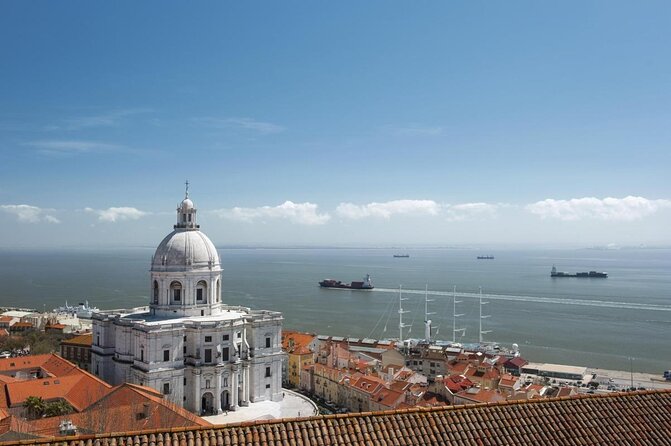
Lisbon from the Tagus is the shortcut to understanding the city. From land, you can tour monuments and squares and still feel like the city is “up there.” On the water, Lisbon shows you how it grew along the river—ports, palaces, defenses, trade routes, and the bridges that knit it all together.
This is also the kind of private tour that feels made for real conversation. Since it’s private, you’re not stuck listening to a generic script or competing with the loudest people for sightlines. The local guide shares the meaning behind each landmark—why it was built, what it replaced, and how it changed Lisbon’s story.
And yes, the drink-and-food part matters. A sightseeing sail is nicer when you’re not just watching from a bench. Here, the onboard welcome drink and wine tasting set a comfortable tone from minute one, and the Portuguese gastronomy portion gives you something more memorable than just photos.
Worth a look before you lock anything else in around Lisbon:
- Lisbon: Sunset Boat Party Cruise with DJ and Open Bar
★ 4.5 · 10,378 reviews - Lisbon: Sunset Boat Tour with Music and Drinks
★ 4.6 · 3,908 reviews - Lisbon: Tagus River Cruise with Welcome Drink
★ 4.2 · 3,717 reviews - Lisbon: Daytime/Sunset/Night City Sailboat Tour with Drink
★ 4.9 · 3,114 reviews
Meet at Av. Brasília 5 and set yourself up for an easy start
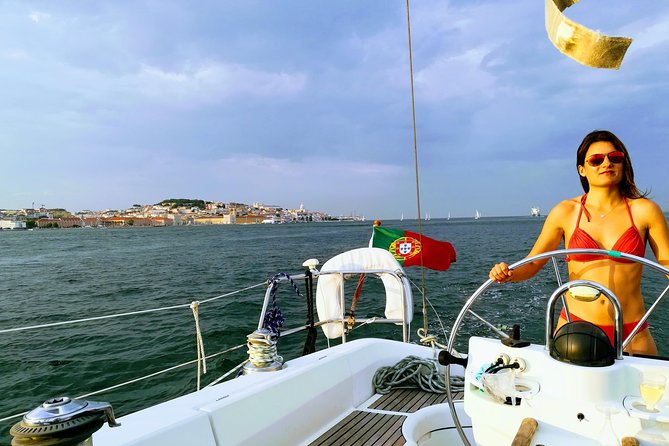
The experience starts at Av. Brasília 5, 1350-353 Lisboa, Portugal, and ends back at that same meeting point. Hotel pickup and drop-off aren’t included, so it helps to plan your transport before you arrive—metro, tram, rideshare, or a short walk from nearby areas.
Because this is a river sail, timing matters more than it does for a museum ticket. You’ll want to arrive with a little buffer, use the first minutes to get settled on board, and then let the river do the work.
Belem Tower: Lisbon’s seaward defense, seen from the water
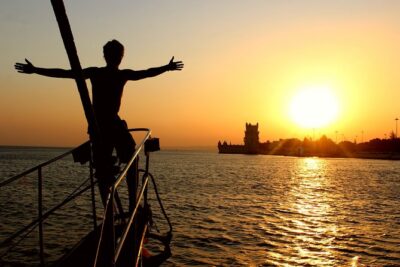
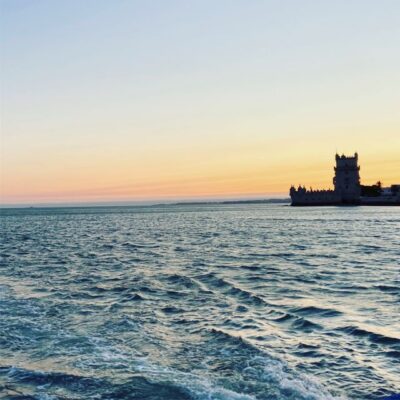
Your first big landmark in the story is Belém Tower, built at the narrowest point of the Tagus estuary. That detail isn’t trivia—it explains the tower’s purpose. This was Lisbon facing the sea, with fortifications designed for control and protection.
Today, the tower is still clearly connected to the river, but it’s also linked symbolically to land by a pedestrian bridge. From the boat, you get the best of both worlds: the tower still feels like it belongs to the water, not the parking lot.
Why I like this stop: it’s one of those places where the setting is the point. Even if you’ve seen photos, the real impact lands when you see how close the water is to the structure and how the tower sits in the estuary.
Possible drawback: because you’re looking from the river, you’ll rely on your onboard position for the best angles. If you’re picky about photos, get settled early and keep an eye on how the boat turns.
Monument of the Discoveries: a ship-shaped tribute to the Age of Discoveries
Next up is the Discoveries Monument, with a ship-like design—two ramps meeting at the prow, crowned by Henry the Navigator. The monument includes 32 stone figures tied to the Age of the Discoveries, including Fernão de Magalhães, Luís de Camões, Pedro Álvares Cabral, and Vasco da Gama.
It’s also interesting that the original monument didn’t last. Built in 1940 for the Portuguese World Exhibition, it used perishable materials and was dismantled just three years later (in 1943). That change adds a layer you don’t get from quick sightseeing: this wasn’t only “memorial art,” it was a construction of its era that Lisbon later chose to keep expanding.
On the sail, you’ll appreciate the scale. The monument isn’t just tall—it’s shaped like a narrative, and the river perspective makes it feel even more ceremonial.
Worth a look before you lock anything else in around Lisbon:
Terreiro do Paço and the 1755 earthquake story: when Lisbon was rebuilt
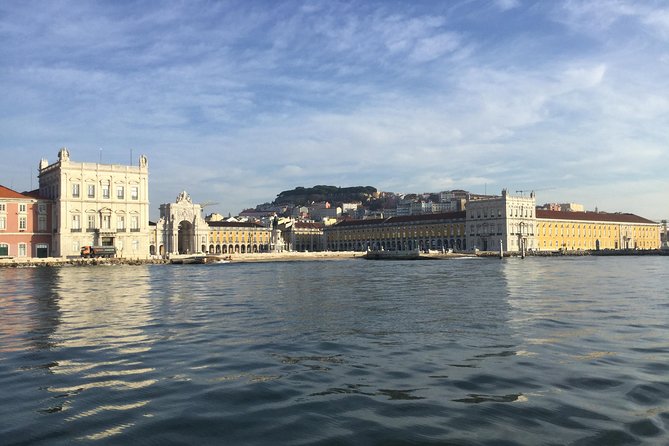
The next stop turns tragic history into city planning you can still see. The Lisbon earthquake began around 9:30 a.m. on November 1, 1755 and devastated much of downtown and the hillside toward Chiado, collapsing buildings like the Palácio Real da Ribeira and many other major structures.
What you learn here is that reconstruction wasn’t random. The square that emerged from those rebuilding plans made way for Terreiro do Paço, designed as a majestic square open toward the Tagus estuary. Today, it hosts major events all year, including the city’s New Year’s Eve fireworks.
From the water, Terreiro do Paço reads like a stage built for river-facing life. You get to see why a rebuilt square mattered: Lisbon needed a public face toward the harbor.
April 25th Bridge: the Portuguese Golden Gate link
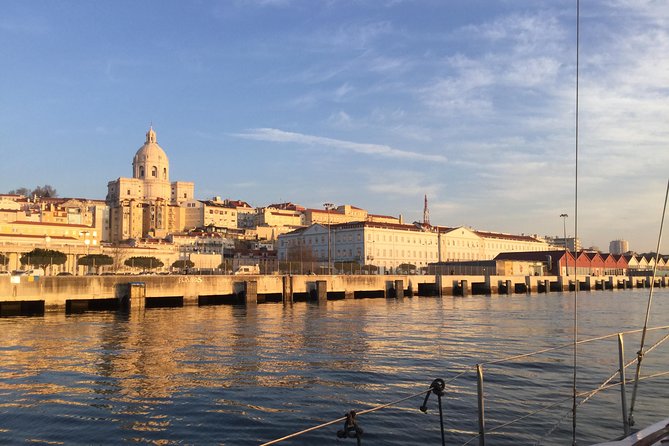
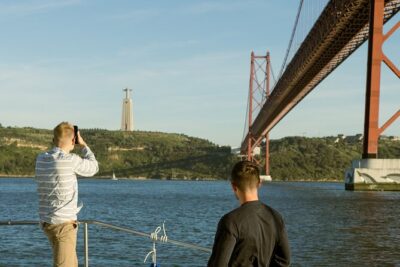
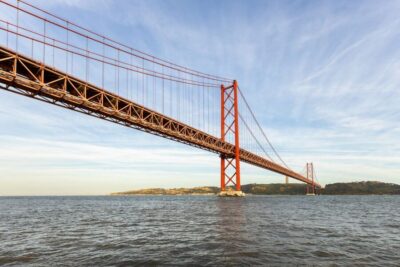
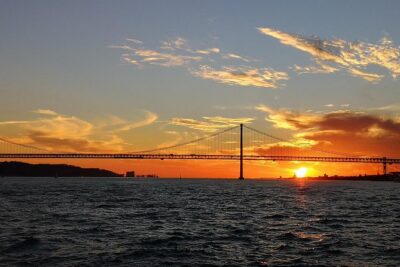
The April 25th Bridge earns its nickname—sometimes called the Portuguese Golden Gate Bridge because of its suspension-bridge similarities. The detail that makes it fun (and memorable) is that after more than 50 years of ideas and projects, the construction was attributed to the same North American company.
It was originally known as Ponte Salazar, and it’s notable for practical reasons: it cost less than anticipated and was executed quickly. It also does what bridges are supposed to do—connects the two banks, linking Lisbon to Almada.
From your seat on the water, the bridge becomes more than a “view object.” It shows you how Lisbon and Almada operate as one system rather than two separate places.
Passing through Alfama: the oldest streets and the fado atmosphere
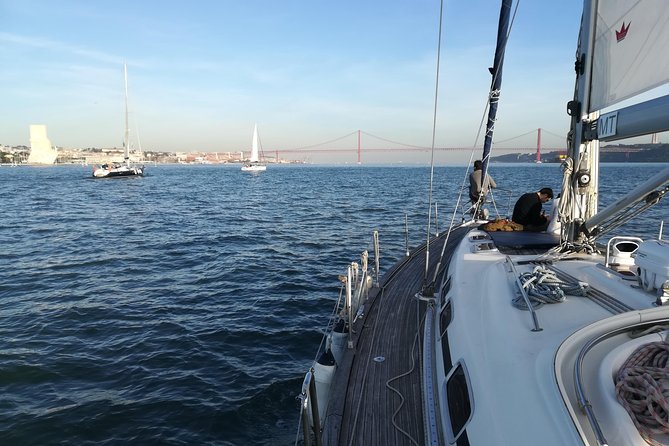
When your route reaches Alfama, the experience becomes more than architecture. Alfama is Portugal’s oldest neighborhood and one of Europe’s oldest, with narrow cobbled streets, colorful houses, and striking views over the Tagus River.
It’s also where the music culture lives—especially fado. Even though you’re sailing past rather than doing a walking tour, you still get the sense of the neighborhood’s rhythm. Alfama’s layout and hill position are made for atmosphere: you can see why music belongs here.
One consideration: Alfama’s best angles often depend on where the boat is positioned. Don’t wait to “see later.” If a view opens up, take it in right away.
São Jorge Castle and Lisbon Cathedral: looking up at power
Your cruise also frames Lisbon’s historic dominance in big ways. São Jorge Castle sits high above the city center, founded in the 10th and 11th centuries when Lisbon was an important Muslim port. In 1147, the first king of Portugal, D. Afonso Henriques, conquered the castle and city from the Moors.
That history helps you read the skyline. You see a hilltop fortress and understand it wasn’t decoration—it was control.
The same hill-and-church vibe continues with Lisbon Cathedral. Construction began in the second half of the 12th century after the Moors’ conquest. It’s Lisbon’s oldest church and one of Portugal’s key religious buildings, and it also has a treasury with valuable objects across multiple halls.
On the water, these are “proof points.” You can tell Lisbon’s past isn’t only in museums; it’s embedded in the shape of the city.
National Pantheon (Santa Engrácia): architecture with a purpose
Another sight tied to Alfama is the National Pantheon, also known as the Church of Santa Engrácia. It’s classified as a National Monument and known for both its architecture and its panoramic views.
It also matters politically and culturally because it houses the remains of exceptional Portuguese people. When your guide explains that, it changes the feeling of the building—from “pretty view stop” to “place chosen for significance.”
Jerónimos Monastery and Empire Square: where the navigators left
Now you hit Lisbon’s maritime heart. Jerónimos Monastery is a 16th-century Portuguese architecture masterpiece, classified as a national monument, located in the river’s monumental zone along the Tagus. Between the monastery and the river you can also find Empire Square, a departure point associated with Portuguese navigators.
This is where the stories of Vasco da Gama and Luís de Camões connect to geography. From the sail, the river becomes the route these people would have followed, not just a backdrop.
Practical note: the monument complex is large. Don’t expect one perfect photo. Expect multiple good angles as the boat passes and turns.
Central Tejo, MAAT, and the art-meets-industry feel along the river
Lisbon’s modern river identity shows up in two major stops on this sailing route: Central Tejo and the Museum of Art, Architecture and Technology (MAAT).
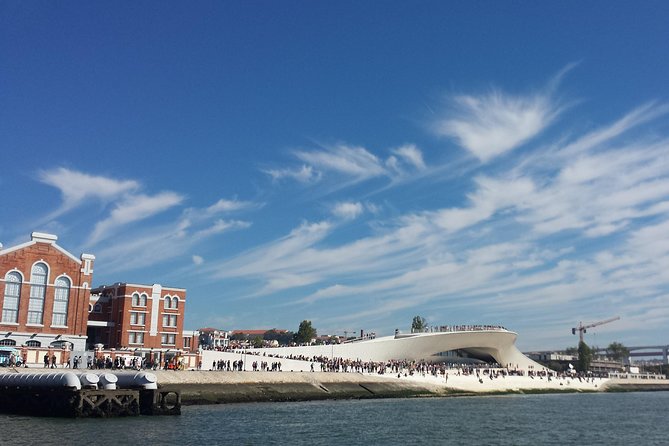
Central Tejo was a thermoelectric plant supplying electricity to Lisbon and the region. Built in 1908, its productive activity ran from 1909 to 1972. It reopened as the Electricity Museum in 1990, then returned definitively after restoration in 2006.
MAAT opened in 2016 and was designed by British architect Amanda Levete. It regularly hosts national and international exhibitions and includes events and educational programs.
From a boat, you get a neat contrast: Lisbon’s river is still powered by industry, but it’s also now powered by creativity. It’s an easy way to see the city’s changing identity without changing your schedule.
Cais do Sodré and Santa Apolónia: port life and rail heritage by the water
The river isn’t only monuments. Your sail also sweeps past areas tied to transport and everyday movement.
Cais do Sodré is historic and iconic because of its location on the Tagus. It was known as the Port of Vessels in the 17th century, when ships left for Portuguese colonies. In the 19th century it became an entertainment zone with bars and venues that attracted sailors and adventurers.
Then there’s Santa Apolónia Station, one of Portugal’s oldest train stations, inaugurated in 1865 in a building that used to be a convent. It planned as both railway and river station, and since 2007 it’s been the final station for one Lisbon metro line. It’s very close to the cruise port terminal, and part of the station is occupied by a five-star hotel, The Editory Riverside Santa Apolónia, with 126 rooms referencing Portuguese railway heritage.
If you like cities that mix old functions with new uses, this is the section that makes you nod along.
Christ-King (Almada): the huge vow that shaped the skyline
Your sail continues toward Almada for the standout religious-and-political landmark: Christ-King. The monument includes a 75-metre-high portico topped by a 28-metre statue of the Most Holy Redeemer with open arms facing Lisbon. The whole pedestal structure rises to 82 metres.
What makes this one different from a simple religious landmark is the story behind it. It was built to fulfill a vow made by the Portuguese episcopate in 1940, asking God to free Portugal from participating in World War II. Portugal’s prime minister António Oliveira Salazar preferred neutrality.
From the water, Christ-King doesn’t feel like a distant photo spot. It reads like a declaration—Lisbon gets viewed back by its skyline companion across the river.
Ajuda Palace: royal rooms, river views
Another Almada-side and Lisbon-river feel comes from Ajuda Palace. Built in the 19th century as a residence for the Portuguese royal family, it’s now an important national museum. Its location gives you views over the Tagus and the city, which makes it a strong pairing with a boat itinerary—because the view is literally part of the building’s value.
Museums and culture on the waterfront: National Ancient Art Museum and Folk Art Museum
If you enjoy art and architecture, you’ll spot two cultural landmarks tied to the city’s heritage.
The National Ancient Art Museum was founded in 1884 and sits in the former Palácio dos Condes de Alvor. The building itself adds charm, with an ornate façade and detailed design, and the collection covers more than 500 years with sculpture, painting, goldsmithing, and decorative arts from Europe, Africa, and the Orient.
Lisbon’s Folk Art Museum (FAM) traces back to the Portuguese World Exhibition in 1940, where it began as a pavilion for the Popular Life Section. In 1945 it became a museum project, opening July 15, 1948. Today it operates as the Folk Art Museum and is a cultural landmark.
Even if you don’t step inside during the sail, a local guide connecting these to the river and city identity makes them more than names you’ll forget.
Behind the scenes: VTS Tower, dolphins, and river life
This part is quieter but fascinating. The Maritime Traffic Control Centre, VTS Tower, manages navigation for the Port of Lisbon administration’s jurisdiction—providing information and advice to ships sailing in the Tagus estuary and approaching it, up to 16.5 nautical miles centered on VTS-Lisboa, with the Vasco da Gama Bridge as an upstream limit. Controllers use surveillance cameras, radars, sensors, and more to monitor maritime movement, and they also manage wharves.
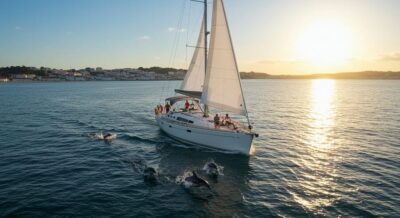
The tower also accommodates a dolphin observatory on the Tagus River.
In practice, this is where you feel the river’s living nature. It’s not just a scenery line; it’s a working environment.
What’s included onboard (and why it matters)
You’re not just buying time on the water. The experience includes all fees and taxes and is run as a private tour with a local guide. Food and drink are part of the package too: a welcome drink, wine tasting, bottled water, and alcoholic beverages, plus the opportunity to taste Portuguese gastronomy.
That’s why this feels like good value for a short trip. For many half-days in cities, you pay for transport and photos and then spend extra on food. Here, the plan builds the meal-and-drink moment into the main event.
Price and value: $226.41 for a private skyline hour-and-a-half-plus
At $226.41 per person for approximately 2 hours 30 minutes, you’re paying for three things:
1) Private sailing access, not a shared boat cattle line
2) A local guide who can explain what you’re seeing while you’re moving
3) Food and drink, including welcome drink and wine tasting, plus Portuguese gastronomy opportunities
That combination is what makes the price easier to justify. If you were to build a comparable day with a private guide plus separate meal stops, you’d spend more—and you still wouldn’t get the Tagus perspective.
If you’re traveling solo, it can be a splurge. If you’re splitting the cost among a group, it becomes a very practical way to get “top sights” without turning your day into a checklist.
Who this private Tagus sail is best for
This style of outing fits a lot of trip types:
- Couples and honeymoons, because sunset-style timing and calm views are a natural match
- Families, since the experience is “one main activity” with lots of sightseeing from one place
- Friends on celebrations like birthdays and anniversaries, since private sailing makes it feel special without extra planning
- Business trips that need a smooth, memorable break—people have used this as a fun finish to a busy schedule
You’ll like it most if you enjoy history you can see, not just read, and if you’re happy to watch Lisbon slide by at river speed.
Should you book Lisbon Sight Sailing?
If you want a simple, good-looking way to see a stack of Lisbon’s famous sights plus the Almada skyline, this private Tagus sail is a strong choice. The included welcome drink and wine tasting make it feel like a real experience, not just transportation. And the guide-led storytelling is the difference between seeing landmarks and understanding them.
I’d skip it only if you really don’t like being on the water, or if you don’t want to handle your own way to the meeting point at Av. Brasília 5.
FAQ
How long is the sailing experience?
The tour lasts about 2 hours 30 minutes.
Is this a private tour?
Yes. It’s a private tour, so only your group participates.
Where is the meeting point?
It starts at Av. Brasília 5, 1350-353 Lisboa, Portugal.
Do you include hotel pickup and drop-off?
No. Hotel pickup and drop-off are not included.
What landmarks will we see while sailing?
You’ll sail along the Tagus River and pass major Lisbon landmarks such as Belém Tower, the Monument of the Discoveries, Praça do Comércio, and Christ Statue/Christ-King, plus sights like the April 25th Bridge.
Is there a welcome drink?
Yes. A welcome drink is included.
Is wine tasting included?
Yes. Wine tasting is included.
Is Portuguese food included?
You’ll have the opportunity to taste Portuguese gastronomy, and bottled water is included.
What tickets do I get?
You’ll receive a mobile ticket.
Is the experience suitable for most people?
Most travelers can participate, and confirmation is received at the time of booking.
Is the booking refundable?
This experience is non-refundable and cannot be changed for any reason. If you cancel or request an amendment, the amount paid will not be refunded.
More Sailing in Lisbon
- Lisbon: Daytime/Sunset/Night City Sailboat Tour with Drink★ 4.9 · 3,114 reviews
- Lisbon: Sunset Catamaran Boat Tour with Music and Drinks★ 4.7 · 2,834 reviews
- 2 Hour Lisbon Sunset and Wine Sailing Tour★ 5.0 · 2,680 reviews
- Lisbon: Sailing Tour on the Tagus River★ 4.8 · 2,632 reviews
- Lisbon: Champagne Sailing Tours★ 4.9 · 1,366 reviews
More Cruises & Boat Tours in Lisbon
- Lisbon: Sunset Boat Party Cruise with DJ and Open Bar★ 4.5 · 10,378 reviews
- Lisbon: Sunset Boat Tour with Music and Drinks★ 4.6 · 3,908 reviews
- Lisbon: Tagus River Cruise with Welcome Drink★ 4.2 · 3,717 reviews
- Lisbon: Daytime/Sunset/Night City Sailboat Tour with Drink★ 4.9 · 3,114 reviews
- Lisbon: Sunset Cruise with Welcome Drink and Snacks★ 4.4 · 3,021 reviews
More Tour Reviews in Lisbon
- Lisbon City Center Tour – The Unmissable Lisbon★ 5.0 · 22,234 reviews
- Lisbon: Sintra, Pena, Regaleira, Cabo da Roca & Cascais★ 4.7 · 19,656 reviews
- Lisbon Card: 24, 48, or 72-Hour Pass★ 4.5 · 17,944 reviews
- Lisbon: Jerónimos Monastery Entrance Ticket★ 4.1 · 14,164 reviews
- Lisbon: History, Stories and Lifestyle Walking Tour★ 4.8 · 10,902 reviews
Just in: fresh Lisbon reviews from the team




Sailing, compared.
 ★ 4.9Daytime/Sunset/Night City Sailboat Tour with DrinkFrom $413,114 reviews
 ★ 4.7Sunset Catamaran Boat Tour with Music and DrinksFrom $262,834 reviews
 ★ 5.02 Hour Lisbon Sunset and Wine Sailing TourFrom $662,680 reviews
 ★ 4.8Sailing Tour on the Tagus RiverFrom $232,632 reviews
 ★ 4.9Champagne Sailing ToursFrom $581,366 reviews
 ★ 4.9Daylight or Sunset on a Vintage SailboatFrom $641,265 reviews
 ★ 4.9Tagus River Sailboat City CruiseFrom $411,212 reviews
 ★ 5.0Lisbon Sunset Sailing Tour on Luxury Sailing Yacht with 2 DrinksFrom $611,109 reviews
Browse the lists this tour appears in