

Reviewed · LISBON TUK-TUK TOURS
Lisbon’s 7 Hills on Tuk-Tuk
Lisbon’s hills never looked this manageable. This private tuk-tuk tour is a fast way to orient yourself, with door-to-door pickup and a driver who handles the navigation while your guide handles the stories. I like that it’s built for real sightseeing time, not just transit time.
My favorite part is the mix of classic lookouts and neighborhood stops—think Portas do Sol, Senhora do Monte, and Estrela—so you get views plus context in about 1.5 to 2 hours. The one drawback to plan for: each stop is brief (often around 5–10 minutes), so it’s best for getting your bearings, not for long museum-style visits.
In This Review
- Key things that make this tuk-tuk tour worth it
- 7 Hills, zero sweat: how the tuk-tuk pace really feels
- Pickup from hotel and meeting at Praça da Figueira
- St. Anthony to Portas do Sol: starting where Lisbon feels oldest
- Miradouro da Senhora do Monte: the best view stop, and why it’s smarter by tuk-tuk
- Ladra flea market and Chiado’s bookstore street culture
- Largo do Carmo: where Lisbon’s modern political story lands
- São Pedro de Alcântara viewpoint and a 19th-century garden reset
- Assembleia da República: Parliament with a monastery past
- Basilica da Estrela and Jardim da Estrela: baroque-to-green scenery
- The guide’s role: stories, pace changes, and photo help
- Price and value: when $216.27 per person makes sense
- Who should book this 7 Hills tuk-tuk tour
- Should you book? My honest take
- FAQ
- How long is the Lisbon’s 7 Hills on Tuk-Tuk tour?
- Is this tour private, or do I join other people?
- Do you pick up guests from hotels or apartments?
- Where is the meeting point if I’m not doing hotel pickup?
- What language is the tour available in?
- Are tickets or entrances included?
- Can I cancel for a full refund?
Key things that make this tuk-tuk tour worth it
- Hotel pickup + drop-off so you spend less time figuring out routes and meeting points
- Tuk-tuk comfort on steep streets with a driver to handle Lisbon’s hills
- Top viewpoints in limited time, including Miradouro da Senhora do Monte
- Free stops at many sites, with short visits designed for quick photo breaks
- Live English commentary that turns landmarks into understandable city stories
- Guides who go off-script when needed, including pacing changes and practical photo help
7 Hills, zero sweat: how the tuk-tuk pace really feels
Lisbon is a city of viewpoints, but it’s also a city of climbs. That’s where a tuk-tuk works well: you still get street-level access, yet you’re not committing to a nonstop walking-and-stairs day.
The tour runs about 1 hour 30 minutes to 2 hours, and the stops are timed in small chunks—often 10 minutes, sometimes 5. That matters because it keeps the day from dragging. You’ll be able to see a lot of the “greatest hits” without feeling like you’re constantly hunting for where to go next.
And there’s one detail that’s especially useful: Miradouro da Senhora do Monte is described as a place where neither the bus nor the tram can arrive. In practice, that means you’re getting to a view many people only hear about, and you’re not forced to re-map your day around public transport.
The hills done the easy way, more tuk-tuk runs
- True 4Hour Private Tuk Tuk Tour: Discover Lisbon with a Local!
★ 5.0 · 8,008 reviews - Lisbon: Private Guided Tuk-Tuk Tour with Hotel Pickup
★ 4.9 · 4,552 reviews - Private Lisbon Sightseeing Tuk-Tuk Tour: Alfama, Belém & More
★ 5.0 · 4,277 reviews - Lisbon Highlights: Private Tuk Tuk Tour Adventure Sightseeing
★ 5.0 · 3,284 reviews
Pickup from hotel and meeting at Praça da Figueira
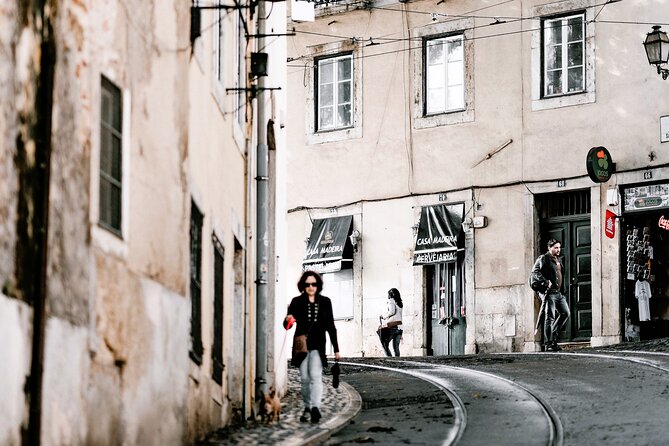
The logistics are set up to be low-stress. You can get reception and drop off at your hotel/apartment, which is a big deal in Lisbon where you can lose time just moving between neighborhoods.
If you’re meeting instead of doing pickup, the start point is Praça da Figueira, right by the Dom João I statue. The end point is essentially back at the same plaza area.
A couple more practical points:
- It’s a private tour, so only your group rides (no joining a big mixed crowd).
- You’ll receive a mobile ticket, and the guide will contact you before the meet.
- The tour is in English, and live explanations are provided during the ride.
- Service animals are allowed, and it’s listed as suitable for most travelers.
- Pricing works differently depending on group size, since the more people booked together, the lower the price per passenger.
St. Anthony to Portas do Sol: starting where Lisbon feels oldest
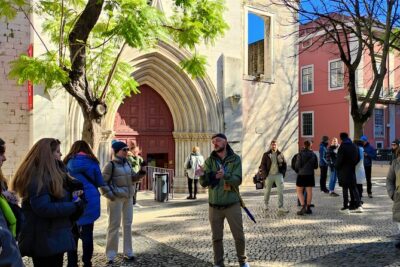
The tour begins with Church of St. Anthony (10 minutes, free admission). This isn’t just a stop to look at a façade; it’s tied to the saint’s story, since it’s described as the place of birth of one of the most famous Catholic saints. If you’re new to Lisbon’s religious art and Portuguese devotion, this is a strong opener because it gives meaning before you start stacking viewpoints.
Right after, you’ll see mention of an impressive Romanesque monument dating from around 1150. Romanesque buildings are usually easier to read than later baroque or ornate styles, so it’s a helpful early “time stamp” for what Lisbon looked like long before today’s neighborhoods formed.
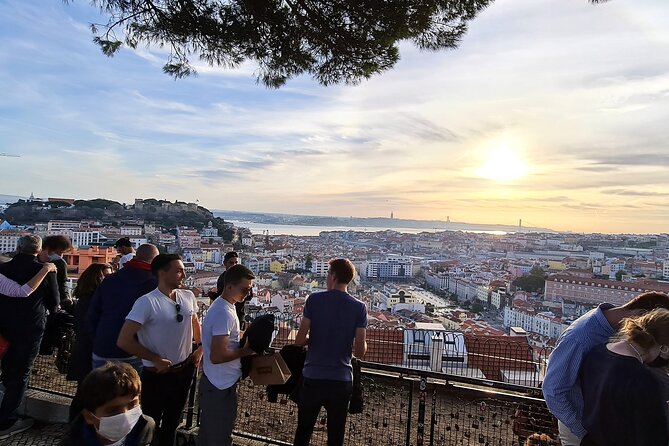
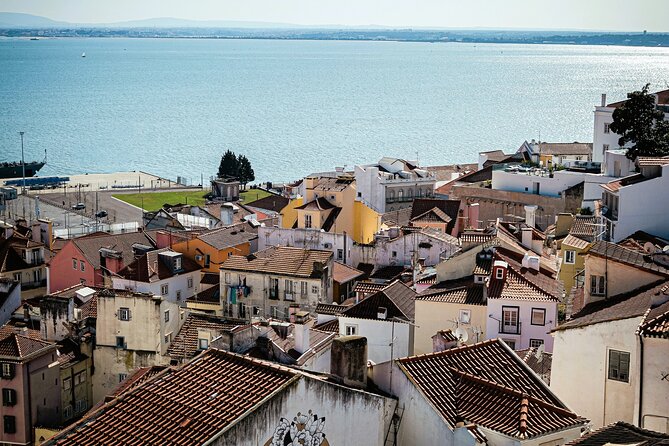
Then comes Miradouro das Portas do Sol (10 minutes, free admission). This viewpoint is about perspective: it looks out over the oldest district of Lisbon. When you stand there, you start noticing how the city’s streets and rooftops fold into each other—useful later when you walk on your own and suddenly everything makes more sense.
There’s also a neighborhood note connected with the area: the city points to the influence of Graça Convent, with the district described as gaining an industrial character in the 19th century. Even in a short stop, that kind of detail helps you understand why Lisbon’s hills don’t feel random—they reflect layers of work, worship, and rebuilding.
Miradouro da Senhora do Monte: the best view stop, and why it’s smarter by tuk-tuk
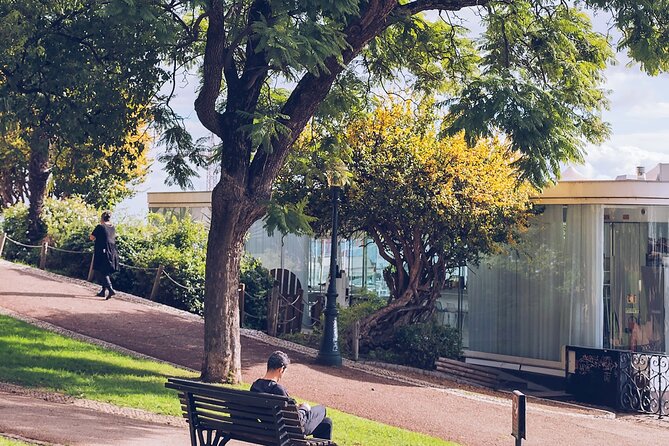
Miradouro Da Senhora do Monte is listed as the tour’s highlight, with a reputation for the most breathtaking city view. It’s also specifically called out as difficult to reach by bus or tram, which is exactly why a driver matters here.
Your time at the viewpoint is brief—about 10 minutes—but it’s enough to do the key thing: orient yourself. You’ll come away understanding where the old quarters sit, how the city stretches, and where you’d want to spend more time later.
Right after, the tour connects the viewpoint experience to Portugal’s big story through architecture and monuments, including references to:
- A 17th-century Maneirista architectural style site linked to the Bragança dynasty pantheon
- Santa Engrácia church, tied to the national pantheon after almost 300 years of construction
Even if you don’t consider yourself a “church person,” these stops add weight. Lisbon isn’t only about pretty streets; it’s about who Portugal was, what it believed, and how it chose to remember important figures.



Ladra flea market and Chiado’s bookstore street culture

Lisbon has markets, and this route brings you to a classic one: Ladra market (listed as one of the oldest flea markets in Europe). The background given here is especially fun—initially known by the Moors as aleadhra, then the name evolved into what people call it today. When a place has language history like that, it tends to feel less like a tourist set and more like a living neighborhood tradition.
Then the tour shifts into Chiado, described as one of Lisbon’s chicest districts with theatres, bookshops, and 19th-century shops. This is a different vibe from the older looking viewpoints—less “view from above,” more “city life happening right in front of you.”
The most specific cultural stop is the oldest bookshop in the world, founded in 1732 (noted as part of the Chiado area). That’s a standout if you like institutions with staying power. It also breaks up the day visually after lots of stone, stairs, and panorama angles—suddenly you’re looking at shelves, shopfronts, and the pace of strolling people.
Largo do Carmo: where Lisbon’s modern political story lands
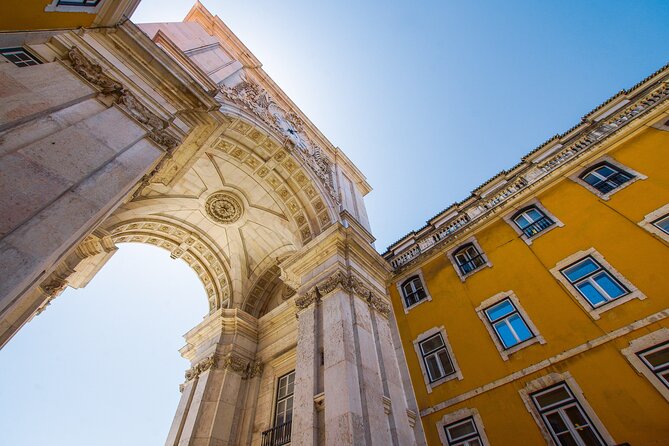
Next is Largo do Carmo (5 minutes, free admission). This stop is anchored to a clear turning point: in 1974, 25 April is described as ending the Carnation Revolution.
That timeline matters because many Lisbon tours feel stuck between medieval buildings and baroque churches. This gives you a quick reality check: modern Portugal is part of what you’re seeing today, not something that happened “elsewhere.”
It’s also brief enough that it doesn’t turn into a lecture stop. You get the meaning and move on.
São Pedro de Alcântara viewpoint and a 19th-century garden reset
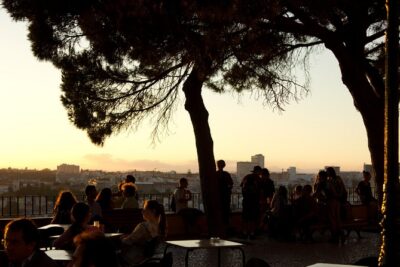
After the political stop, you go back to what Lisbon does best: viewpoints. Miradouro São Pedro de Alcântara is listed as a 19th-century viewpoint (10 minutes, free admission), with views described toward the Medieval area.
Then there’s a calmer pairing: a wonderful 19th-century garden. Even though you spend only about 10 minutes here, it works like a reset. After the uphill energy of viewpoints and city blocks, a garden stop gives you a slower frame for photos and breathing.
If you’re the type who likes to understand a neighborhood as a whole (not just postcard angles), this section helps. You’re seeing Lisbon’s medieval core from an elevated standpoint, then landing back into a human-scaled walking environment.
Assembleia da República: Parliament with a monastery past
Assembleia da República (Portuguese parliament) is a quick 5-minute, free admission stop. The provided context is a great example of why Lisbon feels layered: by the 16th century, it was described as Lisbon’s biggest monastery, and in the early 20th century it became the house of democracy.
That shift—religious institution to civic power—explains a lot about the way Lisbon repurposes important buildings. It’s also a good contrast to the earlier cathedral and pantheon references. Same stones, different role in the national story.
Basilica da Estrela and Jardim da Estrela: baroque-to-green scenery
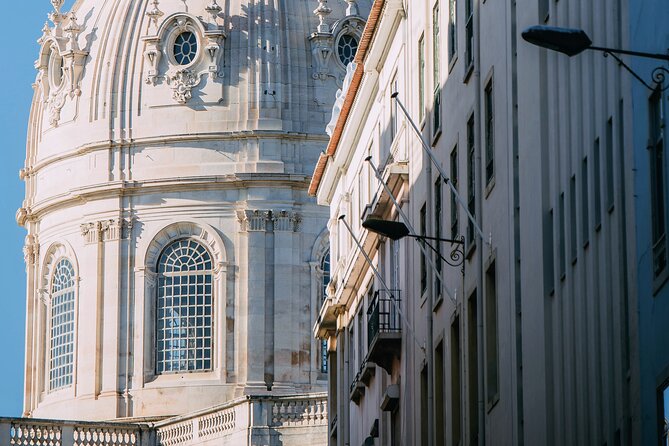
The final stretch brings you to Basilica da Estrela (10 minutes, free admission). It’s described as a baroque highlight from the late 18th century, and specifically noted as the first Catholic temple in the world dedicated to the Sacred Heart of Jesus.
Then you wind up at Jardim da Estrela Park (10 minutes, free admission), described as creating the feeling of a 19th-century romantic walk.
This is a satisfying ending because it balances the day. You get one more architectural icon, then you finish with green space and a slower stroll vibe. By the time you’re done, you’re more likely to remember what you saw, not just that you saw a lot.
The guide’s role: stories, pace changes, and photo help
A tour like this lives and dies on the guide. The standout theme in the provided feedback is the guide’s mix of professionalism and fun, with a lot of detail made easy to follow.
The name that comes up again and again is Dominique (also seen as variants like Dominic). If you can, it’s worth requesting Dominique when booking, because the feedback points to:
- Immense city knowledge delivered in a lively way
- A pace that stays at your speed
- Visual help during the tour to make landmarks easier to understand
- Comfort details like blankets when it got chilly
- Practical photo assistance (including help taking pictures)
There’s also a smart tip tied to food, even though meals aren’t part of the tour: you can ask for a recommendation for an authentic Portuguese tavern called Tasquinha Da Linha. It’s the kind of place that fits the spirit of this route—local, not staged for sightseeing.
Price and value: when $216.27 per person makes sense
The price listed is $216.27 per person for a private tour that includes:
- A local guide and live explanations
- Private tuk-tuk transportation
- Hotel/apartment pickup and drop-off
- Group insurance
- Availability in English
- A route built around free stops
If you were trying to assemble this yourself—hotel pickup, a car/driver for hills, navigation, and an easy sequence of viewpoints—you’d quickly pay more in time, planning headaches, or transport costs.
The part that can change the math: the more people in a booking, the lower the price per passenger. So this tends to work best for couples, small groups of friends, or families who want a shared ride but don’t want to join a big group tour.
Also, the booking lead time is fairly long on average (around 83 days). That usually means it’s popular, so booking earlier is wise if your dates are fixed.
Balanced note: because many stops are quick and listed as free admission, this isn’t designed as a deep museum day. If you want long interior visits, you’ll still need extra time later.
Who should book this 7 Hills tuk-tuk tour
This tour is a good fit if:
- You’re in Lisbon for a short stay and want a fast orientation
- You hate figuring out routes across steep streets
- You want major viewpoints without turning your day into a workout
- You like seeing neighbourhoods and landmark context together in one pass
- You’re okay with short stops rather than long sits in each place
It also helps if you enjoy photography and want the guide to help you make the stops count, especially around the viewpoints.
Should you book? My honest take
Yes, I’d book it if your goal is to get your bearings fast and see Lisbon from the right angles without getting lost in the hills. The combination of private tuk-tuk convenience, door-to-door pickup, and live English guidance makes it feel like you’re paying for time saved and clarity gained.
I’d think twice if your dream day is slow, museum-heavy, or long interior visits. This is built for quick “see it, understand it, move on,” ending with garden calm and a clear sense of where to go next.
If you book, wear layers and expect short viewpoint stops. And if Dominique is available, request them—you’ll likely get a more personal, flexible experience.
FAQ
How long is the Lisbon’s 7 Hills on Tuk-Tuk tour?
It runs approximately 1 hour 30 minutes to 2 hours.
Is this tour private, or do I join other people?
It’s a private tour/activity, meaning only your group participates.
Do you pick up guests from hotels or apartments?
Yes. Reception and drop off at the hotel/apartment are included, and the guide provides contact before the meeting point.
Where is the meeting point if I’m not doing hotel pickup?
The start point is Praça da Figueira, next to the Dom João I statue (then the tour returns to the same area).
What language is the tour available in?
The tour includes live explanations on board in English.
Are tickets or entrances included?
Many listed stops show free admission, but entrance to Lisbon Cathedral is not included (Adults 5€, children ages 5–12: 3€). Food and drinks are also not included.
Can I cancel for a full refund?
Yes. You can cancel up to 24 hours in advance for a full refund. If you cancel less than 24 hours before, the payment isn’t refunded.
More Tour Reviews in Lisbon
- Lisbon City Center Tour – The Unmissable Lisbon★ 5.0 · 22,234 reviews
- Lisbon: Sintra, Pena, Regaleira, Cabo da Roca & Cascais★ 4.7 · 19,656 reviews
- Lisbon Card: 24, 48, or 72-Hour Pass★ 4.5 · 17,944 reviews
- Lisbon: Jerónimos Monastery Entrance Ticket★ 4.1 · 14,164 reviews
- Lisbon: History, Stories and Lifestyle Walking Tour★ 4.8 · 10,902 reviews
More Hills by Tuk-Tuk
- True 4Hour Private Tuk Tuk Tour: Discover Lisbon with a Local!★ 5.0 · 8,008 reviews
- Lisbon: Private Guided Tuk-Tuk Tour with Hotel Pickup★ 4.9 · 4,552 reviews
- Private Lisbon Sightseeing Tuk-Tuk Tour: Alfama, Belém & More★ 5.0 · 4,277 reviews
- Lisbon Highlights: Private Tuk Tuk Tour Adventure Sightseeing★ 5.0 · 3,284 reviews
- Welcome Lisbon Tour with Local Guide in Private Eco Tuk Tuk★ 5.0 · 1,691 reviews
Just in: fresh Lisbon reviews from the team





Lisbon Tuk-Tuk Tours, compared.
 ★ 5.0True 4Hour Private Tuk Tuk Tour: Discover Lisbon with a Local!From $1088,008 reviews
 ★ 4.9Private Guided Tuk-Tuk Tour with Hotel PickupFrom $1534,552 reviews
 ★ 5.0Private Lisbon Sightseeing Tuk-Tuk Tour: Alfama, Belém & MoreFrom $524,277 reviews
 ★ 5.0Lisbon Highlights: Private Tuk Tuk Tour Adventure SightseeingFrom $843,284 reviews
 ★ 5.0Welcome Lisbon Tour with Local Guide in Private Eco Tuk TukFrom $171,691 reviews
 ★ 4.9Private City Tour by Eco Tuk TukFrom $281,215 reviews
 ★ 5.0Old Town TukTuk Tour and Scenic Viewpoints in AlfamaFrom $35974 reviews
 ★ 5.0Explore Lisbon by Tuk Tuk: History and ViewpointsFrom $19840 reviews