
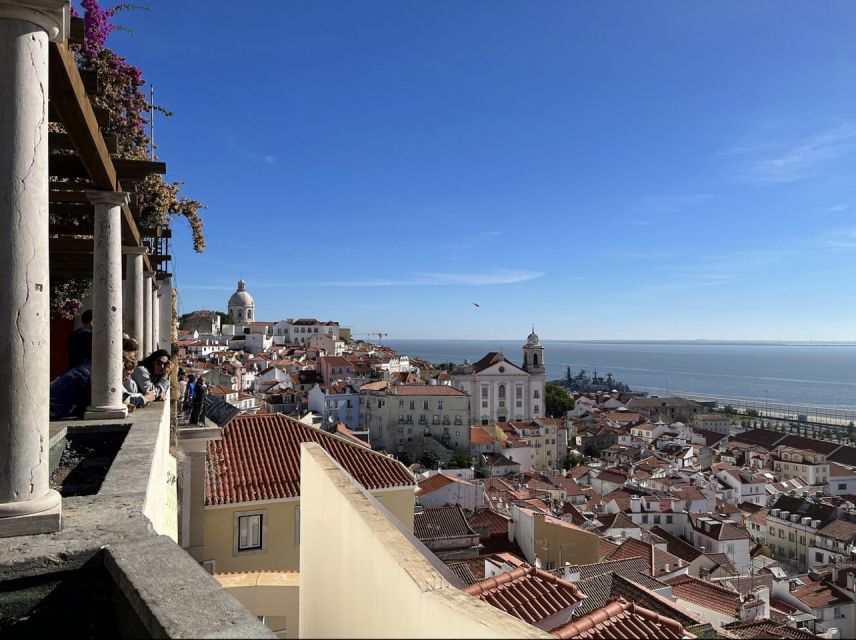
Reviewed · LISBON TUK-TUK TOURS
Lisbon Tuktuk Old-town Sightseeing Tour
Lisbon by tuktuk is a quick joyride. In this 80-minute loop, you’ll get the feel of Lisbon’s old-town hills with a guided route through neighborhoods and viewpoints that most people only see from the street below.
I especially like how the tour anchors around Alfama and Mouraria (two of Lisbon’s oldest areas) and then stitches the story together with key landmarks like the Cathedral, the Castle neighborhood, and the Fado Museum area. The other big win is practical: pickup and drop-off at Time Out Market means you spend less time hunting for your ride.
The main drawback to consider is time and fit: at 80 minutes, it’s a sampler, not a slow walk through every alley. Also, it’s not suitable for wheelchair users and it’s not for children under 5.
In This Review
- Key points to know before you go
- Lisbon’s 7 hills, handled the easy way
- Meet at Time Out Market: simple start, clear plan
- Alfama and Mouraria: the oldest-streets feeling, fast
- Cathedral and Saint Anthony Church: sacred landmarks with big-city views
- Porta ta Sol and the climb to Nossa Senhora da Monte
- São Vicente Monastery, Pantheon, and the Fado Museum side of town
- Flea market stops and the Cruise terminal perspective
- Pink Street and the photo-friendly return to Time Out Market
- What the guide actually adds (and why it matters)
- Price and value: what $38 buys you in Lisbon time
- Who this tour suits best (and who should skip)
- Should you book this Lisbon Tuktuk Old-town Sightseeing Tour?
- FAQ
- Where does the tour start and end?
- How long is the Lisbon Tuktuk Old-town Sightseeing Tour?
- How much does the tour cost?
- What languages are offered for the live guide?
- What’s included in the price?
- What is not included?
- Is this tour suitable for wheelchair users and young children?
- Can I cancel for a refund?
Key points to know before you go

- Timeout Market pickup keeps the start simple and central
- Alfama + Mouraria focus gives you the oldest-street feeling fast
- History of tiles and narrow streets adds meaning to the photo stops
- Nossa Senhora da Monte viewpoint is flagged as the best sunset spot
- Pink Street and other photo-ready corners make memories easy
- English and Arabic live guide keeps the route understandable
Lisbon’s 7 hills, handled the easy way

Lisbon can feel like a never-ending set of staircases. Even if you’re reasonably fit, a “great view” in this city often comes with a steep walk back. This tuktuk format helps you see the seven-hills geography without burning your whole day climbing.
I like that the tour isn’t just scenic driving. You’re not only chasing panoramas—you’re also getting a quick historical thread about the city’s older neighborhoods, including how the area shaped the narrow streets and the look of Lisbon’s famous tiles. That matters, because Lisbon looks beautiful from a distance, but it becomes more interesting when you understand why the streets twist the way they do.
The route is also compact: 80 minutes is short enough that you won’t feel wrecked afterward, but long enough to hit several distinct areas rather than one highlight loop.
The hills done the easy way, more tuk-tuk runs
- True 4Hour Private Tuk Tuk Tour: Discover Lisbon with a Local!
★ 5.0 · 8,008 reviews - Lisbon: Private Guided Tuk-Tuk Tour with Hotel Pickup
★ 4.9 · 4,552 reviews - Private Lisbon Sightseeing Tuk-Tuk Tour: Alfama, Belém & More
★ 5.0 · 4,277 reviews - Lisbon Highlights: Private Tuk Tuk Tour Adventure Sightseeing
★ 5.0 · 3,284 reviews
Meet at Time Out Market: simple start, clear plan
The tour’s pickup and drop-off at Time Out Market, Lisbon is a genuinely useful detail. You’re starting near the heart of the Pink City (Lisbon’s “pink” vibe comes through in the streets and décor you’ll see on the route), and you don’t need to solve the city’s maze just to begin.
You’ll also see a pickup option mentioned around Hard Rock Cafe. If you’re comparing meeting points across Lisbon tours, this kind of central start is a real value: it reduces stress and helps you show up on time without committing to extra transit or complicated directions.
One more practical note: because the tour is built around a quick schedule, arriving a few minutes early helps. You want the tuktuk ride to start when it’s supposed to—especially if you’re hoping to reach the lookout areas at the right moment.
Alfama and Mouraria: the oldest-streets feeling, fast

The tour begins in Lisbon’s older neighborhood area—Alfama and Mouraria—which is exactly where you get that “I’m in Lisbon, not just visiting Lisbon” feeling. These streets are known for their tight layout, and that’s where the guide’s tile and street-history comments start to make sense.
Even on a short tour, this portion is valuable because it sets the tone. You’ll see the kinds of narrow lanes that make the city so recognizable, and you’ll get context for why those tiles and street details matter here. Without that context, you might just treat the scenery like decoration. With it, you start noticing patterns: the way buildings and street design shape light, movement, and street-level life.
This is also the part of the tour that tends to give you the most satisfying “first views.” If it’s your first trip to Lisbon, you’ll likely leave feeling like you got your bearings—without spending hours walking uphill before you’ve even decided what you want to explore later.
Cathedral and Saint Anthony Church: sacred landmarks with big-city views
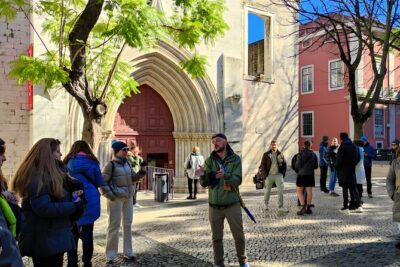
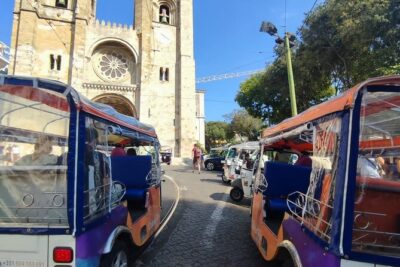
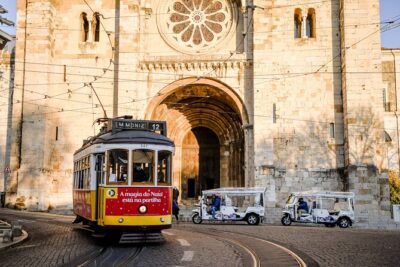
From the oldest neighborhoods, the route moves to major anchors: Lisbon Cathedral (listed as the oldest church in the city) and Saint Anthony Church. These stops matter because they aren’t just big buildings in the background. They’re landmarks that help you orient yourself while also giving the tour historical weight.
Right after that, you head into the Castle neighborhood area. This is where your eyes start doing two jobs: appreciating the architecture and also looking for vantage points. Lisbon’s topography means that even when you’re moving quickly, you’re still likely to get windows of viewpoint potential.
What I like here: the tour links a place of worship to the city’s high-ground layout. You see how Lisbon’s older religious and civic sites connect to the hills and lookouts, instead of treating them as isolated photo stops.
Possible drawback: if you’re hoping for a deep inside visit (time for long browsing inside churches and museums), this is not that kind of tour. The focus is on sightlines, short stops, and guided context.



Porta ta Sol and the climb to Nossa Senhora da Monte
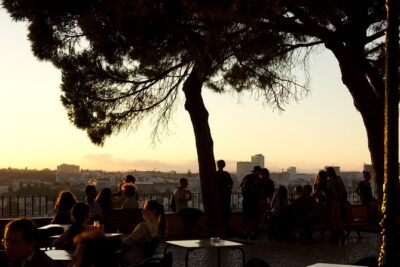
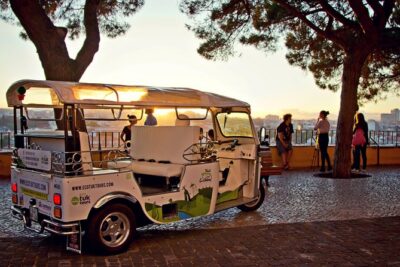
One of the strongest “wow” stops is the route up toward Porta ta Sol and then to Nossa Senhora da Monte, described as the top point and the best sunset point in Lisbon.
This is the part you’ll want to time well, because viewpoints in Lisbon can change fast with light and clouds. Even if sunset isn’t your exact goal, a high viewpoint gives you a clearer map of the city—so you can better plan where you want to return on foot later.
I also think this stop is where the “tuktuk advantage” is most obvious. If you try to do this hill-hopping on your own, you’ll probably overestimate how much energy you have after already walking Alfama. With the tuktuk, you’re more likely to enjoy the view rather than just survive the climb.
If you’re a photographer, this is the moment to be ready with your phone/camera settings. The goal here isn’t just a single snap; it’s getting a few angles that show Lisbon’s layout—hills, rooftops, and the city’s sprawl.
São Vicente Monastery, Pantheon, and the Fado Museum side of town
The itinerary continues through more historic anchors such as Saint Vincent Monastery and the National Pantheon, plus the Fado Museum area. This mix gives the tour more than just “pretty streets.”
Why this works: Lisbon’s identity isn’t only architecture. It’s also music and memory. Fado in particular is one of the most recognizable cultural elements of the city, and having the museum area included helps you understand that the city’s storytelling isn’t only in tiles and stone—it’s also in art forms tied to specific neighborhoods.
I also like how this portion feels like it broadens your picture of Alfama beyond alleyway scenery. You start seeing Lisbon as a layered place: religious sites, memorial spaces, and cultural venues all in one connected old-town zone.
One thing to keep in mind: tickets aren’t included. So if you plan to do any inside viewing at the museum or any other paid location along the way, you’ll need to budget separately and plan your timing.
Flea market stops and the Cruise terminal perspective
There’s time built in for a Flea Market stop, which is a nice way to make the tour feel less like a sightseeing checklist. It’s also a reminder that the older neighborhoods aren’t only for photos—they’re living areas where people shop and browse.
The route also reaches the cruise ship terminal area. That’s an underrated element on short tours. Seeing where cruise ships tie into old-town Lisbon helps you understand why certain sightlines and traffic patterns look the way they do. It also gives you a reality check: Lisbon’s old city is dramatic, but it’s also functional and connected to the global flow of visitors and supplies.
If you’re trying to choose which neighborhood to return to after the tour, this cruise-terminal view can help. You may spot where the city transitions from tourist-heavy zones to quieter streets, and then you can plan your next walk accordingly.
Pink Street and the photo-friendly return to Time Out Market
The tour calls out Pink Street, with the detail that the pavement color is pink. This kind of specific visual cue is exactly what makes a short tour worth it: it gives you clear “go look here” moments rather than generic “you’ll see viewpoints.”
After that, the tour wraps up back near Time Out Market, with an opportunity to see Time Out and more on the way back. This finish is practical: you’re returning to a place that’s useful for food, drinks, and planning your next move without changing neighborhoods again.
If your goal is to leave Lisbon with a handful of strong photos, Pink Street plus the viewpoint stop near Nossa Senhora da Monte is a smart combination. You get both: one dramatic cityscape moment and one uniquely Lisbon color detail.
What the guide actually adds (and why it matters)
The tour is led by a live guide (English and Arabic), and one name that shows up in a verified booking is Rana. In that experience, Rana was described as making sure the group reached the lookout point on time, and as knowing Lisbon well and taking pride in the city.
That timing point is more important than it sounds. In Lisbon, the best photos are often about being at the right place at the right time of day. If the group runs late, you don’t just miss a photo—you miss the mood.
The guide also matters for interpretation. When you’re learning about the history of tiles and the story behind narrow streets, you start noticing details instead of just passing by them. You’ll likely spend more time looking at façades, tile patterns, and alley geometry. That’s how a short tour becomes “memory-rich” instead of “photo-only.”
One more thought from the booking: the person enjoyed the old-style tuktuk, even while noting electric tuktuks are better for the future. That suggests something you can keep in mind as a sustainability-minded traveler: you’re getting the classic experience, but if you care deeply about emissions, it’s worth comparing options when you book.
Price and value: what $38 buys you in Lisbon time
At $38 per person for about 80 minutes, this tour is priced for convenience and access—not for deep, slow exploration. If you’ve got only a morning or one afternoon to cover the old-town highlights, that’s when the value makes sense.
Here’s the value logic I’d use when deciding:
- You’re paying for movement. Instead of walking multiple steep stretches yourself, you’re hopping between neighborhoods and viewpoints.
- You’re paying for a guided thread. The tile and narrow-street context helps you understand what you’re seeing.
- You’re paying for a low-effort photo plan. You hit photo moments like the viewpoint and Pink Street without needing to navigate them alone.
What’s not included—tickets and food—means you shouldn’t expect this to replace museum time. It’s a “see and learn” tour, not an all-in cultural pass.
For me, $38 feels fair if your priority is getting oriented, catching major old-town stops, and grabbing a few photos without spending your whole day on hills.
Who this tour suits best (and who should skip)
This is a good fit if:
- You want an old-town introduction that covers multiple neighborhoods quickly
- You care about guided context for streets, tiles, and historic areas
- You’re okay with short stops rather than long visits inside venues
- You prefer central pickup at Time Out Market
It’s probably not the best choice if:
- You need wheelchair-friendly transport (it’s not suitable for wheelchair users)
- You’re traveling with a very young child (not suitable for children under 5)
- You want a detailed inside museum itinerary (tickets aren’t included, and the timing is tight)
If you’re on a first-time Lisbon trip, I’d put it near the top of your “do early” list. It helps you decide what to return to later—especially if you’re aiming to explore Alfama on foot.
Should you book this Lisbon Tuktuk Old-town Sightseeing Tour?
Book it if you want a fast, guide-led hit of Lisbon’s hills, oldest neighborhoods, and photo stops—without the legwork. The Time Out Market pickup/drop-off is a big practical plus, and the focus on Alfama, tile/narrow-street stories, and the Nossa Senhora da Monte viewpoint makes it feel more meaningful than a simple loop.
Skip it if you need wheelchair access or you’re looking for long inside visits with tickets included. Also, if you only want one or two stops, 80 minutes may feel like “enough” rather than “deep.”
If you’re trying to make the most of limited time in Lisbon, this is one of the more efficient ways to get your bearings and leave with photos you’ll actually remember.
FAQ
Where does the tour start and end?
The pickup and drop-off are at Time Out Market, Lisbon.
How long is the Lisbon Tuktuk Old-town Sightseeing Tour?
The duration is 80 minutes.
How much does the tour cost?
The price is $38 per person.
What languages are offered for the live guide?
The live tour guide is available in English and Arabic.
What’s included in the price?
Included items are insurance, tour guide, and pickup/drop-off at Time Out Market (pickup is also listed as near Hard Rock Cafe).
What is not included?
Tickets and food are not included.
Is this tour suitable for wheelchair users and young children?
It is not suitable for wheelchair users, and it’s not suitable for children under 5.
Can I cancel for a refund?
Yes. You can cancel up to 24 hours in advance for a full refund.
More Tours in Lisbon
- Lisbon City Center Tour – The Unmissable Lisbon★ 5.0 · 22,234 reviews
- Lisbon: History, Stories and Lifestyle Walking Tour★ 4.8 · 10,902 reviews
- True 4Hour Private Tuk Tuk Tour: Discover Lisbon with a Local!★ 5.0 · 8,008 reviews
- Winner 2025 Undiscovered Lisbon Food & Wine Tour by Eating Europe★ 5.0 · 6,390 reviews
- Lisbon: Sintra, Pena, Cabo da Roca, Cascais Tour with Pickup★ 4.8 · 5,445 reviews
More Tour Reviews in Lisbon
- Lisbon City Center Tour – The Unmissable Lisbon★ 5.0 · 22,234 reviews
- Lisbon: Sintra, Pena, Regaleira, Cabo da Roca & Cascais★ 4.7 · 19,656 reviews
- Lisbon Card: 24, 48, or 72-Hour Pass★ 4.5 · 17,944 reviews
- Lisbon: Jerónimos Monastery Entrance Ticket★ 4.1 · 14,164 reviews
- Lisbon: History, Stories and Lifestyle Walking Tour★ 4.8 · 10,902 reviews
More Hills by Tuk-Tuk
- True 4Hour Private Tuk Tuk Tour: Discover Lisbon with a Local!★ 5.0 · 8,008 reviews
- Lisbon: Private Guided Tuk-Tuk Tour with Hotel Pickup★ 4.9 · 4,552 reviews
- Private Lisbon Sightseeing Tuk-Tuk Tour: Alfama, Belém & More★ 5.0 · 4,277 reviews
- Lisbon Highlights: Private Tuk Tuk Tour Adventure Sightseeing★ 5.0 · 3,284 reviews
- Welcome Lisbon Tour with Local Guide in Private Eco Tuk Tuk★ 5.0 · 1,691 reviews
Just in: fresh Lisbon reviews from the team





Lisbon Tuk-Tuk Tours, compared.
 ★ 5.0True 4Hour Private Tuk Tuk Tour: Discover Lisbon with a Local!From $1088,008 reviews
 ★ 4.9Private Guided Tuk-Tuk Tour with Hotel PickupFrom $1534,552 reviews
 ★ 5.0Private Lisbon Sightseeing Tuk-Tuk Tour: Alfama, Belém & MoreFrom $524,277 reviews
 ★ 5.0Lisbon Highlights: Private Tuk Tuk Tour Adventure SightseeingFrom $843,284 reviews
 ★ 5.0Welcome Lisbon Tour with Local Guide in Private Eco Tuk TukFrom $171,691 reviews
 ★ 4.9Private City Tour by Eco Tuk TukFrom $281,215 reviews
 ★ 5.0Old Town TukTuk Tour and Scenic Viewpoints in AlfamaFrom $35974 reviews
 ★ 5.0Explore Lisbon by Tuk Tuk: History and ViewpointsFrom $19840 reviews