Reviewed · LISBON
Lisbon Trendy Downtown – From Romantic Chic to Postmodern Glamour
Lisbon feels different when someone points out the details. This walking tour threads together Chiado and Baixa with a guide named Luis, plus a professional photographer who helps you get Lisbon images you’ll actually want to keep. I like that the route isn’t just about big landmarks; it’s about tiles, shopfront clues, and the stories behind the street-level look of the city. The main thing to consider is simple: it’s a longish walk with many stops, so comfy shoes matter.
What makes it especially practical is the focus on two of Lisbon’s most walkable downtown neighborhoods, starting at Estação Ferroviária do Sul e Sueste and ending near Praça Luís de Camões. The tour runs about 3 to 4 hours, so you get a lot of ground covered without feeling like your whole day is gone. If you’re hoping for a relaxed, sit-down tour with lots of free time, this may feel a bit structured—though the pace is still guided and photo-friendly.
In This Review
- Key Things to Know Before You Go
- Lisbon Trendy Downtown: Why This 3–4 Hour Walk Hits
- Meeting at Estação Ferroviária do Sul e Sueste and Finishing at Praça Luís de Camões
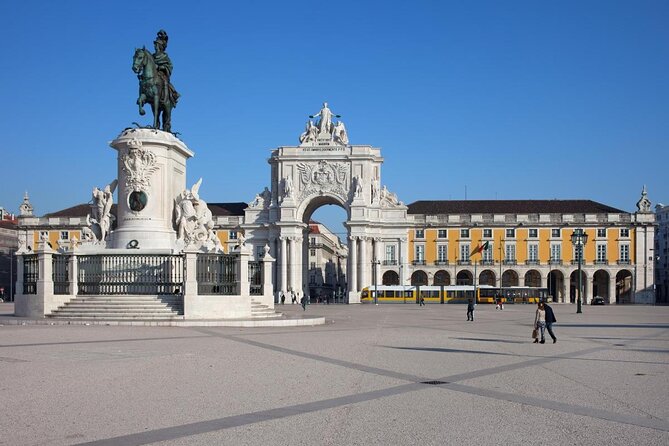
- Praca do Comercio (Terreiro do Paco): Lisbon’s Grand Rebuild in One Square
- Santa Justa Elevator: Post-1755 Lisbon and a 19th-Century Icon
- Praca Dom Pedro IV: The City’s Main Square, Built for People
- Praca da Figueira and the Hospital for Dolls: Shopping Lisbon with a Story
- Igreja de S Domingos: Facade Grandeur, Inside Ruins, and a Masonic Churchyard
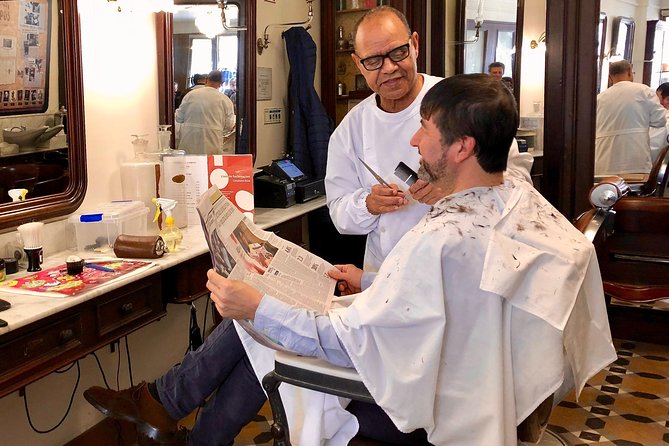
- Luvaria Ulisses: Tiny Shop, Massive Carmo Wall, and Post-Fire Grandeur
- Armazens do Chiado: Department-Store Names That Still Sound Like Lisbon
- Bertrand and the Coffeehouse Culture: Books, Writers, and Everyday Intellectual Energy
- Praça Luís de Camões: Romantic Lisbon Meets Modern Energy
- The Photographer Factor: Better Lisbon Photos Without the Stress
- Price and Value: Is $29.64 Worth It?
- Who This Tour Suits Best
- Should You Book Lisbon Trendy Downtown?
- FAQ
- How long is the Lisbon Trendy Downtown walking tour?
- Where does the tour start and where does it end?
- What’s included in the price?
- Are any admissions included?
- Do you need a minimum group size?
- What is the cancellation policy?
Key Things to Know Before You Go
- Guide Luis spotlights architectural clues: tiles, building decoration, and the small evidence people usually miss
- A professional photographer travels with you, so you get better vacation photos with less guessing
- Multiple stops are marked with free admission tickets, which helps control extra costs
- The 1755 rebuilding theme ties the route together, especially at major squares
- You move through classic shopping Lisbon, from Praca da Figueira to Luvaria Ulisses to old department-store names
- The tour ends in a lively central area, so it’s easy to keep exploring after
Lisbon Trendy Downtown: Why This 3–4 Hour Walk Hits

This is the kind of Lisbon tour that helps you read the city instead of just touring it. You’ll walk through two downtown neighborhoods—Chiado and Baixa—while the guide connects what you’re seeing to why it looks that way.
I also like the way it’s built for photos without turning into a gimmick. There’s a professional photographer with you, which means you don’t have to constantly stop, reposition, and ask strangers for help.
One more plus: the tour is priced for what you get. At $29.64 per person, you’re not just paying for a walking explanation—you also get guide support and photo help, plus several stops listed as free admissions.
Still deciding? See how this one measures up against a few Lisbon favourites.
- Lisbon City Center Tour – The Unmissable Lisbon
★ 5.0 · 22,234 reviews - Lisbon: Sintra, Pena, Regaleira, Cabo da Roca & Cascais
★ 4.7 · 19,656 reviews - Lisbon: Jerónimos Monastery Entrance Ticket
★ 4.1 · 14,164 reviews - Lisbon: History, Stories and Lifestyle Walking Tour
★ 4.8 · 10,902 reviews
Meeting at Estação Ferroviária do Sul e Sueste and Finishing at Praça Luís de Camões
You start at Estação Ferroviária do Sul e Sueste, Av. Infante Dom Henrique 1B, which is a handy landmark if you’re already navigating with public transit. The end point is Praça Luís de Camões (and the info notes it’s near the Baixa/Chiado underground station entrance), so you’re not stuck far from the action when the tour wraps up.
This matters because Lisbon days often hinge on logistics. A tour that begins at one major center and ends at another means you can keep going on foot, grab a café nearby, or connect back into the metro without a long detour.
Also, it’s listed as a private tour/activity, meaning only your group participates. That tends to make photo stops and questions feel more natural—less waiting, more attention.
Praca do Comercio (Terreiro do Paco): Lisbon’s Grand Rebuild in One Square

The walk kicks off at Praca do Comercio (Terreiro do Paco). This is the kind of place where you instantly see the “big city” side of Lisbon: majestic buildings, fine sculptures, and a scenic pier.
But the real reason it’s on this route is the story of rebuilding after the 1755 tsunami. The square is presented as rebuilt after that disaster, and once you know that, you’ll start noticing the careful planning in the layout. You’re not just looking at pretty architecture—you’re seeing how Lisbon chose to reshape itself.
What to look for here: the symmetry, the scale of the facades, and the sense of formal public space. Even if you’re not a history nerd, this stop gives you the mental map for the rest of the walk.
Santa Justa Elevator: Post-1755 Lisbon and a 19th-Century Icon
Next up is the Elevador de Santa Justa area. Lisbon’s downtown has a way of layering time, and this is one of the visual highlights. The tour frames it as part of downtown after the 1755 tsunami, including its 19th-century incarnations—so you’re seeing how the city’s identity continued to evolve after catastrophe.
This is also where the photographer can really help. Tall structures plus strong angles can be tricky on your own—getting the right perspective is half the battle.
Practical note: if this stop includes an entry ticket listed as free, treat it like a time commitment during the 15 minutes. It’s not the place to wander off and “catch up later.”


Praca Dom Pedro IV: The City’s Main Square, Built for People

Praca Dom Pedro IV is described as the most popular square in town, and it earns that label fast. You’ll get the mix of 18th-century building frames, the National Theater, and a wave-pattern pavement that gives the ground some personality.
The best part of this stop is how it shifts you from “historic landmark” thinking into “how Lisbon moves day-to-day.” Squares like this aren’t just scenery; they’re meeting points and daily stages.
What can slow you down: it’s a major square, so other people are usually around. If you’re sensitive to crowds, keep your expectations realistic during the stop.
Praca da Figueira and the Hospital for Dolls: Shopping Lisbon with a Story

Then you move into Praca da Figueira, which the tour frames as one of the more original shopping areas in town. This is where Lisbon becomes fun in a tactile way—shops, window displays, and that sense of street life.
One specific stop here is the Hospital for Dolls. This is the kind of place you remember because it’s odd in the best way: miniature worlds and a souvenir hunt that doesn’t feel generic.
I love that the guide’s attention tends to go beyond “here’s a store.” The tour encourages you to see Lisbon’s commercial spaces as part of the city’s identity, not just places to buy things.
Igreja de S Domingos: Facade Grandeur, Inside Ruins, and a Masonic Churchyard
At Igreja de S Domingos, you’ll see a majestic facade, then the tour points out that the inside has overwhelming ruins. That mix—front grandeur paired with what remains within—hits hard, and it’s one of the more emotional stops on the walk.
The tour also mentions a masonic churchyard, which adds another layer beyond the obvious church architecture. If you’re the kind of person who likes context, this is where the guide’s storytelling style really pays off.
And yes, there’s a practical, human touch here too: the tour notes the best cherry liqueur just around the corner. Even if you don’t stop right then, it’s useful intel for later when you’re deciding what to drink.
Consideration: since ruins are involved, this is a stop where photos can be less straightforward if lighting is dim inside. Your best bet is to use the time the guide gives you and focus on key views.
Luvaria Ulisses: Tiny Shop, Massive Carmo Wall, and Post-Fire Grandeur
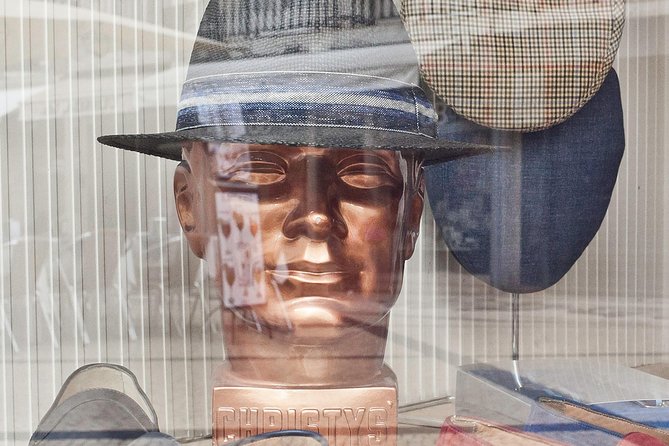
Luvaria Ulisses is one of those Lisbon addresses that sounds like a novelty until you see it. The tour describes it as incredibly tiny, directly dug in the massive Carmo Wall. That alone is worth the walk—Lisbon loves turning history into everyday storefront reality.
From there, the route points you toward Grandes Armazéns, described as more “parisian,” and rebuilt after a fire in 1988. That’s a smart addition to the story: it reminds you that the city’s look isn’t only old. Lisbon’s downtown fabric keeps getting repaired and reshaped.
What to look for: the contrast between the tight, carved-in space and the bigger, more formal department-store feel nearby. It helps you understand Lisbon’s scale—from human-sized details to grand facades.
Armazens do Chiado: Department-Store Names That Still Sound Like Lisbon
Next comes Armazens do Chiado, where you get the feel of Lisbon’s old department-store era. The tour references names like Antigos Armazéns Grandella, Chiado, Paris em Lisboa, and Ramiro Leão—names that help turn facades and streets into something more than “a building you pass.”
This stop is a good reminder that Lisbon’s modern identity still borrows from its retail past. If you pay attention, you can start noticing how storefront layouts communicate status, categories, and street-level culture.
Why this matters: when a guide ties these names to what you see right now, it changes how you look at shopping streets. You stop seeing them as just routes and start seeing them as history in motion.
Bertrand and the Coffeehouse Culture: Books, Writers, and Everyday Intellectual Energy
You’ll then head to Bertrand, described as the oldest bookstore in the world. That’s a bold claim, but the real value here is what the tour uses it to illustrate: Lisbon’s long-running café-and-book culture.
The tour also points out Brasileira as a muster point for artists and writers for the last hundred years. Even if you’re not chasing literary landmarks, this context makes Lisbon feel less like a checklist and more like a living scene.
From there, the walk includes Fernando Pessoa’s sculpture, and the stop is framed around Lisbon’s legendary coffee houses, writers, and intellectuals. Pessoa’s image tends to “click” once you see the surrounding vibe—Lisbon makes it feel natural.
Photo tip: this is another area where the photographer helps a lot. Bookstore façades and street corners are busy. You get better results when someone guides angles and timing.
Praça Luís de Camões: Romantic Lisbon Meets Modern Energy
The last stop is Praça Luís de Camões, described as epitomizing Romantic Lisbon and now one of the most lively places in town. It’s a good ending because it feels like a finish line you can immediately cross into.
You’ll get a sense of the city’s mood shift—from walking through big, story-heavy landmarks to landing in a square where you can relax and decide what comes next. It’s a smart way to end: the route doesn’t dump you at a random alley. It places you back into the kind of public space where Lisbon invites you to linger.
The Photographer Factor: Better Lisbon Photos Without the Stress
A standard walking tour can mean you’re too busy listening to stop for good pictures. Here, that problem is solved by the fact that a professional photographer travels with the group. You’re not left to your own timing, posture, and background choices.
From what I’ve seen in tours like this (and the way this one is described), the biggest benefit is clarity. You’ll likely get directions for where to stand and how to capture the architecture and tiles without turning your whole day into photo work.
If you love photos, bring your camera and charge your phone fully. You’ll also want to be ready when the guide signals the spot—these tours move, and the best shots often happen at the exact moment you arrive.
Price and Value: Is $29.64 Worth It?
At $29.64 per person, this tour is priced like a value option compared to many downtown experiences that only include a guide. Here, you get guide support, a photographer guide, and multiple stops with tickets listed as free.
The hidden value is how the tour reduces decision-making. You’re not spending time figuring out which streets connect to the biggest stories. The route does the organizing for you, including the key squares like Praca do Comercio and Praca Dom Pedro IV, plus shopping areas like Praca da Figueira and Luvaria Ulisses.
It also helps if you like history, but not in a lecture-heavy way. The route uses the city’s visible clues—especially the 1755 rebuilding theme—so you understand what you’re seeing while you’re seeing it.
Who This Tour Suits Best
This tour fits you well if:
- You want a walking tour that connects architecture, storefronts, and street-level details
- You like Lisbon’s neighborhoods in layers (not just one major monument)
- You want help getting photos in a busy, photo-unfriendly downtown
- You prefer a guided route with short stops rather than long museum wandering
It may feel less ideal if you hate walking between frequent stops or if you’re hoping for a mostly indoor, slow-paced plan.
Should You Book Lisbon Trendy Downtown?
If you want a Lisbon downtown afternoon where you learn fast and leave with better photos, I’d book it. The combination of Luis’s attention to details and the photographer’s role makes this feel like more than a generic highlights walk. And starting near Estação Ferroviária do Sul e Sueste and ending near Praça Luís de Camões means it plugs into the rest of your day nicely.
I’d book sooner rather than later because the typical booking window is about 24 days in advance. And if you’re deciding between tours, choose this one when you care about how Lisbon looks at street level—tiles, facades, and the stories behind shops—not just the big name sights.
FAQ
How long is the Lisbon Trendy Downtown walking tour?
It runs about 3 to 4 hours.
Where does the tour start and where does it end?
It starts at Estação Ferroviária do Sul e Sueste (Av. Infante Dom Henrique 1B, 1100-016 Lisboa) and ends at Praça Luís de Camões (1200-243 Lisboa), near the Baixa/Chiado underground station entrance.
What’s included in the price?
A local guide, a professional guide, and a professional photographer guide are included. The tour also uses a mobile ticket.
Are any admissions included?
Several stops are listed as Admission Ticket Free on the tour schedule.
Do you need a minimum group size?
Yes. A minimum of 2 people per booking is required.
What is the cancellation policy?
Free cancellation is available up to 24 hours in advance for a full refund.
More Tour Reviews in Lisbon
- Lisbon City Center Tour – The Unmissable Lisbon★ 5.0 · 22,234 reviews
- Lisbon: Sintra, Pena, Regaleira, Cabo da Roca & Cascais★ 4.7 · 19,656 reviews
- Lisbon Card: 24, 48, or 72-Hour Pass★ 4.5 · 17,944 reviews
- Lisbon: Jerónimos Monastery Entrance Ticket★ 4.1 · 14,164 reviews
- Lisbon: History, Stories and Lifestyle Walking Tour★ 4.8 · 10,902 reviews