

Reviewed · STREET ART
Lisbon Street Art Tour
Street art in Lisbon has a second voice. This 2-hour walk turns murals into stories, with a guide who links big names and local artists to the streets where they live. I especially loved seeing works by Shepard Fairey and learning how Graça and Mouraria connect so many Portuguese and international styles. One thing to consider: this is a walking tour, and it is not suitable for people with mobility impairments.
I also liked that it is not only about famous signatures. You will spend time with Portuguese artists such as Vhils and Bordalo II, and the tour looks at how women are entering a street-art world that has long been dominated by men. Expect discussion, not just photos: each stop includes commentary on the art and the issues it raises.
One more practical win: you get a Lisbon bite along the way. The tour includes either pastel de nata (cream tart) or ginginha (wild cherry liqueur), though coffee and drinks are not included.
In This Review
- Key highlights you’ll remember
- Street Art Stories in Graça and Mouraria, Not Just Photos
- Meeting Peter and Getting Value from a French Live Guide
- Shepard Fairey on the Route: Why the Tour Starts with Big Recognition
- Graça and Mouraria Stops: Murals, Smaller Works, and Other Public Art
- Portuguese Street Artists and Technique Talk That Makes Meaning Stick
- Women Entering a Male-Dominated Street Art World
- Lisbon Extras: Pastel de Nata or Ginginha Included
- Group Size, Walking Pace, and What to Bring for Comfort
- Price and Value: What $41 Buys in Two Hours
- Extra Touches Like Fado: When the Tour Adds a Soundtrack
- Who This Tour Fits Best (and Who Should Skip It)
- Should You Book the Lisbon Street Art Tour?
- FAQ
- How long is the Lisbon Street Art Tour?
- How much does it cost?
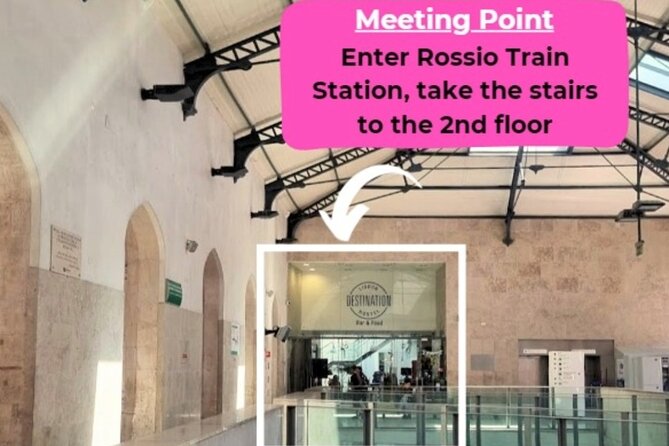
- Where is the meeting point?
- What is included in the tour?
- Are drinks included?
- What language is the live tour guide?
- What is the group size?
- Is the tour refundable if I cancel?
- Is the tour suitable for people with mobility impairments?
- Does the tour ever include fado?
Key highlights you’ll remember
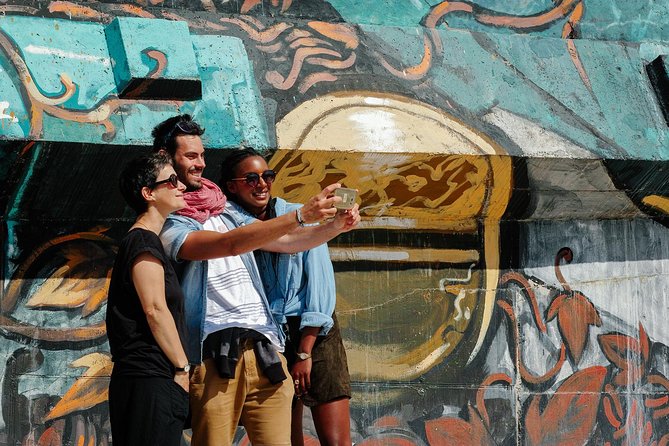
- Shepard Fairey on Portuguese walls: see his work and understand why it lands in Lisbon.
- Graça and Mouraria focus: two neighbourhoods with lots of street art, so you get variety fast.
- Artist-to-technique commentary: you learn how each piece is made, not just what it looks like.
- Portuguese street artists in context: Vhils, Bordalo II, and other names get explained on the spot.
- Women changing the street-art scene: a theme that connects art to social change.
- Lisbon taste included: pastel de nata or ginginha as a sweet punctuation mark.
Street Art Stories in Graça and Mouraria, Not Just Photos
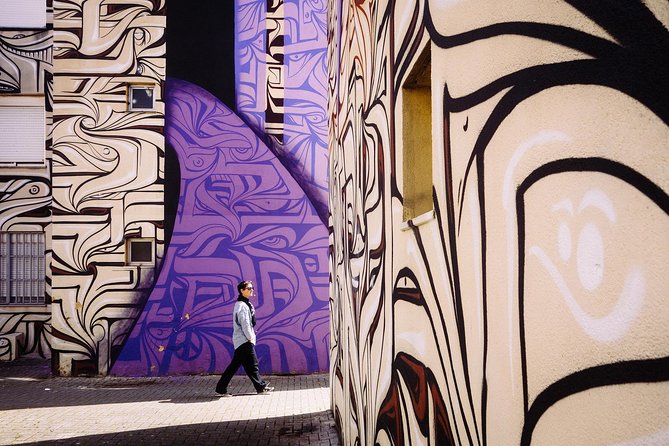
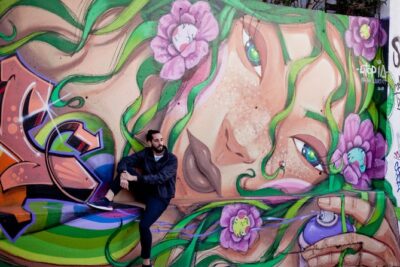
Lisbon is famous for tiles and viewpoints, but its street art is doing real cultural work right alongside the postcards. This tour is built around a simple idea: instead of chasing everything in the city, you go where the art density is high and you learn how to read what you’re seeing.
You’ll walk through Graça and Mouraria, two neighbourhoods that make it easy to spot both large wall pieces and smaller works tucked into street corners. The focus matters. If you try to DIY this on your own, you end up with a phone full of images and no clue why any of it exists. Here, each artwork is treated like a chapter: location, technique, meaning, and the social or political questions it triggers.
The pace is the other key. At just two hours, you’re not stuck all day. Still, you should be ready for real city walking on uneven streets. Comfortable shoes are not optional; they’re how you keep your attention on the walls instead of your feet.
Worth a look before you lock anything else in around Lisbon:
- Lisbon: Street Art Tour
★ 4.9 · 1,324 reviews - Lisbon: Kickstart Street Art Walking Tour
★ 4.9 · 717 reviews - Lisbon: Street Art Tuk Tuk Tour
★ 4.9 · 372 reviews - LISBON Street Art Tour
★ 5.0 · 371 reviews
Meeting Peter and Getting Value from a French Live Guide
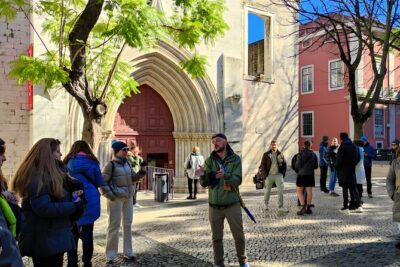
The tour meets in front of the church. That sounds vague, but in practice it’s helpful: you start right where the neighbourhood atmosphere is already thick, instead of trekking across town first.
Your live guide is French, and the tour runs as a small group with a maximum of 8 participants. That small size is a big deal. In a crowd, street art becomes background noise. In a group this size, you can actually hear the explanations and see the details—especially when the tour points out techniques and the subtle differences between artists’ styles.
In the reviews, the guide is repeatedly called out by name—Peter—for bringing the stories to life and adding small touches that make the walk feel like you’re being shown Lisbon by someone who cares. If your French is limited, you might still follow the visual parts, but the deeper meaning is tied closely to the guide’s commentary.
Shepard Fairey on the Route: Why the Tour Starts with Big Recognition

You can spot street art in Lisbon without a tour. The difference is what happens next.
This tour makes Shepard Fairey one of its featured stops, so you’re not only seeing local work. You’re also watching how an internationally known street artist’s style sits in Lisbon’s specific context. That’s useful if you want more than aesthetic appreciation. You start asking questions like: Who is the art speaking to? What kind of attention does it demand? And why does public art work differently than art inside museums?
There’s also a practical benefit to starting with a recognizable name. It gives your brain a handle. Once you understand one artist’s approach in the street, the rest of the artwork—especially the Portuguese pieces—becomes easier to compare. You stop treating everything as random graffiti and start seeing patterns.
Just keep expectations realistic. This is not a citywide street-art inventory. The tour focuses on two neighbourhoods, so you’ll see a lot, but not all of Lisbon’s street art.
Graça and Mouraria Stops: Murals, Smaller Works, and Other Public Art
The best street art routes do two things well: they show you scale and they show you variety. This tour does both.
In Graça and Mouraria, you’ll encounter:
- big mural walls that dominate a street view
- smaller pieces that you would easily miss if you weren’t looking
- other public art, including sculptures and Lisbon’s famous tiles
What makes this more than a walking loop is the commentary style. For each work, you get explanations that cover what you’re looking at, how it was made (techniques), and—when available—the artist’s own words. That last part matters. Even a short artist statement can shift your understanding from This looks cool to This is arguing something.
A drawback to flag: because you cannot see everything in Lisbon in a single walk, you may feel tempted to keep hunting street art after the tour. That’s a good sign, but plan for it. Bring this tour as your starting point and then continue on your own with a better eye.



Portuguese Street Artists and Technique Talk That Makes Meaning Stick
One of the tour’s strengths is that it treats street art like craft, not just decoration. You will learn about top Portuguese street artists, including Vhils and Bordalo II, alongside other international and local names such as TV Boy, Joana Vasconcelos, Andrea Tarli, Urban Solid, and Utopia.
The key word here is technique. The tour doesn’t just point at a wall and say “artist.” It also discusses the methods behind each work. That approach helps you understand why two pieces can look different but still aim at the same kind of question about society.
Also, the tour encourages discussion. The issues raised by the artworks push you to think about:
- the place of art in society
- social and political themes
- what art is, and what it can do outside galleries
This is a nice break from the typical Lisbon tour format, where everything is mostly sightseeing with a light history summary. Here, the walk is structured around interpretation.
Women Entering a Male-Dominated Street Art World

Street art has often been portrayed as a male-dominated scene. This tour tackles that reality head-on, with a focus on how women are entering that preserve.
You don’t just hear the topic. You see how it changes the conversation around public work. It reframes the art you’re looking at: instead of treating it as style-only, you connect it to who gets visibility, whose voices become part of the street, and how public art can challenge norms.
If this theme matters to you, you’ll likely appreciate the way the tour uses the artworks as stepping stones for broader discussion. It’s one of the tour’s most distinctive selling points, and it adds depth beyond names on a mural.
Lisbon Extras: Pastel de Nata or Ginginha Included

Okay, the practical part you will actually be happy about.
The tour includes Lisbon specialities: either pastel de nata (cream tart) or ginginha (wild cherry liqueur). The reviews also mention that these breaks help keep the walk fun, not overly serious. It’s a small, smart inclusion: you get a taste of local culture while you’re already in the neighbourhood mood.
Two quick notes for planning:
- Drinks like coffee are not included.
- If you want to sip something beyond the included speciality, bring a plan for your own hydration.
Also bring water. Street walking plus warm pavement can add up faster than you expect, even when the tour pace feels easy.
Group Size, Walking Pace, and What to Bring for Comfort

This is a small group tour, limited to 8 participants, so the experience doesn’t feel like a cattle line. You’re closer to the art, and you can hear the guide without shouting over everyone’s head.
Still, you’re walking. You’ll want:
- comfortable shoes
- water
The duration is 2 hours, and multiple people in the feedback described the walk as surprisingly smooth—like you don’t feel the time passing because the street scenery keeps pulling your attention forward. That’s exactly what you want from a short walking tour.
If you have mobility issues, don’t force it. It is not suitable for people with mobility impairments, so choose another format that matches your needs.
Price and Value: What $41 Buys in Two Hours
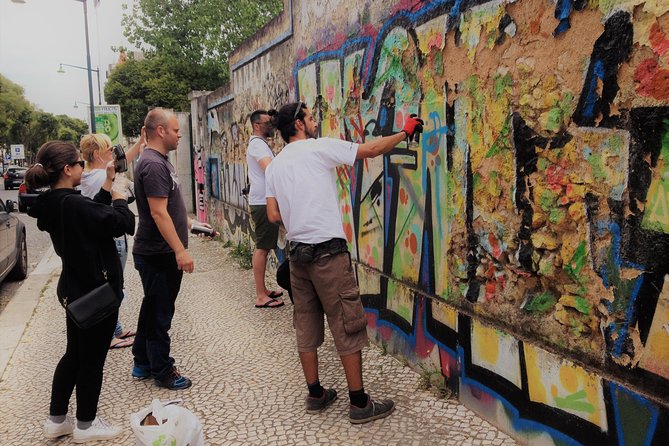
At around $41 per person for a 2-hour tour, you’re paying for three things that add up fast: guidance, interpretation, and included food.
Here’s the value equation as I see it:
- You get a live guide who explains each work, including technique and meaning.
- You get focus. Instead of wandering randomly and hoping you find good walls, you go to Graça and Mouraria for their concentration of street art.
- You get a Lisbon speciality included—pastel de nata or ginginha—which saves you from hunting for a snack mid-walk.
You are not paying for transportation because you’re on foot. And drinks are not included, so budget for whatever you like beyond the included bite. But compared to many city tours that feel like rushed snapshots, this one leans toward learning and understanding.
One more reason the price feels fair: the group size stays small. A tour can be cheap and still feel crowded. Here, the cap of 8 helps keep the experience personal.
Extra Touches Like Fado: When the Tour Adds a Soundtrack
Street art already has its own soundtrack—music from shop fronts, voices from balconies, the city’s daily rhythm. On top of that, the walk may include a brief detour for a fado singer, with a few songs performed along the way.
This kind of add-on can be memorable because it ties Lisbon’s musical identity to the same neighbourhood layers where street art lives. Since it’s mentioned in the feedback, it’s worth expecting the possibility, even if you should treat it as a nice bonus rather than a guaranteed ticketed event.
Either way, expect the tour to feel a bit like Lisbon itself—art plus atmosphere.
Who This Tour Fits Best (and Who Should Skip It)
This Lisbon street art walk is best for you if:
- you like street art but want the meaning behind it
- you want to see both famous and Portuguese artists in the same route
- you enjoy walking neighbourhoods like Graça and Mouraria
- you want discussion around art, society, and politics
- you appreciate a small-group guide-led experience
You might skip it if:
- you need step-free access or mobility support (it’s not suitable for mobility impairments)
- you’re only interested in quick photo stops and don’t care about interpretation
- you need an English-language tour (the guide language is French)
It also helps if you’re open to public art beyond murals. The inclusion of sculptures and Lisbon tiles makes the walk broader than typical street-art-only tours.
Should You Book the Lisbon Street Art Tour?
Yes, if you want Lisbon’s street art with context. I think this is a smart way to spend two hours because it balances big-name recognition (Shepard Fairey) with Portuguese street artists and real social themes, all in a route designed to show you variety without wasting time.
Book it especially if you:
- want a guide to explain techniques and the questions behind the walls
- like small groups and hate crowded tours
- want an included taste of Lisbon, either pastel de nata or ginginha
Skip it if you’re looking for full-city coverage or step-free access. Also, if you can’t follow French commentary, plan on reading the art visually and accept that the deeper layer may be harder to catch.
If you’re on the fence, use this test: if you’d rather understand a mural than just collect an image, you’ll enjoy this tour.
FAQ
How long is the Lisbon Street Art Tour?
The tour lasts 2 hours.
How much does it cost?
It costs $41 per person.
Where is the meeting point?
Meet in front of the church.
What is included in the tour?
You get Lisbon specialities: pastel de nata (cream tart) or ginginha (wild cherry liqueur). The tour also includes the guided street art commentary.
Are drinks included?
Coffee or other hot or cold drinks are not included.
What language is the live tour guide?
The live tour guide speaks French.
What is the group size?
The group is small, limited to 8 participants.
Is the tour refundable if I cancel?
You can cancel up to 24 hours in advance for a full refund.
Is the tour suitable for people with mobility impairments?
No, it is not suitable for people with mobility impairments.
Does the tour ever include fado?
A detour with a fado singer and a few songs is mentioned in the feedback, so it can happen as a bonus.
More Street Art in Lisbon
- Lisbon: Street Art Tour★ 4.9 · 1,324 reviews
- Lisbon: Kickstart Street Art Walking Tour★ 4.9 · 717 reviews
- Lisbon: Street Art Tuk Tuk Tour★ 4.9 · 372 reviews
- LISBON Street Art Tour★ 5.0 · 371 reviews
- 3-Hour Guided Street Art Walking Tour of Lisbon★ 5.0 · 278 reviews
More Tours in Lisbon
- Lisbon City Center Tour – The Unmissable Lisbon★ 5.0 · 22,234 reviews
- Lisbon: History, Stories and Lifestyle Walking Tour★ 4.8 · 10,902 reviews
- True 4Hour Private Tuk Tuk Tour: Discover Lisbon with a Local!★ 5.0 · 8,008 reviews
- Winner 2025 Undiscovered Lisbon Food & Wine Tour by Eating Europe★ 5.0 · 6,390 reviews
- Lisbon: Sintra, Pena, Cabo da Roca, Cascais Tour with Pickup★ 4.8 · 5,445 reviews
More Tour Reviews in Lisbon
- Lisbon City Center Tour – The Unmissable Lisbon★ 5.0 · 22,234 reviews
- Lisbon: Sintra, Pena, Regaleira, Cabo da Roca & Cascais★ 4.7 · 19,656 reviews
- Lisbon Card: 24, 48, or 72-Hour Pass★ 4.5 · 17,944 reviews
- Lisbon: Jerónimos Monastery Entrance Ticket★ 4.1 · 14,164 reviews
- Lisbon: History, Stories and Lifestyle Walking Tour★ 4.8 · 10,902 reviews
Just in: fresh Lisbon reviews from the team





Street Art, compared.
 ★ 4.9Street Art TourFrom $401,324 reviews
 ★ 4.9Kickstart Street Art Walking TourFrom $23717 reviews
 ★ 4.9Street Art Tuk Tuk TourFrom $165372 reviews
★ 5.0LISBON Street Art TourFrom $24371 reviews
 ★ 5.03-Hour Guided Street Art Walking Tour of LisbonFrom $42278 reviews
 ★ 5.0Lisbon Street Art Walking TourFrom $33141 reviews
 ★ 4.83-Hour Street Art Tuk Tuk TourFrom $21286 reviews
 ★ 5.0Street Art WalkFrom $4079 reviews
Browse the lists this tour appears in