
One short ride can do what a day of walking can’t. A vintage, open-air TukTuk gives you Lisbon’s feel fast, with live stories and the chance to stop for photos at the places you actually want to see. I especially liked the way the ride blends old Lisbon energy with the comfort of not fighting the steep streets on foot.
The second thing I really like is the guide-led storytelling, including the city’s turnaround after the 1755 earthquake. On a private tour, you also get that calm, unhurried pacing at viewpoints, like the patient approach shown by guide Sohel for groups that want extra time for questions and pictures.
The only drawback to think about is the mix of narrow streets and open air. If the weather turns rough or you’re short on time for a longer option (the tour can run up to 4.5 hours), you’ll want to dress for wind and plan your day accordingly.
In This Review
- Key things to know before you ride
- From Restaurante Sophia to Vintage TukTuk mode
- Avenida da Liberdade and Baixa: Lisbon’s polished intro
- Climbing into Alfama’s maze: tiles, balconies, and fado vibes
- Viewpoints that actually change your perspective: Portas do Sol and Santa Luzia
- Landmark stops: Sé Cathedral, the National Pantheon, and São Vicente de Fora
- Parque Eduardo VII: a planned pause with a big-city look
- How the timing works (and why 1.5 to 4.5 hours matters)
- Comfort on an open-air ride: what to wear and how to plan
- Languages and commentary: choosing the right fit
- Price and value: what you’re really paying for at $47 per person
- Who this TukTuk tour suits best
- Should you book this Lisbon vintage TukTuk ride?
- FAQ
- How long is the Lisbon Vintage TukTuk tour?
- Where does the tour start and end?
- Is this a private tour?
- What languages are available for the live guide?
- Are there audio guides included for other languages?
- What stops and sights are included?
- Is pickup and drop-off included?
- Do you get photo opportunities?
- Can I cancel for a full refund?
- Is there an option to reserve without paying today?
Key things to know before you ride
- Vintage open-air TukTuk keeps you close to the street-level atmosphere in Alfama and the center
- Photo stops at major viewpoints like Portas do Sol and Miradouro de Santa Luzia
- Live commentary in English or Portuguese plus audio options in French, German, Dutch, Italian, and Spanish
- Private group experience with time for questions, not a speed-run crowd tour
- Landmark circuit including Sé Cathedral, the National Pantheon, and the Monastery of São Vicente de Fora
From Restaurante Sophia to Vintage TukTuk mode
Your tour starts and ends at Restaurante Sophia – Natural Italian, right in Lisbon’s city center area. It’s a practical setup: you’re close enough to other sights that you can still build a full day around the ride without losing half of it to travel time.
Once you’re in the TukTuk, the mood shifts quickly. The open-air design means you feel the city’s temperature, traffic rhythm, and street life in a way that a bus just can’t match. I like that you can look up at façades and signage without barriers, and you’ll get frequent chances to pause without having to find parking or negotiate steep streets.
The hills done the easy way, more tuk-tuk runs
- True 4Hour Private Tuk Tuk Tour: Discover Lisbon with a Local!
★ 5.0 · 8,008 reviews - Lisbon: Private Guided Tuk-Tuk Tour with Hotel Pickup
★ 4.9 · 4,552 reviews - Private Lisbon Sightseeing Tuk-Tuk Tour: Alfama, Belém & More
★ 5.0 · 4,277 reviews - Lisbon Highlights: Private Tuk Tuk Tour Adventure Sightseeing
★ 5.0 · 3,284 reviews
Avenida da Liberdade and Baixa: Lisbon’s polished intro
Before Alfama, you glide through Lisbon’s more modern, wide-street side. Avenida da Liberdade is a nice warm-up because it gives you context: you see the elegance of the boulevards and big squares, then you roll down toward Baixa where everything feels more central and immediate.
This early stretch matters because it sets the story your guide is sharing. You’ll hear about Lisbon’s resilience after the 1755 earthquake, and you start noticing how the city’s different areas feel like separate chapters. In other words, the ride isn’t just movement, it’s orientation.
If you’re the kind of person who wants to understand where you are before you start taking photos, this part will click. You get your bearings fast, so when the streets tighten up later, you’ll know what you’re looking at.
Climbing into Alfama’s maze: tiles, balconies, and fado vibes
Then the TukTuk turns upward and inward. Alfama is Lisbon’s oldest neighborhood, and you’ll feel it right away: narrow lanes, tight turns, and colorful tiled façades that look like they were made for slow looking.
What I find most appealing here is the street feel. You’re not just watching Lisbon from far away; you’re moving through it. Along the way, you may catch glimpses of local life, like chatting neighbors from balconies and the kind of fado atmosphere that seems to drift out of side streets and small taverns.
And yes, the TukTuk helps with the big practical issue in Lisbon: hills. If you want to experience Alfama without spending your legs on steep, slippery cobblestones, this is a smart way to do it. It’s also a good choice if your group has mixed mobility levels, since you’re covering ground without long stair sessions (though you still want to dress for uneven sidewalks when you step out for stops).
Viewpoints that actually change your perspective: Portas do Sol and Santa Luzia
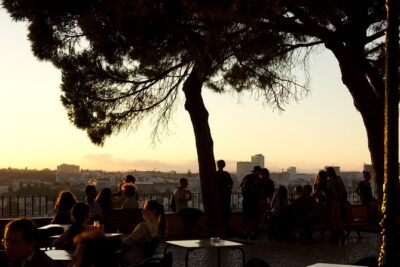
Lisbon’s best photos usually come from viewpoints, not street corners. That’s why the stops at Portas do Sol and Miradouro de Santa Luzia feel like the emotional heart of the tour.
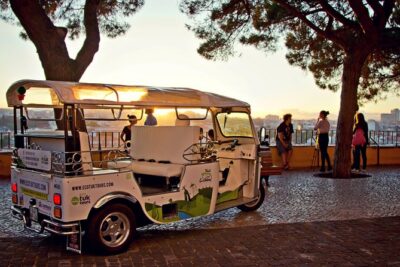
At Portas do Sol, you get the postcard spread over red rooftops, and you can often trace how the city spills toward the Tagus River. Miradouro de Santa Luzia gives a slightly different angle and a more intimate feel, with terraces that invite you to look, pause, and then look again. This is the point where your brain clicks: you start understanding Lisbon as a set of layers, not a single flat city.
Practical tip: if you care about photos, bring your phone or camera ready. The guide will time stops so you can get your shots, and based on how guides like Sohel handle group pace, you can usually take a little extra time at the viewpoints without feeling rushed.
Worth a look before you lock anything else in around Lisbon:


Landmark stops: Sé Cathedral, the National Pantheon, and São Vicente de Fora
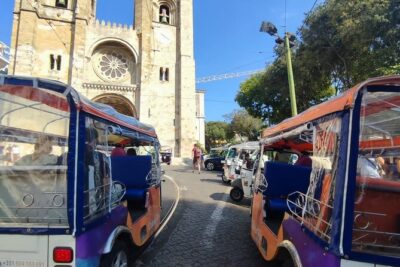
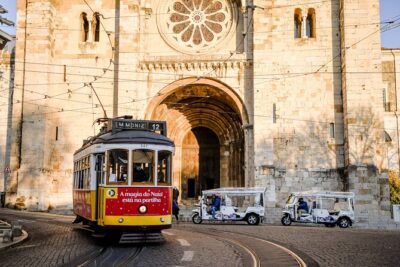
The tour also strings together major landmarks so you’re not just seeing scenery—you’re seeing what shaped the city. Passing Sé Cathedral is especially meaningful because it anchors Lisbon in its long religious and civic past. Even if you don’t go inside, the exterior presence helps you understand why Alfama and the surrounding areas kept evolving where they did.
You’ll also encounter the National Pantheon, which gives you another historic marker as you move around. The Monastery of São Vicente de Fora is another highlight on this route, and it works well because monasteries in Lisbon aren’t isolated objects—they fit into the city’s everyday texture. You’re watching history while still experiencing normal street life.
One caution: these landmark moments are stops during the drive, not a full walking museum day. If you’re hoping for deep, long interior visits, you’ll want to pair this TukTuk ride with separate time to go inside specific sites afterward.
Parque Eduardo VII: a planned pause with a big-city look
Not every viewpoint in Lisbon is in Alfama. Parque Eduardo VII adds a different angle and a calmer pause. It’s a place where the city feels wider and more open, and that shift is useful if the earlier narrow streets start to feel tight.
This kind of break also helps your pacing. In open-air vehicles, you can feel the cool or heat more quickly, and a stop in a park setting gives you a chance to regroup. You can take photos, check your bearings, and decide what you want to explore next on foot.
How the timing works (and why 1.5 to 4.5 hours matters)
The ride length can be 1.5 to 4.5 hours depending on what you choose. That range is important because it affects how much time you’ll have for slower stops, extra photos, and questions.
If you’re short on time or you want a quick orientation, the shorter end can be perfect. If you like to linger, the longer options give you space to enjoy each viewpoint without feeling like you’re sprinting to the next stop.
The experience is also private, so the timing isn’t controlled by a large group schedule. That’s where you feel the value: you can spend a bit more time where you care most—cathedral views, tiled streets, or the river panorama.
Comfort on an open-air ride: what to wear and how to plan
An open-air TukTuk is one of the best ways to see Lisbon up close, but it’s still outdoors. Lisbon can swing from mild to windy, especially near viewpoints and while moving through exposed areas.
I’d plan with layers. Even if you’re not cold, a breeze can make waiting for a photo stop feel cooler than you expected. Comfortable shoes matter too, because you’ll step out at viewpoints and landmark stops even if you’re not doing long walking sections.
If rain is on your forecast, the TukTuk helps cut the time you’d spend hiking uphill. You’ll still want a light rain layer or umbrella plan, since you’ll be exposed during driving and brief stops.
Languages and commentary: choosing the right fit
You’ll have live commentary in English or Portuguese, and you’ll also have an audio guide included in French, German, Dutch, Italian, and Spanish. In practice, this means you can match the tour’s language to who’s in your group, and you won’t feel like you’re missing the story even if you have multiple language needs.
For me, the big win is that the guide connects the sights to the city’s past—like how the earthquake shaped Lisbon’s resilience. That kind of context turns viewpoints into something you understand, not just something you photograph.
Price and value: what you’re really paying for at $47 per person
At $47 per person, this isn’t a budget bus tour. You’re paying for three big things: a private TukTuk ride, live storytelling, and a route built around viewpoints and key landmarks.
For value, ask yourself what you would do otherwise. If you had to do this by taxi plus separate self-guided time at viewpoints, you’d likely spend more while getting less story and fewer coordinated stops. The TukTuk also saves your legs for when you actually choose to walk, instead of forcing you to walk uphill just to get from one angle to another.
Private matters here, too. With your own driver-guide, you can pause where you care most. Based on the experience of groups who were taken through with extra photo time and patient pacing, you’re not just along for the ride—you’re part of how it unfolds.
Who this TukTuk tour suits best
This is a great match if you want a classic Lisbon overview with less uphill strain. It’s also ideal when you’re traveling with friends or family who have different walking speeds, since the route is designed for getting from place to place without requiring a marathon of stairs.
It also works well if you’re a first-timer who wants orientation and story in one package. The combination of central Lisbon, Alfama’s older lanes, and viewpoint stops gives you variety without decision fatigue.
If you’re the type who wants long time inside churches, museums, and courtyards, you’ll probably want to treat this as part one, then add separate time for deeper visits.
Should you book this Lisbon vintage TukTuk ride?
I’d book it if you want a smart, scenic route with minimal effort and maximum viewpoint payoff. It’s especially worth it when Lisbon’s hills or weather could slow you down, and when you want story delivered in real time, not from a phone screen.
Skip it only if you want a full, slow walking tour with lots of interior time. This experience is built for movement, viewpoints, and landmark stops, so you’ll get the best results by using it as your “get oriented and capture the key angles” day—then choosing your follow-up neighborhoods on foot.
FAQ
How long is the Lisbon Vintage TukTuk tour?
The duration can be 1.5 to 4.5 hours, depending on the starting time you choose. Check availability to see the options.
Where does the tour start and end?
The tour starts and arrives back at Restaurante Sophia – Natural Italian.
Is this a private tour?
Yes. It’s a private group experience.
What languages are available for the live guide?
The live tour guide offers English and Portuguese.
Are there audio guides included for other languages?
Yes. Audio guide support is included for French, German, Dutch, Italian, and Spanish.
What stops and sights are included?
You’ll pass or stop for major landmarks and scenic viewpoints, including Sé Cathedral, Portas do Sol, Miradouro de Santa Luzia, and Parque Eduardo VII, along with other historic sites along the route.
Is pickup and drop-off included?
Pick-up and drop-off within the specific location is included, so you don’t need to travel to a distant meeting point.
Do you get photo opportunities?
Yes. There are photo stops at key locations during the ride.
Can I cancel for a full refund?
Yes. Free cancellation is available up to 24 hours in advance for a full refund.
Is there an option to reserve without paying today?
Yes. You can reserve now & pay later, so you can book your spot without paying today.
More City Tours in Lisbon
- Lisbon City Center Tour – The Unmissable Lisbon★ 5.0 · 22,234 reviews
- Lisbon: Daytime/Sunset/Night City Sailboat Tour with Drink★ 4.9 · 3,114 reviews
- Lisbon: City Highlights and Viewpoints E-Bike Tour★ 4.9 · 1,556 reviews
- Lisbon: City Sightseeing Hop-On Hop-Off Bus Tour★ 3.8 · 1,220 reviews
- Lisbon: Private City Tour by Eco Tuk Tuk★ 4.9 · 1,215 reviews
More Tour Reviews in Lisbon
- Lisbon City Center Tour – The Unmissable Lisbon★ 5.0 · 22,234 reviews
- Lisbon: Sintra, Pena, Regaleira, Cabo da Roca & Cascais★ 4.7 · 19,656 reviews
- Lisbon Card: 24, 48, or 72-Hour Pass★ 4.5 · 17,944 reviews
- Lisbon: Jerónimos Monastery Entrance Ticket★ 4.1 · 14,164 reviews
- Lisbon: History, Stories and Lifestyle Walking Tour★ 4.8 · 10,902 reviews
More Hills by Tuk-Tuk
- True 4Hour Private Tuk Tuk Tour: Discover Lisbon with a Local!★ 5.0 · 8,008 reviews
- Lisbon: Private Guided Tuk-Tuk Tour with Hotel Pickup★ 4.9 · 4,552 reviews
- Private Lisbon Sightseeing Tuk-Tuk Tour: Alfama, Belém & More★ 5.0 · 4,277 reviews
- Lisbon Highlights: Private Tuk Tuk Tour Adventure Sightseeing★ 5.0 · 3,284 reviews
- Welcome Lisbon Tour with Local Guide in Private Eco Tuk Tuk★ 5.0 · 1,691 reviews
Just in: fresh Lisbon reviews from the team





Lisbon Tuk-Tuk Tours, compared.
 ★ 5.0True 4Hour Private Tuk Tuk Tour: Discover Lisbon with a Local!From $1088,008 reviews
 ★ 4.9Private Guided Tuk-Tuk Tour with Hotel PickupFrom $1534,552 reviews
 ★ 5.0Private Lisbon Sightseeing Tuk-Tuk Tour: Alfama, Belém & MoreFrom $524,277 reviews
 ★ 5.0Lisbon Highlights: Private Tuk Tuk Tour Adventure SightseeingFrom $843,284 reviews
 ★ 5.0Welcome Lisbon Tour with Local Guide in Private Eco Tuk TukFrom $171,691 reviews
 ★ 4.9Private City Tour by Eco Tuk TukFrom $281,215 reviews
 ★ 5.0Old Town TukTuk Tour and Scenic Viewpoints in AlfamaFrom $35974 reviews
 ★ 5.0Explore Lisbon by Tuk Tuk: History and ViewpointsFrom $19840 reviews
Browse the lists this tour appears in