Reviewed · LISBON
Lisbon: Graça Church | Convent & Terrace viewpoint access
Lisbon looks bigger from Graça. The short climb to the terrace gives you one of the city’s best panoramic views, with the feeling that you can almost touch the horizon. Then, inside the Convent of Nossa Senhora da Graça, you step into centuries of damage, restoration, and art you can actually see up close.
Two things I really like here: the quiet, historic convent spaces (not just another viewpoint stop) and the way the viewpoint frames Lisbon’s landmarks in one sweep. The only drawback is practical—there’s walking and stairs, and this isn’t a good fit if you need wheelchair access or if altitude is an issue.
In This Review
- Key points before you go
- Graça Church and Convent: a viewpoint stop with real rooms
- What your 1-hour ticket actually covers
- Entering the convent complex: tiles, cloisters, and quiet corners
- The church interiors: gilded woodwork and grisaille ceilings
- The big historical arc: 13th century start, 16th-century rebuild, 1755 shock
- Senhor dos Passos and the procession from Graça to São Roque
- Upper cloisters and the high choir: why those parts are worth it
- The terrace at Graça: St. George’s Castle, Tagus River, Old Bridge, Cristo Rei
- Timing tips: how to make the hour feel longer
- How much is it worth for $7?
- Who should book this access pass?
- Should you book the Graça Church Convent & Terrace access?
- FAQ
- Is this activity really about both the church/convent and the terrace?
- How long does the visit take?
- What does the $7 price include?
- What should I bring?
- Do I need to exchange a voucher?
- Is it suitable for wheelchair users?
- Is it suitable for people with altitude sickness?
Key points before you go
- Terrace access gives you a high, panoramic viewpoint without having to skip the church/convent
- Cloister and 18th-century tile panels make the visit feel like more than a quick photo stop
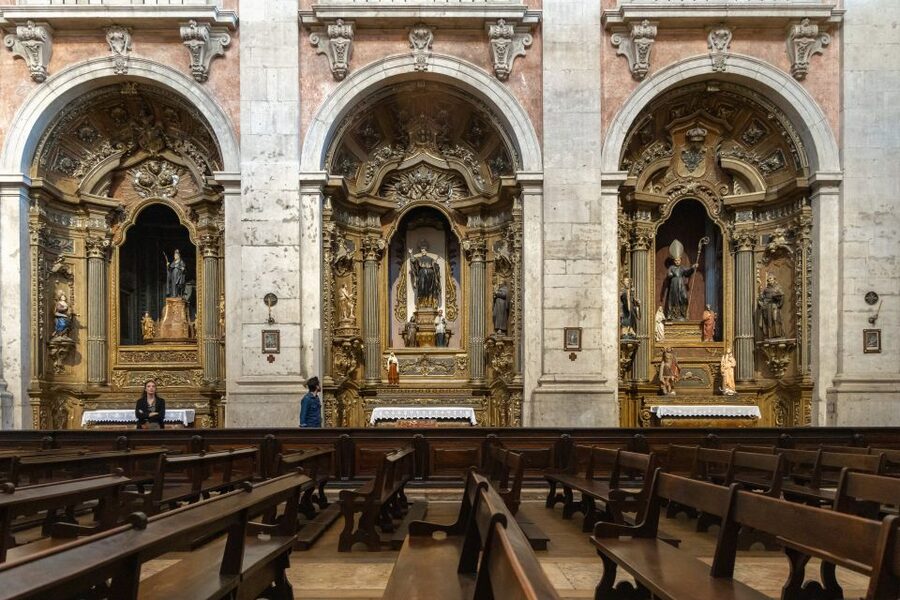
- Church interiors include gilded woodwork and grisaille ceiling paintings
- Over 700 years of built-and-rebuilt story, from the 13th century through the 1755 earthquake and later restoration
- Senhor dos Passos connection links Graça to a historic procession tradition
- Bring binoculars if you want to pick out the castle, river, and Cristo Rei details
Graça Church and Convent: a viewpoint stop with real rooms
This is the kind of Lisbon visit that keeps your feet busy but your brain happy. You start at Graça Church and Convent, not at a random viewpoint sign, so you get architecture, religious art, and old stone paths before the view does its thing.
The Graça complex is big and imposing, and that matters. When you walk through it, you don’t just pass by decorations—you move through a place that has been rebuilt, re-used, and re-shaped over centuries.
The origins go back to 1271, when construction began at the site then called Almofala. It began as a convent of Saint Augustine, then later the invocation shifted to Nossa Senhora da Graça (the exact change is listed as 1305 or 1362, so expect some historical overlap in the records).
Still deciding? See how this one measures up against a few Lisbon favourites.
- Lisbon City Center Tour – The Unmissable Lisbon
★ 5.0 · 22,234 reviews - Lisbon: Sintra, Pena, Regaleira, Cabo da Roca & Cascais
★ 4.7 · 19,656 reviews - Lisbon: Jerónimos Monastery Entrance Ticket
★ 4.1 · 14,164 reviews - Lisbon: History, Stories and Lifestyle Walking Tour
★ 4.8 · 10,902 reviews
What your 1-hour ticket actually covers
Your ticket (about $7 per person) is timed around a full circuit: entry to the convent and church, plus terrace access. You’ll also get access to the high choir and the upper cloisters, which is the difference between seeing a church from the doorway and actually understanding how monastic life was laid out.
That added interior access is the value. Plenty of Lisbon viewpoint stops are basically: walk up, take photos, walk down. Here, you get at least one “indoor Lisbon”—tiles, church details, and covered cloisters—so the hour feels like it has substance.
It’s also built for a tight window. The experience is listed as valid for 1 hour from the first activation, so don’t plan to treat it like a half-day museum crawl.
Entering the convent complex: tiles, cloisters, and quiet corners
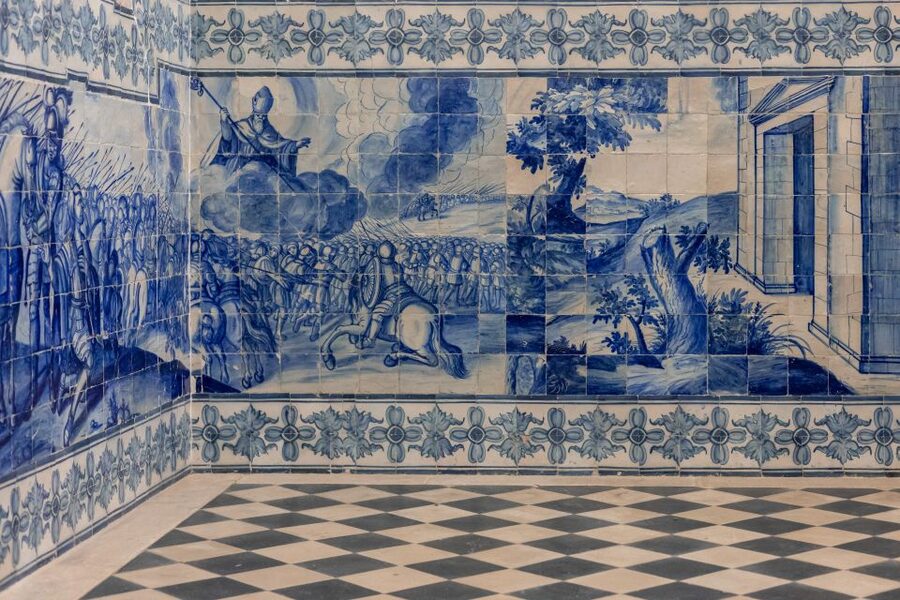
Once you’re inside, the convent spaces set the tone fast. You’ll see the cloister area and 18th-century tile panels, the kind of Portuguese azulejos that can turn a hallway into a slow-moving story. Even if your Spanish-and-Portuguese history skills are rusty, the visual language is easy to read: religious themes, decorative rhythm, and scenes built to be looked at repeatedly.
Then there’s the feeling of scale. The complex is described as one of Lisbon’s most imposing convent complexes, and you’ll feel that in the rooms and corridors. It’s not just one pretty room—it’s a connected set of spaces that helps you picture how people lived, prayed, and processed time day after day.
If you want a calmer moment, aim to spend a little time in the church and monastery areas before you go straight for the busiest viewpoint spots nearby. I like the idea of using Graça as an anchor: build your sense of place first, then let the city views finish the job.
The church interiors: gilded woodwork and grisaille ceilings
Inside the church, look up. You’ll find gilded woodwork and grisaille paintings on the ceiling—details that reward a few minutes of staring rather than sprinting.
Grisaille is basically painting in shades of gray, and here it works as a ceiling treatment that makes the whole interior feel layered. The gilded elements add contrast, so your eye naturally bounces between architectural lines and painted surfaces.
What I enjoy about this stop is that the artwork isn’t isolated to a single “main altar” moment. The church interior gives you multiple cues to slow down, and it’s a good place to reset between outdoor views.

The big historical arc: 13th century start, 16th-century rebuild, 1755 shock
If you like historic places, this one comes with a built-in timeline. Construction began in the 13th century, then the complex was rebuilt in the 16th century.
Then comes the turning point: the 1755 earthquake destroyed the church and convent. After that, the site was restored later in a late Baroque style. That combination—medieval beginnings plus later Baroque restoration—helps explain why the complex can feel both old and theatrically decorated at the same time.
You don’t need a lecture to sense the change. When a site is rebuilt, materials, decorative styles, and the proportions of interiors often shift. Here, you’re walking through layers of Lisbon’s resilience.
Senhor dos Passos and the procession from Graça to São Roque
One of the most interesting threads tied to this complex is what happened in 1586. The convent became famous for housing Senhor dos Passos, and from the following year, a procession developed that ran from Graça to São Roque.
That matters for your visit because it gives the place a living-function story, not just an architectural one. Religious buildings often look static, but traditions like processions make the stone feel like part of a calendar—something people returned to, again and again.
So when you’re touring, pay attention to the space as a stage for ritual. Even if you’re not there during a procession, the building’s layout and church focus help you picture how it worked.
Upper cloisters and the high choir: why those parts are worth it
A lot of visitors only see the church floor. Your ticket includes the high choir and upper cloisters, which makes a difference in how you understand the building.
The high choir area gives you a sense of elevation and separation—how worship could be both communal and structured. It also changes how the church looks from different angles, which is handy if you like photographing interiors without people blocking your line of sight.
The upper cloisters extend that same idea. They’re not just a route to get to the terrace; they’re another layer of space. Think of it as moving upward through the convent’s “internal world,” so the terrace at the end feels like the final step—from prayer spaces to city views.
The terrace at Graça: St. George’s Castle, Tagus River, Old Bridge, Cristo Rei
Now for the reason most people come: the terrace viewpoint. After the convent and church visit, you climb up to the terrace facing one of Lisbon’s best panoramas.
From here, you get standout views over:
- St. George’s Castle
- the Tagus River
- the Old Bridge
- and far into the horizon, Cristo Rei (the Christ statue)
This is exactly why terrace access is worth paying for. You’re not just reaching a viewpoint after walking past buildings. You’re earning it with a historic interior tour first, then stepping outside into an open-air reward.
Bring a camera, but also consider binoculars. The viewpoint description explicitly suggests them, and that’s your clue that you’ll get more out of looking carefully—not only shooting wide photos.
Timing tips: how to make the hour feel longer
This experience is about 1 hour, so your time management matters. I’d treat it as a two-part visit: interiors first, viewpoint second. That way, you don’t rush the church details just because you’re thinking about the view queue.
Weather can play a role on the terrace. One of the best pieces of practical wisdom here is to dress for wind, because the viewpoint sits high and exposed. If you show up lightly dressed, you’ll feel it faster once you’re outside.
If you want photos, wait a minute before you shoot everything. Lighting changes can be obvious from height, and even small differences can make the castle and river look more dramatic.
How much is it worth for $7?
For $7, you’re paying for more than a photo spot. You get entry to the convent and church, terrace access, plus the high choir and upper cloisters—areas many people never see when they only pop into churches casually.
That makes the value pretty strong for a short visit. You’re also not paying for extras like drinks, so budget realistically if you plan to snack after. This is a “see, look, and climb” kind of stop, not a long café break.
If your Lisbon day already includes multiple miradouro-style viewpoints, Graça can still be a smart pick because it pairs outdoor payoff with indoor rooms. If your day is packed, the one-hour time limit helps you keep control.
Who should book this access pass?
Book it if you want:
- a terrace viewpoint that’s tied to a real convent complex
- architecture and tile details, not just skyline photos
- an hour-long plan that doesn’t swallow your whole afternoon
Skip it (or choose something else) if:
- you rely on wheelchair access, since it’s not suitable for wheelchair users
- you’re dealing with altitude sickness, since the terrace climb could be a problem
It’s also a good match for people who like quiet structure. If you enjoy a calm church and monastery area before you take on the broader viewpoint scene, Graça gives you that rhythm.
Should you book the Graça Church Convent & Terrace access?
Yes, if you want one of Lisbon’s top viewpoint experiences without turning your visit into a fast-in-fast-out line of photos. The pairing of convent interiors (tiles, cloister spaces, church details) with terrace access makes the hour feel earned.
I’d book it especially if you care about history you can actually walk through—starting with the long timeline of the complex and finishing with the city framed in one wide view. Just go prepared for steps and weather, and you’ll get the best version of this stop.
FAQ
Is this activity really about both the church/convent and the terrace?
Yes. Your entry ticket includes access to the Convent & Church of Graça and includes climbing to the terrace. It also includes the high choir and upper cloisters.
How long does the visit take?
The experience is listed as 1 hour, and the ticket is valid for 1 hour from first activation.
What does the $7 price include?
It includes entry to the Convent & Church of Graça, plus terrace access. It also includes access to the high choir and upper cloisters.
What should I bring?
Bring a camera and binoculars, which are specifically suggested for this viewpoint-focused visit.
Do I need to exchange a voucher?
Yes. You must present your voucher at the ticket office and exchange it for an entrance ticket.
Is it suitable for wheelchair users?
No. It is not suitable for wheelchair users.
Is it suitable for people with altitude sickness?
No. It is not suitable for people with altitude sickness.
More Tour Reviews in Lisbon
- Lisbon City Center Tour – The Unmissable Lisbon★ 5.0 · 22,234 reviews
- Lisbon: Sintra, Pena, Regaleira, Cabo da Roca & Cascais★ 4.7 · 19,656 reviews
- Lisbon Card: 24, 48, or 72-Hour Pass★ 4.5 · 17,944 reviews
- Lisbon: Jerónimos Monastery Entrance Ticket★ 4.1 · 14,164 reviews
- Lisbon: History, Stories and Lifestyle Walking Tour★ 4.8 · 10,902 reviews