
Midnight Fado feels like a time machine. At Mesa de Frades, I love the intimate former-chapel setting with hand-painted tiles that make the whole room feel hushed and historic. You’re close enough to see the emotion land on faces, not just hear it.
I also like how the night works like a living, breathing Fado salon. From midnight, a professional singer anchors the show, and seasoned performers plus hidden talents get to share the stage, song by song.
The main thing to plan around is spontaneity: the schedule and how many fados you hear can shift. One verified booking reported it ran closer to 1:30 instead of a full 2 hours.
In This Review
- Key highlights to know before you go
- Step inside Mesa de Frades’s former chapel
- Midnight timing: why the show can feel fluid
- How the stage works: professional anchors, then shared moments
- Fado mood at Mesa de Frades: haunting, fiery, and human
- Price and value: what $17 buys you (and what it doesn’t)
- Wine, seating, and the small-room reality
- What the night feels like once you’re inside
- Who should book this midnight Fado night?
- Should you book Mesa de Frades Fado at midnight?
- FAQ
- What time does Lisbon Fado Midnight at Mesa de Frades start?
- How long is the experience?
- What’s included in the $17 price?
- Is there food included?
- How big is the group?
- What language is used during the event?
- Is free cancellation available?
- Is payment handled on-site?
Key highlights to know before you go
- Former chapel atmosphere: hand-painted tiles and a small, close-in room that supports quiet intensity
- Midnight to 2 AM format: a long, late start that fits Fado’s mood
- Open sharing on one small stage: professional voices alongside lesser-known talents
- Soulful, haunting, and fiery variety: the energy can change from song to song
- Small group limit (8 people): you’re not lost in a crowd
Step inside Mesa de Frades’s former chapel
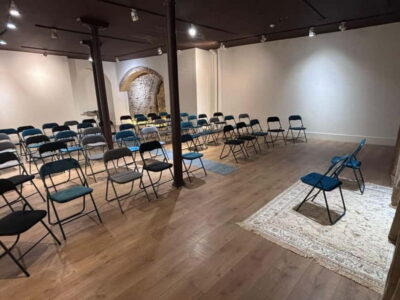
This is one of those Lisbon experiences where the room matters as much as the music. Mesa de Frades takes place in a former chapel, and you feel that immediately. The setting is warm and intimate, and the hand-painted tiles give the whole place a visual rhythm while you listen.
I like how this venue turns Fado from something you watch into something you participate in. With a small group and close proximity to the performers, you’re not just standing in a corner. You’re in the same space as the singer’s breathing, the guitar’s phrasing, and the pauses that carry as much feeling as the notes.
There’s also a certain comfort in the venue’s age and character. When the setting has history in its walls, Fado doesn’t sound like a performance. It sounds like a tradition being passed along in real time.
Another night of fado and a glass of red
- Lisbon: Live Fado Show with Port Wine at Lisboa em Fado
★ 4.7 · 5,097 reviews - Lisbon: Fado Show and Wine inside Medieval Walls
★ 4.8 · 3,819 reviews - Lisbon: Fado Show and Portuguese Dinner
★ 4.5 · 1,531 reviews - Lisbon: Alfama Tour and Live Fado with Traditional Dinner
★ 4.4 · 970 reviews
Midnight timing: why the show can feel fluid
Mesa de Frades is scheduled for midnight to 2 AM. That’s late, and it’s part of the point. Fado’s themes—loss, longing, life’s ache—often land differently when the city is quieter and your brain has fully switched into night mode.
Now for the practical bit: because this is an open night with multiple participants, the flow can be less clockwork than a typical ticketed concert. One verified booking reported the event wrapped around 1:30 and that only a handful of fados happened in that time, with long gaps between songs.
So here’s how you should think about it: this isn’t a “strict set list, tight timing” situation. It’s more like a night that’s built in the moment. If you love that kind of live, anything-can-happen energy, you’ll probably enjoy it a lot. If you need a precise timetable and predictable song count, this format might feel a little unpredictable.
How the stage works: professional anchors, then shared moments
From midnight, the show is guided by a professional Fado singer. That matters, because Fado is not only about voice—it’s about control, storytelling, and knowing when to let silence speak.
After that anchor, the night becomes a shared stage. The format is designed so you’ll see seasoned performers and also hidden talents step in. That mix is one of the best reasons to choose this venue over a more formal concert. You might recognize some voices, and you might also hear someone you’ve never heard before who has the courage to go up and sing anyway.
In a small room, that “one more person steps forward” feeling is powerful. The closeness between audience and artists means you don’t feel like you’re watching from far away. You’re right there while someone takes a risk and delivers a song that can’t be repeated the same way twice.
Fado mood at Mesa de Frades: haunting, fiery, and human
Fado often gets described with big words, but the real thing you notice is how human it feels. At Mesa de Frades, you should expect emotional range across the night—some performances can feel soulful or haunting, while others can be fiery and energized.
That variety is not random. Fado singers and guitarists shape the mood through tempo, phrasing, and the intensity of delivery. A quiet song can feel like a confession. A faster, more intense piece can feel like anger at the world or joy you can’t hold in.
Why does this work especially well at midnight? Late at night, your attention narrows. Even if you don’t speak Portuguese, your ear starts picking up the emotional cues: the breath before a line, the way a singer leans into a phrase, and how the guitar answers like a second voice.
You’ll also be in a venue where the setting encourages listening. This is not background entertainment. If you sit back and actually pay attention, the experience tends to stick with you.


Price and value: what $17 buys you (and what it doesn’t)
The price is $17 per person, and what you get included is straightforward: Fado music performance plus a glass of wine.
That’s a decent value for a late-night, small-room experience—especially because the show isn’t one locked set with one performer. It’s a shared night with multiple voices. Also, the venue itself is part of the value: a chapel space with hand-painted tiles is not something you get as a free upgrade in most other music nights.
What’s not included is also clear. The wine is not unlimited, and there’s no promise of a full drinks plan. A wine list exists, and drinks, cocktails, and foods are not part of the included package. So if you like to make a night of it, you should budget extra.
One more practical point from a real review: don’t assume payment will be as smooth as at a big venue. I can’t generalize from one person’s experience, but it’s smart to come prepared—especially if you prefer to avoid stress around change or seating.
Wine, seating, and the small-room reality
You get one glass of wine included. That’s perfect for warming up your night and taking the edge off your first minute in a late venue. But you should treat the wine as a simple add-on, not the centerpiece.
Because the group is small—limited to 8 participants—seating can matter a lot more than you’d think. In a small room, there may be a few good spots, and those spots aren’t infinite. One verified booking described initial seat issues and said the rules felt inconsistent. I’m not saying that’s the norm, but it’s enough to suggest a sensible strategy: arrive with a calm attitude, and don’t wait until the last seconds to find a place if you care about being close.
Also, the language used is Portuguese. That doesn’t mean you’ll miss the whole night, because music is the universal language. Still, if you want the full effect of introductions or whispered context, you’ll benefit from knowing even a few basics—or simply being okay with enjoying the emotion without a running translation.
What the night feels like once you’re inside
Here’s the vibe you should expect: a warm, intimate atmosphere in a room designed for listening. The professional singer pulls you in, then the night becomes a series of contributions. Some songs may feel like they’re landing in your lap. Other moments may come with longer pauses—because the open format has breathing room between performers.
That pacing can be wonderful or frustrating, depending on your personality. If you like slow intensity, you’ll likely find it immersive in a quiet way. If you want constant momentum, you might wish the schedule were more predictable.
Either way, this kind of night is about attention. The best version of this experience comes when you treat it like a conversation, not a playlist. Stay present, notice the guitar responses, and let the mood move you.
Who should book this midnight Fado night?
This is a strong fit if you:
- love Fado as a living tradition, not just as a museum piece
- enjoy small-group events where you can feel the room
- want a late-night cultural experience that’s different from the usual dinner-and-a-show routine
It’s also a great match if you’re already comfortable being flexible with timing. The show runs midnight to 2 AM on paper, but the actual rhythm can vary.
You might want a different option if you:
- need a strict start-to-finish schedule and predictable song count
- get stressed by potential seating or hospitality rough edges in small venues
Should you book Mesa de Frades Fado at midnight?
If you’re the type of traveler who likes real rooms, real voices, and a night that doesn’t feel engineered, I’d say yes, book it. The venue setting is genuinely special—former chapel + hand-painted tiles + close audience energy. Add in a professional singer anchoring the night and the chance to hear multiple Fado voices, and you’re getting value for your $17.
Just go in with the right expectations. This is an open, shared night, so don’t treat it like a timed concert with a guaranteed set list. If you can handle a bit of spontaneity and you’re ready to listen closely, Mesa de Frades can feel like Lisbon’s soul at its most personal.
FAQ
What time does Lisbon Fado Midnight at Mesa de Frades start?
It takes place from midnight to 2 AM. One verified booking reported the night ended closer to 1:30 AM.
How long is the experience?
The experience is listed as 2 hours.
What’s included in the $17 price?
You get the Fado music performance plus one glass of wine.
Is there food included?
No. Drinks, cocktails, and foods are listed as not included beyond the glass of wine.
How big is the group?
It’s a small group, limited to 8 participants.
What language is used during the event?
The language listed is Portuguese.
Is free cancellation available?
Yes. You can cancel up to 24 hours in advance for a full refund. Reserve & pay later is also offered.
Is payment handled on-site?
The provided details don’t specify payment method beyond the fact that wine/drinks beyond the included glass are not included, so plan on paying for anything extra separately.
More Tour Reviews in Lisbon
- Lisbon City Center Tour – The Unmissable Lisbon★ 5.0 · 22,234 reviews
- Lisbon: Sintra, Pena, Regaleira, Cabo da Roca & Cascais★ 4.7 · 19,656 reviews
- Lisbon Card: 24, 48, or 72-Hour Pass★ 4.5 · 17,944 reviews
- Lisbon: Jerónimos Monastery Entrance Ticket★ 4.1 · 14,164 reviews
- Lisbon: History, Stories and Lifestyle Walking Tour★ 4.8 · 10,902 reviews
One More Night of Fado
- Lisbon: Live Fado Show with Port Wine at Lisboa em Fado★ 4.7 · 5,097 reviews
- Lisbon: Fado Show and Wine inside Medieval Walls★ 4.8 · 3,819 reviews
- Lisbon: Fado Show and Portuguese Dinner★ 4.5 · 1,531 reviews
- Lisbon: Alfama Tour and Live Fado with Traditional Dinner★ 4.4 · 970 reviews
- Lisbon: Tapas & Drinks with Fado Live Performance★ 4.6 · 749 reviews
Just in: fresh Lisbon reviews from the team





Fado Shows, compared.
 ★ 4.7Live Fado Show with Port Wine at Lisboa em FadoFrom $185,097 reviews
 ★ 4.8Fado Show and Wine inside Medieval WallsFrom $183,819 reviews
 ★ 4.5Fado Show and Portuguese DinnerFrom $571,531 reviews
 ★ 4.4Alfama Tour and Live Fado with Traditional DinnerFrom $58970 reviews
 ★ 4.6Tapas & Drinks with Fado Live PerformanceFrom $58749 reviews
 ★ 4.5Fado in Chiado – Live Show in Lisbon on Stage for over 15 YearsFrom $25638 reviews
 ★ 4.8Live Fado Show in Historic Alfama with Port WineFrom $17572 reviews
 ★ 4.3Fado Night with Dinner in a Typical Fado HouseFrom $70365 reviews
Browse the lists this tour appears in