Reviewed · LISBON
Lisbon Contemporary Architecture
Lisbon’s modern buildings cut through the postcard. This 4-hour, English-language walk gives you a focused route from Belém’s waterfront science and culture to Parque das Nações’ future-minded design, with Champalimaud Foundation and MAAT on the shortlist. It’s a smart way to see Lisbon’s 20th- and 21st-century side without getting lost in a self-guided blur.
I like the balance here: you get landmark exteriors you can’t miss, plus places designed for walking, looking, and thinking—not just posing. I also like how the experience can be shaped around your pace and interests, with guide Nelson Leona called out for being friendly, personable, and flexible, plus fluent English.
One consideration: you’ll be on your feet for a good stretch. If you’re tired fast or want long museum time at a slow pace, you may find the schedule feels a bit tight since the highlights are split across multiple neighborhoods.
In This Review
- Key moments worth putting on your mental map
- A fast route through Lisbon’s new-wave architecture
- Champalimaud Foundation: Charles Correa’s research “therapy” idea
- Belém Cultural Center by Manuel Salgado and Vittorio Gregotti
- MAAT and Central Tejo: walking a roof of 15,000 glazed tiles
- Parque das Nações: modern expo city planning, then a cable-car view
- Price and what you’re really paying for
- Who this Lisbon contemporary architecture tour fits best
- Should you book this Lisbon contemporary architecture tour?
- FAQ
- What’s the duration of the Lisbon Contemporary Architecture experience?
- How much does the tour cost?
- Is the tour offered in English?
- What’s included for tickets?
- Is this experience private?
- Where does the tour start and end?
- What time does the experience run?
- How far in advance do people usually book?
- Is free cancellation available?
- Are service animals allowed?
Key moments worth putting on your mental map
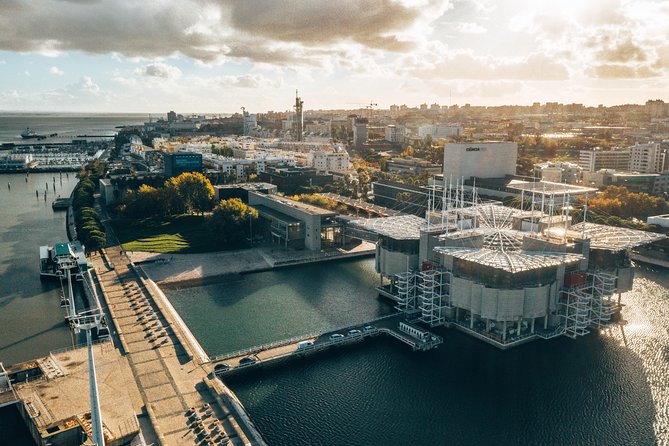
- Champalimaud Foundation on the Tagus: a Charles Correa design tied to biomedical research, right by the river.
- Belém Cultural Center icon status: modern architecture by Manuel Salgado and Vittorio Gregotti, in dialogue with older Lisbon.
- MAAT’s 15,000 glazed tiles: an arching roof you can walk on (ticket details matter, see below).
- Central Tejo Power Station connection: industrial history folded into today’s museum experience.
- Parque das Nações cable car: roundtrip ride for a high-angle view of the post-Expo city.
- Nelson Leona’s on-the-fly tailoring: a guide who adjusts to your preferences and keeps things clear in English.
A fast route through Lisbon’s new-wave architecture
This tour is built like a guided highlight reel, but with real structure. You’ll move between key Belém sights and then head to Parque das Nações, with time carved out for two of the most visitor-friendly modern stops: MAAT and the cable car at Parque das Nações.
Because it’s a private setup (only your group), you’re not fighting for space in the crush. And because tickets are handled in a mobile format, you spend less energy on logistics and more on looking—exactly what you want on an architecture day.
The route also makes sense geographically. Starting near the Tagus helps you see how modern Lisbon still leans on the river—science, power, leisure, and infrastructure all shaped by the same waterfront geography.
Still deciding? See how this one measures up against a few Lisbon favourites.
- Lisbon City Center Tour – The Unmissable Lisbon
★ 5.0 · 22,234 reviews - Lisbon: Sintra, Pena, Regaleira, Cabo da Roca & Cascais
★ 4.7 · 19,656 reviews - Lisbon: Jerónimos Monastery Entrance Ticket
★ 4.1 · 14,164 reviews - Lisbon: History, Stories and Lifestyle Walking Tour
★ 4.8 · 10,902 reviews
Champalimaud Foundation: Charles Correa’s research “therapy” idea
The Champalimaud Foundation is the kind of building you have to process twice. From the outside it reads as futuristic and sculptural, facing right toward the Tagus—so you get both the architecture and the waterline in the same frame. It’s also wrapped in a mission: biomedical research, housed in a complex often described as the Center of Research into the Unknown.
Architect Charles Correa’s approach is part of the story: the building aims to treat architecture like sculpture, then sculpture like beauty, then beauty like therapy. Even if you don’t read architectural theory fluently, you can still feel what that means in the design—this isn’t a plain box doing utilitarian work. The building’s form is meant to communicate purpose, not just contain labs.
What I’d watch for as you look (without overthinking it):
- How the massing relates to the river: it’s positioned so the Tagus isn’t background; it’s part of the setting.
- How “sculpture” language shows up in shape: think curves and presence, not just function.
- The contrast with nearby maritime symbolism: the building sits in a zone where Lisbon’s seafaring identity is never far away.
Potential drawback: exterior stops can feel short if you’re the type who wants lots of interior time. If you’re very focused on museum-like interior exploration, you’ll enjoy the outside more than the inside because this tour’s emphasis is on architectural viewpoints and key landmarks.
Belém Cultural Center by Manuel Salgado and Vittorio Gregotti
After the research-forward vibe of Champalimaud, you shift into something more civic and cultural: the Belem Cultural Center. It’s described as one of modern Lisbon’s biggest icons, and you can see why once you’re in the area. Its modern architecture gently contrasts with some of old Lisbon’s landmark buildings, creating a look that feels intentional rather than awkward.
The design is credited to Manuel Salgado and Vittorio Gregotti, and the building also ties into a special site. That detail matters: in architecture, placement changes everything. Here, the site helps the modern form feel like it belongs in the Belém scene rather than sitting there like an afterthought.
What I like about this stop as a visitor:
- You get a clear example of how modern Lisbon negotiates with its past.
- It’s a good breather between more science-heavy designs and the museum-focused MAAT stop.
- It works well for photos because the building and nearby historic textures can share the same composition.
If you’re hoping for a deep dive into the building’s programming (exhibits, performances), note that this tour’s emphasis is architecture and orientation. You’ll come away with strong visual and historical context, but not necessarily as a full event guide.
MAAT and Central Tejo: walking a roof of 15,000 glazed tiles
MAAT is where the tour turns from “look at buildings” to “experience how buildings work.” MAAT stands for Museu de Arte, Arquitetura e Tecnologia, and that trio is more than a slogan. The space is designed for debate, discovery, and critical thinking—so it fits a traveler who wants context, not just sight-seeing.
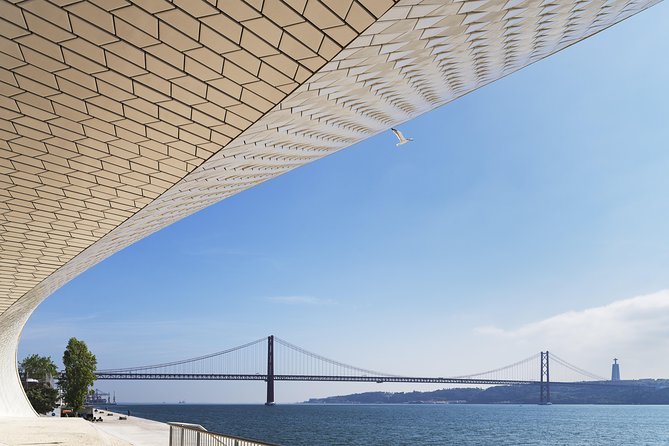
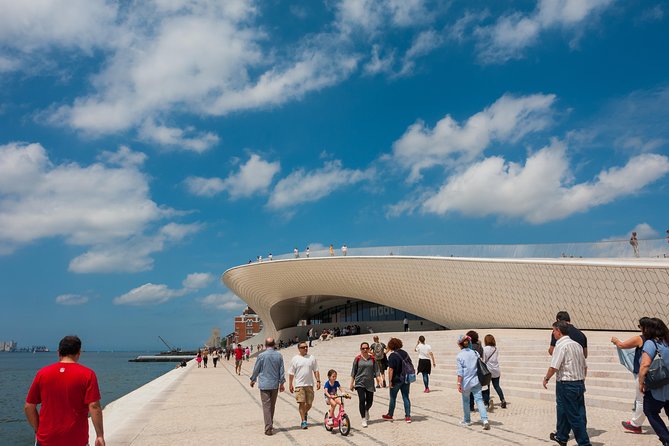
The architecture itself is a highlight. MAAT’s building is by Amanda Levete Architects’ studio, and it’s designed as a continuation of the promenade along the Tagus. Instead of a harsh geometry, you get an arching, gently humped structure that invites movement.
Then there’s the practical wow-factor: the building is covered in 15,000 glazed tiles, and it’s designed so visitors can walk over the roof. That makes MAAT different from many city museums—there’s a strong “architectural promenade” feeling baked into the plan.
MAAT also connects to Central Tejo Power Station, an important early-20th-century industrial site in Lisbon. The pairing is valuable for you because it shows a city pattern: old power infrastructure rethought for art and ideas. You don’t just see modern design; you see modern reuse.
Important ticket detail for your planning: MAAT admission is not included in the tour. The time is built into the experience, but you should budget for entry if you want to go inside and make the most of the museum.
How to make this stop pay off:
- If you’re visiting for architecture, plan to spend time on and around the roof areas rather than rushing the viewing points.
- If you’re visiting for art, you’ll still enjoy the structure, but pair your attention between galleries and building design so you get the “technology + architecture” theme.


Parque das Nações: modern expo city planning, then a cable-car view
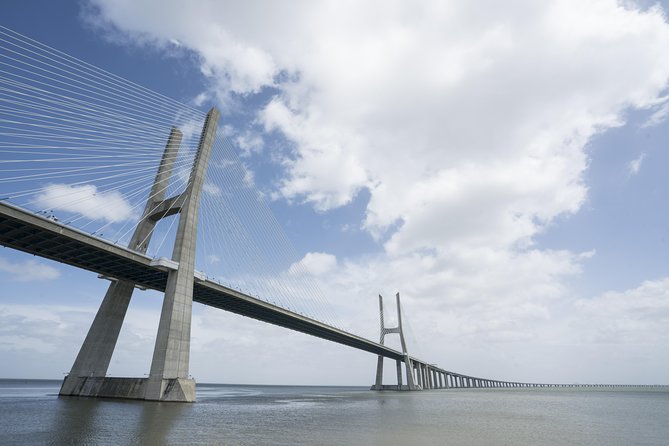
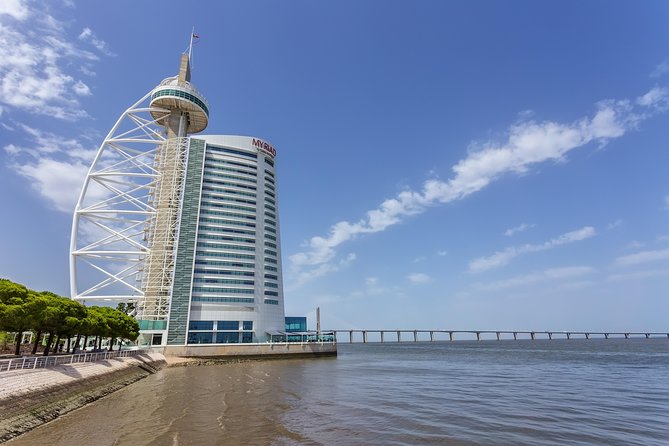
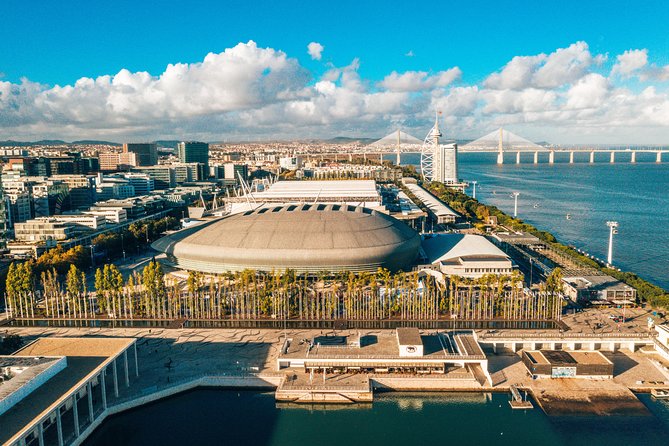
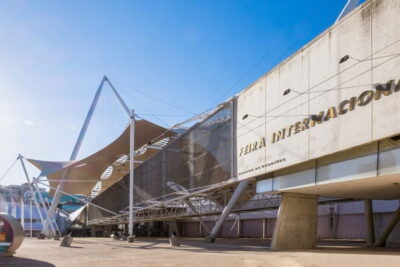
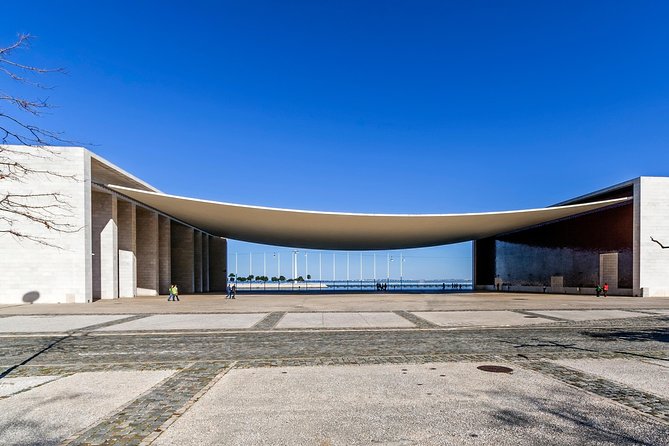
Parque das Nações feels like Lisbon’s “future city” cousin. It was planned from the start as an opportunity to create a new city—one where architecture could take varied forms, with imagination as the guiding limit. You’ll recognize the visual language quickly once you hit the area: it’s clean, structured, and designed for movement.
This stop gives you a taste of key building types and landmarks linked to the area, including:
- Portuguese Pavilion
- Atlantic Pavilion
- Knowledge Pavilion
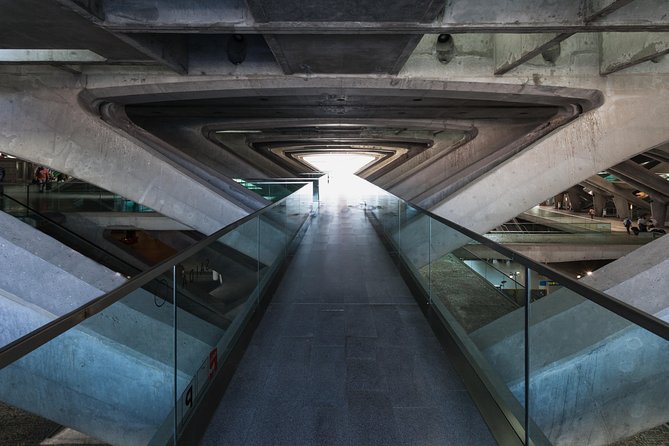
- Vasco da Gama Tower
- Orient Station
But the best part for many visitors is the perspective shift you get with the roundtrip cable car. You’ll go up for birds-eye views to connect what you saw at ground level with the way the city blocks and building clusters relate to each other.
The cable car is included here, which is a big value point because it removes one uncertainty from the day. You’re not trying to figure out what else to add or how to squeeze in another ticketed activity.
What to keep in mind: birds-eye views are great, but they also tempt you to take too many photos and not enough time looking. Give yourself a minute or two for quiet scanning. Once you spot the pattern of the buildings, the whole place starts to make sense.
Price and what you’re really paying for
At $181.39 per person for an approximately 4-hour experience, you’re not buying “a museum day.” You’re buying a guided route through major modern landmarks, with time saved on organization and a structured pace that would be harder to replicate efficiently on your own.
Here’s the value equation I’d use:
- You get multiple architectural anchors in one day (science building, cultural icon, museum architecture, and planned-city highlights).
- You get one included ticket activity (the Parque das Nações cable car roundtrip), while MAAT requires its own admission.
- You travel in a private format, which is usually where the quality jump happens in tours like this—less crowd friction and more room for your guide to tailor the conversation.
Also worth noting: group discounts apply, and the company offers mobile tickets. Those are small details, but on a half-day architecture plan, they help the day feel smooth.
If you’re trying to keep costs down, you’ll do best if you’re already planning to visit at least MAAT (since it’s not included) and you’re comfortable adding the cable-car view as part of your Lisbon highlights.
Who this Lisbon contemporary architecture tour fits best
This is a strong fit if you:
- love architecture that has an idea behind it, not just a pretty façade
- want a structured way to see modern Lisbon across two very different areas
- prefer a guide who can explain what you’re looking at without turning it into a lecture
- want a half-day that still feels like more than window-shopping
It can also work well for couples or small groups who want shared conversations. When the day is designed around design principles and city planning, you’ll find you talk about it during dinner.
Should you book this Lisbon contemporary architecture tour?
If your goal is to understand Lisbon’s modern side in a few hours, I’d say yes—with one clear planning adjustment. Make sure you’re ready for a walking-and-looking format, not a slow museum marathon.
Book it if you want:
- a coherent route from the Tagus-focused Belém landmarks to Parque das Nações
- guided context around Champalimaud Foundation, Belem Cultural Center, and MAAT
- the convenience of a private setup and an included cable-car ride
Skip it (or at least adjust expectations) if you need extended interior museum time across multiple institutions. The tour’s strength is prioritizing architectural viewpoints and key buildings; MAAT admission isn’t included, so you’ll want to decide in advance how much you want to spend inside.
FAQ
What’s the duration of the Lisbon Contemporary Architecture experience?
It lasts about 4 hours.
How much does the tour cost?
The price is $181.39 per person.
Is the tour offered in English?
Yes, it’s offered in English.
What’s included for tickets?
The Parque das Nações cable car is included. MAAT admission ticket is not included.
Is this experience private?
Yes. Only your group participates.
Where does the tour start and end?
It starts in Lisbon, Portugal, and ends back at the meeting point.
What time does the experience run?
Daily availability is listed from 7:00 AM to 8:00 PM (within the stated date range).
How far in advance do people usually book?
On average, it’s booked about 11 days in advance.
Is free cancellation available?
Yes. You can cancel up to 24 hours in advance for a full refund.
Are service animals allowed?
Service animals are allowed.
More Tour Reviews in Lisbon
- Lisbon City Center Tour – The Unmissable Lisbon★ 5.0 · 22,234 reviews
- Lisbon: Sintra, Pena, Regaleira, Cabo da Roca & Cascais★ 4.7 · 19,656 reviews
- Lisbon Card: 24, 48, or 72-Hour Pass★ 4.5 · 17,944 reviews
- Lisbon: Jerónimos Monastery Entrance Ticket★ 4.1 · 14,164 reviews
- Lisbon: History, Stories and Lifestyle Walking Tour★ 4.8 · 10,902 reviews