

Reviewed · LISBON TUK-TUK TOURS
Halfday Tuk Tuk Tour Lisbon Highlights-Viewpoints-Local Stories
Lisbon hills, solved in a tuk-tuk. This private electric tour helps you cover a lot fast, while a local guide connects the sights to the stories behind them. I especially like the mix of neighborhood feel plus classic monuments without turning your day into a scavenger hunt.
What I also like is the smart sequence: you get iconic viewpoints like Portas do Sol and Senhora do Monte, then you bounce into historic spots such as Lisbon Cathedral and São Vicente de Fora. One possible drawback: admission tickets aren’t included, so if you want to go inside every monument, budget extra.
In This Review
- Key highlights to know before you go
- How an electric tuk-tuk helps you actually enjoy Lisbon
- Baixa Pombalina and the grid streets of Lisbon’s reset
- Lisbon Cathedral: Romanesque strength and centuries of repairs
- Portas do Sol and Alfama: viewpoint photos plus real neighborhood texture
- Senhora do Monte: a wider view with a calmer vibe
- São Vicente de Fora: baroque grandeur and royal tombs
- The National Pantheon and the dome view
- Feira da Ladra: browse like a local on the market days
- Largo do Carmo ruins: earthquake memory in an outdoor museum
- Church of São Roque: tiles, gold details, and art that rewards time
- São Pedro de Alcântara: a garden viewpoint with sunset energy
- Príncipe Real: a quieter square with gardens and local hangouts
- Parque Eduardo VII and Marquês de Pombal: the modern Lisbon line
- Avenida da Liberdade and Restauradores: Lisbon’s polished center
- Price, value, and what you get for $96.55
- Who should book this tour (and who might not)
- Should you book the Halfday Tuk Tuk Tour?
- FAQ
- How much does the tour cost?
- How long is the Halfday Tuk Tuk Tour?
- Is the tour conducted in English?
- Do you offer hotel pickup in Lisbon?
- Is this a private tour?
- Are admission tickets included?
- Is there an age limit?
- Where does the tour start and end?
- Can I cancel for free?
Key highlights to know before you go

- Private group in an electric tuk-tuk so you’re not squeezed into a crowd or stuck waiting on strangers
- Guided viewpoint stops for photos and quick orientation, including Portas do Sol and São Pedro de Alcântara
- Historic hits in a short time like Lisbon Cathedral and São Roque, with practical story context
- Alfama and fado-area atmosphere plus a market stop that’s perfect for browsing if it’s operating
- Designed for hills so you can see more without feeling wrecked halfway through
How an electric tuk-tuk helps you actually enjoy Lisbon

Lisbon is gorgeous, but it can also be demanding: steep streets, sudden climbs, and viewpoints that seem to appear only after you suffer for them. Riding in a private electric tuk-tuk is the best kind of “shortcut”—you still stop at the right places, but you don’t pay for the best views with sore legs.
This tour lasts about 3 to 4 hours, which is ideal if you’re short on time or you want an easy start to a multi-day trip. And because it’s private, your guide can match the pace to your group and spend a little more time where your interests land—architecture, history, photo stops, or just street-level Lisbon life.
The hills done the easy way, more tuk-tuk runs
- True 4Hour Private Tuk Tuk Tour: Discover Lisbon with a Local!
★ 5.0 · 8,008 reviews - Lisbon: Private Guided Tuk-Tuk Tour with Hotel Pickup
★ 4.9 · 4,552 reviews - Private Lisbon Sightseeing Tuk-Tuk Tour: Alfama, Belém & More
★ 5.0 · 4,277 reviews - Lisbon Highlights: Private Tuk Tuk Tour Adventure Sightseeing
★ 5.0 · 3,284 reviews
Baixa Pombalina and the grid streets of Lisbon’s reset
You start in Baixa de Lisboa (Baixa Pombalina), the city center rebuilt after the 1755 earthquake. What’s striking here is the layout: wide, straight streets in a grid, surrounded by neoclassical façades. It feels planned and orderly compared to the older, twisty parts of town.
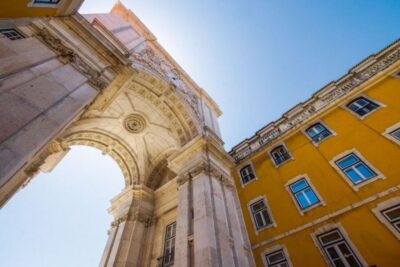
Expect a guided pass by major squares and classic landmarks in this zone, including the Rossio area (with its famous cafés and the iconic wave-pattern walkway), Praça da Figueira, and Praça do Comércio right by the Tagus River. This is a great first segment because it gives you a map in your head: you start understanding how Lisbon’s older and newer sections connect.
If you’re the type who likes to know what you’re looking at, this is the moment to lean in. Baixa’s “rebuild story” also sets you up for the rest of the tour, where earthquakes and restoration keep showing up.
Lisbon Cathedral: Romanesque strength and centuries of repairs
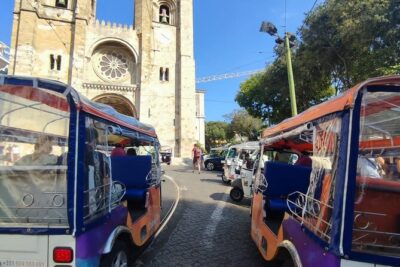
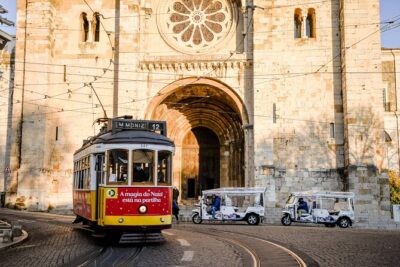
Next up is Lisbon Cathedral (Santa Maria Maior), the oldest cathedral in the city. Its imposing Romanesque front with two fortified towers makes it hard to miss, even when you’re moving through the area quickly.
Inside, the focus is on layers—styles that changed over time. You’ll also hear about restorations after major earthquakes, including the 1755 quake, which makes this place feel less like a museum and more like a survivor. The cathedral’s cloister and central areas are key highlights, and archaeological finds from earlier periods (including Roman and Visigothic remains) add another layer of time depth.
Practical note: this is one of the stops where you might want to decide how deeply you go inside. The tour is structured for seeing and understanding fast, but entrance details and any optional inside time can affect your total pacing.
Portas do Sol and Alfama: viewpoint photos plus real neighborhood texture
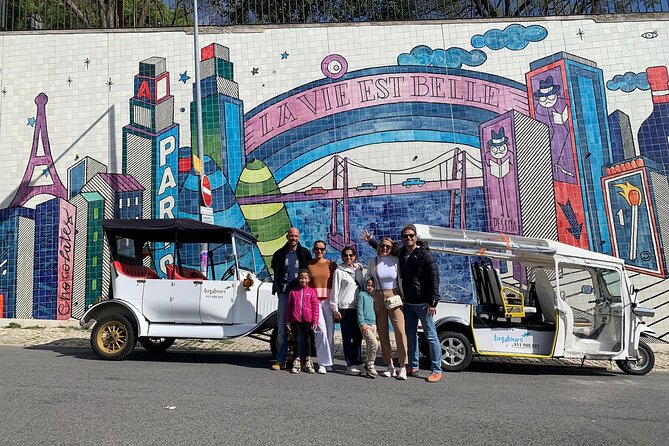
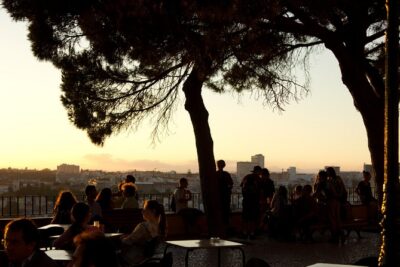
Then you’ll hit Miradouro das Portas do Sol, one of Lisbon’s most photographed overlooks. The views take in the red roofs of Alfama, the Tagus River, and landmarks like the National Pantheon and the Church of St. Vincent de Fora.
Portas do Sol is famous for a reason: the light over the rooftops can look especially good, and it’s easy to take a few minutes to orient yourself. The viewpoint sits near old city walls and ancient gates, so you’re not just watching the city—you’re seeing where history lines up with geography.
After that, Alfama comes into focus. This is Lisbon’s older maze: narrow streets, steep slopes, colorful tiles, and balconies. It’s also where you’ll sense the music tradition associated with the area—especially in and around the local tascas where you might hear fado.
Reality check: Alfama is steep. Even if you’re not walking much during the tour, you’ll feel the “height” in the neighborhood. That’s a big reason the tuk-tuk format works so well here.


Senhora do Monte: a wider view with a calmer vibe

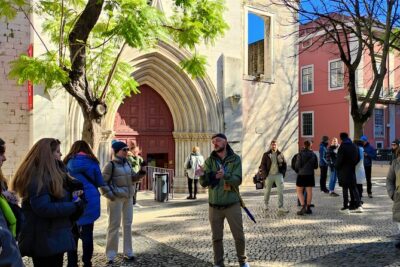
One of my favorite kinds of stops is the viewpoint that feels famous but not frantic. Miradouro da Senhora do Monte in the Graça area fits that bill.
From up here you can see from São Jorge Castle toward the Tagus, with views that stretch across the city toward the Bridge 25 de Abril. The viewpoint is beside the chapel dedicated to Our Lady of the Monte, which adds a spiritual and local significance to the scene.
If you like quieter photo moments, this is a smart middle stop. It gives you “wide Lisbon” without the stress of being packed into the most overrun corners.
And because time on tours is limited, you’ll appreciate the short, efficient stop style here—enough time to capture the view and take in the atmosphere without losing the rest of your day.
São Vicente de Fora: baroque grandeur and royal tombs

In Lisbon, great architecture often comes with a story of power, faith, and restoration. São Vicente de Fora is a prime example.
Built in the 17th century, the complex pairs an impressive façade with an interior known for Portuguese marbles and azulejo tiles from the 17th and 18th centuries. The monastery holds tombs connected to the Bragança dynasty, including kings and queens, which gives the site an almost “political” weight.
Two details worth your attention: the cloister with panels illustrating La Fontaine fables, and the terrace views over Alfama and the Tagus. Even if you don’t linger long, you can see why this place mattered enough to be restored and revisited through the centuries.
The National Pantheon and the dome view

In the heart of Alfama sits the National Pantheon (Igreja de Santa Engrácia), recognizable from its big white dome. The building began in the 17th century but wasn’t completed until the 20th, which explains why it carries that famous feeling of an ongoing project.
Inside, you’ll find memorials to prominent Portuguese figures, including names like Amália Rodrigues, Humberto Delgado, and Eusébio. There’s also the experience of going up for dome views—wide sights back toward the river and across Alfama rooftops.
This stop can be a great cultural break, especially because it’s different from the street-and-viewpoint rhythm. It turns the tour into more than photos; it gives you a sense of national identity built into the architecture.
Feira da Ladra: browse like a local on the market days
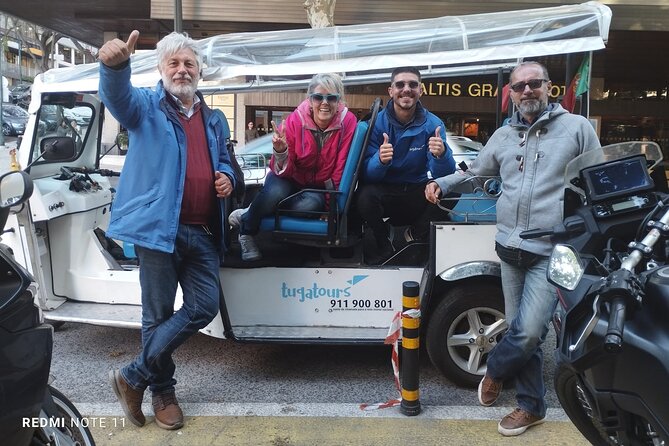
Then there’s Feira da Ladra, Lisbon’s classic flea market in Alfama. It runs on Tuesdays and Saturdays, and the setting near the National Pantheon makes it an easy place to combine browsing with a viewpoint schedule.
You’ll typically see a mix of antiques, books, vintage clothing, crafts, souvenirs, and all sorts of curious objects. The name is tied to old stories about theft—though today it’s more about trade, chatter, and browsing for interesting finds.
The key reason this works on a tuk-tuk day: you don’t have to commit to a full shopping afternoon. You get a taste, you can look for a small souvenir or two, and you still keep moving on schedule.
Tip: if your days line up with Tuesday or Saturday, this market stop can turn the tour from “highlights” into something more personal and Lisbon-specific.
Largo do Carmo ruins: earthquake memory in an outdoor museum
Moving toward Bairro Alto, you’ll reach Largo do Carmo, known for the ruins of the Church of Carmo, destroyed in the 1755 earthquake. The ruins now function as an outdoor archaeological museum, which means you’re looking at history in place—not just through a guide’s narration.
What I like about this stop is the contrast. You’re in a lively meeting area with cafés and nightlife energy nearby, but the ruins keep the tone grounded. It’s an easy way to remember that Lisbon’s story is shaped by disasters and rebuilds, not just by postcard views.
Also keep an eye on the connection here: the Santa Justa Elevator sits close by, linking Baixa and Bairro Alto. Even if you’re not taking the elevator on this tour, it helps you understand Lisbon’s vertical geography.
Church of São Roque: tiles, gold details, and art that rewards time
In Chiado you’ll see São Roque, one of Lisbon’s important churches. Founded by the Jesuits in the 16th century, the outside is fairly restrained, but the interior is where the big impression lands.
Expect decoration and sacred art, including a notable chapel dedicated to St. John the Baptist, described as having been brought piece by piece from Rome. The interior’s mix of Baroque and Manierist styles, plus the tiles and painted works, makes this stop feel more like a curated art visit than a quick exterior glance.
Because this is a church stop, you’ll want to decide how much time you give it. If you rush, you’ll still learn the big story. If you slow down, the details in the art and materials can be the best part of the whole afternoon.
São Pedro de Alcântara: a garden viewpoint with sunset energy
Back toward Bairro Alto, one of the most charming stops is Miradouro de São Pedro de Alcântara. It sits at the end of the famous climb near the Elevator da Glória and offers panoramic views spanning Castelo de São Jorge, the Sé, the Tagus, and the Baixa rooftops.
This miradouro isn’t just a blank lookout. It has a well-kept garden with fountains, banks, and tiled markers that help identify monuments from where you’re standing. That’s helpful because you don’t just point and hope—you can actually match what you see to what you’re learning.
If you visit near late afternoon, it can feel especially lively, with street musicians and kiosks where you can grab a refreshment while you watch the city shift.
Príncipe Real: a quieter square with gardens and local hangouts
Then comes Praça do Príncipe Real, a more relaxed pocket in an elegant neighborhood. The square has well-maintained gardens, old trees, and a tropical greenhouse with exotic plants.
It’s a good stop when you want a breather between viewpoints and big monuments. Nearby you’ll find cafés, restaurants, and small shops, and on weekends there’s mention of an organic and craft market.
This is also a handy place to sit for a few minutes and mentally regroup. After a day of slopes and moving, the calmer pause helps you enjoy the next segment more.
Parque Eduardo VII and Marquês de Pombal: the modern Lisbon line
From the old quarters, the tour shifts toward larger urban viewpoints and public space.
Parque Eduardo VII is Lisbon’s largest central park, and it gives you a green break with sweeping city and river views. The park was inaugurated in 1903 and offers walking paths and tropical plants in greenhouses. At the bottom, you’ll find the imposing statue of the Marquis de Pombal, tied directly to the post-1755 reconstruction story.
Next you’ll pass Praça Marquês de Pombal, a major roundabout and a key junction between older neighborhoods and more modern areas. The statue there is hard to miss, and it acts like a starting reference point for the grand boulevard nearby.
This segment is valuable because it helps you understand Lisbon’s identity beyond the hills. You see how the city rebuilt not just buildings, but transportation and urban life.
Avenida da Liberdade and Restauradores: Lisbon’s polished center
Avenida da Liberdade is Lisbon’s grand, elegant avenue: wide alleys lined with trees and gardens. It’s where Lisbon feels formal and cosmopolitan—an easy change of pace from medieval streets.
At the end you’ll finish at Praça dos Restauradores, anchored by an obelisk inaugurated in 1886. The square commemorates the restoration of Portuguese independence in 1640. It also acts as a practical link between Baixa and Bairro Alto, and it’s convenient for continuing your walk or using transit afterward.
As a tour finale, this works well because it leaves you in a “choose your own path” area. You’re not deposited in a random corner; you’re set up to explore calmly on your own.
Price, value, and what you get for $96.55
At $96.55 per person for a 3 to 4 hour private tour, you’re paying for three things: speed, access to viewpoint stops, and a guided narrative that ties the city together.
What’s included that helps justify the price:
- Pickup in city-centre hotels (when requested) or a clear meeting point if not
- A private tour in an electric vehicle that saves your legs
- Live commentary from an experienced local guide
- Liability and personal injury insurance
What’s not included:
- Tickets/entrance fees (the tour is careful about free stops, but not everything is automatically paid for)
So the value is best if you want orientation plus highlights in one afternoon, and you’re okay paying a bit extra only when you choose to enter a monument. If you’re traveling with mobility concerns, the tuk-tuk format can be even more “worth it” since it keeps you from spending hours grinding uphill.
Who should book this tour (and who might not)
This tour is a great fit if you want a high-yield first look at Lisbon: viewpoints, major landmarks, and neighborhood context without turning your day into constant walking.
It’s also smart if you dislike long transit transfers and prefer a plan where stops follow a logical route—from Baixa through Alfama and up toward Bairro Alto and the city center.
One note from the rules: children under 7 aren’t allowed, so if you’re traveling with younger kids, you’ll need to pick a different option.
Should you book the Halfday Tuk Tuk Tour?
Yes, if you want Lisbon highlights with less effort. The strongest reason to book is the balance: you get classic architecture and historic sites, but you also get the viewpoint stops that make the city click.
If you’re the type who likes to understand what you’re seeing—why Lisbon looks the way it does after the 1755 earthquake, how districts evolved, and where to place your photos—this tour does that without making you feel rushed every second.
Just plan for the fact that entrance tickets aren’t included, so decide ahead of time which inside visits you care about most.
FAQ
How much does the tour cost?
The tour costs $96.55 per person.
How long is the Halfday Tuk Tuk Tour?
It runs for about 3 to 4 hours.
Is the tour conducted in English?
Yes, the tour is offered in English.
Do you offer hotel pickup in Lisbon?
Yes. Pickup is offered for hotels in the city centre. If pickup isn’t requested, you’ll start at the garage meeting point.
Is this a private tour?
Yes. It’s a private tour/activity, meaning only your group participates.
Are admission tickets included?
No. Tickets are not included, although some stops are free (for example, certain viewpoints and miradouros).
Is there an age limit?
Yes. Children under 7 years old are not allowed.
Where does the tour start and end?
The tour meets at Rua de Arroios 120, 1150-260 Lisboa and ends at Praça dos Restauradores (1250-001 Lisboa).
Can I cancel for free?
Yes. You can cancel for a full refund up to 24 hours in advance of the start time.
More Tours in Lisbon
- Lisbon City Center Tour – The Unmissable Lisbon★ 5.0 · 22,234 reviews
- Lisbon: History, Stories and Lifestyle Walking Tour★ 4.8 · 10,902 reviews
- True 4Hour Private Tuk Tuk Tour: Discover Lisbon with a Local!★ 5.0 · 8,008 reviews
- Winner 2025 Undiscovered Lisbon Food & Wine Tour by Eating Europe★ 5.0 · 6,390 reviews
- Lisbon: Sintra, Pena, Cabo da Roca, Cascais Tour with Pickup★ 4.8 · 5,445 reviews
More Tour Reviews in Lisbon
- Lisbon City Center Tour – The Unmissable Lisbon★ 5.0 · 22,234 reviews
- Lisbon: Sintra, Pena, Regaleira, Cabo da Roca & Cascais★ 4.7 · 19,656 reviews
- Lisbon Card: 24, 48, or 72-Hour Pass★ 4.5 · 17,944 reviews
- Lisbon: Jerónimos Monastery Entrance Ticket★ 4.1 · 14,164 reviews
- Lisbon: History, Stories and Lifestyle Walking Tour★ 4.8 · 10,902 reviews
More Hills by Tuk-Tuk
- True 4Hour Private Tuk Tuk Tour: Discover Lisbon with a Local!★ 5.0 · 8,008 reviews
- Lisbon: Private Guided Tuk-Tuk Tour with Hotel Pickup★ 4.9 · 4,552 reviews
- Private Lisbon Sightseeing Tuk-Tuk Tour: Alfama, Belém & More★ 5.0 · 4,277 reviews
- Lisbon Highlights: Private Tuk Tuk Tour Adventure Sightseeing★ 5.0 · 3,284 reviews
- Welcome Lisbon Tour with Local Guide in Private Eco Tuk Tuk★ 5.0 · 1,691 reviews
Just in: fresh Lisbon reviews from the team





Lisbon Tuk-Tuk Tours, compared.
 ★ 5.0True 4Hour Private Tuk Tuk Tour: Discover Lisbon with a Local!From $1088,008 reviews
 ★ 4.9Private Guided Tuk-Tuk Tour with Hotel PickupFrom $1534,552 reviews
 ★ 5.0Private Lisbon Sightseeing Tuk-Tuk Tour: Alfama, Belém & MoreFrom $524,277 reviews
 ★ 5.0Lisbon Highlights: Private Tuk Tuk Tour Adventure SightseeingFrom $843,284 reviews
 ★ 5.0Welcome Lisbon Tour with Local Guide in Private Eco Tuk TukFrom $171,691 reviews
 ★ 4.9Private City Tour by Eco Tuk TukFrom $281,215 reviews
 ★ 5.0Old Town TukTuk Tour and Scenic Viewpoints in AlfamaFrom $35974 reviews
 ★ 5.0Explore Lisbon by Tuk Tuk: History and ViewpointsFrom $19840 reviews