

Reviewed · FÁTIMA, NAZARÉ & ÓBIDOS DAY TRIPS
Fátima Private Tour And Batalha Nazaré & Óbidos
A day trip to Fátima and the Atlantic is a strange mix.
Yet that contrast is exactly what makes this tour fun: you’ll move from major Catholic shrines in Fátima to ocean cliffs and a working fishing town in Nazaré.
Two things I like: the logistics are handled for you with hotel pickup in an air-conditioned minivan, plus bottled water and WiFi on board. And the guides (I saw strong mentions of Luis and Filipe Silva) seem to bring real care to the day, including smart pacing so you’re close to the action when the route gets tight.
One thing to plan for: it’s a long day (about 8 to 9 hours) with several short stops. If you hate lots of walking or prefer to linger in one place, this may feel rushed.
In This Review
- Key highlights worth your attention
- Why this Fátima–Batalha–Nazaré–Óbidos route works in one day
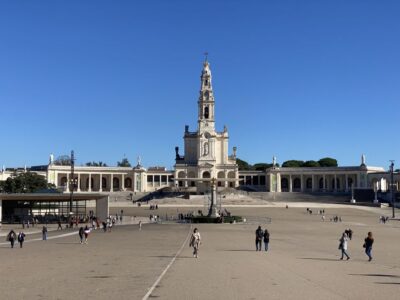
- Fátima Sanctuary: the Trinity Basilica, Apparitions Chapel, and the Rosary Basilica
- Basilica da Santíssima Trindade (Holy Trinity)
- Capela das Aparições (Chapel of the Apparitions)
- Basilica de Nossa Senhora do Rosário de Fátima (Basilica of the Rosary)
- Valinhos and Aljustrel: the Via-Sacra route and the houses of the Marto children
- Batalha Monastery: Portuguese nation-building after Aljubarrota
- Nazaré Farol and the Sítio viewpoint: ocean drama with a fishing-town heartbeat
- Farol da Nazaré and the Sítio da Nazaré views
- Nazaré town details: carapaus, craft, and the Our Lady legend
- Óbidos inside the walls: medieval lanes shaped by Queen Isabel
- Price and logistics: is $290.89 per person good value?
- Should you book this Lisbon private tour?
- FAQ
- How long is the tour from Lisbon?
- What time does the tour start?
- Is this tour private?
- What’s included in the price?
- Are attraction tickets included?
- Do I need a passport?
- What should I wear?
- Can I cancel for free?
Key highlights worth your attention
- Modern round design at Fátima, planned long before it opened, with huge open space inside
- Capela das Aparições in the heart of the sanctuary, built by locals in 1919 with the holm-oak story woven in
- Valinhos and Aljustrel area, with the Via-Sacra route and visit to the houses of Lucy and Francis and Jacinta Marto
- Batalha Monastery near the 1385 Battle of Aljubarrota, tied to the Portuguese nation’s consolidation
- Nazaré Sítio viewpoints, including the wide coastal panorama from Farol da Nazaré
- Óbidos inside the walls, a medieval town shaped by Queen Isabel and the Casa das Rainhas
Why this Fátima–Batalha–Nazaré–Óbidos route works in one day
This tour is built like a highlight reel, but it doesn’t feel like a drive-by if you’re the type who likes variety. In one day you get three different moods: pilgrimage awe in Fátima, big Portuguese history at Batalha, and then ocean drama plus medieval charm in Nazaré and Óbidos.
The best part for practical travelers is that it’s structured around time blocks that make sense for day trips. Many Fátima stops are around 30 minutes, which keeps the day moving without turning every stop into a photo sprint. Then you get longer chunks where you’ll likely want them more: Farol da Nazaré and Óbidos are about an hour each, which is about right for viewpoints, wandering, and grabbing a snack if you didn’t pack one.
This is also the kind of itinerary that benefits from a private setup. Since it’s private, only your group rides with the guide, and that matters on roads like these where timing can change fast. I like that it’s explicitly set as a private tour with hotel pickup and drop-off, because that removes the friction that often ruins “one big day” plans.
One more value point: the tour includes bottled water and WiFi on board. That’s small, but it helps on a day where you’re in and out of vehicles multiple times and you’ll likely be checking maps, reading notes, or coordinating with whoever you’re traveling with.
The western circuit, a few more ways to ride it
- Three Cities in One Day: Porto, Nazare and Obidos from Lisbon
★ 4.5 · 3,572 reviews - Fátima, Nazaré and Óbidos Small-Group Day Trip from Lisbon
★ 4.5 · 3,444 reviews - From Lisbon: Fátima, Nazaré, Batalha, and Óbidos Guided Tour
★ 4.7 · 3,060 reviews - From Lisbon: Fatima Batalha Nazaré & Óbidos Small-Group Tour
★ 4.7 · 2,563 reviews
Fátima Sanctuary: the Trinity Basilica, Apparitions Chapel, and the Rosary Basilica
Fátima is not just one site. It’s a whole spiritual complex, and this tour uses it well by giving you more than one kind of space. You’re not only seeing religious monuments. You’re seeing how the sanctuary’s architecture and layout handle massive crowds—then stepping into smaller, more intimate places where the stories feel closer.
Basilica da Santíssima Trindade (Holy Trinity)
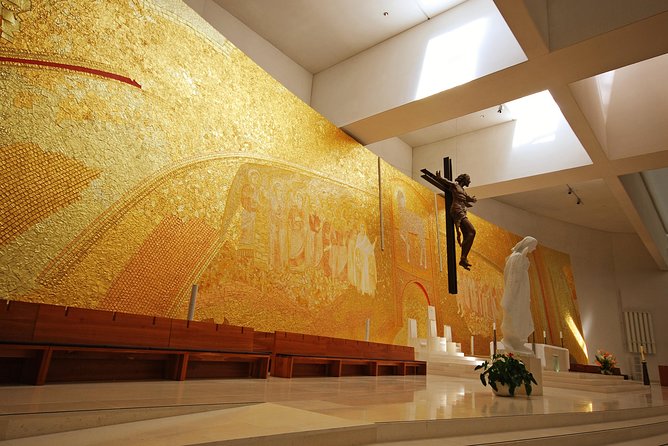
The first stop is the Basílica da Santíssima Trindade, a church within the Sanctuary of Fátima, on the opposite side of the older Basilica. The building opened in 2007, but the idea goes back to 1973, when it became clear the older basilica wasn’t big enough for services on average pilgrimage days.
I like this stop because it explains itself through design. It’s modern, round, and white, built with local stone described as the white of the sea. The standout detail is the scale: the church is 125 meters in diameter and has no intermediate support. That kind of construction detail isn’t trivia—it changes how the space feels. When a building is that open, you notice the geometry and the sense of gathering, even if you’re not there for the architecture.
You should plan on a short visit—about 30 minutes—so if you want photos, decide what you’re aiming for (exterior curves, interior space, or both) before you go in.
Capela das Aparições (Chapel of the Apparitions)
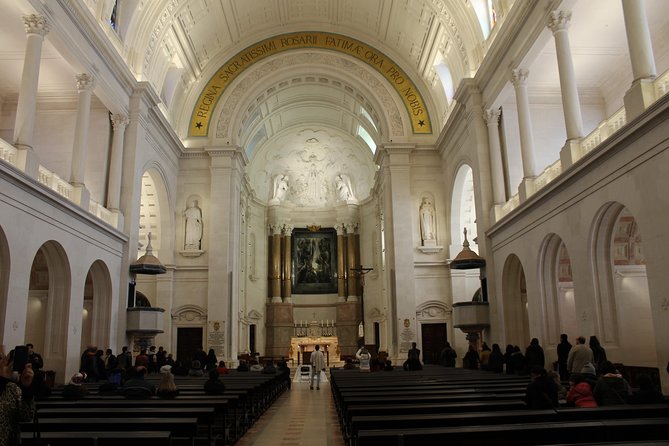
Next is the Capela das Aparições, built by local people in 1919 in response to the request made by Our Lady during one of the apparitions. The first mass was held there in 1921. What I appreciate is that it isn’t presented as a polished museum piece. It keeps a rough, hermitage-like feel, the kind of design that helps you understand how ordinary people supported something profound.
The story detail you’ll hear about the holm-oak tree matters here. The image of Our Lady marks the spot of the holm-oak tree, but the tree itself disappeared over time because believers took pieces away. That’s the kind of human detail that turns a religious legend into lived memory.
This is another free-entry stop for your day. You’ll likely want to slow your pace slightly here, since the chapel’s scale and atmosphere reward it.
Worth a look before you lock anything else in around Lisbon:

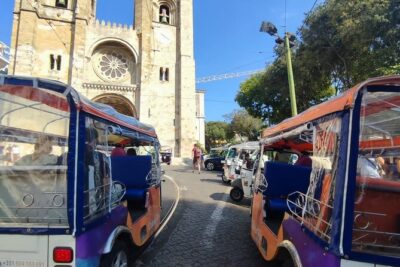
Basilica de Nossa Senhora do Rosário de Fátima (Basilica of the Rosary)
The final core shrine stop in Fátima is the Basilica of Our Lady of the Rosary, also called the Basilica of the Rosary. It’s part of the sanctuary at Cova da Iria in the municipality of Ourém.
Even without going into every architectural detail, it’s worth using the time well. The reason this stop matters is simple: your day shifts from the more story-centered scale of the Chapel of the Apparitions to a major basilica space that represents how pilgrimage became a huge, organized phenomenon. You get that “small story to large institution” sense in one move.
Expect another short visit, about 30 minutes, so keep your priorities in mind—big basilica shots vs. quiet corner moments.
Valinhos and Aljustrel: the Via-Sacra route and the houses of the Marto children
After the major basilicas, the tour heads into the Valinhos Sanctuary area. This is where the day becomes more walk-and-story than monument-and-view.
Valinhos is described as visited by thousands of Portuguese and foreign pilgrims who take the route of the Via-Sacra to the Hungarian Calvary. Along the way, you visit the Chapel of St. Stephen of Hungary, then you move on toward the village of Aljustrel where you can see the House of Lucy and the House of Francis and Jacinta Marto.
I like this portion because it connects the religious narrative to geography. When you’re walking a route like the Via-Sacra, you’re not just looking at faith. You’re experiencing a kind of spiritual choreography: a sequence, a progression, and a repeated pattern people come back to.
You should also pay attention to the artistic layer here. The sculptures of the Angel of Portugal and the various Via-Sacra stations are credited to Maria Amélia Carvalheira da Silva. That means the route isn’t only “where people walk.” It’s also where artistic storytelling shows up.
This stop is also free, and it’s built for short, respectful visits. It’s a good fit if you want the pilgrimage context to deepen without turning the day into a multi-hour hike.
Batalha Monastery: Portuguese nation-building after Aljubarrota
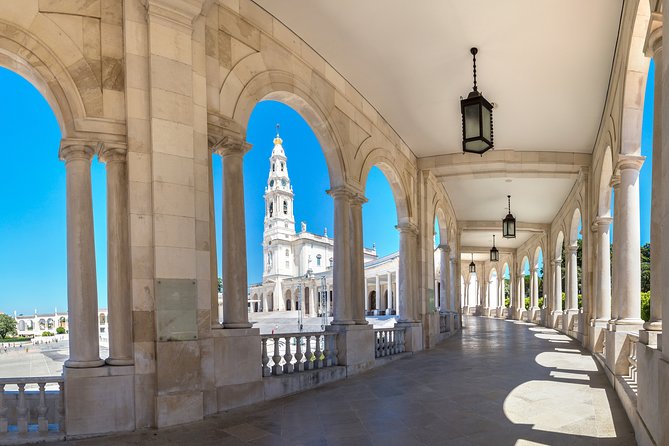
Then the day pivots from Fátima’s devotional focus to something more political and historical: the Monastery of Santa Maria da Vitória in Batalha, often called the Monastery of Batalha.
This site is tied to a decisive event on August 14, 1385 near the monastery: D. João, Master of Avis and the future King of Portugal, overcame the Castilian armies in the Battle of Aljubarrota. That victory ended a dynastic crisis that started after the death of King Ferdinand, whose only daughter was married to the King of Castile—creating a serious claim to the Portuguese throne.
I think that historical context makes the monastery more meaningful, because you’re not just looking at stonework. You’re seeing a monument tied to a turning point in how Portugal shaped itself.
A practical note: the monastery visit is about 30 minutes on this tour, and admission is not included. So if you really care about the architecture details, go in with a plan for what you’ll focus on first—façade views, interior spaces, and any highlights your guide points out.
If you’re someone who likes connecting places to dates and decisions, this stop is a great counterbalance to the religious sites. The tone changes, but the theme of devotion-by-people remains—just expressed through nation-building rather than sanctuary faith.
Nazaré Farol and the Sítio viewpoint: ocean drama with a fishing-town heartbeat
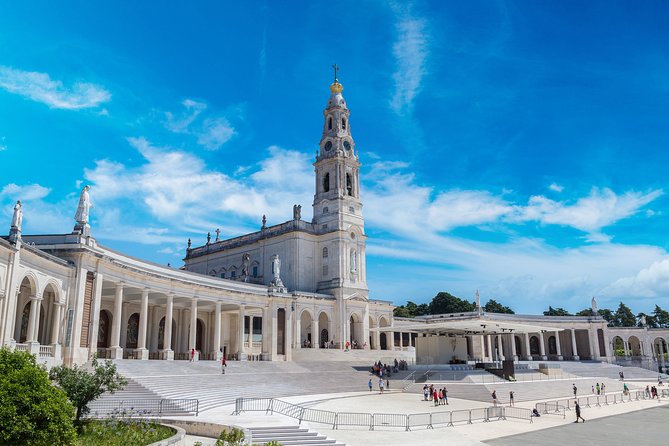
After Batalha, you go to Nazaré, and the shift is immediate. Fátima and Batalha feel interior and inland. Nazaré feels like air, wind, and scale.
Farol da Nazaré and the Sítio da Nazaré views
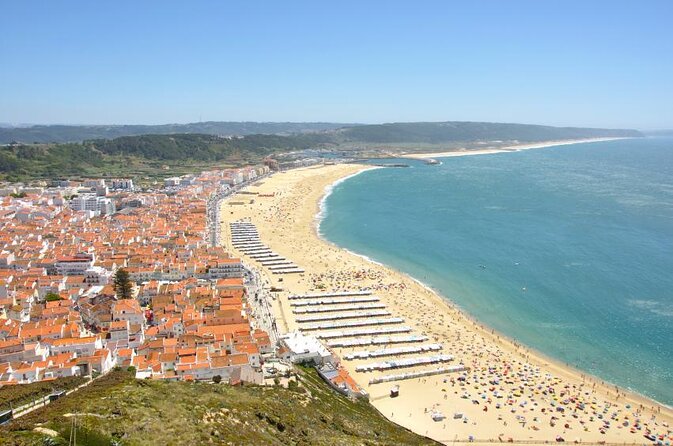
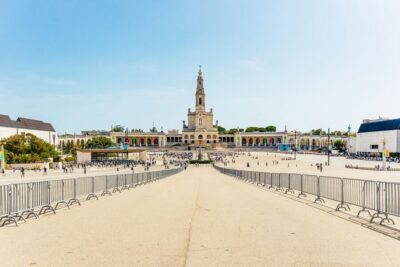
The highlight here is Farol da Nazaré at Sítio da Nazaré, where you get one of the most impressive and wide views of the Portuguese coast. From the Largo de Nossa Senhora da Nazaré balcony, you can see the Serra de Mira de Aire and Serra dos Candeeiros, plus the coastline from Nazaré toward Peniche.
This is a 1-hour stop, and that timing is smart. Viewpoints like this are the kind of place where 10 minutes becomes 30 without you realizing it, because the horizon keeps offering new angles. If you’re sensitive to crowds or motion, bring a moment-by-moment mindset. Look from one side, then reposition, then take a longer look.
Ticket for this stop is not included, so factor that into your budget.
Nazaré town details: carapaus, craft, and the Our Lady legend
The tour also includes time in Nazaré for artesanato e design de Autor, about 1 hour. This matters because Nazaré today isn’t only “the view.” It’s a working fishing town that still shows fish-sellers and fish drying in the streets—especially carapaus (horse mackerel).
The Sítio district at the highest point is closely tied to the cult of Our Lady of Nazaré. There’s a 12th-century legend about Dom Fuas Roupinho, who was hunting a deer and came close to falling into an abyss with no salvation. He invoked Our Lady, and the story became part of the area’s identity.
The Sítio district is accessible by funicular, so you won’t necessarily be dealing with a steep climb every time. Still, this part of the day is more active than it looks. Plan for steps and uneven ground around viewpoints and town lanes.
This stop is one of the best parts of the itinerary if you want both atmosphere and context: you get the ocean view, then the human scale of a place that still runs on fishing and local craft.
Óbidos inside the walls: medieval lanes shaped by Queen Isabel
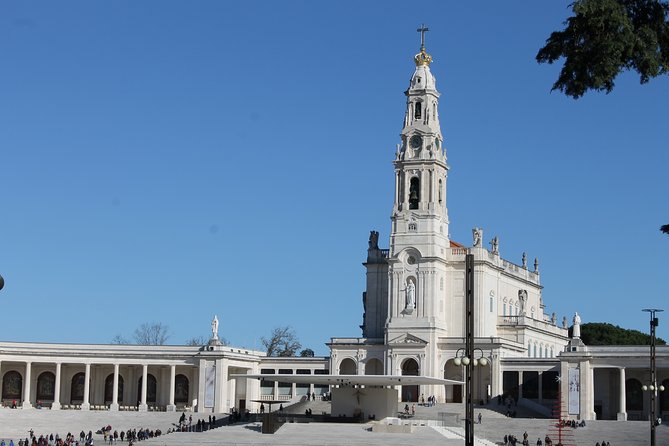
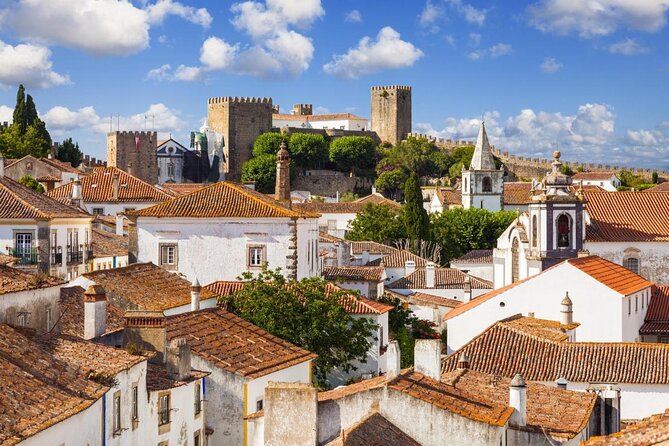
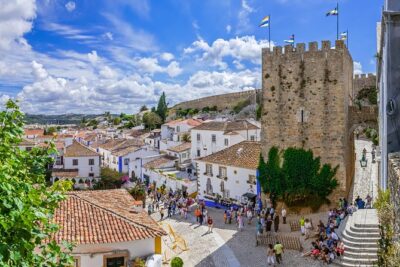
Óbidos is the closing act, and it’s a strong one for a day trip because the town is compact and walkable. The mediaeval town of Óbidos is described as one of Portugal’s most picturesque and well preserved places, and it’s positioned close to Lisbon with strategic importance near the Atlantic coast.
What helps your visit is knowing why it became so “church-heavy.” Before the Romans, the town was settled. Later, after becoming part of the royal holdings, it prospered. King Dinis gave Óbidos to his wife, Queen Isabel, in the 13th century. It was later part of the Casa das Rainhas, the Queens’ Estate, which enriched and improved it through successive dynasties. That royal connection is one reason you see a higher concentration of churches in a relatively small area.
You’ll have about 1 hour. In that time, you can do a simple loop: walk inside the walls, pause at viewpoints over the streets, and pick one or two churches to explore if you’re inclined. Admission for Óbidos is not included, so don’t be surprised if you hit ticketed areas depending on what you choose to enter.
I also like that Óbidos provides a softer ending to a day that’s already packed with powerful religious sites. Instead of another sanctuary stop, you get a place where stone lanes let you exhale.
Price and logistics: is $290.89 per person good value?
At $290.89 per person, this tour sits in the “not cheap, but organized” category. The value question is simple: will you spend time fighting transport and coordinating stops on your own? If you’d rather avoid the headache, the included pieces matter.
Here’s what you do get:
- Hotel pickup and drop-off (big deal for day trips starting in Lisbon)
- Air-conditioned minivan for the long road segments
- Private tour for your group
- Bottled water and WiFi on board
- Several free-entry shrine stops (Fátima sites and Valinhos area)
What you should watch for:
- Food and drinks are not included. Plan to budget for at least one meal or a decent snack stop.
- Tickets are not included for a few key paid stops: Batalha Monastery, Farol da Nazaré, and Óbidos areas (depending on what you enter).
So is it worth it? I’d say yes if you want a single-day “Portugal highlights” arc without doing the planning math yourself. And because it’s private, it’s easier to adjust to your group’s pace when the day feels heavy.
Also, it’s useful that it’s geared toward most travelers, with a dress code of smart casual and a reminder that comfortable walking shoes help.
If you like having a guide handle timing so you can focus on the sights, you’ll probably feel good about the price by the end of the day.
Should you book this Lisbon private tour?
Book it if you want one focused day that mixes Fátima’s sacred spaces, Portuguese history at Batalha, and Atlantic viewpoint time at Nazaré, then ends with an easy-walk medieval finish in Óbidos.
Skip it or choose something else if you’re the kind of traveler who hates short stops. With several sites at about 30 minutes each, this is built for people who can enjoy brief visits and move on.
My practical tip: bring your sense of curiosity, not just your itinerary checklist. The tour works best when you treat each stop like a different chapter—architecture at Trinity, story at the Chapel of the Apparitions, devotion at the Rosary Basilica, then nation-building at Batalha, ocean drama at the Farol, and finally a slow wander through Óbidos lanes.
FAQ
How long is the tour from Lisbon?
It runs about 8 to 9 hours total.
What time does the tour start?
The start time is 9:00 am.
Is this tour private?
Yes. It’s a private tour, and only your group participates.
What’s included in the price?
Included items are bottled water, transport by air-conditioned minivan, hotel pickup and drop-off, private tour, and WiFi on board.
Are attraction tickets included?
No. The tour lists tickets as not included, and some stops are marked as admission not included.
Do I need a passport?
Yes. A current valid passport is required on the day of travel.
What should I wear?
The dress code is smart casual, and comfortable walking shoes are recommended.
Can I cancel for free?
Yes, you can cancel for a full refund if you cancel at least 24 hours before the experience’s start time.
More Tours in Lisbon
- Lisbon City Center Tour – The Unmissable Lisbon★ 5.0 · 22,234 reviews
- Lisbon: History, Stories and Lifestyle Walking Tour★ 4.8 · 10,902 reviews
- True 4Hour Private Tuk Tuk Tour: Discover Lisbon with a Local!★ 5.0 · 8,008 reviews
- Winner 2025 Undiscovered Lisbon Food & Wine Tour by Eating Europe★ 5.0 · 6,390 reviews
- Lisbon: Sintra, Pena, Cabo da Roca, Cascais Tour with Pickup★ 4.8 · 5,445 reviews
More Tour Reviews in Lisbon
- Lisbon City Center Tour – The Unmissable Lisbon★ 5.0 · 22,234 reviews
- Lisbon: Sintra, Pena, Regaleira, Cabo da Roca & Cascais★ 4.7 · 19,656 reviews
- Lisbon Card: 24, 48, or 72-Hour Pass★ 4.5 · 17,944 reviews
- Lisbon: Jerónimos Monastery Entrance Ticket★ 4.1 · 14,164 reviews
- Lisbon: History, Stories and Lifestyle Walking Tour★ 4.8 · 10,902 reviews
The Western Circuit: Fátima, Nazaré, Óbidos
- Three Cities in One Day: Porto, Nazare and Obidos from Lisbon★ 4.5 · 3,572 reviews
- Fátima, Nazaré and Óbidos Small-Group Day Trip from Lisbon★ 4.5 · 3,444 reviews
- From Lisbon: Fátima, Nazaré, Batalha, and Óbidos Guided Tour★ 4.7 · 3,060 reviews
- From Lisbon: Fatima Batalha Nazaré & Óbidos Small-Group Tour★ 4.7 · 2,563 reviews
- Lisbon: Fátima, Batalha, Nazaré & Obidos Small-Group Tour★ 4.9 · 1,463 reviews
Just in: fresh Lisbon reviews from the team




Fátima, Nazaré & Óbidos Day Trips, compared.
 ★ 4.5Three Cities in One Day: Porto, Nazare and Obidos from LisbonFrom $1333,572 reviews
 ★ 4.5Fátima, Nazaré and Óbidos Small-Group Day Trip from LisbonFrom $773,444 reviews
 ★ 4.7From Lisbon: Fátima, Nazaré, Batalha, and Óbidos Guided TourFrom $473,060 reviews
 ★ 4.7From Lisbon: Fatima Batalha Nazaré & Óbidos Small-Group TourFrom $792,563 reviews
 ★ 4.9Fátima, Batalha, Nazaré & Obidos Small-Group TourFrom $481,463 reviews
 ★ 4.5From Lisbon: Day Trip to Porto, Óbidos, and NazaréFrom $971,311 reviews
 ★ 5.0Fatima, Nazare, Obidos 8-People Small Group, Day-Tour from LisbonFrom $71995 reviews
★ 5.0From Lisbon: Fátima, Nazaré, Batalha and Óbidos Guided TourFrom $55922 reviews
Browse the lists this tour appears in