

Reviewed · FÁTIMA, NAZARÉ & ÓBIDOS DAY TRIPS
Fátima and Tomar – Heritage, History & Religion
Fatima plus Tomar is a faith-meets-history day. This route pairs the world-famous Sanctuary of Fatima with the Convent of Christ in Tomar, a UNESCO site tied to the Knights Templar and later the Order of Christ. I like that the day is paced so you can see the key places without feeling dragged from one photo spot to the next.
I really like the way the tour handles context. You get stops that explain why the region matters, from the Fatima apparitions to Tomar’s Templar roots, and you’re in a comfortable air-conditioned vehicle with bottled water while you transfer between sites. A big plus: guides can be very hands-on with clear explanations, like the praised guidance from Ricardo, who made people feel genuinely looked after.
One thing to consider: not all major sites include entry tickets. Convento de Cristo has tickets that aren’t included, so you’ll want to plan for that cost before you go.
In This Review
- Key highlights you can plan around
- Why Fatima and Tomar belong in one day
- Church of Nossa Senhora do Rosário de Fátima: the pilgrimage heartbeat
- Aljustrel’s Os Três Pastorinhos: the story moves from altar to everyday life
- Tomar in transit: Templars show up before the big sights
- Convento de Cristo: the UNESCO centerpiece (and why tickets matter)
- Mata Nacional dos Sete Montes: a quieter break with the Charolinha
- Getting around from Lisbon: private pickup, comfort, and a real pace
- Price and value: what $286.91 buys you
- Who this tour fits best (and who might want to adjust)
- A few practical tips so the day feels smooth
- Should you book this Fatima and Tomar day trip?
- FAQ
- How long is the Fatima and Tomar heritage day trip?
- How much does it cost per person?
- Is pickup available in Lisbon?
- Is this a private tour?
- Do I need to buy tickets during the tour?
- Are meals included?
- Is there a mobile ticket?
- Is Wi-Fi and bottled water included?
- What hours is the experience available?
- What is the cancellation policy?
Key highlights you can plan around
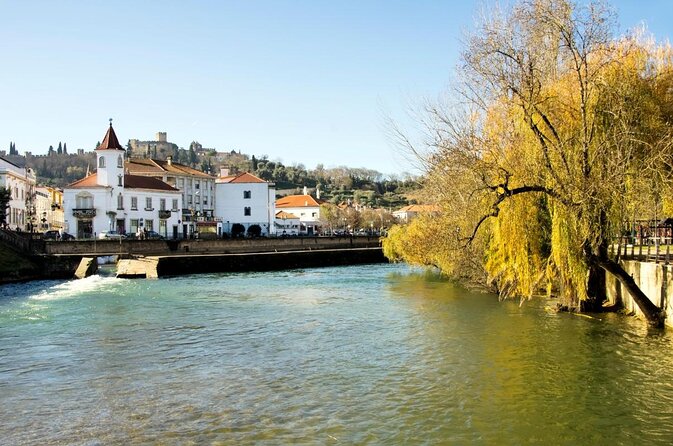
- Private group experience where only your group participates, with pickup offered
- Fatima candle time tip: go with enough time if you want to light a promised candle
- Aljustrel cottages for a simple look at the shepherd children’s early life nearby the sanctuary
- Tomar’s Templar legacy that connects the city to the Knights of Christ
- UNESCO Convent of Christ as the day’s major architectural payoff, with ticket not included
- Forest of Seven Hills and the small stone church called the Charolinha
Why Fatima and Tomar belong in one day
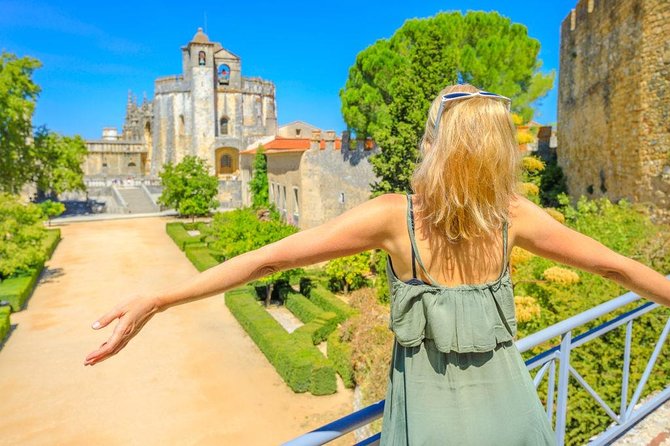
A lot of Portugal tours split religion and art into different trips. This one doesn’t. It links them. You start in Fatima, where millions of people come for the story of the apparitions and the sanctuary built on that sacred ground. Then you head to Tomar, where the spiritual thread shifts into medieval orders, castle walls, and a Renaissance complex that grew over centuries.
The best part is how different the two places feel while still making sense together. Fatima is about pilgrimage space—wide, meaningful, and full of lived tradition. Tomar is about stone and design—layers of history you can actually read in the buildings, especially at the Convent complex. Put together, it’s a day that explains religion as both belief and culture.
Because the tour lasts about 8 hours, you’re not trying to “speed-run” either place. You get guided context and then time to absorb what you see on your own. That mix is ideal if you like structure but still want to linger where your eye goes.
The western circuit, a few more ways to ride it
- Three Cities in One Day: Porto, Nazare and Obidos from Lisbon
★ 4.5 · 3,572 reviews - Fátima, Nazaré and Óbidos Small-Group Day Trip from Lisbon
★ 4.5 · 3,444 reviews - From Lisbon: Fátima, Nazaré, Batalha, and Óbidos Guided Tour
★ 4.7 · 3,060 reviews - From Lisbon: Fatima Batalha Nazaré & Óbidos Small-Group Tour
★ 4.7 · 2,563 reviews
Church of Nossa Senhora do Rosário de Fátima: the pilgrimage heartbeat
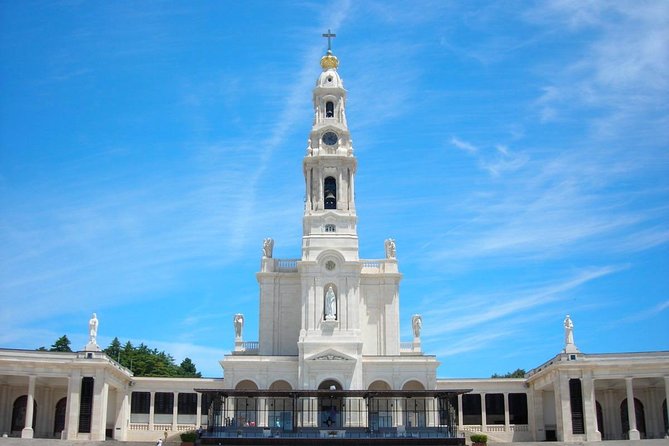
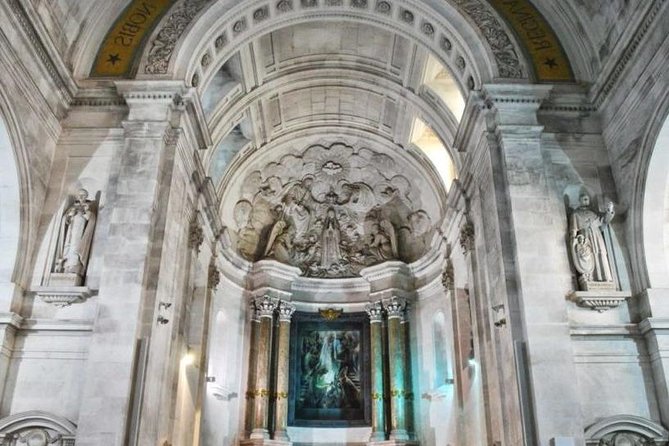
The day begins at the Church of Nossa Senhora do Rosário de Fátima, inside the wider Sanctuary of Fatima area. This is the kind of place where the setting matters as much as the building. The sanctuary annually welcomes huge numbers of pilgrims and visitors, especially around the dates tied to the apparitions—May 13 and October 13.
Even if you’re not traveling on those specific days, the tour’s framing helps you understand why those dates “turn up the volume.” On the Fatima calendar, those times bring both more visitors and a stronger focus on the story—especially the connection to the three witnesses and the places tied to their lives in Aljustrel.
You also get a practical tip through local-style timing advice. If you want to light a promised candle, don’t treat it like a last-minute task. One of the strongest pieces of guidance you’ll hear about this trip is to plan for enough time so it doesn’t feel rushed. That simple mindset change can make a big difference in a place like this, where rituals have their own pace.
What to expect: a calm start, a clear introduction, and the feeling that you’re standing in a living site, not a museum set. The stop is listed with an admission ticket marked free, which helps keep the day’s budget predictable.
Aljustrel’s Os Três Pastorinhos: the story moves from altar to everyday life
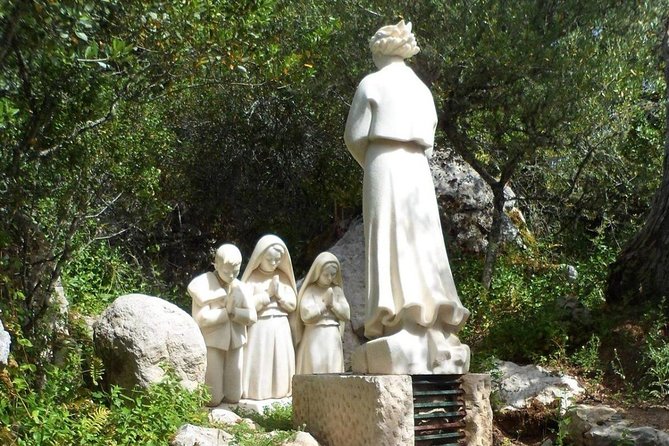
After Fatima’s sanctuary space, the tour shifts to a smaller, more human scale at Os Três Pastorinhos. These are the cottages associated with the shepherd children—Lucia and her cousins, Francisco and Jacinta. The area is around 2 kilometers from the sanctuary, so it’s close enough to feel linked, but far enough to slow the day down.
Here’s what makes this stop special: the homes are described as single-storey and simple, like you’d expect from early 20th-century rural life in the mountains. The tour highlights that the houses are similar in architecture and simplicity, and it even places the exact relationship between them—Jacinta and Francisco’s house sits about 200 meters from Lucia’s house.
There’s also a House-Museum of Aljustrel alongside Lucia’s home. Even though you’re not spending the whole day inside, the idea is clear: you’re meant to see everyday objects—agricultural tools, cooking items, clothing, and furniture—to understand what life looked like before the story became worldwide.
The admission for this stop is also marked free. That means you can spend more of your attention on what you’re seeing, not on ticket math.
The drawback to keep in mind: this is more “small and grounded” than “grand and dramatic.” If you want only monumental architecture, you might prefer Tomar—but if you like how context changes your understanding, this one tends to pay off.
Tomar in transit: Templars show up before the big sights
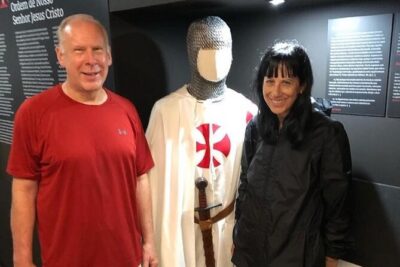
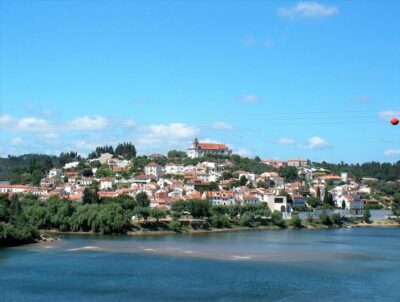
Tomar is where the tour’s theme changes from pilgrimage to medieval orders. The drive into town matters because Tomar’s identity is connected to the Order of the Templars. The region received those lands in 1159, tied to support given to Dom Afonso Henriques, the first King of Portugal.
The tour keeps this connection on your mind as you arrive. Tomar isn’t just a pretty stop—it’s a place with a historical “why,” and the connection starts early. It’s often the kind of detail that makes architecture feel less random. When you know an order is behind the construction, the shapes and walls start to read like decisions, not decoration.
The Tomar stop is listed with a free admission ticket, and it’s allotted around 2 hours. That’s enough time to take a first pass at the city’s feel and to get your bearings before the larger Convent complex.
What I like about this structure: you don’t just get dropped at the main site. You get the storyline first, then the main monument.
Following the Templars: more Tomar day trips

Convento de Cristo: the UNESCO centerpiece (and why tickets matter)
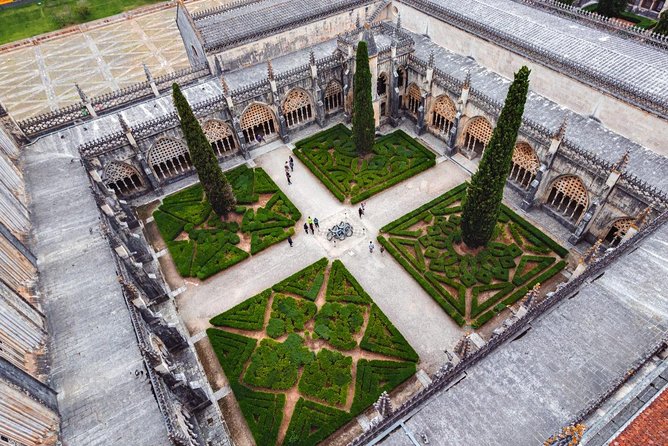
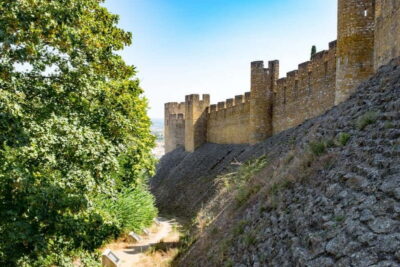
The day’s biggest architectural payoff is the Convento de Cristo. UNESCO classified the Templar castle and the Convent of the Knights of Christ in 1983, and that recognition matches the scale of what you’re looking at.
This complex is described as unique in the western world’s history, and it sits on a site that previously had Roman worship. In other words, you’re seeing layers: Roman presence, medieval power, and later changes as the complex expanded and adapted.
The tour’s explanation also ties the Convent to the Portuguese monarchy and the Knights Templar/Knights of Christ connection. It notes that Afonso Henriques granted lands to the Knights of Temple of Jerusalem between the Mondego and Tagus rivers. Even the legend included in the description matters here—it’s part of how the site’s story was carried forward.
The stop is around 1 hour, with admission noted as not included. That’s the main logistical consideration for this day: your calendar might look “free and simple” on paper until you hit this point.
How to think about value here: since the Convent of Christ is the big ticket item, the tour’s pricing makes more sense when you treat this as the core reason for the trip. If you’re excited about UNESCO monuments and you want the story behind the walls, this is where you’ll feel your money at work. If you only want a light, casual day, it may be the one part you’d skip on future trips.
Mata Nacional dos Sete Montes: a quieter break with the Charolinha
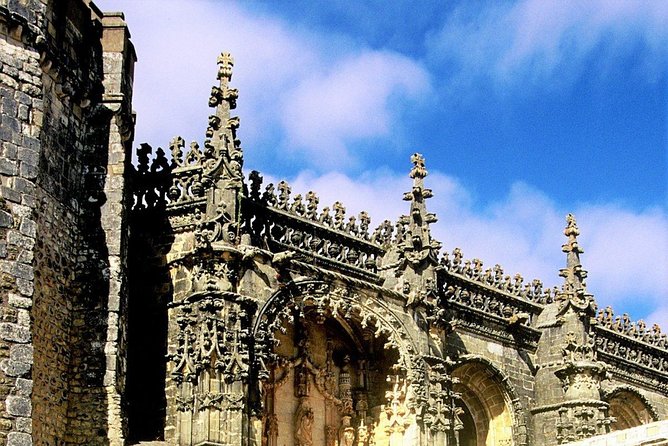
After the heaviness of the Convent complex, the tour adds air with the Mata Nacional dos Sete Montes, the Forest of Seven Hills. It’s a 39-hectare woodland in the middle of Tomar, described as the city’s main park and closely linked to the Convent.
This stop can feel like a reset. It’s also more connected than it first appears: the woods are known as the Convent Enclosure because the Order of Christ used the land for growing and harvesting crops.
You’ll see plant life described as including centuries-old cypress trees, Judas trees, oak trees, and olive trees. More importantly for the tour’s theme, the woodland includes a small carved stone church called the Charolinha—a miniature church shaped like a cylindrical tower. It’s described as appearing to be a replica of lantern towers from the Convent of Christ.
The stop is about 30 minutes and marked free. It’s short enough that it doesn’t drag, but long enough for you to swap the focus from “stone details” to “how the place functioned.”
If you like travel moments where you can breathe and still feel connected to the main theme, this is a smart addition.
Getting around from Lisbon: private pickup, comfort, and a real pace
This experience runs from Lisbon and includes private transportation in an air-conditioned vehicle, plus bottled water. Pickup is offered, and the tour provides free Wi-Fi as well as a mobile ticket.
That matters because a Fatima-and-Tomar day can easily turn into a “transfer-heavy blur.” Here, the design tries to keep the day usable: you’re comfortable during the road time, and you’re not left scrambling for information once you arrive.
The format is also described as private—only your group participates. In practice, that often means you’re not stuck listening through a crowded group dynamic. It’s also why guides like Ricardo and Clayton are called out: people value explanations and a steady flow of context while they travel.
One more timing note: the listing’s opening hours run from 8:00 AM to 7:00 PM (Monday through Sunday) in the given date range. That gives you flexibility, but it also hints that earlier starts can help you match your preferred rhythm—especially if you want time for candle lighting at Fatima.
Price and value: what $286.91 buys you

At $286.91 per person, this isn’t the cheapest way to see two big-name destinations from Lisbon. But it’s priced like a day where you’re paying for transportation, private grouping, and guided interpretation rather than just hopping between sites.
Here’s the value math that makes sense from the included items:
- Private transportation (not just a shared bus concept)
- Air-conditioned vehicle and bottled water
- Free Wi-Fi and mobile ticket
- Time staged across multiple key stops, including free-admission areas
What’s not included is also important:
- Tickets / meals / gratuities
- And specifically, Convento de Cristo tickets are marked as not included
So you’re really paying for the “guided day” plus the “getting there without stress” part. If you want to do Fatima and Tomar with meaningful context and less logistical work, the price can feel reasonable. If you’re comfortable building your own day and want only the UNESCO site experience, you might compare costs and consider whether you’d rather pay entry tickets yourself and arrange transport separately.
Who this tour fits best (and who might want to adjust)
This works especially well if you:
- Want a day that combines religion, architecture, and medieval orders without splitting into multiple trips
- Like guided explanations but also want freedom to explore on your own for parts of the day
- Prefer a private format over crowd-management math
It might be less ideal if:
- You’re mainly interested in only one site and would rather spend more time there (because this is an 8-hour “best of” mix)
- You strongly dislike days where you need to account for at least one ticketed stop (Convento de Cristo is the one clearly noted)
A few practical tips so the day feels smooth
You’ll get bottled water and comfort on the road, which helps. Still, I’d plan like you’re doing a full day of sightseeing:
- Build in time for a slow moment at Fatima if you want to light a promised candle.
- Check what you’ll pay for at the ticketed site ahead of time so you’re not doing math on site.
- Keep your phone charged for the mobile ticket and any quick reference notes you like during visits.
Also, since the tour includes guided context, you’ll likely get more out of it if you’re ready to listen for the “why” behind what you see—especially at Tomar and the Convento complex.
Should you book this Fatima and Tomar day trip?
If you want one full day that connects Fatima’s sanctuary story with Tomar’s Templar/Knights of Christ monuments, this is a strong fit. The structure is built around two anchor locations, with Aljustrel adding the human scale and the Forest of Seven Hills giving your brain a breather. The private format plus comfortable transport makes it a good value when you factor in how much coordination the day replaces.
Book it if you care about context and you want a guide-led route through both places. Skip or adjust if your priorities are narrow and you’d rather spend a longer chunk of time at just one site.
FAQ
How long is the Fatima and Tomar heritage day trip?
It runs for about 8 hours (approx.).
How much does it cost per person?
The price listed is $286.91 per person.
Is pickup available in Lisbon?
Yes, pickup is offered.
Is this a private tour?
Yes. It is private, and only your group participates.
Do I need to buy tickets during the tour?
Some stops are free, but tickets are not included. The Convento de Cristo stop specifically notes admission ticket not included.
Are meals included?
No. Tickets/meals/gratuities are listed as not included.
Is there a mobile ticket?
Yes. The tour includes a mobile ticket.
Is Wi-Fi and bottled water included?
Yes. Free Wi-Fi internet and bottled water are included.
What hours is the experience available?
The listed opening hours are 8:00 AM to 7:00 PM, Monday through Sunday, for the date range shown.
What is the cancellation policy?
Free cancellation is available up to 24 hours in advance for a full refund. If you cancel less than 24 hours before the start time, the amount paid is not refunded.
More Tour Reviews in Lisbon
- Lisbon City Center Tour – The Unmissable Lisbon★ 5.0 · 22,234 reviews
- Lisbon: Sintra, Pena, Regaleira, Cabo da Roca & Cascais★ 4.7 · 19,656 reviews
- Lisbon Card: 24, 48, or 72-Hour Pass★ 4.5 · 17,944 reviews
- Lisbon: Jerónimos Monastery Entrance Ticket★ 4.1 · 14,164 reviews
- Lisbon: History, Stories and Lifestyle Walking Tour★ 4.8 · 10,902 reviews
On the Templar Trail to Tomar
- Templar Tour Convent of Christ & Almourol Castle from Lisbon★ 5.0 · 704 reviews
- From Lisbon: Tomar, Convent of Christ & Almourol Castle★ 4.8 · 663 reviews
- Tour of the Knights Templar’s of Tomar in Private Tour★ 5.0 · 138 reviews
- Lisbon: Tomar and Almourol Knights Templar Tour★ 4.8 · 126 reviews
- Knights Templar Castle, Nazaré & Óbidos️ Private Day Tour★ 5.0 · 91 reviews
The Western Circuit: Fátima, Nazaré, Óbidos
- Three Cities in One Day: Porto, Nazare and Obidos from Lisbon★ 4.5 · 3,572 reviews
- Fátima, Nazaré and Óbidos Small-Group Day Trip from Lisbon★ 4.5 · 3,444 reviews
- From Lisbon: Fátima, Nazaré, Batalha, and Óbidos Guided Tour★ 4.7 · 3,060 reviews
- From Lisbon: Fatima Batalha Nazaré & Óbidos Small-Group Tour★ 4.7 · 2,563 reviews
- Lisbon: Fátima, Batalha, Nazaré & Obidos Small-Group Tour★ 4.9 · 1,463 reviews
Just in: fresh Lisbon reviews from the team





Fátima, Nazaré & Óbidos Day Trips, compared.
 ★ 4.5Three Cities in One Day: Porto, Nazare and Obidos from LisbonFrom $1333,572 reviews
 ★ 4.5Fátima, Nazaré and Óbidos Small-Group Day Trip from LisbonFrom $773,444 reviews
 ★ 4.7From Lisbon: Fátima, Nazaré, Batalha, and Óbidos Guided TourFrom $473,060 reviews
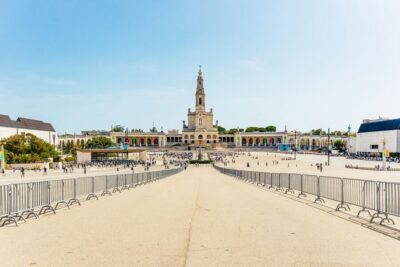 ★ 4.7From Lisbon: Fatima Batalha Nazaré & Óbidos Small-Group TourFrom $792,563 reviews
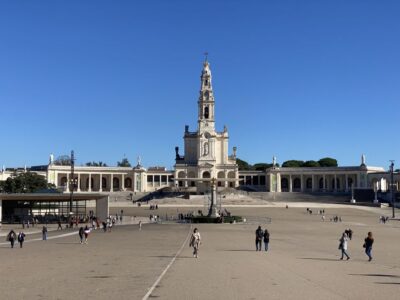 ★ 4.9Fátima, Batalha, Nazaré & Obidos Small-Group TourFrom $481,463 reviews
 ★ 4.5From Lisbon: Day Trip to Porto, Óbidos, and NazaréFrom $971,311 reviews
 ★ 5.0Fatima, Nazare, Obidos 8-People Small Group, Day-Tour from LisbonFrom $71995 reviews
★ 5.0From Lisbon: Fátima, Nazaré, Batalha and Óbidos Guided TourFrom $55922 reviews
Browse the lists this tour appears in