

Reviewed · LISBON TUK-TUK TOURS
Explore the City in Style Lisbon on Electric Tuk Tuk
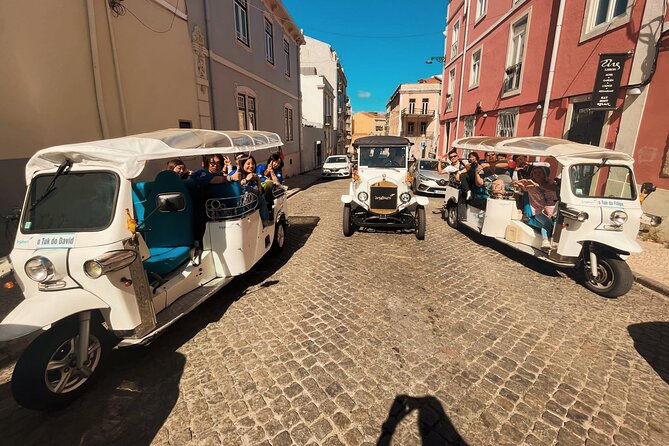
Lisbon feels made for the slow slide. This electric tuk tuk tour mixes classic landmarks with hilltop viewpoints in an easy, low-effort way.
I especially liked the live commentary from local guide Joao, which turns the big sights (and the small street details) into quick, understandable stories. You also get a ride that keeps the long walking to a minimum while still letting you hop out for photos.
The main thing to think about: it’s not permitted for children under 7, so if your group includes young kids, you’ll need another option.
In This Review
- Key things to know before you go
- Electric Tuk Tuk Lisbon: why this format works
- Price and value: what you’re paying for
- Starting in Baixa Pombalina: Lisbon rebuilt after 1755
- Lisbon Cathedral (Sé): Romanesque front, many eras inside
- Miradouro das Portas do Sol: the Tagus in your camera frame
- Senhora do Monte: a higher viewpoint with fewer crowds
- São Vicente de Fora: tiles, tombs, and a monastery that rewards standing still
- Feira da Ladra: flea market atmosphere when it’s running
- Alfama: the old Lisbon you came for
- National Pantheon (Santa Engrácia): the dome you spot all over
- Largo do Carmo and the Carmo Church ruins: earthquake as a living monument
- São Roque Church: tiles and Baroque art that hold your attention
- São Pedro de Alcântara viewpoint: garden calm above Bairro Alto
- Príncipe Real and Eduardo VII Park: breathing space in the city center
- Praça do Príncipe Real
- Eduardo VII Park
- Marquês de Pombal and Avenida da Liberdade: Lisbon’s modern centerline
- Ending at Praça dos Restauradores: your easy handoff to self-guided Lisbon
- Who this tour suits best (and who might skip it)
- Should you book the Explore the City in Style Lisbon on Electric Tuk Tuk?
- FAQ
- How long is the electric tuk tuk tour?
- What is the price per person?
- Do they offer hotel pickup?
- What language is the commentary in?
- Is the tour private?
- Is there a mobile ticket?
- Are tips included in the price?
- Are children allowed?
- Where does the tour start and end?
- What is the cancellation policy?
Key things to know before you go

- Electric tuk tuk comfort: less strain on steep Lisbon hills, with stops built in for getting out and looking around.
- Guide-led pacing: Joao’s commentary helps you connect Baixa’s earthquake-rebuild grid to what you see later in Alfama’s older streets.
- Big-view viewpoints: you’ll reach major miradouros like Portas do Sol and Senhora do Monte, without trekking uphill the whole time.
- Classic Lisbon architecture mix: Romanesque cathedral, tile-filled churches, and landmark squares across different eras.
- Private-group feel: it’s just your group in the vehicle, which makes the stops and timing feel more flexible.
Electric Tuk Tuk Lisbon: why this format works

Lisbon has two speeds: walking-friendly streets and “my legs are filing a complaint” hills. The electric tuk tuk solves that without turning your day into a bus tour where you mainly stare out the window. You get to move between districts quickly, then pause at the viewpoints and major sights that make each neighborhood feel different.
This is also a good choice if you want a plan that still leaves room for your own Lisbon wandering afterward. The tour ends at Praça dos Restauradores, which is a solid jumping-off point for more wandering in the city center, grabbing a pastry, or linking up with public transit.
The other piece I liked is the way the trip is structured around “Lisbon moments,” not just checkboxes. You’re guided through Baixa’s planned streets, then the cathedral, then viewpoint after viewpoint where the city layout suddenly makes sense from above.
The hills done the easy way, more tuk-tuk runs
- True 4Hour Private Tuk Tuk Tour: Discover Lisbon with a Local!
★ 5.0 · 8,008 reviews - Lisbon: Private Guided Tuk-Tuk Tour with Hotel Pickup
★ 4.9 · 4,552 reviews - Private Lisbon Sightseeing Tuk-Tuk Tour: Alfama, Belém & More
★ 5.0 · 4,277 reviews - Lisbon Highlights: Private Tuk Tuk Tour Adventure Sightseeing
★ 5.0 · 3,284 reviews
Price and value: what you’re paying for
At $42.38 per person (with durations running roughly 1 to 5 hours), the value is in what’s included. You’re not just buying a ride—you’re buying:
- pickup at city-center hotels (when requested)
- a local guide doing live commentary
- a private tour in an electric vehicle
- civil liability and personal injury insurance
- an English-speaking experience
- a mobile ticket
Tips aren’t included, so you’ll decide that on the day. If you’re traveling as a group, the tour also offers group discounts, which can make the cost feel more manageable for families or friend groups.
If you’re the type who likes to understand what you’re seeing (instead of snapping photos and guessing later), the guide component is what makes this price easier to justify.
Starting in Baixa Pombalina: Lisbon rebuilt after 1755
Most Lisbon first-timers start in Baixa, and for good reason. This is the center of Baixa Pombalina, Lisbon’s post-1755-earthquake rebuild with a rational street plan. The area’s wide, straight streets and grid layout aren’t just pretty—they’re a clue to how the city reimagined itself.
As you roll through, you’ll get a feel for the classic squares that anchor Baixa:
- Rossio Square, known for its cafés and patterned pavement
- Praça da Figueira
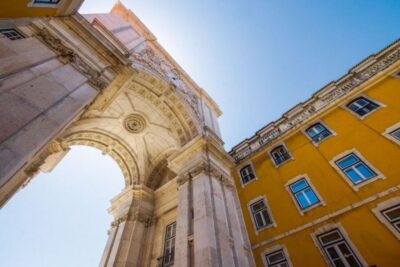
- the grand Praça do Comércio, which faces the Tagus River
This is a smart early stop because it sets your mental map. Once you’ve seen the grid and the main river-facing square, the later contrast with Alfama’s tight lanes hits harder—in a good way.
Lisbon Cathedral (Sé): Romanesque front, many eras inside
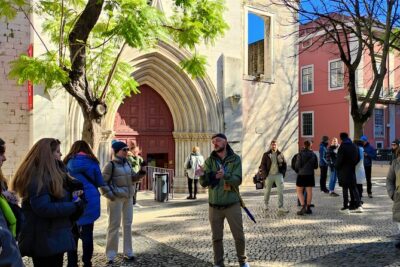
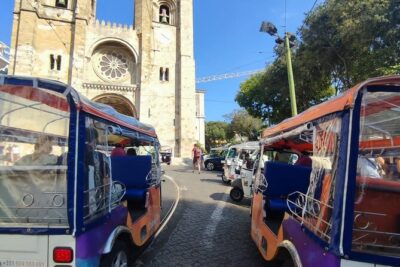
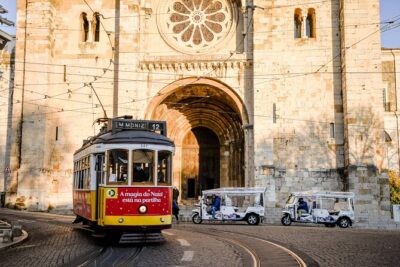
From there, the tour goes to Lisbon Cathedral, also called Santa Maria Maior. The big Romanesque façade and twin fortified towers make it feel like a fortress of faith. Even before you step inside, you get the sense this is an anchor monument—one that survived centuries and earthquakes.
Inside, you’re looking at layers:
- restorations and modifications over time, mixing Romanesque, Gothic, Baroque, and Neoclassical elements
- the central nave and the main altar as visual highlights
- the cloister, where archaeological remains from earlier periods were discovered, including Roman and Visigothic evidence
Why I think this stop is a great use of your limited time: the cathedral doesn’t just offer art and architecture. It also helps you understand how Lisbon’s power centers shifted across time—then made room for today’s city.
Worth a look before you lock anything else in around Lisbon:


Miradouro das Portas do Sol: the Tagus in your camera frame
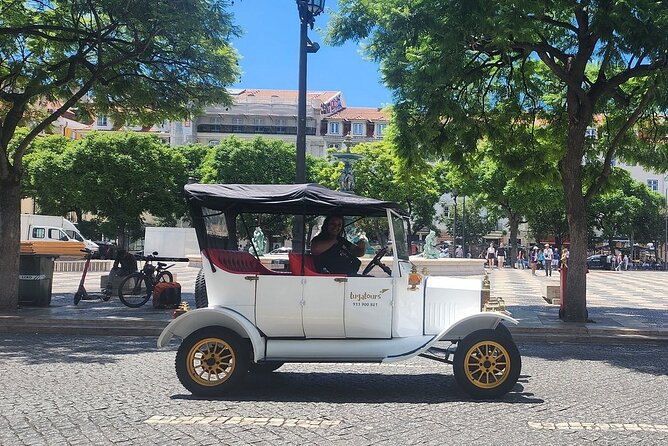
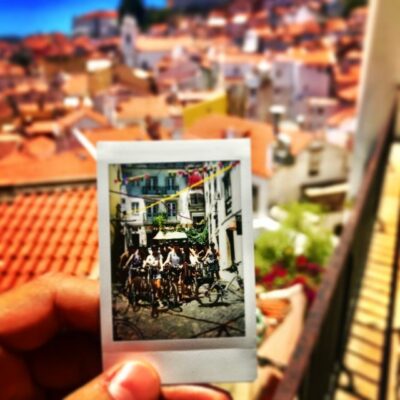
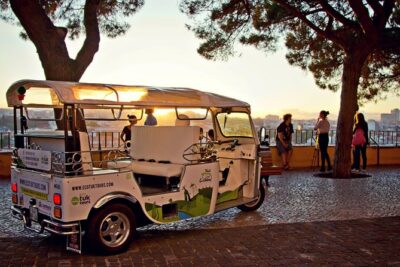
Next comes one of Lisbon’s most famous viewpoints: Miradouro das Portas do Sol. If you like photos, this is a stop you won’t rush.
From here you look over:
- Alfama rooftops
- the Tagus River
- landmarks including the National Pantheon and the Church of São Vicente de Fora
The viewpoint connects to an older story too. It takes its name from ancient Moorish gates that once stood here, so the view isn’t just a view—it’s part of the city’s physical past. Expect a popular terrace café atmosphere, plus statue and old-stone energy. It’s also a classic place to slow down for a few minutes and just let the light do its thing.
Senhora do Monte: a higher viewpoint with fewer crowds
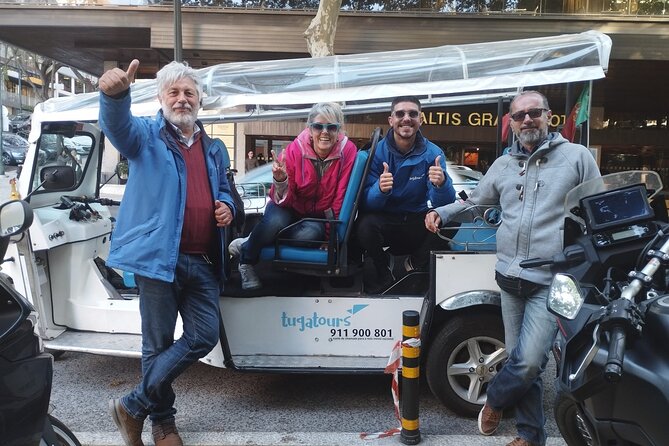
Then you climb to Miradouro da Senhora do Monte in Graça. This one is notable for being higher and for feeling a bit calmer than some of the other viewpoint spots.
The payoff is wide-ranging:
- São Jorge Castle
- the Tagus River
- the Baixa district and Avenida da Liberdade
- even the 25 de Abril Bridge
There’s also a chapel beside the viewpoint—Our Lady of the Hill. Even if you’re not visiting for religious reasons, it adds meaning to the stop. You’ll likely want a short pause here for photos and a break from the city’s motion. The admission for this stop is free in the way the experience is set up, and the time allotted is around 10 minutes.
São Vicente de Fora: tiles, tombs, and a monastery that rewards standing still
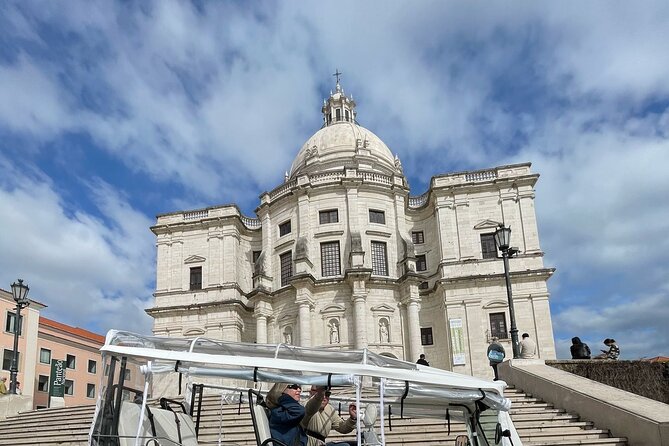
A key cultural stop is the Church of São Vicente de Fora. The name “de Fora” means outside the former city walls, and the building reflects its importance: in the 17th century it was created in grand Mannerist and Baroque style under King Philip I.
Inside, you’ll find details that are hard to reproduce with words:
- Portuguese marble
- azulejos (tilework) spanning 17th- and 18th-century styles
- the monastery area with tombs of the Braganza dynasty (kings and queens)
- a cloister with tile panels illustrating La Fontaine’s fables
If you only skim this kind of place, you might miss it. But if you’re willing to stand still for a few minutes, the tiles and the sense of dynastic history make it feel like you’ve stepped into Lisbon’s long timeline.
The terrace view over Alfama and the Tagus is also a useful double hit—architecture first, then panorama.
Feira da Ladra: flea market atmosphere when it’s running
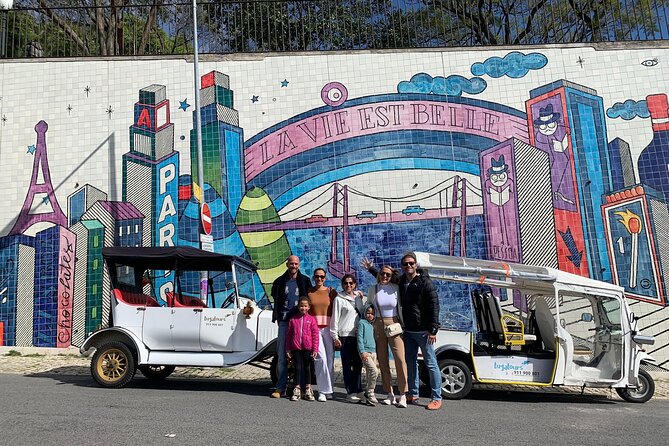
One of the most “Lisbon-feels-real” stops is Feira da Ladra, the city’s flea market. It happens on Tuesdays and Saturdays in Alfama near the National Pantheon.
This isn’t a curated bazaar. It’s a working market with a huge mix of:
- antiques
- books and vintage items
- furniture
- handicrafts and souvenirs
- curious one-off finds
The name Ladra refers to old stories about petty theft at the market, but today it’s known for the trade, motion, and character of the place. If you catch it on a market day, this is one of those moments that turns the tour into more than sightseeing—you get a sense of how locals (and visitors) actually fill a historic neighborhood.
Alfama: the old Lisbon you came for
Then you pass into Alfama, Lisbon’s oldest neighborhood and one of its most atmospheric. This is where Lisbon’s famous tiles and flower-filled balconies show up with more personality than postcard photos.
You’ll see why Alfama is known for:
- narrow streets and steep hills
- a maze of alleys that feels older than the rest of the city
- strong connections to fado culture (with many small restaurants and taverns)
Even without staying for a full fado night, seeing Alfama from the streets and viewpoint stops gives you the “why” behind the music tradition. The neighborhood’s landmark cluster—São Jorge Castle, the National Pantheon, Miradouro das Portas do Sol—also means you can connect the geography to the stories.
Practical thought: Alfama’s streets can be slow-going on foot. The electric tuk tuk helps you reach key areas without turning the entire day into uphill footwork.
National Pantheon (Santa Engrácia): the dome you spot all over
Another major landmark stop is the National Pantheon, also called Santa Engrácia. You recognize it by that big white dome visible from many places around the city.
Construction began in the 17th century but finished only in the 20th. That long delay shows up in a popular expression tied to the building: as obras de Santa Engrácia (something that never ends). It’s the kind of detail that makes the monument feel human and historical at the same time.
Inside, you’ll find notable Portuguese figures resting there, including:
- Amália Rodrigues
- Humberto Delgado
- Eusébio
From the dome viewpoints, you get a strong look over the Tagus and Alfama rooftops. If you’re doing this tour as a first day in Lisbon, this stop often becomes your “oh, so that’s where everything is” moment.
Largo do Carmo and the Carmo Church ruins: earthquake as a living monument
Next, you reach Largo do Carmo in Bairro Alto. This square is famous for the ruins of the Carmo Church, destroyed by the 1755 earthquake, now presented as an open-air archaeological setting.
That mix—archaeology, ruin, and an active city meeting point—is what makes this stop memorable. The square is surrounded by cafés and restaurants, so you see how Lisbon built life back around the scars.
If you’re curious about Lisbon’s relationship with the earthquake era, this is a powerful, quiet kind of place to pause.
Nearby you’ll also have an easy connection to the Santa Justa Elevator, which links Baixa and Bairro Alto and can offer panoramic views.
São Roque Church: tiles and Baroque art that hold your attention
In Chiado, the tour includes Church of São Roque, one of Lisbon’s older and most important churches. Founded by the Society of Jesus in the 16th century, it’s known for a richly decorated interior.
What’s worth your attention here:
- azulejos (tilework)
- gilded woodwork
- important sacred art collections
- the Chapel of St. John the Baptist, described as one of the most expensive chapels in the world
- the Baroque/Mannerist architectural style
The exterior is simpler, reflecting the Jesuits’ early austerity, but the interior is where the real payoff happens. It’s also a church that has survived major earthquakes, including 1755. That matters in Lisbon, where so much of the city’s identity is tied to rebuilding.
São Pedro de Alcântara viewpoint: garden calm above Bairro Alto
You’ll also stop at São Pedro de Alcântara Viewpoint, up in Bairro Alto near the top of the Glória Funicular.
This is a charming viewpoint with a maintained garden—fountains, benches, and a tile panel that helps identify major landmarks. So even if you’re not 100% sure what you’re seeing, the viewpoint nudges your eye to the right features:
- São Jorge Castle
- the Cathedral (Sé)
- the Tagus River
- the color of Baixa’s rooftops
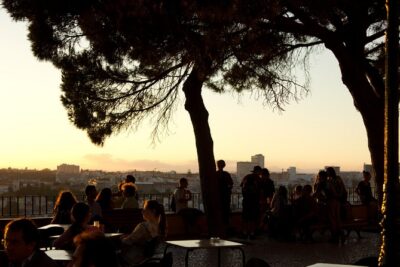
At sunset, it can get lively with musicians and a strong street energy. For me, this is a good “reset stop” before you move back toward bigger avenues and squares.
Príncipe Real and Eduardo VII Park: breathing space in the city center
As your tour continues, you shift toward calmer green spaces.
Praça do Príncipe Real
Here, you’re in an elegant square with gardens, old trees, and a tropical greenhouse with exotic plants. It’s a meeting point for locals and visitors, with cafés and shops around it. The neighborhood is also known for cultural diversity and for weekends with an organic/handicraft market.
Eduardo VII Park
Then you hit Eduardo VII Park, the largest public park in central Lisbon. It’s open since 1903 and built for strolling, picnics, and general outdoor time. Wide paths and well-kept gardens keep it easy to move through slowly.
At the lower end of the park, you’ll see the statue of the Marquis of Pombal, honoring the man responsible for Lisbon’s reconstruction after 1755. That link back to early stops in Baixa makes the day feel like one connected story.
Marquês de Pombal and Avenida da Liberdade: Lisbon’s modern centerline
You’ll also pass Marquês de Pombal Square, a key roundabout with a strong central statue and lions/allegorical figures. It’s a major transit reference point and marks the start of Avenida da Liberdade.
Then there’s Avenida da Liberdade, Lisbon’s elegant main boulevard. It’s wide, tree-lined, and known for its 19th-century architecture and iconic iron lamp posts. Events and parades happen here, so even when it’s just ordinary traffic time, the avenue feels like the city’s social centerline.
This section can help if you’re thinking, okay, Lisbon has old stone everywhere—but where does the modern city pulse? Avenue da Liberdade answers that.
Ending at Praça dos Restauradores: your easy handoff to self-guided Lisbon
The tour finishes at Praça dos Restauradores, at the end of Avenida da Liberdade. The central obelisk commemorates the Restoration of Portugal’s Independence in 1640 after 60 years of Spanish rule.
Surrounding façades reflect a 20th-century Lisbon vibe, with Art Deco and Neo-Manueline elements. Practically speaking, it’s a good ending point because it connects easily to nearby areas and is close to funicular access toward viewpoints like São Pedro de Alcântara.
After the tour, you can stay in the center, head to a museum, or just wander into Baixa or Bairro Alto depending on your energy.
Who this tour suits best (and who might skip it)
This is a strong fit if you:
- want to see a lot of Lisbon with less walking on steep hills
- like guided explanation, not just photo stops
- want a day that mixes viewpoints and major monuments across multiple districts
- prefer a private-group ride for a calmer feel
You might consider skipping it if:
- you want a purely self-guided day with no structure at all
- you plan to spend most of your time in one neighborhood only (Alfama, for example), since you’ll be covering several areas
Also note: it isn’t permitted for children under 7, so family groups with younger kids should check other tour options.
Should you book the Explore the City in Style Lisbon on Electric Tuk Tuk?
I’d book this if you want Lisbon in an efficient, friendly format: electric tuk tuk comfort, clear local guiding, and a route that hits the viewpoints and monuments that make the city click.
The biggest reason is the guide experience. Hearing Joao’s style—fun, informative, and focused on helping you understand what you’re seeing—makes the day feel like more than a ride. Combine that with the 5-star rating and the fact that pickup and insurance are part of the package, and it’s a good-value way to get your bearings fast.
If your ideal Lisbon day includes photos, viewpoints, cathedral-scale landmarks, and a path that moves district to district without exhausting your legs, this one is a smart pick.
FAQ
How long is the electric tuk tuk tour?
The duration is listed as approximately 1 to 5 hours, depending on how the experience is run.
What is the price per person?
The price is $42.38 per person.
Do they offer hotel pickup?
Yes. Pickup is offered at hotels located in the city center.
What language is the commentary in?
The live commentary is offered in English.
Is the tour private?
Yes. It’s described as a private tour/activity, with only your group participating.
Is there a mobile ticket?
Yes. Mobile ticketing is included.
Are tips included in the price?
No. Tips are not included.
Are children allowed?
The experience is not permitted for children under 7 years old.
Where does the tour start and end?
The start is Rua de Arroios 120, 1150-260 Lisboa, Portugal. The tour ends at Praça dos Restauradores.
What is the cancellation policy?
Free cancellation is available. You can cancel up to 24 hours in advance for a full refund.
More City Tours in Lisbon
- Lisbon City Center Tour – The Unmissable Lisbon★ 5.0 · 22,234 reviews
- Lisbon: Daytime/Sunset/Night City Sailboat Tour with Drink★ 4.9 · 3,114 reviews
- Lisbon: City Highlights and Viewpoints E-Bike Tour★ 4.9 · 1,556 reviews
- Lisbon: City Sightseeing Hop-On Hop-Off Bus Tour★ 3.8 · 1,220 reviews
- Lisbon: Private City Tour by Eco Tuk Tuk★ 4.9 · 1,215 reviews
More Tour Reviews in Lisbon
- Lisbon City Center Tour – The Unmissable Lisbon★ 5.0 · 22,234 reviews
- Lisbon: Sintra, Pena, Regaleira, Cabo da Roca & Cascais★ 4.7 · 19,656 reviews
- Lisbon Card: 24, 48, or 72-Hour Pass★ 4.5 · 17,944 reviews
- Lisbon: Jerónimos Monastery Entrance Ticket★ 4.1 · 14,164 reviews
- Lisbon: History, Stories and Lifestyle Walking Tour★ 4.8 · 10,902 reviews
More Hills by Tuk-Tuk
- True 4Hour Private Tuk Tuk Tour: Discover Lisbon with a Local!★ 5.0 · 8,008 reviews
- Lisbon: Private Guided Tuk-Tuk Tour with Hotel Pickup★ 4.9 · 4,552 reviews
- Private Lisbon Sightseeing Tuk-Tuk Tour: Alfama, Belém & More★ 5.0 · 4,277 reviews
- Lisbon Highlights: Private Tuk Tuk Tour Adventure Sightseeing★ 5.0 · 3,284 reviews
- Welcome Lisbon Tour with Local Guide in Private Eco Tuk Tuk★ 5.0 · 1,691 reviews
Just in: fresh Lisbon reviews from the team





Lisbon Tuk-Tuk Tours, compared.
 ★ 5.0True 4Hour Private Tuk Tuk Tour: Discover Lisbon with a Local!From $1088,008 reviews
 ★ 4.9Private Guided Tuk-Tuk Tour with Hotel PickupFrom $1534,552 reviews
 ★ 5.0Private Lisbon Sightseeing Tuk-Tuk Tour: Alfama, Belém & MoreFrom $524,277 reviews
 ★ 5.0Lisbon Highlights: Private Tuk Tuk Tour Adventure SightseeingFrom $843,284 reviews
 ★ 5.0Welcome Lisbon Tour with Local Guide in Private Eco Tuk TukFrom $171,691 reviews
 ★ 4.9Private City Tour by Eco Tuk TukFrom $281,215 reviews
 ★ 5.0Old Town TukTuk Tour and Scenic Viewpoints in AlfamaFrom $35974 reviews
 ★ 5.0Explore Lisbon by Tuk Tuk: History and ViewpointsFrom $19840 reviews
Browse the lists this tour appears in