
Reviewed · ÉVORA DAY TRIPS
ÉVORA Megalithic Almendres Cromlech
Stone circles and church bones in one day. This is the kind of Portugal outing that flips from Neolithic megaliths to UNESCO Évora in the same long morning-to-afternoon stretch. You’ll also get onboard Wi‑Fi and hotel pickup from the Lisbon area, so the day feels structured without being stiff.
I love how the Almendres area makes prehistory feel physical, not textbook. And I love that Évora’s top sights come bundled with the seriously unforgettable Chapel of Bones at Igreja de São Francisco.
One thing to plan for: tickets aren’t included, and some parts of the sites are more rugged than you might expect, so mobility can matter.
In This Review
- Key moments that make this tour work
- Almendres Cromlech and the “summer solstice” clues
- The drive matters: Alentejo outside Évora feels like a different Portugal
- Évora UNESCO: short walks, smart stops, and good angles
- The Roman Temple (Templo de Diana): why the name changed
- Cathedral area to the Chapel of Bones: a controlled dose of dark theater
- Igreja de São Francisco: where Gothic meets Moorish, then the bones take over
- Logistics that make a long day feel manageable
- Price and value: what you’re really paying for
- Who should book, and who should think twice
- Should you book this Évora and Almendres day trip?
- FAQ
- What time does the tour start, and how long is it?
- Do I get hotel pickup?
- Is onboard Wi‑Fi included?
- Are entrance tickets included in the price?
- Is this tour private?
- What language is the tour offered in?
- Can I cancel for a full refund?
Key moments that make this tour work
- Almendres Menhir and summer-solstice alignment you can connect to the stones’ purpose
- Évora UNESCO city highlights in a time-efficient walking route
- Roman Temple (Templo de Diana) with centuries of reuse and later archaeological recovery
- Capela dos Ossos (Chapel of Bones) built on a blunt message about life’s fragility
- Private transport plus onboard Wi‑Fi to keep a long day comfortable
- A/C, bottled water, and a set schedule that prevents Lisbon-to-rural logistics headaches
Almendres Cromlech and the “summer solstice” clues
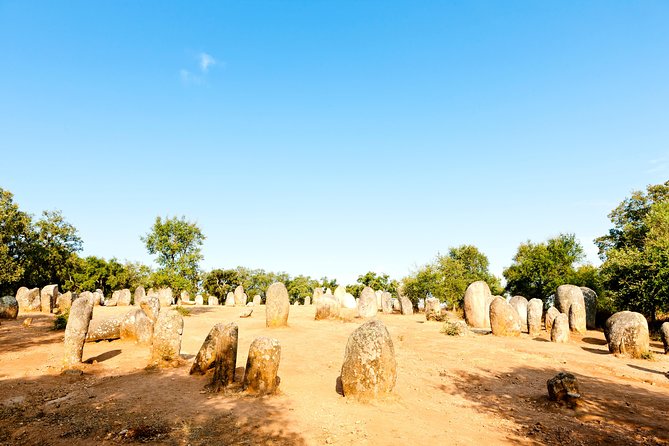
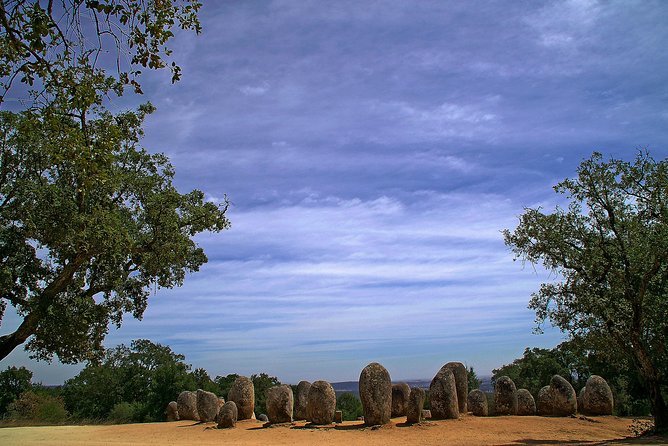
If you’re drawn to places where the past feels arranged on purpose, Almendres is a big reason to come to this region. The monuments here date to the Neolithic (about 5500–4500 BC), and the Almendres complex is one of the standout megalithic areas in Portugal.
The tour starts at the Centro Interpretativo dos Almendres, where you get the basic framing for why these stones are here. The story is tied to the Alentejo plains: this part of Portugal is where several river basins meet in the same broader area, including the Tagus, Sado, and Guadiana. That combination of water access and open land helped early communities survive and build, long before people in this region were living in cities.
Then you move to Cromeleque dos Almendres, the big stone circle. This is the moment that often turns a casual visit into a proper “I get it now” stop. The menhir nearby isn’t random background either: it’s linked to the sunrise during the summer solstice. Even without technical tools, the idea gives the stones a sense of direction and intention.
There’s also a detail you might appreciate if you like symbolic design. The Almendres Menhir is described as having an elongated egg shape with a carved element at the top, including a crossier-like engraving. The explanation ties the form to Neolithic thinking about nature and domestication of animals. Whether or not you’re a “stone astronomy” person, that context helps you look more than just at the stones.
Out to the plains: more Évora and Alentejo trips
- Private Évora Tour – Megaliths, Historical Center and Cork Region
★ 5.0 · 16 reviews
The drive matters: Alentejo outside Évora feels like a different Portugal
This is a day trip, but it doesn’t feel like a nonstop squeeze from one ticket line to another. The route through the Alentejo countryside changes the tempo. One of the practical perks of a private car is you aren’t stuck behind a group bus schedule, and you can actually pay attention as you go.
On the ride, you may spot small, local details that make the region feel lived-in rather than just scenic. For instance, there are stork nests sometimes visible on utility poles along parts of the road, and the roadside can include cork trees tied to harvesting traditions. You might also see fields with wildflowers in season, which makes the approach feel like part of the experience rather than dead time.
This matters because the tour’s core vibe is contrasts. You’re leaving Lisbon-area life behind, then jumping into Évora’s stone-and-tiles world, and finally returning to open-air prehistory. If you like that kind of pacing, you’ll probably find the day satisfying.
Évora UNESCO: short walks, smart stops, and good angles
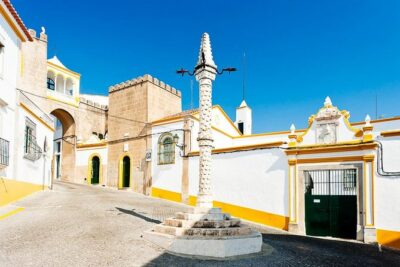
Évora is listed as a UNESCO World Heritage site, and the town’s shape helps you understand why people built here. You’re dealing with a city that sits on a gentle rise out of the huge Alentejo plain, and it’s wrapped in a defensive outer wall. Up close, the historic center feels like layered neighborhoods rather than one single “museum street.”
The tour gives you about an hour centered on the town’s key look-and-learn moments. That’s enough time to get your bearings and see major landmarks, but it’s not a long, slow wandering day. If your ideal outing is to lose yourself for hours in side streets, you’ll want to plan a separate free afternoon in Évora another day.
Still, the walking directions are useful. When you’re in the cathedral area, you’ll likely be told to go from the Sé toward Largo das Portas de Moura, and to check the older porches and twin windows on houses off Freiria de Cima. You’ll also pass through areas like Cenáculo and Freiria de Baixo, with streets such as S. Manços leading you to buildings like the House of Garcia de Resende.
If you like architecture that mixes styles, Évora delivers. Look for Manueline windows, Moorish-influenced ornament, and courtyards and squares where sunlight seems to flood the stone. You’ll also see how the city’s history moves from Roman importance to Moorish influence, then to the later Portuguese royal period. That context helps you read what you’re seeing instead of just taking photos.
One practical note: the cathedral area stop includes time for looking around, but the Cathedral itself is marked as not included for admission. So budget a bit of flexibility for any entry fees.
The Roman Temple (Templo de Diana): why the name changed
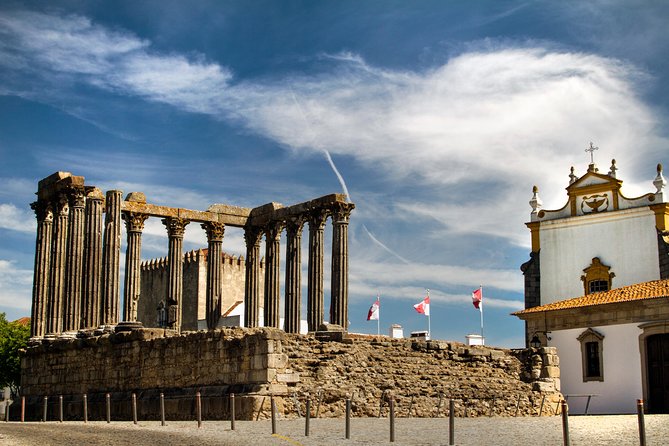
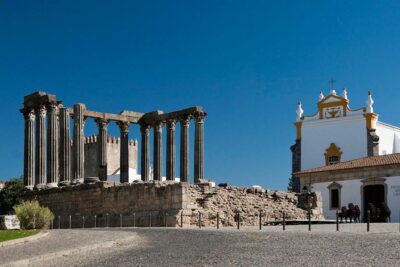
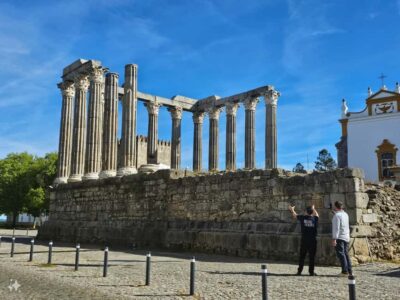
Next up is one of the easiest “wow” stops in Évora: the Templo Romano de Évora, often called the Temple of Diana. It’s over 2,000 years old and is described as the ex-libris monument of Évora.
This temple was built in the first century during the time of Caesar Augustus. The big thing I like about this site is its layered story. Over the centuries, the temple was practically destroyed during the period of barbarian occupations in the 5th century, and then reused much later as a bank vault and even a butcher’s in the 14th century. That kind of reuse can feel grim, but it also explains why you don’t always get a perfectly “untouched” ruin.
The original Roman design only came back into focus much later, in the 19th century, when early archaeological work in Portugal helped recover how it originally looked. You may also hear that it was linked to the Imperial cult and later connected to a 17th-century tradition that claimed the temple honored the goddess Diana. Recent excavation details, including evidence of a surrounding portico and a water mirror, help clarify what was likely happening on the original forum setting.
You’ll spend about 30 minutes here. That’s plenty if you’re looking for a strong highlight without turning the day into an all-day archaeology seminar.

Cathedral area to the Chapel of Bones: a controlled dose of dark theater
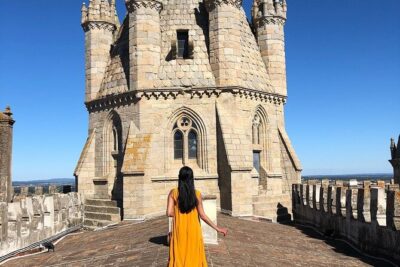
Évora’s cathedral area is a quick but satisfying stop because it shows you how the old city frames its religious power. The tour route often points out where to turn to spot porches and twin windows, then how to reach the Portas de Moura area where you can see a Renaissance fountain and other notable facades.
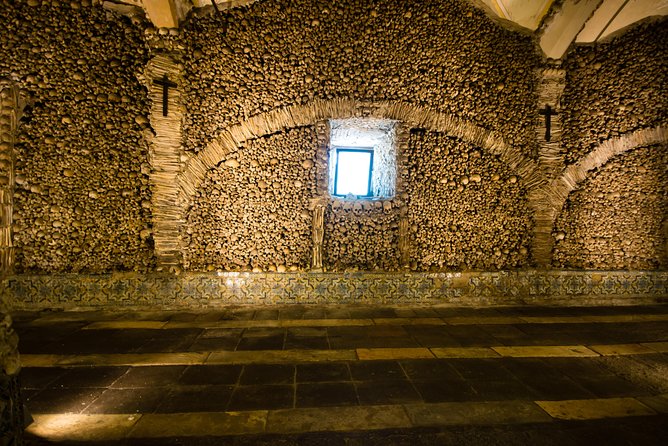
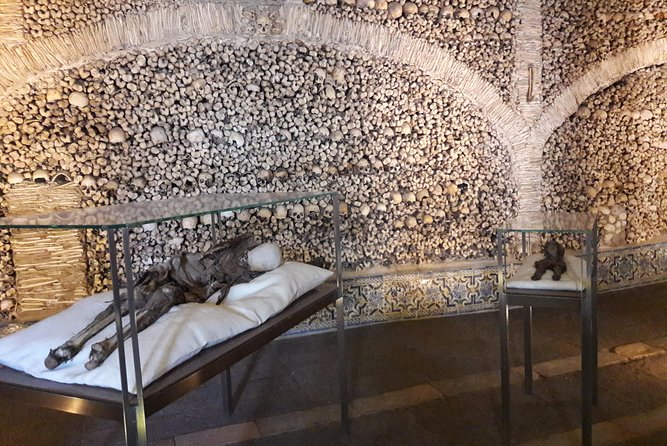
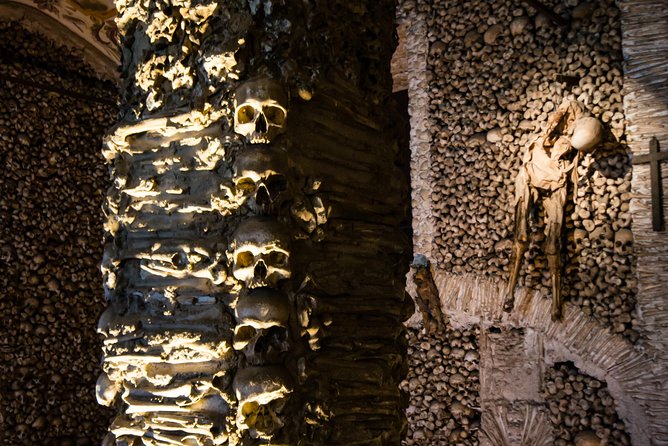
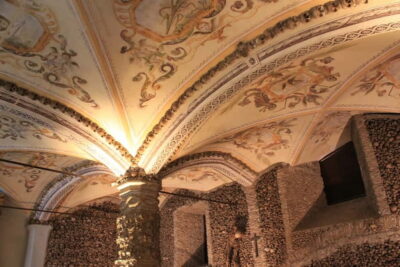
Then comes the emotional hit: Capela dos Ossos, the Chapel of Bones at the Igreja de São Francisco complex. This chapel was built in the 17th century at the initiative of three Franciscan friars, with the goal of reminding people about the temporariness and fragility of human life. The message is made blunt at the entrance with the line about bones waiting for yours.
The tone is Baroque, including those famous “men macabre” tastes for turning death into art you can’t ignore. If you’re someone who dislikes creepy experiences, this may feel like too much. If you’re the kind of traveler who appreciates how places use symbolism to teach, this stop can be strangely effective.
Admission here is marked as not included, so check ticket handling expectations before you arrive. You’ll have about 30 minutes at this stop.
Igreja de São Francisco: where Gothic meets Moorish, then the bones take over
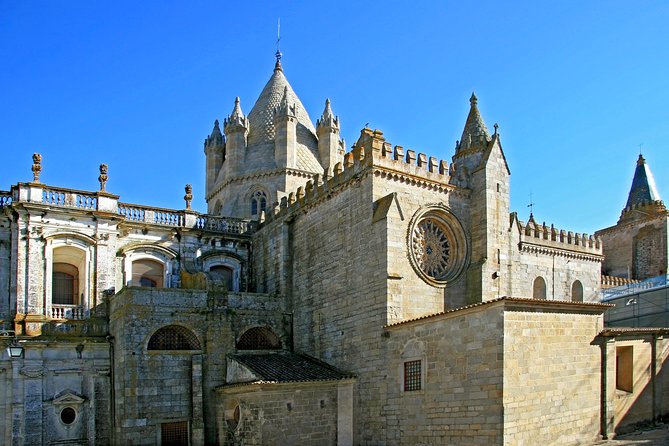
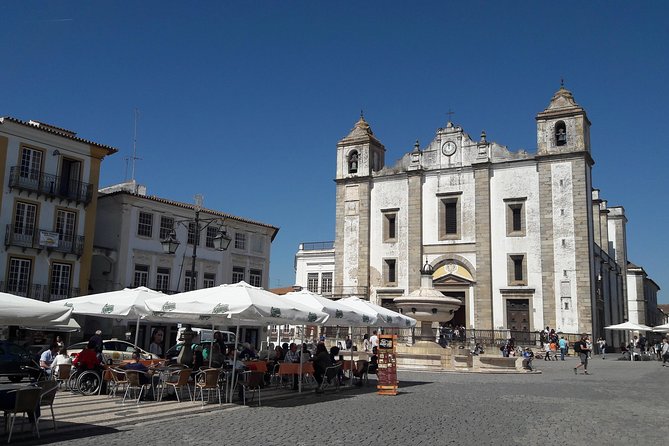
The church itself, Igreja de São Francisco, is more than a wrapper for the Chapel of Bones. The façade is described as a mix where you’ll see Gothic and Moorish influence side by side. Over the Manueline doorway you can find the emblems tied to the kings who commissioned construction, including D. João II and D. Manuel I, with the pelican and armillary sphere respectively.
Inside, the church design is a selling point for architecture lovers. It has a single nave ending in a ribbed vaulted ceiling, described as having the largest span of all Portuguese Gothic architecture. It also holds twelve chapels, covered in Baroque carved woodwork, with the main chapel dating to the early 16th century and maintaining Renaissance features such as pulpits.
As for the bones, they’re not a small “Easter egg.” The chapel is described as having pillars and walls completely covered by bones, created during the 17th-century period associated with the “Filippine period.” Even if you’re not into anatomy-as-art, it’s the kind of place that makes you slow down without being forced.
This stop is about one hour, and admission isn’t included in the tour price. I suggest you treat the time like a guided museum moment: look at the woodwork, notice the stone-and-tiles harmony, then let the Chapel of Bones be the final, hard stop.
Logistics that make a long day feel manageable
This tour runs from 9:00 am and lasts about 8 to 9 hours. You’ll be picked up from a hotel, accommodation, airport, station, or seaport in the Lisbon District. Even if you’re starting from the Sintra area, this pickup setup matters because it removes the “how do I get there and back?” stress.
Comfort is clearly part of the design. You get an air-conditioned vehicle, bottled water, and Wi‑Fi on board. That’s not a small perk on a day that includes outdoor walking at prehistoric sites, plus a town day in the heat of the afternoon if the weather is warm.
It’s also listed as private, meaning your group is the only one participating. That usually makes a difference in how smoothly the timing works, especially with short stops like the Templo Romano and the cathedral area.
English is offered, and you’ll get confirmation at booking. A mobile ticket is included, which helps on day-of entry.
Finally, there’s a practical reality to the schedule: the tour is packed with highlights. That’s the trade for seeing a lot in one day. If you’re the type who needs long free time, you’ll want to pair this with extra time in Évora on your own.
Price and value: what you’re really paying for
At $240.32 per person, this isn’t a budget add-on. But it also isn’t just “a driver who drops you off.” The price covers private transportation, A/C, bottled water, onboard Wi‑Fi, and all taxes and handling charges.
The one cost item that can change your total is that tickets aren’t included. Some stops are listed as free in the planned visit (like parts of the Almendres interpretation and several outdoor monuments), but Cathedral-related and the churches tied to the bones experience are not marked as included for admission. So your final spend depends on what you choose to enter.
I also like that the tour is popular enough to have a booking rhythm: it’s commonly booked around 65 days in advance. That usually means there’s demand for this exact mix of megaliths plus Évora highlights without the hassle of arranging transport yourself.
If you want a one-day “greatest hits” plan from the Lisbon/Sintra side and you value comfort and organization, this price can make sense.
Who should book, and who should think twice
This fits you well if:
- You want prehistory and classic archaeology in a single outing, especially with the Almendres megalith alignment explained.
- You’re interested in Évora’s UNESCO old-town structure but don’t want to drive and park.
- You can handle the Chapel of Bones and the strange beauty of it, including Baroque symbolism.
It might not fit you if:
- You want long, unstructured time inside Évora’s streets. The town portion is built for quick highlights.
- Mobility is a concern. Access to amenities at the megalithic sites is described as a work-in-progress in at least one account, and difficult access for limited mobility should be flagged.
One more practical heads-up: sometimes the Almendres Cromlech entrance can be affected by closure or limited access. In that case, you may still be able to appreciate the stones from nearby viewpoints rather than from every ideal angle.
Should you book this Évora and Almendres day trip?
Book it if you want a well-paced day that connects Almendres Cromlech to Évora’s UNESCO center, with the Chapel of Bones as the bold emotional center of the story. The private transport, Wi‑Fi, and hotel pickup help you focus on the sights instead of logistics, and the short stop timing works well for first-time visitors.
Pass or rethink it if you’re traveling mainly for slow exploration or if you need very smooth, easy-access routes everywhere. In that case, consider spending more time in Évora on your own schedule and reserving a different format for the prehistoric sites.
If you do book, wear shoes that handle outdoor paths, and bring a bit of patience for ticket questions on the day—since tickets are not included for some of the most iconic stops.
FAQ
What time does the tour start, and how long is it?
It starts at 9:00 am and runs about 8 to 9 hours.
Do I get hotel pickup?
Yes. Pickup is offered from your hotel, accommodation, airport, station, or seaport in the Lisbon District.
Is onboard Wi‑Fi included?
Yes. Wi‑Fi on board is included.
Are entrance tickets included in the price?
Tickets are not included overall. Some items are listed as free during the itinerary, but the Cathedral area and the Chapel of Bones / Igreja de São Francisco are marked as admission not included.
Is this tour private?
Yes. It’s listed as a private tour/activity with only your group participating.
What language is the tour offered in?
English.
Can I cancel for a full refund?
Yes. You can cancel up to 24 hours in advance for a full refund. If you cancel less than 24 hours before the start time, the amount paid is not refunded.
More Tour Reviews in Sintra
- Sintra: Pena Palace and Park Entrance Ticket★ 4.2 · 17,410 reviews
- Lisbon: Sintra, Pena, Regaleira, Cabo & Cascais Tour★ 4.8 · 4,326 reviews
- Quinta da Regaleira Skip-the-Ticket-Line Entry & Audioguide★ 4.2 · 3,316 reviews
- Sintra: Castle of the Moors Skip-the-Line Ticket★ 4.6 · 2,893 reviews
- From Lisbon: Sintra & Cascais Group Tour with Pena Palace★ 4.8 · 2,237 reviews
Out to Évora and the Alentejo
- Private Évora Tour – Megaliths, Historical Center and Cork Region★ 5.0 · 16 reviews
Just in: fresh Sintra reviews from the team





Évora Day Trips, compared.
 ★ 4.7Évora and Megaliths Full-Day Tour from LisbonFrom $94456 reviews
 ★ 4.7From Lisbon: Évora and Monsaraz with Regional Wine TastingFrom $97345 reviews
 ★ 4.5Évora and Monsaraz with Regional Wine Tasting from LisbonFrom $132229 reviews
 ★ 5.0Private Day Tour With Guide to Évora and MonsarazFrom $212134 reviews
 ★ 4.5From Lisbon to Alentejo: Évora and Megaliths Full-Day TourFrom $108131 reviews
 ★ 5.0Tour Évora and Alentejo in a private tourFrom $169124 reviews
 ★ 4.5From Lisbon to Alentejo: Évora and Megaliths Full-Day Group TourFrom $96111 reviews
 ★ 4.7Évora (w/ Cathedral & Bones), Cartuxa & Cork FactoryFrom $10597 reviews
Browse the lists this tour appears in