
Reviewed · LISBON TUK-TUK TOURS
Classic Lisbon & Earthquake Tour by Private Tuk Tuk (4 Hours)
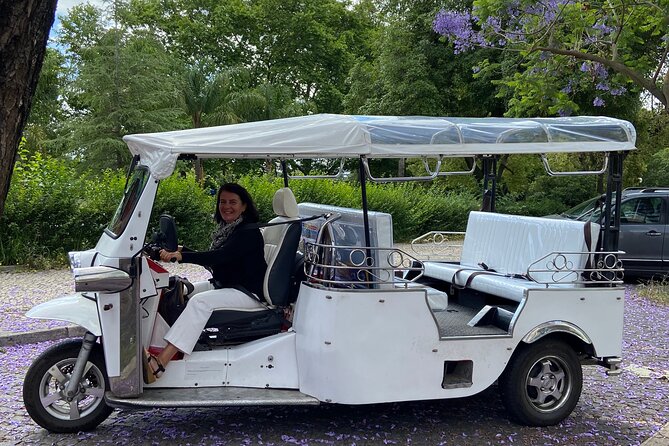
Lisbon clicks fast in a tuk-tuk. This private 4-hour classic route is a friendly way to get your bearings, with a guide who can tailor stops around what you want to see. I like the photo-flexible pace most, because you’re not stuck marching on foot every time you spot a perfect angle; you can pause, snap, and go. One thing to watch: the clock moves fast, and several major sights have ticket costs that are not included.
You’ll start at Hard Rock Café Lisboa, right in the city’s action on Av. da Liberdade, and you’ll roll through the earthquake-rebuilt downtown before heading toward Belém’s bigger monuments. It’s a great fit for first-timers, and it works well for families who want variety without the sore-feet tax. The tour runs in English with a private guide, and you’ll end back at the meeting point.
In This Review
- Key Things to Know Before You Go
- The Value Pitch: What You’re Really Paying For
- Starting at Hard Rock Café: Getting Oriented in Lisbon
- Pombaline Lisbon, Chiado, and Luís de Camões Square: The Earthquake Story Starts Here
- Church of São Roque: When Lisbon Turns Spiritual and Artistic
- Miradouro São Pedro de Alcântara: The View That Resets Your Brain
- Jardim do Príncipe Real: A More Resident-Feeling Break
- The Portuguese Government Stop: Assembleia da República
- Basilica da Estrela and Parque Eduardo VII: Big Architecture Meets Big Air
- Marques de Pombal, Main Avenue, and the Push to Restauradores Square
- Estação do Rossio: More Than a Train Station
- Convento do Carmo and the Big Downtown Squares by the Tagus
- LX Factory and a Creative Lisbon Detour
- Crossing the Tagus Story: 25 de Abril Bridge and Cordoaria
- Belém Day: Coaches, Monuments, and River Power (Ticket Costs Included Here)
- Torre de Belém and Padrão dos Descobrimentos: The Two Belém Anchors
- On-the-Go Costs: Tickets You’ll Want to Budget
- Who This Tuk-Tuk Tour Fits Best
- Should You Book Classic Lisbon & Earthquake by Private Tuk Tuk?
- FAQ
- How long is the Classic Lisbon & Earthquake Tour by Private Tuk Tuk?
- Is this tour private?
- What language is the tour offered in?
- Where does the tour start, and where do you end?
- Are entrance tickets included for the stops?
- What is the minimum age for the tour?
- Can I cancel for a full refund?
Key Things to Know Before You Go

- Private tuk-tuk + private guide: your group sets the tone, not a big bus schedule.
- Short stops, smart routing: you get highlights from multiple neighborhoods in about four hours.
- Earthquake-era Lisbon themes: you’ll see how the 1755 rebuilding shaped the center.
- Free photo viewpoints are built in: expect multiple quick “get out, look, shoot” moments.
- Belém’s big ticket sites are optional costs: some entries (like Jerónimos) add up if you choose them.
- Guides can be flexible: in at least one case, a guide planned around closures on Monday.
The Value Pitch: What You’re Really Paying For
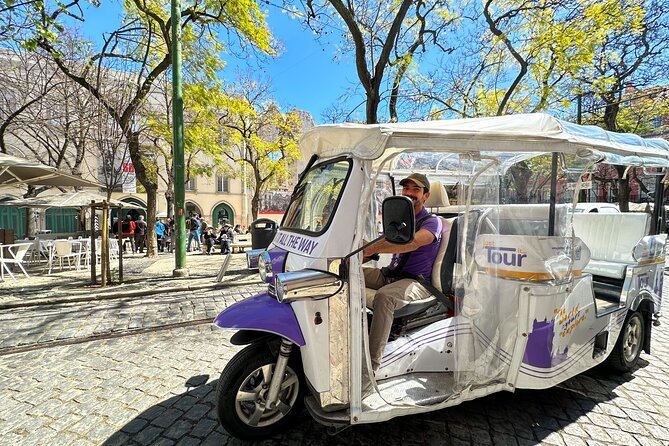
At $174.22 per person for a 4-hour tour, you’re paying for three things: private transport, a private guide, and time-saving access to scattered highlights. Lisbon’s sights are spread out, and without a car you can waste a lot of energy on buses, trams, and walking uphill. The tuk-tuk solves that by acting like a movable viewing platform.
What makes this good value is the way the route mixes quick stops and longer, meaningful breaks. Some stops are just to orient you, like the downtown squares where the city’s design tells the story. Other stops are for the “stand and stare” moments—especially viewpoints and major monuments—where spending 10–20 minutes can genuinely change how you understand Lisbon.
The cost isn’t perfectly “one price, no thinking.” Several attractions on the route list entrance fees that are not included (more on that later). Still, if you treat tickets as choose-your-own-adventure, this pricing makes sense for first-time visitors who want both the headline sights and the context.
The hills done the easy way, more tuk-tuk runs
- True 4Hour Private Tuk Tuk Tour: Discover Lisbon with a Local!
★ 5.0 · 8,008 reviews - Lisbon: Private Guided Tuk-Tuk Tour with Hotel Pickup
★ 4.9 · 4,552 reviews - Private Lisbon Sightseeing Tuk-Tuk Tour: Alfama, Belém & More
★ 5.0 · 4,277 reviews - Lisbon Highlights: Private Tuk Tuk Tour Adventure Sightseeing
★ 5.0 · 3,284 reviews
Starting at Hard Rock Café: Getting Oriented in Lisbon
The meeting point is easy to find: Hard Rock Café Lisboa, Av. da Liberdade 2. Starting here is smart because it anchors you in central Lisbon, not on the far edges of town where a day can start to feel complicated.
From your first minutes, the tone is practical. You pass key downtown areas with your guide ready to explain what you’re looking at—down to the curiosities of the streets and the building styles. Even if you’re jet-lagged, you’ll start to build a mental map quickly: downtown squares, viewpoints, and the long push toward Belém.
This kind of start matters more than you might think. When Lisbon is your first big city stop, “what am I looking at?” is the question that eats time. A guide who can answer while you’re riding makes the whole day feel lighter.
Pombaline Lisbon, Chiado, and Luís de Camões Square: The Earthquake Story Starts Here
You begin by moving through the downtown Pombaline area and Chiado. This is where Lisbon’s big historical turning point shows up in the architecture. After the 1755 earthquake, the center was rebuilt with a more planned, neoclassical approach—so instead of random-looking streets, you get a center that feels designed.
One of your first “slow down and look” areas is around Largo das duas Igrejas and Luís de Camões Square. The square is laid out like a pleasant pause—trees, stone banks, open space—and the famous Portuguese sidewalk pattern under your feet turns it into a mini outdoor artwork. If you like noticing details, this stop pays off because you’re not just admiring big buildings; you’re seeing how the city decorates everyday ground.
If you’re traveling with kids, squares like this are ideal. They let everyone stretch, look around, and keep energy up while still feeling like you’re moving forward with the day.
Church of São Roque: When Lisbon Turns Spiritual and Artistic
Next comes the Church of São Roque. Even without going in, a guide-led stop like this is useful because churches in Lisbon often pack multiple layers: devotion, local power, art, and the way the city evolved around faith.
This stop works best when you’re open to slower listening for a few minutes. If you’re the type who wants “just tell me what to see and go,” you might find this one a bit more narrative than photo-heavy. But if you want context for why Lisbon’s buildings feel like they mean something, this is a strong anchor stop.
Worth a look before you lock anything else in around Lisbon:
Miradouro São Pedro de Alcântara: The View That Resets Your Brain
Then you hit Miradouro São Pedro de Alcântara for about 15 minutes. This is one of those places where the view does the heavy lifting. From here, Lisbon looks like a set of layered neighborhoods, roofs, hills, and river direction all in one frame.
What makes this stop valuable on a tuk-tuk tour is timing and effort. Lisbon viewpoints are often tied to stairs and steep walking. Here you can get to the viewpoint, enjoy the perspective, and move on without turning the day into a workout.
Admission is free here, so you’re paying in time, not tickets. It’s an easy “yes” stop for almost anyone.
Jardim do Príncipe Real: A More Resident-Feeling Break

After the big view, you get Jardim do Príncipe Real for around 15 minutes. This is a calmer pause—less about monuments, more about atmosphere. The point isn’t just shade and benches; it’s the feeling of Lisbon continuing beyond tourist checklists.
It’s also a nice breather if your group includes people who need breaks. The tour is fast-moving by design, but this kind of garden stop helps everyone reset before the next buildings and squares.
Free admission means you can treat this as breathing room rather than a timed ticket stop.
The Portuguese Government Stop: Assembleia da República
You’ll also pass by Assembleia da República for about 5 minutes. It’s the legislative body of Portugal’s state, and the building’s presence is hard to miss. Even a short stop can be worthwhile if your guide points out the details that match Portugal’s civic identity.
This one is more “look at the big institution” than “spend your soul inside.” If you want deeper stops, you’ll likely enjoy the longer breaks later in the day more.
Basilica da Estrela and Parque Eduardo VII: Big Architecture Meets Big Air
Two more stops keep the middle of the day visually strong:
- Basilica da Estrela (~15 minutes): a monument known for details and history.
- Parque Eduardo VII (~15 minutes): a breathtaking garden area where you get space and perspective.
These stops are worth it because they balance Lisbon’s dense downtown. If Chiado and the older streets make the city feel like it’s packed in, these areas help you see the city has room to breathe.
Free admission keeps the mental math simple. You can enjoy these without worrying about an extra fee for a short visit.
Marques de Pombal, Main Avenue, and the Push to Restauradores Square
As you continue, you’ll stop to see the statue of Marques de Pombal and discover details around Lisbon’s main avenue, then end at Restauradores Square.
This stretch is about “reading the city.” Marques de Pombal is closely tied to Portugal’s 1755-era rebuilding era, so seeing his statue isn’t random decoration—it fits the earthquake theme the tour name hints at.
Restauradores Square is a good transition point. It’s central, recognizable, and it sets you up for the next phase of the day—rail-era architecture and historic downtown blocks closer to the river.
Estação do Rossio: More Than a Train Station
You’ll spend around 5 minutes at Estação do Rossio. The architecture is the star here. The station isn’t just transportation; it’s a landmark that helps you understand how Lisbon organizes movement and civic life.
Short stop means quick photos and a brief explanation, not a long museum-style visit. But if your goal is city overview with a clean timeline, it fits perfectly.
Convento do Carmo and the Big Downtown Squares by the Tagus
Convento do Carmo is one of the more history-forward stops. The construction of the Carmo church dates back to 1389, and it was built by religious devotion tied to D. Nuno Álvares Pereira. It also sits on a hill opposite the castle of S. Jorge, which gives the building a dramatic sense of placement in the city’s geography.
There’s an entrance fee listed for the Basilica and Convent of Nossa Senhora do Carmo (€5.00 per person), so treat this as a choose-to-enter moment. If you only have energy for one ticketed interior in this half of the day, this is a reasonable candidate.
Then you move toward Praça do Comércio (also called Terreiro do Paço), a major square right by the Tagus River. With around 10 minutes here, the goal is simple: feel the space, understand the riverfront core, and see the neoclassical rebuild feel that wraps around the square area.
Free admission makes this a good “everyone wins” stop.
You also get a quick look at Elevador de Santa Justa (ticket not included). Even if you don’t ride it, seeing it from outside helps you appreciate how Lisbon turns vertical movement into architecture.
LX Factory and a Creative Lisbon Detour
On the way further into Lisbon’s story, you’ll pass through LX Factory for about 10 minutes. This is a commercial and artistic space in Alcântara, and it’s free to visit on the tour as a stop.
This is a good time for a practical mindset: Lisbon is not only old stone and classic viewpoints. It’s also where people work, shop, create, and hang out now. If you want your photos to include something modern and human-scale, LX Factory helps.
Crossing the Tagus Story: 25 de Abril Bridge and Cordoaria
Two of the route moments extend Lisbon beyond its historic center:
- A pass by the 25 de Abril Bridge, connecting Lisbon’s north bank with Almada on the south bank.
- A look at Fábrica Nacional de Cordoaria (Cordoaria Nacional), tied to Portuguese Navy manufacturing.
These aren’t “buy a ticket, enter a hall” moments. They help you understand how Lisbon relates to the wider region: movement, industry, and how the city grew around water.
It’s especially helpful if your Belém day feels like a lot of monuments. This kind of detour keeps your understanding from becoming only art and churches.
Belém Day: Coaches, Monuments, and River Power (Ticket Costs Included Here)
The Belém stretch is where the tour starts to feel like a greatest-hits reel, because you’re moving through Portugal’s imperial and memorial spaces.
You’ll have a quick stop at Museu Nacional dos Coches (National Coach Museum) for about 10 minutes, with a listed entrance fee of €8.00 per person. It’s a strong option if you like vehicles and royal display objects, but remember: you don’t get long here. If interiors are your priority, consider whether to spend your time inside or focus on what you can absorb quickly.
Next you may pass Palácio de Belém (listed as ticket not included). Your stop time is short (~5 minutes), so again think photos and orientation, not a full palace visit.
Then comes the big one: Jerónimos Monastery. You’ll have around 20 minutes, and the listed entrance fee is €10.00 per person. The monastery was built at the end of the 15th century by King D. Manuel I, and it tends to dominate how people remember Belém. This is the stop where the earthquake theme turns into a different kind of story: Lisbon as a powerhouse that built monumental religious and cultural statements.
You’ll also stop at Centro Cultural de Belém (CCB) for about 10 minutes (ticket not included). It’s more about the contemporary civic layer than an old-stone deep dive.
There’s also Museu do Combatente (Culture, Citizenship and Defense), connected to topics like the Great War, overseas war, peace operations, and aviation in the 19th century—again listed as ticket not included, so treat it as an interest stop if you’re museum-minded.
Then you may encounter the Electricity Museum detail associated with the old Central Tejo, run by the EDP Foundation (stated as a former museum). If you love tech and industrial Lisbon, this is the kind of stop that can feel refreshing compared with only church-and-palace routes.
Torre de Belém and Padrão dos Descobrimentos: The Two Belém Anchors
Toward the end of the Belém sequence, you’ll get stops for:
- Torre de Belém (~20 minutes). Entrance ticket not included, and it has a listed fee of €6.00 per person. This is a fortification tied to the city’s riverfront defense story.
- Padrão dos Descobrimentos (~20 minutes). Entrance fee listed as €5.00 per person.
These are both strongly “Lisbon from the water” themed stops. If you’re thinking about Lisbon as a port city, this is where the logic clicks.
A quick word on timing: since it’s a 4-hour tour, your interior time depends on what your guide recommends and how long your group wants to linger. If you’re trying to do every ticketed interior, you may run out of time. If you choose one or two key ones, you’ll usually enjoy the day more.
On-the-Go Costs: Tickets You’ll Want to Budget
Not everything is included. The tour lists these specific entrance fees as not included:
- Lisbon Se Cathedral: €5.00 per person
- Padrão dos Descobrimentos: €5.00 per person
- Basilica and Convent of Nossa Senhora do Carmo: €5.00 per person
- MAAT (Museu de Arte, Arquitetura e Tecnologia): €5.00 per person
- Torre de Belém: €6.00 per person
- Museu Nacional dos Coches: €8.00 per person
- Mosteiro dos Jerónimos: €10.00 per person
Other stops are marked as ticket not included (like Elevador de Santa Justa, Palácio de Belém, and several cultural sites), but no exact prices are listed for those items here. Your best move is simple: decide in advance which interiors you truly care about, then let your guide adjust the plan so you don’t spend the last ten minutes feeling rushed.
Who This Tuk-Tuk Tour Fits Best
This tour fits best if you want a structured overview with short breaks and the ability to pause for photos. It’s ideal for:
- First-time Lisbon visitors who want the earthquake-era center and Belém’s major landmarks in one day
- Families who may not want to tackle constant uphill walking
- Groups who value flexibility, especially for photography needs
It may be less ideal if you want long museum-style stays. This is built for seeing a lot, not for deep solo study inside every site.
Also note the tour sets a minimum age of 7 years old, and it’s designed for most travelers to participate. If anyone has walking limits, it’s smart to tell the guide right away so they can plan around it. One guide described being sensitive to walking needs and offering a Plan B when a stop wasn’t open.
Should You Book Classic Lisbon & Earthquake by Private Tuk Tuk?
Yes, book this if your goal is a high-efficiency introduction with a private guide, and you want to avoid the sore-feet grind while still seeing the core of Lisbon and the Belém highlights. The central meeting point makes it easy, and the free viewpoint-style stops help you get value even if you skip a few paid interiors.
Hold off—or book with a lighter “must-see list”—if you’re determined to enter every major ticketed site. With a 4-hour window and several entrance fees along the way, you’ll get the best experience by choosing a couple of interiors and letting the rest be story-and-views.
If you want a day that feels like Lisbon got organized for you, this is a strong option. Just plan your tickets, wear comfortable shoes for the quick walking bits, and ask your guide to tune the route to your group’s pace.
FAQ
How long is the Classic Lisbon & Earthquake Tour by Private Tuk Tuk?
It lasts about 4 hours.
Is this tour private?
Yes. It’s a private tour/activity, so only your group participates.
What language is the tour offered in?
It’s offered in English.
Where does the tour start, and where do you end?
You start at Hard Rock Café Lisboa (Av. da Liberdade 2, 1250-144 Lisboa, Portugal) and end back at the meeting point.
Are entrance tickets included for the stops?
No. Several entrances are listed as not included, including Jerónimos Monastery, Torre de Belém, Museu Nacional dos Coches, and others (with specific prices listed).
What is the minimum age for the tour?
The minimum age is 7 years old, and children must be accompanied by an adult.
Can I cancel for a full refund?
Yes. You can cancel for a full refund up to 24 hours in advance of the experience start time.
More Tours in Lisbon
- Lisbon City Center Tour – The Unmissable Lisbon★ 5.0 · 22,234 reviews
- Lisbon: History, Stories and Lifestyle Walking Tour★ 4.8 · 10,902 reviews
- True 4Hour Private Tuk Tuk Tour: Discover Lisbon with a Local!★ 5.0 · 8,008 reviews
- Winner 2025 Undiscovered Lisbon Food & Wine Tour by Eating Europe★ 5.0 · 6,390 reviews
- Lisbon: Sintra, Pena, Cabo da Roca, Cascais Tour with Pickup★ 4.8 · 5,445 reviews
More Tour Reviews in Lisbon
- Lisbon City Center Tour – The Unmissable Lisbon★ 5.0 · 22,234 reviews
- Lisbon: Sintra, Pena, Regaleira, Cabo da Roca & Cascais★ 4.7 · 19,656 reviews
- Lisbon Card: 24, 48, or 72-Hour Pass★ 4.5 · 17,944 reviews
- Lisbon: Jerónimos Monastery Entrance Ticket★ 4.1 · 14,164 reviews
- Lisbon: History, Stories and Lifestyle Walking Tour★ 4.8 · 10,902 reviews
More Hills by Tuk-Tuk
- True 4Hour Private Tuk Tuk Tour: Discover Lisbon with a Local!★ 5.0 · 8,008 reviews
- Lisbon: Private Guided Tuk-Tuk Tour with Hotel Pickup★ 4.9 · 4,552 reviews
- Private Lisbon Sightseeing Tuk-Tuk Tour: Alfama, Belém & More★ 5.0 · 4,277 reviews
- Lisbon Highlights: Private Tuk Tuk Tour Adventure Sightseeing★ 5.0 · 3,284 reviews
- Welcome Lisbon Tour with Local Guide in Private Eco Tuk Tuk★ 5.0 · 1,691 reviews
Just in: fresh Lisbon reviews from the team





Lisbon Tuk-Tuk Tours, compared.
 ★ 5.0True 4Hour Private Tuk Tuk Tour: Discover Lisbon with a Local!From $1088,008 reviews
 ★ 4.9Private Guided Tuk-Tuk Tour with Hotel PickupFrom $1534,552 reviews
 ★ 5.0Private Lisbon Sightseeing Tuk-Tuk Tour: Alfama, Belém & MoreFrom $524,277 reviews
 ★ 5.0Lisbon Highlights: Private Tuk Tuk Tour Adventure SightseeingFrom $843,284 reviews
 ★ 5.0Welcome Lisbon Tour with Local Guide in Private Eco Tuk TukFrom $171,691 reviews
 ★ 4.9Private City Tour by Eco Tuk TukFrom $281,215 reviews
 ★ 5.0Old Town TukTuk Tour and Scenic Viewpoints in AlfamaFrom $35974 reviews
 ★ 5.0Explore Lisbon by Tuk Tuk: History and ViewpointsFrom $19840 reviews