
Reviewed · CITY TOURS
City Tour, wonders of ancient Lisbon through the monuments
Lisbon looks best from above, and this tour makes it easy. I like that it mixes quick stops with killer viewpoint time, plus a private guide-led rhythm that keeps the hills from wearing you down. I also love the A/C pickup with WiFi and water, which helps if you’re arriving by plane or feeling a little jet-lagged. One thing to consider: each monument stop is brief, so you’ll see a lot fast, but you won’t have long to linger and go deep at every site.
You’ll start in the calmer, greener heights and work your way toward the oldest streets and the biggest city views. The route is designed for getting your bearings: gardens, cathedral history, Alfama lanes, and then a run of miradouros where Lisbon suddenly makes sense.
As for cost, $36.05 per person isn’t just paying for a checklist. You’re also paying for transport + a guide who can time the walks and photo breaks so you get the good angles. Most listed stops have free admission, so your money goes to the experience, not entry fees.
In This Review
- Key Highlights to Know Before You Go
- Getting Started: Eduardo VII to the Lisbon Cathedral Story
- Alfama Without the Confusion: Ginjinhas and the Fado Legend
- Miradouro Das Portas do Sol: The Tagus View That Reframes Lisbon
- Miradouro Da Senhora Do Monte: Lisbon’s Highest Point Moment
- The 1755 Rebuilding Story: Royal Palace Square and the Reconstruction Mentor
- A Classic Architectural Pause: Santa Engrácia and a National Landmark
- The Late-1800s Train Station Stop Near Rossio
- Price and Value: What $36.05 Really Covers
- The Guide Factor: Carlos and Andre’s Style of Making Stops Work
- Who Should Book This Lisbon Monuments Tour
- Should You Book It?
- FAQ
- How long is the Lisbon monuments city tour?
- What’s the price per person?
- Is there pickup included?
- Is the tour private?
- What language is the tour offered in?
- Do you need a ticket on your phone?
- Are there any free admissions on the route?
- Is the tour easy to join for most people?
- Should you book ahead?
Key Highlights to Know Before You Go
- Pickup with A/C, WiFi, and water so you’re comfortable before you even start walking
- Private format: only your group, with the guide able to adjust the pace
- Big-city views without the full hike via major miradouros on the high ground
- Old Lisbon history in plain language, from the cathedral’s beginnings to 1755 reconstruction
- Photo-friendly timing at multiple viewpoints and squares (including lots of stop-and-shoot time)
- Great first-day option, especially if you want orientation fast rather than slow wandering
Getting Started: Eduardo VII to the Lisbon Cathedral Story
This tour works because it begins with momentum, not stress. You’re picked up in a comfortable vehicle with air conditioning, WiFi, and water, then you’re dropped at the first stop where you can breathe and reset. It’s a smart start if Lisbon has you arriving tired, because you’re not immediately thrown into steep, slippery streets.
Stop one is Parque Eduardo VII, a garden space built in honor of the King of England. Even if you’re not there for horticulture, it’s a good warm-up: open air, good sightlines, and a calmer setting before the architecture and hills of older Lisbon.
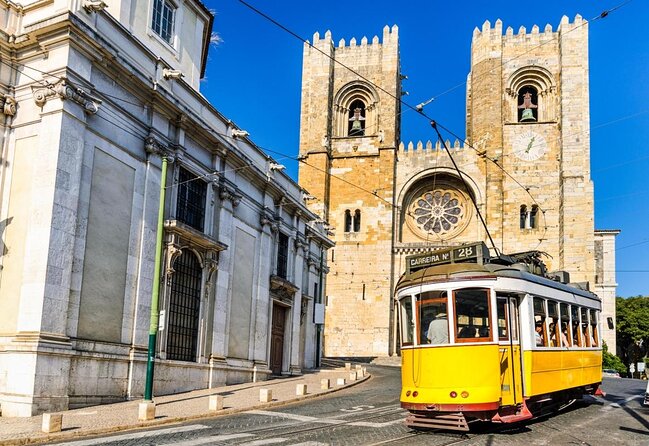
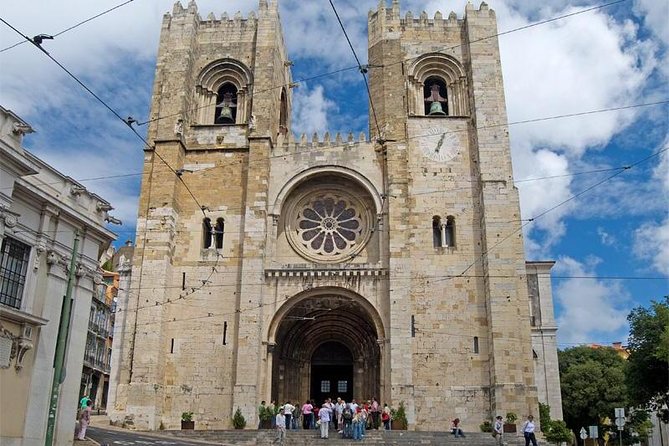
Next comes Lisbon Cathedral, whose construction started in 1147 on a site where a Muslim mosque once stood. That single fact gives you a framework for the whole trip. Lisbon wasn’t shaped by one culture or one century; it layers them. You’ll get the kind of explanation that helps you read what you see instead of just collecting photos.
This is also where you’ll feel the tour’s pace. The stop is short, so it’s not meant for a long museum-style visit. Instead, it’s a quick orientation plus the most important historical points you can connect later when you’re on your own.
Worth a look before you lock anything else in around Lisbon:
- Lisbon City Center Tour – The Unmissable Lisbon
★ 5.0 · 22,234 reviews - Lisbon: Daytime/Sunset/Night City Sailboat Tour with Drink
★ 4.9 · 3,114 reviews - Lisbon: City Highlights and Viewpoints E-Bike Tour
★ 4.9 · 1,556 reviews - Lisbon: City Sightseeing Hop-On Hop-Off Bus Tour
★ 3.8 · 1,220 reviews
Alfama Without the Confusion: Ginjinhas and the Fado Legend
After the cathedral, you head toward Alfama, Lisbon’s old, bohemian quarter. The streets here can feel like a maze, but the tour gets you there with context, so you’re not just wandering uphill and hoping for the best.
One of the most fun parts is the stop near where Fado is supposedly born. That doesn’t mean Lisbon’s music history is simple. It means the area carries a story people still retell, and that makes the neighborhood feel alive even when you’re just standing on a corner. You’ll also get a chance to soak in the look of Alfama: tight streets, old stone, and a neighborhood vibe that still feels more lived-in than staged.
There’s time for a quick break too. If you want to taste ginjinha, this is a practical moment to do it. Not because you must, but because this kind of neighborhood is better experienced through small rituals like a local liqueur stop than through a rushed checklist.
A small drawback: because Alfama is full of charm and corners, it can be tempting to keep walking after the planned stop. Don’t fight it too hard—just plan to return later for a slower night in the lanes. This tour is about getting there, understanding it, and grabbing the key views so you know where to go next.
Miradouro Das Portas do Sol: The Tagus View That Reframes Lisbon
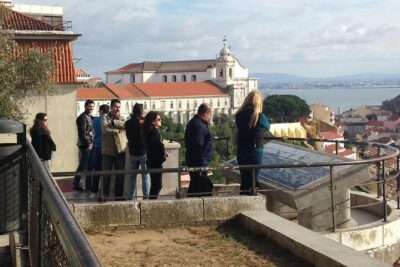
Then you get the first big panoramic payoff: Miradouro das Portas do Sol. This spot is essentially a large balcony looking over the Tagus River, and it’s exactly the kind of place where the city stops feeling like a map and starts feeling like a layout.
What I like about this stop is that it’s visual learning. After Parque Eduardo VII and the cathedral, you now understand how Lisbon’s geography does the work. Hills, viewpoints, and neighborhoods aren’t random—they’re part of why Lisbon has the skyline it does.
The time here is short, so you’ll want to be ready when you arrive. If you’re photographing, it helps to pick your angle fast: wide view first, close details second. That way you don’t lose the main shot while waiting for the perfect light.
If you’re the type who needs a second or third look to fully process a view, don’t worry. You’ll come back to this feeling later in the tour at another miradouro. That’s one of the best tricks here: repeat the format at different heights so you build a mental model of the city.
Miradouro Da Senhora Do Monte: Lisbon’s Highest Point Moment
Next is Miradouro da Senhora do Monte, which sits on the highest ground in Lisbon. This one gives you a different kind of understanding: not just the river and the city spread, but the sense of scale over the old quarters.
This viewpoint also helps you connect Lisbon to São Jorge Castle nearby, because it’s on the shores overlooking the old city. Even if you don’t go into the castle area, you’ll see the structure of neighborhoods and streets below. It’s like switching from a postcard view to a strategic map view.
Time is again limited, but this stop is timed for impact. If you can, try to arrive with your phone camera ready and your questions ready too. A good guide will point out what you’re seeing, not just tell you where it is.
For many people, this is the strongest single stop of the tour because it feels like you’re standing on the city’s crown. It’s also a great moment for photos that don’t look like every other Lisbon photo, because you’re at a real elevation advantage.



The 1755 Rebuilding Story: Royal Palace Square and the Reconstruction Mentor
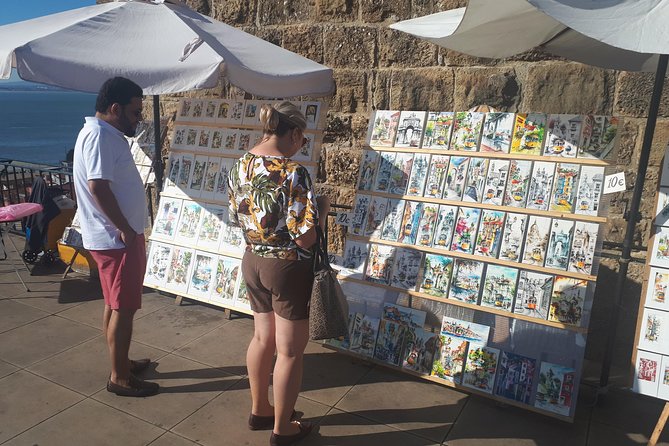
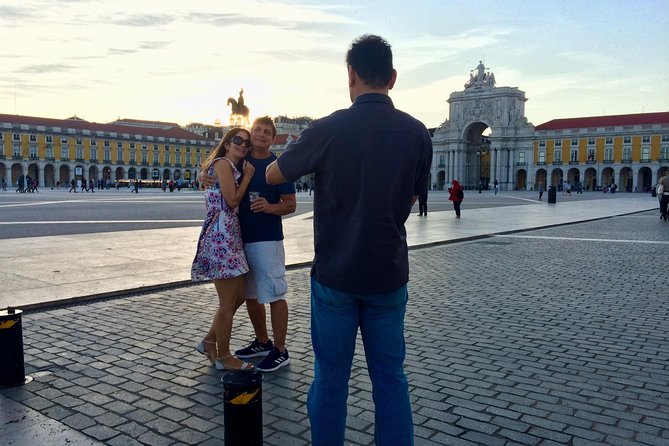
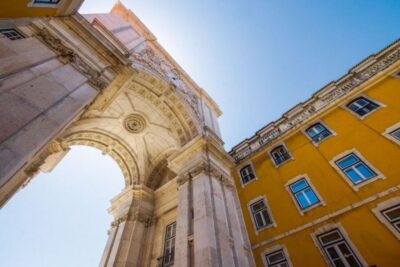
After the viewpoints, the tour pivots from scenery to story. You’ll visit the place where the Royal Palace stood before the 1755 earthquake, and today it’s a large square surrounded by 18th- and 19th-century buildings.
This stop matters because it shows how Lisbon remade itself after disaster. The earthquake wasn’t just a tragic event; it reshaped the city’s planning and identity. When you stand in that square, you can feel how public space became part of the rebuilding process.
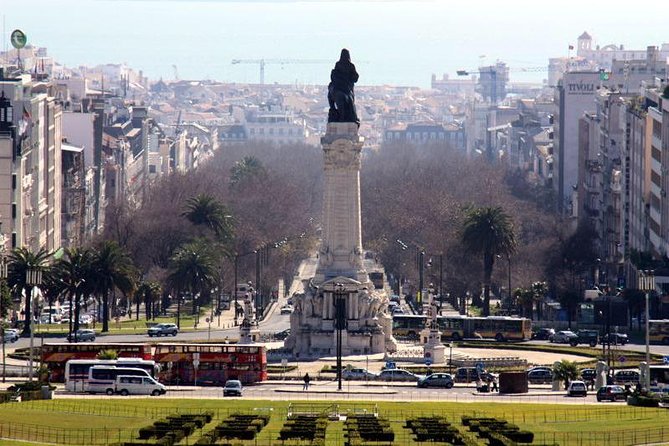
In the same zone, you’ll also see a monument honoring the Marquis who mentored the reconstruction of Lisbon after the 1755 earthquake. If you only take one historical takeaway from this part of the tour, make it this: rebuilding is a political and cultural act. Lisbon didn’t just repair damage; it reorganized how the city would function afterward.
Then you’ll move to another central square with a statue of Pedro IV or Pedro I in the Brazil context. This adds a different layer to your understanding of Lisbon. Portugal’s story is global, and the city’s monuments often reflect that outward reach, not only local events.
If you’re the type who gets bored by statues, keep your mind open here. In Lisbon, squares and statues are like book covers. They point you toward bigger themes: power, rebuilding, and identity. The tour keeps those themes easy to follow without turning it into a lecture.
A Classic Architectural Pause: Santa Engrácia and a National Landmark
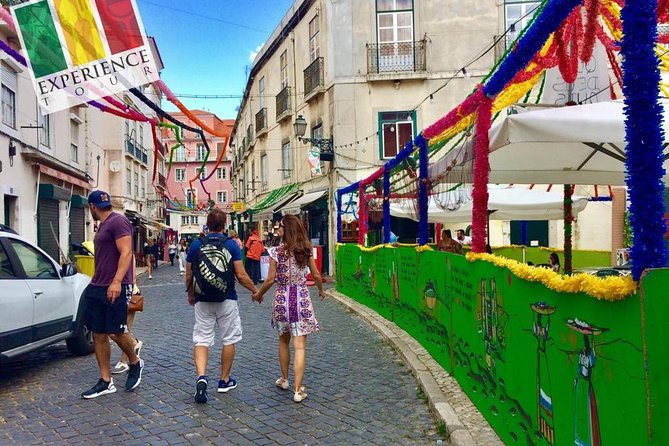
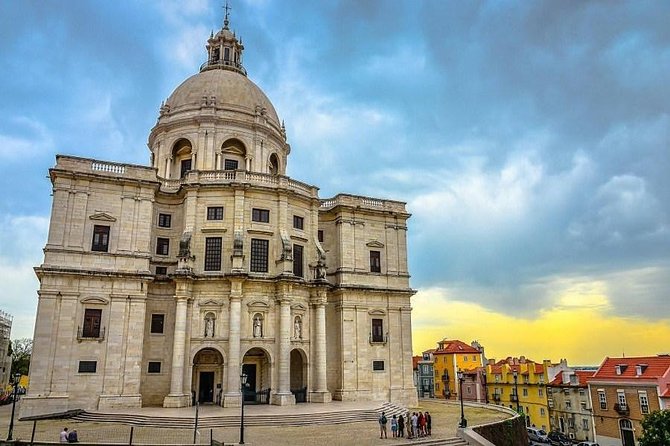
One of the stops in the middle of the monument cluster is the church of Santa Engrácia, which was designated Panteão Nacional in 1966. This detail helps you understand why it’s more than just a pretty church stop. A national pantheon role changes how you’re meant to view the building.
Now, a quick note on expectations: this is still a tour with limited time per stop. So treat it like a guided orientation to a major monument. If you want to go deeper, you’ll have a clearer sense of what to look for next time you return on your own.
The upside is that even a short stop here can shift your whole day. Once you know what Santa Engrácia represents in Lisbon’s national story, you start noticing the building differently as you move around.
The Late-1800s Train Station Stop Near Rossio

The tour also includes a stop at one of Lisbon’s most beautiful train stations, inaugurated at the end of the 19th century and located on the outskirts of Rossio Square.
This kind of stop is underrated, and I think it’s smart that it’s included. Train stations are where Lisbon meets everyday life: commuters, arrivals, departures, and quick glances upward at impressive ceilings and design. It’s a break from viewpoint thinking and a chance to see the city at human speed.
Even if you’re not riding the rails during your trip, this stop gives you a different texture than churches and miradouros. And because the station is tied to the city’s late-19th-century era, it fits the tour’s theme of Lisbon’s ongoing evolution.
Price and Value: What $36.05 Really Covers
At $36.05 per person for about 1 hour 45 minutes, this tour is priced for people who want a strong orientation without paying for a half-day. The biggest value isn’t just the route; it’s the combination of guided stops and transport.
You’re also not locked into paying entry fees at the places that list free admission. Some of the stops on the route are marked as free, including Parque Eduardo VII, Lisbon Cathedral, Alfama, and the listed miradouros. That means more of your budget stays focused on getting where you need to be, with the guide doing the context work.
Is it perfect value for everyone? Not necessarily. If you’re the kind of traveler who loves long museum-style pacing, you might feel impatient with the short stop times. But if your goal is to see key monuments and viewpoints while skipping some of the steep navigation, it’s a solid deal.
The Guide Factor: Carlos and Andre’s Style of Making Stops Work
A lot of this tour’s quality comes down to the guide. In the information you’re likely to see for this experience, the names Carlos and Andre show up with strong mentions for how they handle the day.
What stands out is flexibility. There are examples of a guide adjusting pickup location, taking extra time for photos, and even extending the tour when requested. That matters in Lisbon because angles matter. The difference between a good photo and a great one is often timing, not equipment.
There’s also mention of a guide taking photos of participants with permission and sending them later by email. That’s a practical kindness, especially if you’re traveling with someone who always seems to be the one behind the camera.
So the real takeaway: if you like your day shaped around viewpoints and explanations you can actually remember, a good guide turns a short tour into a lasting map in your head.
Who Should Book This Lisbon Monuments Tour
This is a great match if:
- You want your first day in Lisbon to feel organized instead of chaotic
- You don’t want to spend hours climbing between viewpoints on your own
- You like learning just enough history to make the streets mean something
- You’re traveling with parents or anyone who needs easier pacing but still wants major sights
It may be less ideal if you:
- Prefer long, quiet time inside churches or museums
- Want to fully explore Alfama’s winding streets without any timed constraints
- Expect a deep dive into every building (this tour is about getting your bearings, not marathon sightseeing)
Should You Book It?
I’d book it if you’re aiming for efficiency with soul. You get a compact route that hits major Lisbon themes: layered history, viewpoints over the Tagus, and the rebuilding story after 1755. The A/C pickup is a real comfort win, and the free-admission nature of several stops keeps the day feeling like good value.
If you’re already planning to return to Lisbon’s neighborhoods later, this tour is a smart primer. It gives you landmarks, viewpoints, and context so your future wandering has direction instead of guesswork.
Book it when you want Lisbon to make sense fast. Then come back for the slow parts on your own.
FAQ
How long is the Lisbon monuments city tour?
It runs about 1 hour 45 minutes.
What’s the price per person?
The price is $36.05 per person.
Is there pickup included?
Yes. Pickup is offered in a comfortable vehicle with air conditioning and WiFi, plus water.
Is the tour private?
Yes. It’s private, and only your group participates.
What language is the tour offered in?
The tour is offered in English.
Do you need a ticket on your phone?
Yes. You’ll receive a mobile ticket.
Are there any free admissions on the route?
Several stops list free admission, including Parque Eduardo VII, Lisbon Cathedral, Alfama, Miradouro das Portas do Sol, and Miradouro da Senhora do Monte.
Is the tour easy to join for most people?
Most travelers can participate. Service animals are allowed, and it’s near public transportation.
Should you book ahead?
Confirmation is subject to availability, and booking is often made about 25 days in advance.
More City Tours in Lisbon
- Lisbon City Center Tour – The Unmissable Lisbon★ 5.0 · 22,234 reviews
- Lisbon: Daytime/Sunset/Night City Sailboat Tour with Drink★ 4.9 · 3,114 reviews
- Lisbon: City Highlights and Viewpoints E-Bike Tour★ 4.9 · 1,556 reviews
- Lisbon: City Sightseeing Hop-On Hop-Off Bus Tour★ 3.8 · 1,220 reviews
- Lisbon: Private City Tour by Eco Tuk Tuk★ 4.9 · 1,215 reviews
More Tours in Lisbon
- Lisbon City Center Tour – The Unmissable Lisbon★ 5.0 · 22,234 reviews
- Lisbon: History, Stories and Lifestyle Walking Tour★ 4.8 · 10,902 reviews
- True 4Hour Private Tuk Tuk Tour: Discover Lisbon with a Local!★ 5.0 · 8,008 reviews
- Winner 2025 Undiscovered Lisbon Food & Wine Tour by Eating Europe★ 5.0 · 6,390 reviews
- Lisbon: Sintra, Pena, Cabo da Roca, Cascais Tour with Pickup★ 4.8 · 5,445 reviews
More Tour Reviews in Lisbon
- Lisbon City Center Tour – The Unmissable Lisbon★ 5.0 · 22,234 reviews
- Lisbon: Sintra, Pena, Regaleira, Cabo da Roca & Cascais★ 4.7 · 19,656 reviews
- Lisbon Card: 24, 48, or 72-Hour Pass★ 4.5 · 17,944 reviews
- Lisbon: Jerónimos Monastery Entrance Ticket★ 4.1 · 14,164 reviews
- Lisbon: History, Stories and Lifestyle Walking Tour★ 4.8 · 10,902 reviews
Just in: fresh Lisbon reviews from the team





City Tours, compared.
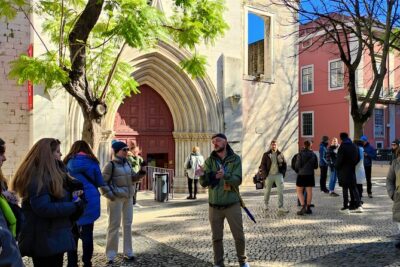 ★ 5.0Lisbon City Center Tour – The Unmissable LisbonFrom $322,234 reviews
 ★ 4.9Daytime/Sunset/Night City Sailboat Tour with DrinkFrom $413,114 reviews
 ★ 4.9City Highlights and Viewpoints E-Bike TourFrom $291,556 reviews
 ★ 3.8City Sightseeing Hop-On Hop-Off Bus TourFrom $381,220 reviews
 ★ 4.9Private City Tour by Eco Tuk TukFrom $281,215 reviews
 ★ 4.9Tagus River Sailboat City CruiseFrom $411,212 reviews
 ★ 5.0Private City Tour by Tuk-TukFrom $41789 reviews
 ★ 4.7City Tour by Tuk TukFrom $117617 reviews
Browse the lists this tour appears in