
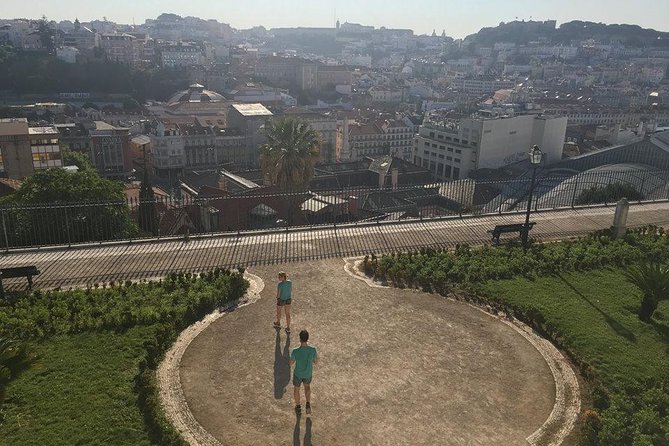
Reviewed · CITY TOURS
City Centre Run in Lisbon
Trade maps for running shoes in Lisbon, on a guided city-center run with pickup and stops for viewpoints, markets, monuments, and river views. In about 1½ hours, you cover multiple neighborhoods without the usual hop-on hop-off backtracking.
What I like most is how the guide brings 10+ years of local running experience to keep things smooth and safe, while sharing practical stories and photo tips at the corners where it matters—guides like Pedro and Nuno get called out for that. The main consideration: the route involves climbs and a moderate fitness level, so it’s not for an everyone-walks pace.
In This Review
- Key Things I’d Book This For
- Why a Lisbon City Centre Run Feels Smarter Than Standard Touring
- Price and Logistics: What You Pay For (and Why It Can Be Worth It)
- Safety, Fitness, and the Real Deal About Lisbon’s Elevation
- Praca do Comercio (Terreiro do Paco): The River Start That Sets the Tone
- Alfama: Closer Streets, Longer Feel, and Viewpoint Climbing
- Avenida da Liberdade to Rossio Station: Where Lisbon Gets Broad and Elegant
- Elevador de Santa Justa: The Moment You Feel Lisbon’s Height
- Lisbon Cathedral: A Strong Finish With Context, Not Just Photos
- How the Guides Make This More Than Exercise
- What to Wear and Bring for a 90-Minute Lisbon Morning Run
- Who This Lisbon Run Is Best For (and Who Should Skip It)
- Should You Book This Lisbon City Centre Run?
- FAQ
- How long is the City Centre Run in Lisbon?
- Is pickup available for the Lisbon run?
- What’s the tour format: private or shared?
- What level of fitness do I need?
- Do I need to speak Portuguese or is English available?
- What if the weather is bad?
- Can I cancel and get a full refund?
Key Things I’d Book This For
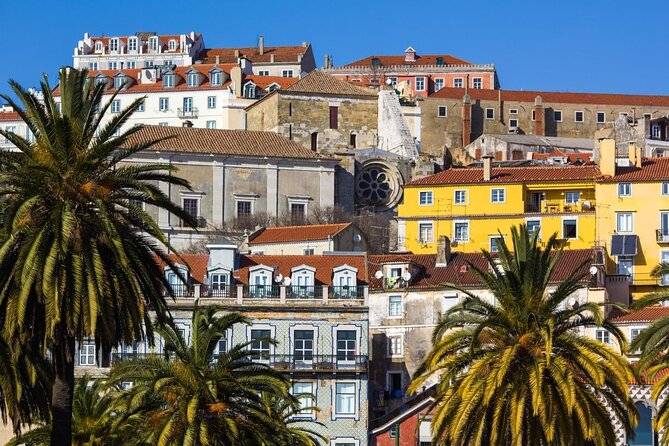
- A city-center route built around running so you see Lisbon in motion, not just from sidewalks
- Pickup offered which helps you start with less friction and more “go time”
- Viewpoints, markets, and river scenery packed into a tight 90-minute window
- Stops that come with stories and history context rather than random landmark photos
- Guides with 10+ years of experience focused on running safely
- Private format for your group (no mingling with strangers)
Why a Lisbon City Centre Run Feels Smarter Than Standard Touring
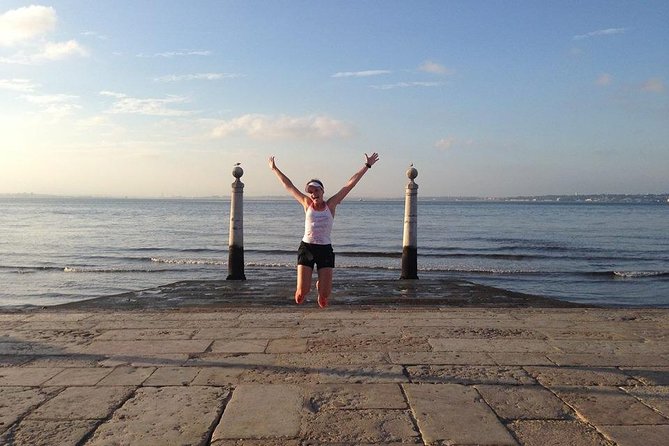
Lisbon is one of those cities where the views are worth the effort, but the getting-there can be tiring. This kind of tour flips the script: you move by running, and the route is planned around the parts of the city that make Lisbon famous. You’re not just ticking off monuments—you’re getting a feel for how different neighborhoods connect, from riverfront to hilltop viewpoints.
I also like the pacing concept. Because it’s time-boxed (about 1 hour 30 minutes), you get momentum. You can build a mental map quickly—exactly what you want if you’re staying only a few days. Guides often help you place landmarks in your head so later, when you’re wandering on your own, you’re not constantly re-orienting.
And yes, it’s active. That’s the point. But the “active” part doesn’t mean you’re left to figure it out alone. Your guide leads the route, keeps the running safe, and turns sight-seeing into something you actually remember because you experienced it with your body.
Worth a look before you lock anything else in around Lisbon:
- Lisbon City Center Tour – The Unmissable Lisbon
★ 5.0 · 22,234 reviews - Lisbon: Daytime/Sunset/Night City Sailboat Tour with Drink
★ 4.9 · 3,114 reviews - Lisbon: City Highlights and Viewpoints E-Bike Tour
★ 4.9 · 1,556 reviews - Lisbon: City Sightseeing Hop-On Hop-Off Bus Tour
★ 3.8 · 1,220 reviews
Price and Logistics: What You Pay For (and Why It Can Be Worth It)
At $42.34 per person for roughly 90 minutes, you’re paying for three things that usually cost more when you buy them separately: a guided route, a structured way to move between neighborhoods, and a format that’s built for running. If you’ve ever tried to cobble together an early-morning “walk + photos + history stops” plan on your own, you know it can turn into a lot of waiting, detours, and “which way was that again?”
You’ll also want to pay attention to the details that matter for value:
- Pickup is offered, which can save you time (and stress) if you’re not staying right by a main transit hub.
- You get a mobile ticket, so you’re not hunting for printed confirmations.
- It’s offered in English, so you can actually follow the context as you run.
- It’s a private tour/activity, meaning it’s only your group. That tends to make the whole experience feel more personal and less chaotic.
One more practical note: it’s commonly booked about 21 days in advance on average. That’s a hint that good-weather days get taken. If you have flexible mornings, you’ll often find better timing by booking early rather than hoping.
Safety, Fitness, and the Real Deal About Lisbon’s Elevation
This run is meant for people with moderate physical fitness. That doesn’t mean you need to be a marathon hero. It does mean you should expect climbs and effort—Lisbon’s terrain is part of the story, and this route is built to reach viewpoint areas and elevated spots.
A good way to think about it: plan for a workout that’s paired with sightseeing. If you’re used to jogging or steady walking up hills, you’ll likely feel comfortable. If your idea of exercise is stairs once a week, you might still manage it, but you’ll want to go in with realistic expectations about breathing, pace, and how your legs feel afterward.
The good news is that this is led by Lisbon City Runners guides with over 10 years of experience. That matters. You’re not just getting local info—you’re getting direction designed for running safely through city streets and tight areas.
If you’re unsure, base your decision on one simple question: Can you handle 90 minutes of active movement with occasional climbing? If yes, you’re in the right place.
Praca do Comercio (Terreiro do Paco): The River Start That Sets the Tone

The run begins at Praca do Comercio (Terreiro do Paco), and that opening choice is smart. This is a huge, open-sky area with strong river context, so it’s a great place to find your rhythm early. Starting here also helps you understand Lisbon’s “water-to-hill” geography right away.
What you’ll likely enjoy from this start:
- You get an immediate sense of scale—Lisbon doesn’t feel like a maze when you begin with an open waterfront perspective.
- It’s easier to settle into the movement before you transition into tighter neighborhood streets later.
- For photo lovers, it’s the kind of place where the first shots set up the whole trip.
The only drawback is also basic: it’s an outdoor start by a major public area, so the weather matters. If it’s hot, you’ll feel it. If it’s windy, you’ll notice it. This is one of those tours where having a light layer and sunscreen isn’t optional.



Alfama: Closer Streets, Longer Feel, and Viewpoint Climbing
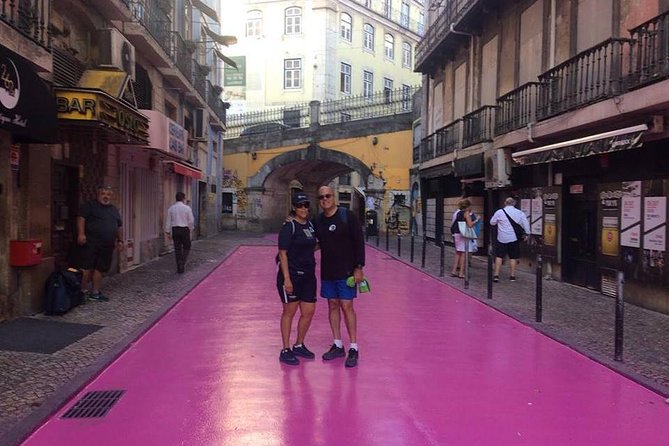
From the open river space, you move into Alfama, which is exactly where Lisbon starts to feel like Lisbon. This neighborhood is associated with views, steep angles, and winding city texture. In other words: it’s the part of the tour where you earn the scenery.
Alfama also ties into the tour’s promise of climbing viewpoints. That doesn’t have to mean dangerous steepness, but it does mean effort. The payoff is that you’re running through the kind of streets that make you slow down (in your mind) even if your feet keep moving. Your guide will be doing what matters most here: pointing out what you’re looking at and why it’s significant.
A big advantage of doing Alfama on a running tour is timing. One guide-led style that comes up in experience feedback is getting to viewpoints before the crowd swell. You don’t get a guarantee on crowds, but if you follow your guide’s pacing, you’ll often land at the scenic moments with fewer distractions.
Avenida da Liberdade to Rossio Station: Where Lisbon Gets Broad and Elegant
Then you transition to Avenida da Liberdade, and that’s a tonal shift. Instead of tight alleys, you get the wider boulevard feel. It’s a nice way to break up the run mentally—your eyes get a wider view, and your body gets different walking/running rhythm.
After that, you reach Estacao do Rossio. This stop matters because it’s not just a pretty building. Stations in big European cities are where the city’s daily movement shows up. They also act like visual anchors—when you later plan self-guided wandering, you’ll remember Rossio as a reference point.
What I like about including Rossio in a running route is that it gives your mind a structure. You can think of it like this: riverfront start (big geography) → Alfama intensity (steep texture) → boulevard clarity (wide streets) → station landmark (easy orientation).
The main consideration here is comfort. Stations and major avenues can be smoother underfoot than narrow streets, but you still have to stay aware for pedestrians stepping out, people crossing, and the general city flow.
Elevador de Santa Justa: The Moment You Feel Lisbon’s Height
Next stop: Elevador de Santa Justa. Even if you’re not riding it during this exact run, the area signals the vertical side of Lisbon. It’s a strong viewpoint-adjacent type of location, and it fits the tour’s promise of climbs and city viewpoint stops.
This is where the tour’s active style starts to feel meaningful. You’re not just hearing about elevation; you’re experiencing what it does to your effort level and your perspective. When the air cools or your breath steadies after a climb, you’ll understand why Lisbon has that reputation for dramatic views.
Drawback to keep in mind: if you’re carrying stiff calves or you’re not used to hills, Santa Justa-type zones can feel tough. That’s not a reason not to go. It’s a reason to go with the right expectations: this is a sightseeing run, not a casual stroll.
Lisbon Cathedral: A Strong Finish With Context, Not Just Photos
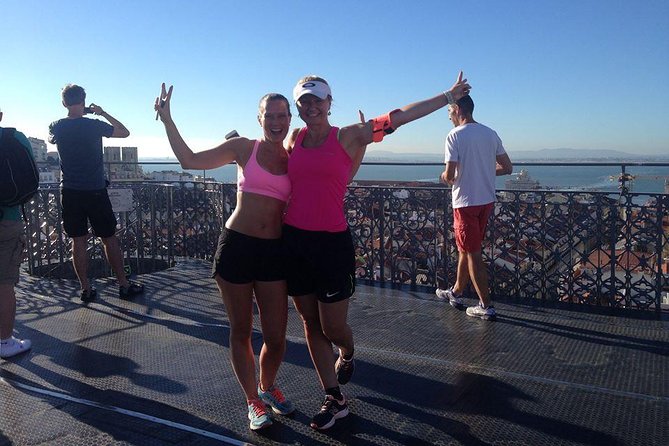
Finally, you reach Lisbon Cathedral. Ending near a major monument makes sense. After the climbs and route shifts, cathedral areas tend to give you calmer space to absorb what you’ve just seen.
What’s valuable here is the context your guide can bring as you get closer to the finish:
- You start connecting landmarks into a bigger story.
- You can understand why neighborhoods feel distinct instead of random.
- You leave with something that anchors the route in your memory.
If you like to travel with intention, this kind of ending helps. A cathedral stop is not just a photo. It’s a “now I get it” moment for many first-timers because it links architecture, neighborhood identity, and the city’s long timeline—without turning the whole morning into a classroom.
How the Guides Make This More Than Exercise
The best part of this experience is how the guide turns the run into a guided story. You’ll get city knowledge that’s tied to what you can actually see while you’re moving: photo pointers, explanations of what you’re looking at, and practical running rhythm through different city textures.
The names Pedro and Nuno show up in experience feedback, and the common thread is style: they help you get to great spots before crowds, and they add running-friendly commentary so the history doesn’t feel like a lecture. Instead, it feels like someone pointing out what you’d miss if you were just trying to “get from A to B.”
If you’re doing Lisbon for the first time, this is one of the fastest ways to get oriented. You leave with a mental map and a set of places you’ll recognize later. That can make your next day’s wandering easier—less guessing, more walking straight to the good stuff.
What to Wear and Bring for a 90-Minute Lisbon Morning Run
Because this is weather-dependent and active, plan your gear like you’re doing a workout outdoors. You don’t need fancy equipment, but you do want comfort.
I’d pack:
- Proper running or walking shoes with good grip
- A light layer you can adjust if it’s warm or breezy
- Sunscreen and water (especially if you start mid-morning in warmer months)
Also, bring a basic mindset: you’re going to be outside for most of the run. That means you should dress for the conditions, not for the ideal forecast you’re hoping for.
One other practical point: the route includes viewpoints and city monuments. So your “official” time on the run is still time spent moving through areas that are sometimes tight or crowded. Listen when your guide gives instruction, and you’ll keep the experience fun instead of stressful.
Who This Lisbon Run Is Best For (and Who Should Skip It)
This tour is a great fit if you:
- Like running or jogging and want to combine it with city exploring
- Want an easy way to build a mental map fast
- Prefer a guide to help you hit meaningful stops without planning every turn
- Enjoy viewpoints, monuments, and markets as part of your sightseeing
It’s not ideal if you:
- Want purely flat ground or a very easy pace
- Have limitations that make climbs and moderate fitness tough
- Are hoping for a relaxed “wander and linger” schedule (this is time-focused)
If you’re in shape enough to jog for 90 minutes with some climbing, you’ll probably have a great time. If you’re not, you might still manage it—but you should be honest about what the route requires.
Should You Book This Lisbon City Centre Run?
Yes, if you want Lisbon with energy. This is one of the more efficient ways to see multiple neighborhoods and major landmarks in a short window, while getting context from a guide who’s spent years doing this.
You should think twice if hills and climbing would frustrate you. And if weather looks rough, remember the run needs good weather—if it’s canceled, you’ll typically be offered another date or a refund.
My decision rule is simple: if you can handle a moderate-fitness, viewpoint-focused morning run, book it and treat it as your orientation to the city. Then spend the rest of your trip walking back to the places you liked most.
FAQ
How long is the City Centre Run in Lisbon?
It runs for about 1 hour 30 minutes.
Is pickup available for the Lisbon run?
Pickup is offered. If you’re staying in a house or hotel off the listed area, you’ll be asked to tell the address.
What’s the tour format: private or shared?
This is a private tour/activity, so only your group participates.
What level of fitness do I need?
The experience is designed for travelers with a moderate physical fitness level.
Do I need to speak Portuguese or is English available?
The tour is offered in English.
What if the weather is bad?
This experience requires good weather. If it’s canceled due to poor weather, you’ll be offered a different date or a full refund.
Can I cancel and get a full refund?
Yes. Free cancellation is available up to 24 hours in advance for a full refund. If you cancel less than 24 hours before the start time, the amount paid is not refunded.
More City Tours in Lisbon
- Lisbon City Center Tour – The Unmissable Lisbon★ 5.0 · 22,234 reviews
- Lisbon: Daytime/Sunset/Night City Sailboat Tour with Drink★ 4.9 · 3,114 reviews
- Lisbon: City Highlights and Viewpoints E-Bike Tour★ 4.9 · 1,556 reviews
- Lisbon: City Sightseeing Hop-On Hop-Off Bus Tour★ 3.8 · 1,220 reviews
- Lisbon: Private City Tour by Eco Tuk Tuk★ 4.9 · 1,215 reviews
More Tour Reviews in Lisbon
- Lisbon City Center Tour – The Unmissable Lisbon★ 5.0 · 22,234 reviews
- Lisbon: Sintra, Pena, Regaleira, Cabo da Roca & Cascais★ 4.7 · 19,656 reviews
- Lisbon Card: 24, 48, or 72-Hour Pass★ 4.5 · 17,944 reviews
- Lisbon: Jerónimos Monastery Entrance Ticket★ 4.1 · 14,164 reviews
- Lisbon: History, Stories and Lifestyle Walking Tour★ 4.8 · 10,902 reviews
Just in: fresh Lisbon reviews from the team




City Tours, compared.
 ★ 5.0Lisbon City Center Tour – The Unmissable LisbonFrom $322,234 reviews
 ★ 4.9Daytime/Sunset/Night City Sailboat Tour with DrinkFrom $413,114 reviews
 ★ 4.9City Highlights and Viewpoints E-Bike TourFrom $291,556 reviews
 ★ 3.8City Sightseeing Hop-On Hop-Off Bus TourFrom $381,220 reviews
 ★ 4.9Private City Tour by Eco Tuk TukFrom $281,215 reviews
 ★ 4.9Tagus River Sailboat City CruiseFrom $411,212 reviews
 ★ 5.0Private City Tour by Tuk-TukFrom $41789 reviews
 ★ 4.7City Tour by Tuk TukFrom $117617 reviews
Browse the lists this tour appears in