

Reviewed · ARRÁBIDA & SETÚBAL TOURS
4-Day South Portugal Tour from Lisbon: Lagos, Algarve Coast, Sagres, Évora, Beja and Setúbal
Cliffs, cathedrals, and salt air in 4 days. This tour links UNESCO Évora with air-conditioned coach comfort, so you can soak up big sights without burning your whole trip on driving. You’ll get a local guide’s stories and a mix of guided stops and free time in key southern towns.
My favorite part was the cluster of Évora must-sees—especially Igreja de São Francisco and the Chapel of Bones. One thing to consider: you’ll be entering churches and other sites with a strict dress code, and there’s no toilet on board the coach, so plan for frequent stops.
In This Review
- Key points worth your attention
- Day 1 in Évora’s World Heritage Center: granite, gold light, and bones
- Day 2: Beja to Silves and then Lagos’ sea-breeze reset
- Day 3: Ponta da Piedade, Sagres Fortress, and the Cape Saint Vincent finish
- Day 4: Setúbal waterfront, Serra da Arrábida scenery, and Azeitão wine tasting
- Transport, pacing, and small logistics that actually matter
- Value for money: what’s really included, and what you’ll likely pay extra
- Who should book this tour, and who should skip it
- Should you book this 4-day South Portugal circuit?
Key points worth your attention
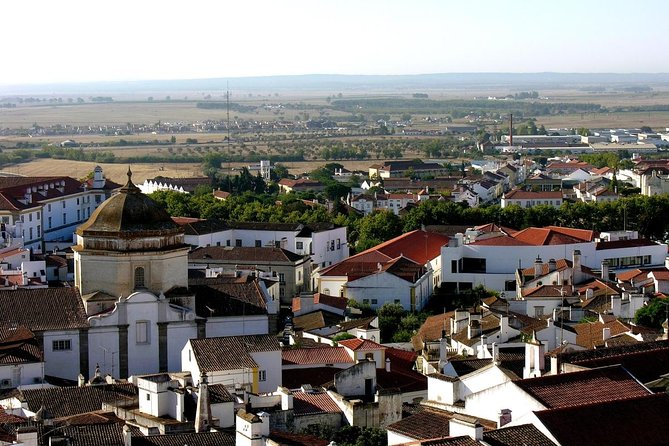
- UNESCO Évora in one focused day, with Cathedral, St. Francis Church, and the Temple of Diana area
- Big Algarve viewpoints like Ponta da Piedade and Praia da Rocha in Portimão, built into the route
- Sagres fortress history tied to Portuguese exploration and later coastal raids
- Cape Saint Vincent at the southwestern edge, plus the São Vicente lighthouse inside the fort area
- Free time is real, but not unlimited, so go in with a plan for wandering
- Dress code matters, and the coach has no onboard toilet
Day 1 in Évora’s World Heritage Center: granite, gold light, and bones
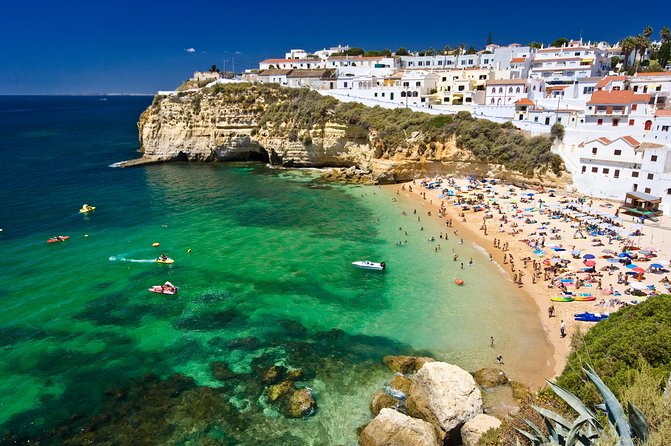
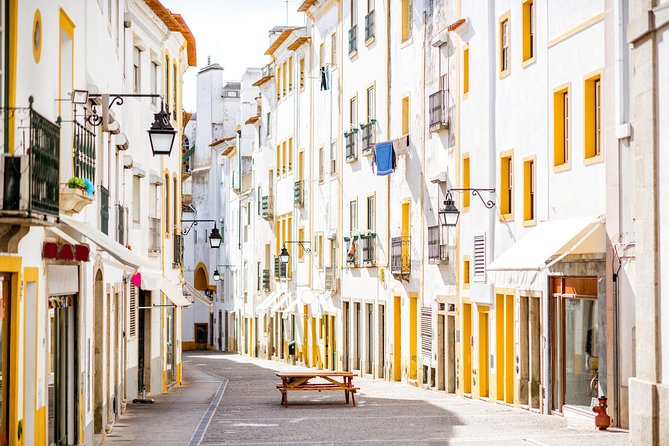
Évora feels like the kind of place you slow down in, even when you’re on a timed itinerary. The day starts with the Sé de Évora Cathedral, a huge medieval cathedral in granite that reflects the shift from Romanesque to Gothic styles. You’ll get about 45 minutes here—enough time to appreciate the size, then step back and take in the square-life around it.
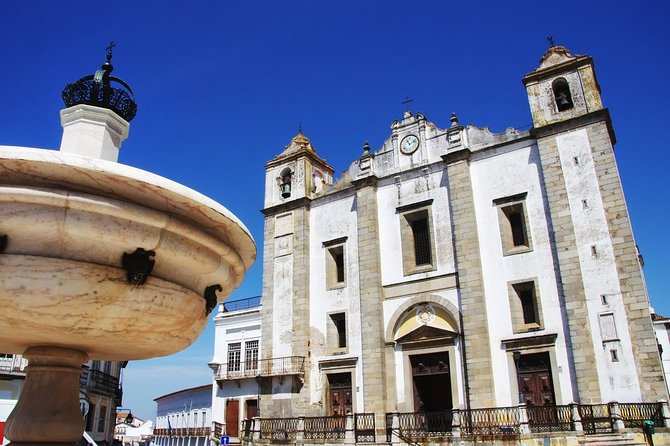
Next up is Igreja de São Francisco, widely loved for its grand interior. Even if you’re not a hardcore church person, it’s the kind of stop that makes you stand still, because the architecture does the talking for you. Expect around 30 minutes, and try to look at details rather than rushing to the “main view.”
Then comes the emotional one: the Chapel of Bones (Capela dos Ossos). It’s marked as included on this tour, and it’s located within the same complex as St. Francis. I like this stop because it’s not vague history—it’s a direct, physical statement about how earlier societies viewed death and memory. It can be intense. If you’re sensitive, you might want to give yourself a minute before you go in and then take a slow walk afterward.
The plan also includes the Templo Romano de Évora, known as the Temple of Diana. It’s listed as one of the best-preserved Roman temples in Iberia, and UNESCO status is tied to it. This is a good reset after the Chapel of Bones: Roman symmetry, stonework, and a very different mood in the same city.
To finish, you’ll have a short stop at Praca do Giraldo and then free time in central Évora. This is where you can do your own pacing—cafés, small lanes, and lingering in the plazas without a stopwatch. Practical tip: if you want a calmer photo window, aim to do your walking while the group is moving through the timed sights, then save slower wandering for your free block.
Drawback to flag: the day packs several major sites into a single flow. It’s doable, but if you hate rushing between highlights, you’ll want to use your free time later to breathe.
Out to the plains: more Évora and Alentejo trips
- Évora and Megaliths Full-Day Tour from Lisbon
★ 4.7 · 456 reviews - From Lisbon: Évora and Monsaraz with Regional Wine Tasting
★ 4.7 · 345 reviews - Évora and Monsaraz with Regional Wine Tasting from Lisbon
★ 4.5 · 229 reviews - Private Day Tour With Guide to Évora and Monsaraz
★ 5.0 · 134 reviews
Day 2: Beja to Silves and then Lagos’ sea-breeze reset
Day 2 starts with breakfast at your hotel, then heads toward the Algarve through Beja. Beja’s medieval castle tower dominates the town and the region, and the route crosses low mountain ranges as you transition into Algarve country. This is one of the quieter travel days, but that’s part of its value: the scenery shifts from inland stone towns toward coastline rhythms.
You’ll have a stop in Silves, a town known for its red sandstone castle and its Moorish-era memories. Cork is also part of the local story—Silves wasn’t just about fortress walls; it was an industry town too. The tour gives you about an hour and a half, including time to visit the village area and the Castle of Silves.
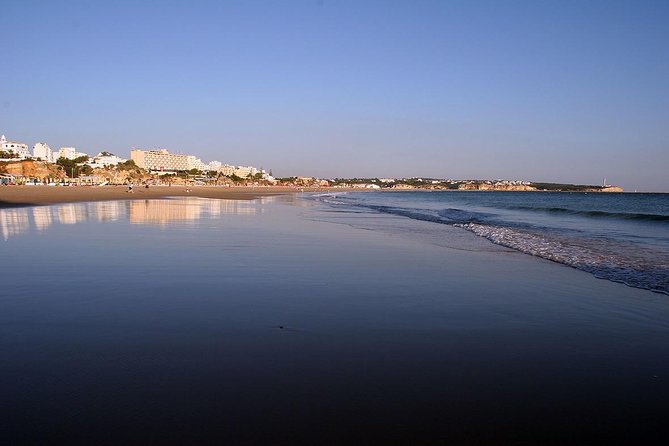
From there, you continue toward the coast and pass Praia da Rocha on the way to Lagos. Praia da Rocha is a popular beach stretch, and it works as a “see it, snap a photo, keep moving” moment before you reach Lagos proper.
Lagos is where the mood changes. The plan gives you about 90 minutes of exploration plus free time to enjoy views and local life. What I like about Lagos on a tour like this is that it’s not just a beach stop—you’ll see a working connection to the sea, from marina energy to the straightforward joy of wandering along the water. If you’re the type who likes finding a viewpoint, then finding the snack shop nearby, Lagos is a good match.
One planning note from real-world expectations: free time is helpful, but it’s not a “do anything all afternoon” situation. You’ll want to arrive in Lagos knowing what you want to prioritize—old-town streets, waterfront, or just beach breaks.
Day 3: Ponta da Piedade, Sagres Fortress, and the Cape Saint Vincent finish
Day 3 is the day for coastline drama. You start with time in Lagos, then head toward Ponta da Piedade. This is one of those spots where the cliffs feel sculpted by time and weather, and the Atlantic keeps insisting on its presence. You’ll have around an hour for the viewpoints, including the Ponta da Piedade Lighthouse area. Bring a jacket even in warmer months—coast wind can sneak up on you.
After that, the route continues to Sagres, another place where the scenery does the storytelling. The tour description connects Sagres to Portuguese exploration and the 15th-century push into the unknown. Even if you don’t go deep into the dates, the setting helps the story land: the force of weather, the raw edges of land meeting sea, and that feeling of being near the continent’s end.
You’ll also visit the Sagres Fortress (ticket included). It’s connected to Prince Henry’s era and later repairs after damage from Sir Francis Drake’s raids on southern coasts. I like fortress stops when they include context like this, because suddenly the stones stop being random. They become part of a timeline of coast defense and maritime ambition.
Then you finish the day at Cape Saint Vincent, also known for its fortress area and the São Vicente lighthouse still in operation (built in 1904). The tour notes that the fortress originally protected the coast from frequent pirate attacks, and it also references a medieval convent tradition linked to St. Vincent. The walk-through time is about an hour, and it’s often enough to get your photos and still feel like you experienced the spot rather than just passed by it.
Small heads-up: this is the longest-feeling day in terms of “standing around for views.” It’s not marathon walking, but you’ll be on your feet often. Wear shoes you don’t mind using again the next day.
Day 4: Setúbal waterfront, Serra da Arrábida scenery, and Azeitão wine tasting
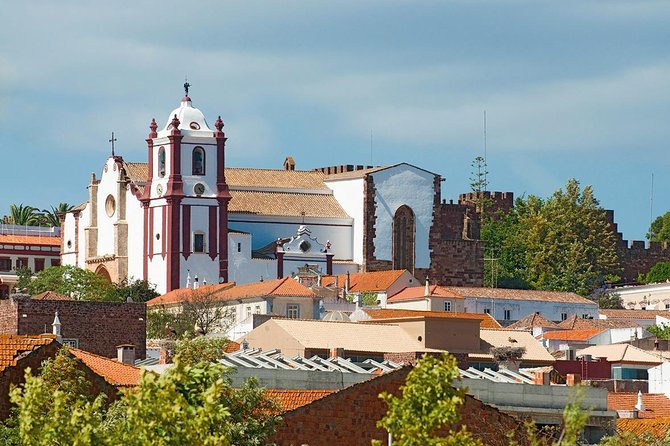
On Day 4 you start back toward Lisbon area after breakfast, but you don’t just do a fast transfer. The itinerary builds in stops that keep the trip feeling like a southern Portugal circuit instead of a straight line.
Your first big stop is Setúbal. Setúbal is tied to the sea, and the tour highlights the newly rejuvenated waterfront with a colourful fishing harbour and an urban park. You’ll also pass the Troia Peninsula ferry terminal area, plus the historic center with narrow alleys, hidden plazas, and family-owned shops.
If you like places with daily life—real markets, working streets—Setúbal is a good fit. The plan also mentions Portugal’s largest fish market, which can be a lively contrast to the “monument” rhythm of Évora and Sagres.
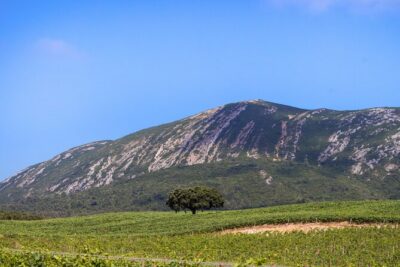
Next is Serra da Arrábida, reached via a scenic route and described as a natural park. This part is all about views and unique vegetation, with sweeping sightlines toward the Tróia Peninsula. It’s one of those scenic stops that feels good even if you’re not a photography person—because the setting makes it easy to relax.
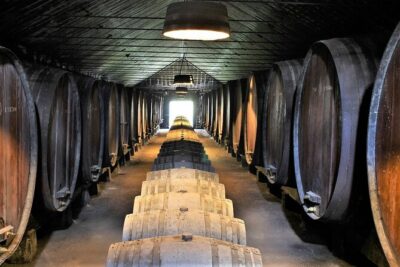
Finally, there’s a highlight that feels very Portugal: a stop in Azeitão for a wine tasting at José Maria da Fonseca (ticket included). You’ll be in the cellar experience for about an hour. I love this kind of included tasting because it turns the day from sightseeing into a proper sensory break—plus it gives you something to remember besides photos.
Practical consideration: like other days, you’ll be in-and-out of vehicles and then walking a bit at stops. Bring a small day bag and keep water accessible when possible. (The coach itself has no toilet, so you’ll want to handle that timing around stops.)
More of the Arrábida coast and Setúbal wine country
Transport, pacing, and small logistics that actually matter
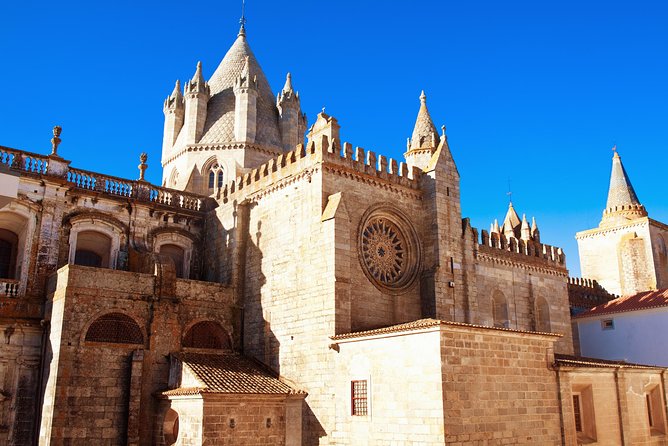
This is a coach tour with air-conditioned vehicle comfort, and it runs with a local guide. The group size max is 50 travelers, which is big enough to feel like a group, but small enough that most people can hear the guide during stops.
The tour notes no toilet on board the coach. That sounds like a minor detail until you’re on a longer drive with a tight schedule. So here’s my practical advice: use restroom breaks when they’re offered, even if you don’t feel desperate. The schedule won’t revolve around anyone’s timing.
Also plan for moderate walking. You’re not scaling mountains, but you are moving between monuments and viewpoints. In addition, there’s a strict dress code for places of worship and selected museums: no shorts or sleeveless tops; knees and shoulders must be covered for both men and women. This is a common place where good intentions fail. If you show up in hot-weather clothes, you might lose entry time—or lose entry completely.
One more pacing note: the tour balances guided stops with free time in several towns (Lagos, Évora, Sagres, Alvor, Silves, Setúbal are named). In practice, free time tends to be slotted into the day rather than stretching for hours. So if you want a long sit-down meal or a slow beach afternoon, treat free time like a window, not like a blank page.
Value for money: what’s really included, and what you’ll likely pay extra
The price shown in your details is $0.00, so I’d treat it as a placeholder and confirm the current rate before you book. That said, the included items are clear and they shape the value:
- 3 nights of accommodation in a superior-class hotel
- 3 breakfasts included
- Hotel pickup on day 1
- Local guide and air-conditioned transport
- Several key admissions listed as free, plus some that are included (Chapel of Bones, Sagres Fortress, and the José Maria da Fonseca tasting)
Here’s how I’d think about value: you’re getting hotel nights plus guided sight time plus major transfers by coach across multiple regions. On a route like this, transport alone can be a big expense if you do it on your own. The good news is that many stops are marked as free admission in the plan, so you’re not constantly paying entry fees at each stop.
What’s not included is also straightforward: dinners and lunch are not included, and you should budget meals along the way. Water and snacks may be on you unless a stop explicitly includes them (and this plan only confirms breakfasts and the wine tasting).
One extra to watch: if you want a boat trip for Lagos sea caves, it isn’t listed as included here. So if that’s on your bucket list, you’ll want to arrange it separately and budget for it.
Who should book this tour, and who should skip it
This tour fits best if you want southern Portugal’s highlights without planning every leg yourself. It’s also a solid match for people who like a guided narrative—especially around UNESCO Évora and the fortress history in Sagres and at Cape Saint Vincent.
You should probably think twice if:
- you hate schedule-heavy days with multiple timed stops
- you need lots of time to be independent every afternoon
- you’re likely to ignore dress code rules and then hope it works out
If you’re a first-timer to Portugal’s south, this circuit is a quick way to see how Évora’s medieval and Roman layers connect to the Algarve’s coastline energy, then to Setúbal’s sea-linked everyday life.
Should you book this 4-day South Portugal circuit?
I’d book it if you want a guided sampler that still leaves you time to wander, especially in Évora and Lagos. The mix of major World Heritage sights, dramatic coast viewpoints, fortress context, and an included wine tasting gives you a lot of variety per day.
But go in with eyes open. Expect moderate walking, a hard dress code for religious sites, and a coach with no toilet. And if you love fully free afternoons or boat excursions in Lagos, plan to pay extra or add those separately.
If your goal is a well-paced, coach-friendly route that hits Évora and the Algarve’s most photogenic corners, this one makes sense.
More Tour Reviews in Lisbon
- Lisbon City Center Tour – The Unmissable Lisbon★ 5.0 · 22,234 reviews
- Lisbon: Sintra, Pena, Regaleira, Cabo da Roca & Cascais★ 4.7 · 19,656 reviews
- Lisbon Card: 24, 48, or 72-Hour Pass★ 4.5 · 17,944 reviews
- Lisbon: Jerónimos Monastery Entrance Ticket★ 4.1 · 14,164 reviews
- Lisbon: History, Stories and Lifestyle Walking Tour★ 4.8 · 10,902 reviews
The Arrábida Coast and Setúbal Wines
- Private Lisbon Arrabida Wine Tour: Food & Wines, Mountain and Sea★ 5.0 · 907 reviews
- Private Wine Tasting in the Setúbal Wine Region, from Lisbon★ 5.0 · 611 reviews
- Arrabida and Sesimbra Small-Group Day Trip from Lisbon with Wine Tasting★ 5.0 · 494 reviews
- Lisbon: Arrabida Park Kayak Tour with Beach Picnic★ 4.9 · 490 reviews
- Private Lisbon-Arrábida Wine Tour: 3 Wineries, Coast & Heritage★ 5.0 · 450 reviews
Out to Évora and the Alentejo
- Évora and Megaliths Full-Day Tour from Lisbon★ 4.7 · 456 reviews
- From Lisbon: Évora and Monsaraz with Regional Wine Tasting★ 4.7 · 345 reviews
- Évora and Monsaraz with Regional Wine Tasting from Lisbon★ 4.5 · 229 reviews
- Private Day Tour With Guide to Évora and Monsaraz★ 5.0 · 134 reviews
- From Lisbon to Alentejo: Évora and Megaliths Full-Day Tour★ 4.5 · 131 reviews
Just in: fresh Lisbon reviews from the team




Arrábida & Setúbal Tours, compared.
 ★ 5.0Private Lisbon Arrabida Wine Tour: Food & Wines, Mountain and SeaFrom $139907 reviews
 ★ 5.0Private Wine Tasting in the Setúbal Wine Region, from LisbonFrom $151611 reviews
 ★ 5.0Arrabida and Sesimbra Small-Group Day Trip from Lisbon with Wine TastingFrom $90494 reviews
 ★ 4.9Arrabida Park Kayak Tour with Beach PicnicFrom $70490 reviews
 ★ 5.0Private Lisbon-Arrábida Wine Tour: 3 Wineries, Coast & HeritageFrom $156450 reviews
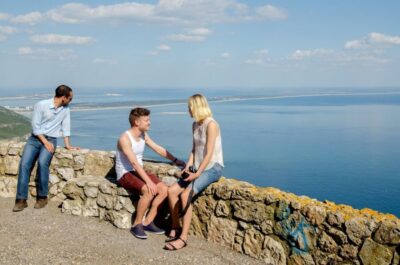 ★ 4.8Arrábida and Sesimbra Day Trip with WineFrom $75366 reviews
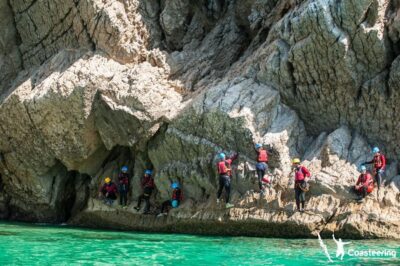 ★ 4.9Sesimbra/Arrábida Natural Park Coasteering AdventureFrom $76345 reviews
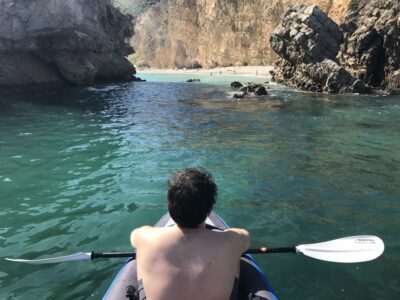 ★ 4.8From Lisbon: Arrábida Natural Park Kayak Tour with LunchFrom $57320 reviews
Browse the lists this tour appears in