
Reviewed · PRIVATE
3 Days Private Tour In the Algarve from Lisbon
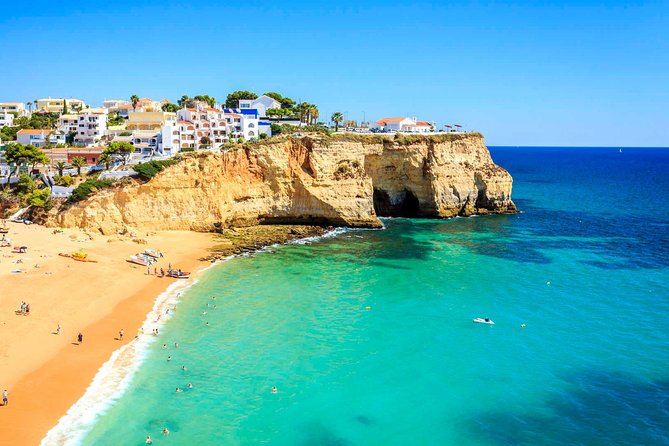
Getting from Lisbon to the Algarve can feel like work. This private 3-day Algarve trip turns it into a door-to-door drive with a guide who handles the route and the timing, so you can focus on sights instead of stress. Two things I especially like: the onboard Wi‑Fi (use it for check-ins or just to share as you go), and the way the trip mixes classic coastal Portugal with hands-on crafts, from cork to tiles.
One thing to plan for up front: your base is Albufeira, not included. You book the accommodation yourself, and you cover lunches plus any entrance fees that aren’t marked as included on the stops. It’s still good value if you want a guided, private pace, but it’s not a fully all-in package.
In This Review
- Key things you’ll like about this Lisbon to Algarve private tour
- Why this tour beats self-driving: guide-led routes, less friction
- The “value” angle of private, per-person pricing
- Day 1 in Alentejo and Evora: cork craft, Roman angles, and bone chapel shock
- Corticarte (Cortiça / cork art): the material lesson that changes how you see Portugal
- Evora’s historic center: Temple-of-Diana vibes and the Agua da Prata aqueduct
- Chapel of Bones: an eerie visit you shouldn’t skip (even if it’s uncomfortable)
- Monsaraz Castle and walls: medieval village views over Alqueva
- Arrive in Albufeira: your base for the Algarve
- Day 2 Lagos and Sagres: Discoveries-era ports and windswept fortresses
- Lagos Marina: where expeditions started and corsair pressure reshaped the town
- Sagres Fortress: Prince Henry the Navigator, cannons, and the Rose of the Winds
- Cape Saint Vincent: fortress views and a legend about St. Vincent
- Day 3 on the way back: Sesimbra’s defense lines, Setúbal’s sea life, and Azeitão tiles
- Castelo de Sesimbra: Moorish defense on a hill above the bay
- Maritime Museum of Sesimbra: fishing tools plus a 3D storytelling angle
- Baía de Setúbal: riverfront boats and real working-sea atmosphere
- Monastery of Jesus of Setúbal and Praça do Bocage: where people meet
- Azeitão tile factory: Portuguese azulejos, plus time to paint your own tile
- What’s included (and what you’ll likely pay for yourself)
- Who this private tour is best for
- Should you book this 3-day private Algarve tour from Lisbon?
- FAQ
- What’s the start time for this tour?
- Does the tour include pickup and drop-off in Lisbon?
- Is onboard Wi‑Fi included?
- Is hotel accommodation included?
- Are entrance fees included?
- Is lunch included?
- Can I cancel for a full refund?
Key things you’ll like about this Lisbon to Algarve private tour
- Private, door-to-door pickup and drop-off across Lisbon, which saves you the hassle of figuring out meeting points and transfers
- Onboard Wi‑Fi and an air-conditioned vehicle, handy for the ride days you’ll spend on the road
- Cork workshop at Corticarte (Cortiça / cork bark) with practical context on how cork is harvested and why it’s so useful
- Évora UNESCO highlights, including the Temple of Diana area and the unforgettable Chapel of Bones
- Sagres + Cabo de São Vicente for dramatic coastal history tied to Prince Henry the Navigator
- Azeitão tile factory experience, including time in a traditional workshop process that ends with painting your own tile
Why this tour beats self-driving: guide-led routes, less friction
If you’ve ever tried to self-drive a new country with a full itinerary, you know the real challenge isn’t the roads. It’s the mental load: maps, parking, timing, and suddenly realizing you missed a turn because you were busy admiring the view.
This private tour is designed to remove that pressure. You get transport by private vehicle with a driver/guide, and the tour includes bottled water, Wi‑Fi on board, and an air-conditioned ride. For a 3-day itinerary that moves between major towns and viewpoints, that comfort matters more than you might think. It gives you time to arrive ready to walk, not just ready to find your way.
Also, your guide isn’t just a driver. They connect the dots—Portuguese history, architecture styles, and what you’re actually looking at. The tour is built around multiple stops, so having one person manage the flow usually means less waiting and fewer “what now?” moments.
Worth a look before you lock anything else in around Lisbon:
- True 4Hour Private Tuk Tuk Tour: Discover Lisbon with a Local!
★ 5.0 · 8,008 reviews - Lisbon: Private Guided Tuk-Tuk Tour with Hotel Pickup
★ 4.9 · 4,552 reviews - Private Lisbon Sightseeing Tuk-Tuk Tour: Alfama, Belém & More
★ 5.0 · 4,277 reviews - Lisbon Highlights: Private Tuk Tuk Tour Adventure Sightseeing
★ 5.0 · 3,284 reviews
The “value” angle of private, per-person pricing
At $960.81 per person, it’s not cheap in the way a hop-on bus is. But you’re paying for:
- private transport (not a shared bus),
- a driver/guide,
- a planned multi-day route,
- and a mix of stops where some entrance tickets are included.
If you’re the kind of group that values convenience and wants a custom-feeling experience—without the work—this pricing can make sense.
Day 1 in Alentejo and Evora: cork craft, Roman angles, and bone chapel shock
Day 1 starts with a drive out of Lisbon toward the Alentejo, crossing a suspension bridge and arriving in the Evora area. From the start, the day is built to teach you how Portugal’s inland regions connect to the coast: materials (cork), empires (Roman and Arab influences), and how people used architecture to survive and remember.
Corticarte (Cortiça / cork art): the material lesson that changes how you see Portugal
Your first stop is Corticarte – Arte em Cortica, a cork-focused visit that includes admission. You learn that cork comes from the bark of the cork oak—light, elastic, and resistant to fire. What I like most is the very practical explanation of how cork is harvested: the bark grows again over time, and it’s removed only after roughly nine years (the idea being that the tree keeps living). The bark can reach thick measurements around 25 centimeters before removal, then a new layer forms afterward.
Even if you think you know cork, this kind of explanation makes the Algarve feel more “made,” not just scenic. You start noticing materials and trade, not just buildings and beaches.
Worth a look before you lock anything else in around Lisbon:

Evora’s historic center: Temple-of-Diana vibes and the Agua da Prata aqueduct
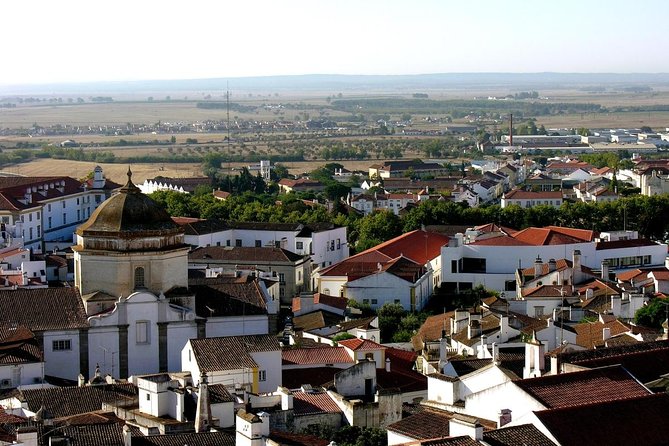
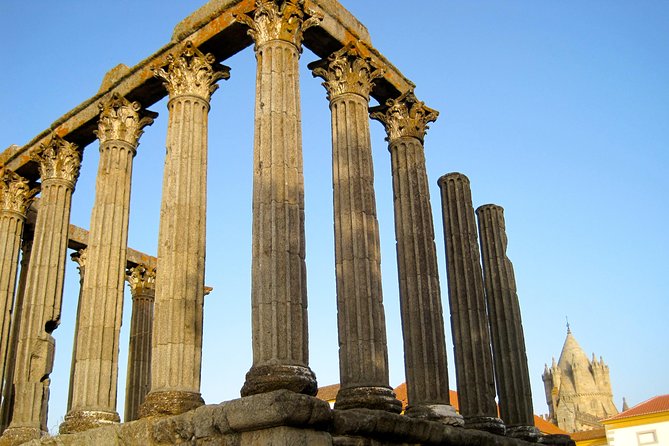
Next is Centro Histórico de Évora, where you’ll see major Roman-era references like the Temple of Diana area near the Evora Cathedral, plus the Agua da Prata aqueduct. A standout detail is that some arches of the aqueduct remain visible inside the city. It was built in the 16th century to support water transportation, extending from outside the city walls.
The guide also helps you connect the layers: Arab streets and alleys from the 11th and 12th centuries, Evora as a residence for Portuguese kings, and later growth during the discoveries period that helped produce aristocratic mansions. Evora’s Jesuit university adds another chapter—education and patronage shaping the city’s look.
This stop is one of those “easy to enjoy” segments: you don’t have to be a history buff to get value. The scale of the old streets and the mix of influences does the work.
Chapel of Bones: an eerie visit you shouldn’t skip (even if it’s uncomfortable)
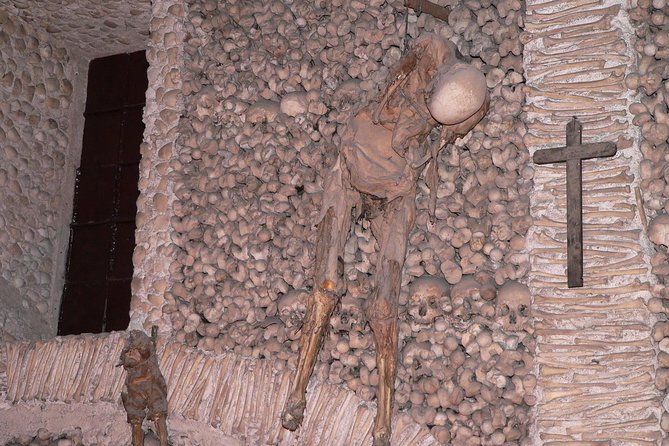
The Chapel of Bones in the Church of San Francisco is the ex-libris. The premise is simple and disturbing: the chapel is decorated with the skulls and bones of 500 monks, with a message at the entrance that effectively warns you that your bones will join them someday.
Admission isn’t included here, so budget extra time to handle the ticket if you want to go. Still, this is the kind of place that sticks in your memory for years. It’s not subtle, but it’s an important part of how Europeans used religion, mortality, and art together.
Monsaraz Castle and walls: medieval village views over Alqueva
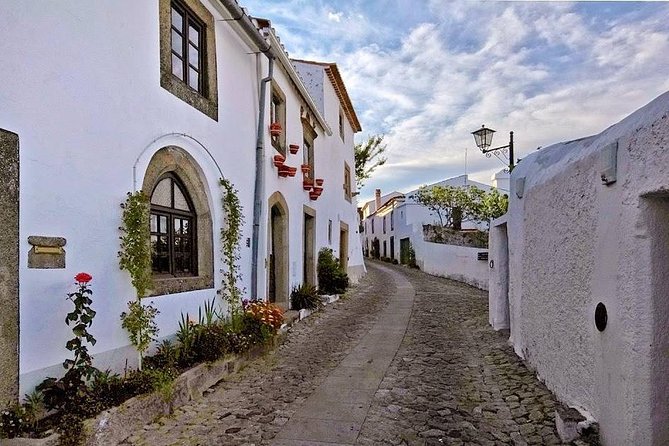
After Evora, you head to Monsaraz Castle and Walls, a medieval village with narrow stone lanes and white-painted houses. The value here is the atmosphere: as you pass through the walls, it feels like the village is sealed in time. You’re surrounded by plains stretching far into the distance, with the Alqueva reservoir setting the boundary between Portugal and Spain.
This stop is free for admission, which is always a nice bonus when a day is already packed. It’s also a good “slow it down” moment compared with the density of Evora’s historic core.
Arrive in Albufeira: your base for the Algarve
By late day, you reach Albufeira. The focus shifts to the historic center—whitewashed houses, narrow cobbled streets, and a lively mix of cafés and shops. If you want nightlife, Albufeira is built for it, especially along the central avenue with bars, restaurants, and late energy.
Just remember: the tour includes the transportation to get you there, but you choose your own accommodation for the nights. Your guide drops you in the Albufeira area so you can settle in and decide your dinner plan.
Day 2 Lagos and Sagres: Discoveries-era ports and windswept fortresses
Day 2 is about the Algarve coastline, with a strong theme: ships, ports, and the push into the Atlantic during the Age of Discoveries.
Lagos Marina: where expeditions started and corsair pressure reshaped the town
You begin with Marina de Lagos, with admission included. Lagos is described as a key base of support in the 16th century for Portugal’s maritime expansion—an area where main expeditions departed and where products were marketed.
The tour also explains why the town developed so fast: strategic importance pulled in people and created economic growth. Then you get the defensive side of the story. North African corsair attacks led to the construction of a second waist of walls, updated to match new military ideas.
This isn’t just “pretty harbor time.” You’re given a reason for the town’s layout and fortification choices, so the place feels more intentional.
Sagres Fortress: Prince Henry the Navigator, cannons, and the Rose of the Winds
Next is Sagres Fortress, admission not included. You’ll hear it referred to as Promontorium Sacrum, and you’ll connect it to Prince Henry the Navigator, who ordered the fortress built. Inside, you’ll see cannons, a sixteenth-century tower, and the Church of Our Lady of Grace.
One of the most specific details here is the rose of the winds, linked to a sundial associated with the time and nautical study Prince Henry supported. The point for me is that it ties navigation tools to place. You can stand where people obsessed over wind direction and mapping.
Cape Saint Vincent: fortress views and a legend about St. Vincent
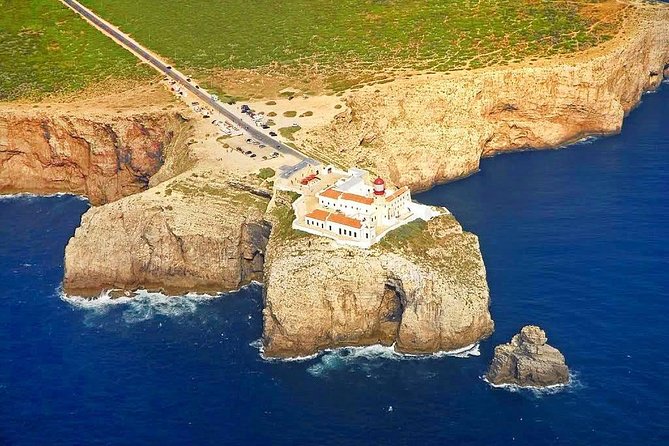
From Sagres you go near Cape Saint Vincent, including the Fortress of Cabo de São Vicente (admission not included). This was built in the 16th century to protect the coast from Moorish attacks and pirates.
Then there’s the legend: the place where the fortress was built is said to have received the remains of San Vicente before they were moved to Lisbon. Whether you treat it as pure story or spiritual tradition, it gives the coastline a sense of “why here” rather than just “nice views.”
After day 2, you’re back in Albufeira for the night—another practical choice. You don’t have to change hotels mid-trip.
Day 3 on the way back: Sesimbra’s defense lines, Setúbal’s sea life, and Azeitão tiles
Day 3 turns inland-to-coast logic into a return route. You’re heading back toward Lisbon, but you don’t do it with boredom. You do it with three different “sea-facing” cultures and a crafts stop.
Castelo de Sesimbra: Moorish defense on a hill above the bay
Your first stop is Castelo de Sesimbra, which is free to enter. The castle sits on a hillside north of the village and is tied to Moorish occupation. It’s noted as a national monument since 1910, and it dates back to the 9th century, while still under Islamic occupation for much of its history.
The key value is the defense story: its role was land and maritime protection. When you look at the geography from a viewpoint like this, it helps you understand why fortresses weren’t built randomly—they were built to watch and warn.
Maritime Museum of Sesimbra: fishing tools plus a 3D storytelling angle
Next is the Maritime Museum of Sesimbra, also free. This stop focuses on the village’s connection to the sea and fishing craft—history, local fishing art, and even utensils used by fishermen.
You’ll also see a feature described as a 3D movie, taking you through prehistory and medieval times and ending with a return to the ocean and the future. I like that this isn’t only static displays. It’s a narrative approach that can be easier to follow if you’re tired from walking the fortress.
Baía de Setúbal: riverfront boats and real working-sea atmosphere
Then it’s time for Baía de Setúbal, free. Here the tour leans into the everyday identity of the town: fishermen, boats, and the sea as inseparable parts of life. The riverfront has hundreds of boats anchored along it, creating a strong visual connection between work and place.
This is a good moment to slow down and just watch. The tour doesn’t force a “must see everything” mentality here.
Monastery of Jesus of Setúbal and Praça do Bocage: where people meet
You stop at the Monastery of Jesus of Setúbal (admission not included). The surrounding area matters too: Setúbal downtown has stores and older and newer streets that all meet at Praça do Bocage, described as the meeting point of locals.
The square centers on a statue of Portuguese poet Bocage with eyes fixed toward the sea. I find this kind of detail helpful. It turns a stop from a checklist into a place where you can imagine daily life happening.
Azeitão tile factory: Portuguese azulejos, plus time to paint your own tile
Finally, you end with Azulejos de Azeitão, admission included. This is the craft stop that makes the whole trip feel more tactile.
You learn why Portugal’s famous tile style matters: azulejos have Muslim roots, but they became a symbol of Portuguese culture. You’ll also see designs with Hispano-Arabic style influences from the 15th and 16th centuries, with examples that include European, Islamic, and Chinese drawings—painted or in relief.
Most valuable is the manufacturing process lesson: making, glazing and finishing, and then painting. And you can take part at the end by painting your own tile. If you like buying souvenirs, this is more satisfying than picking up a random shop item because you’re not just paying for something pretty—you’re paying for a skill and a story.
What’s included (and what you’ll likely pay for yourself)
This tour includes several items that make long days easier:
- Driver/guide
- Transport by private vehicle
- Onboard Wi‑Fi
- Air-conditioned vehicle
- Bottled water
- Personal accidents insurance
What’s not included:
- Lunch
- Hotels (you choose accommodation in Albufeira)
Entrance fees depend on the stop. Some are included, some are free, and some are not included (like the Chapel of Bones and Sagres Fortress). That pattern matters because it changes how you budget each day. If you’re trying to keep costs tight, I’d plan to pay for the not-included sites, and I’d also keep extra time for tickets at those locations.
Who this private tour is best for
This tour fits best if you want:
- maximum convenience with private transport,
- a guided route that handles the hard part (getting you between towns),
- and hands-on cultural stops like cork and tiles.
It’s a great match for people who don’t want to negotiate parking or routing in an unfamiliar country and who still want more than beach time. If you love odd history—like the Chapel of Bones—or you enjoy learning why places look the way they do, you’ll probably have a strong time.
And if you care about the guide experience, you’ve got something solid. One standout name tied to this tour is Ruben, praised for being personable and truly comfortable explaining Algarve-specific details. When a private guide is good, the trip feels lighter.
Should you book this 3-day private Algarve tour from Lisbon?
I’d book it if you’re looking for a private, structured route from Lisbon to the Algarve that includes real stops in Évora, Lagos, Sagres, and the Sesimbra–Setúbal return corridor—plus at least two craft experiences you can take home as memory (cork context and tile-making).
Skip it or think twice if:
- you want a fully self-paced independent trip (because this is guide-driven),
- you don’t want to manage your own hotel in Albufeira,
- or you hate tours where the schedule includes multiple ticketed sites across three packed days.
If you can handle one base hotel and a bit of on-the-spot budgeting for admissions and meals, this tour is a strong value for the amount of ground covered—and for the kind of Portugal you rarely see when you only do coastlines.
FAQ
What’s the start time for this tour?
The tour starts at 9:00 am.
Does the tour include pickup and drop-off in Lisbon?
Yes. Pickup is offered and the tour includes door-to-door service across Lisbon areas, with drop-off at locations around Lisbon after the Algarve portion.
Is onboard Wi‑Fi included?
Yes. The vehicle includes Wi‑Fi, listed as part of the experience.
Is hotel accommodation included?
No. Hotels aren’t included. You book your own accommodation, with the plan based on staying in Albufeira.
Are entrance fees included?
It depends on the stop. Some sites list admission ticket included, some are free, and some are not included (for example, the Chapel of Bones and Sagres Fortress).
Is lunch included?
No. Lunch is not included.
Can I cancel for a full refund?
Yes. Free cancellation is available if you cancel up to 24 hours in advance of the experience start time.
More Private in Lisbon
- True 4Hour Private Tuk Tuk Tour: Discover Lisbon with a Local!★ 5.0 · 8,008 reviews
- Lisbon: Private Guided Tuk-Tuk Tour with Hotel Pickup★ 4.9 · 4,552 reviews
- Private Lisbon Sightseeing Tuk-Tuk Tour: Alfama, Belém & More★ 5.0 · 4,277 reviews
- Lisbon Highlights: Private Tuk Tuk Tour Adventure Sightseeing★ 5.0 · 3,284 reviews
- Welcome Lisbon Tour with Local Guide in Private Eco Tuk Tuk★ 5.0 · 1,691 reviews
More Tours in Lisbon
- Lisbon City Center Tour – The Unmissable Lisbon★ 5.0 · 22,234 reviews
- Lisbon: History, Stories and Lifestyle Walking Tour★ 4.8 · 10,902 reviews
- True 4Hour Private Tuk Tuk Tour: Discover Lisbon with a Local!★ 5.0 · 8,008 reviews
- Winner 2025 Undiscovered Lisbon Food & Wine Tour by Eating Europe★ 5.0 · 6,390 reviews
- Lisbon: Sintra, Pena, Cabo da Roca, Cascais Tour with Pickup★ 4.8 · 5,445 reviews
More Tour Reviews in Lisbon
- Lisbon City Center Tour – The Unmissable Lisbon★ 5.0 · 22,234 reviews
- Lisbon: Sintra, Pena, Regaleira, Cabo da Roca & Cascais★ 4.7 · 19,656 reviews
- Lisbon Card: 24, 48, or 72-Hour Pass★ 4.5 · 17,944 reviews
- Lisbon: Jerónimos Monastery Entrance Ticket★ 4.1 · 14,164 reviews
- Lisbon: History, Stories and Lifestyle Walking Tour★ 4.8 · 10,902 reviews
Just in: fresh Lisbon reviews from the team




Private, compared.
 ★ 5.0True 4Hour Private Tuk Tuk Tour: Discover Lisbon with a Local!From $1088,008 reviews
 ★ 4.9Private Guided Tuk-Tuk Tour with Hotel PickupFrom $1534,552 reviews
 ★ 5.0Private Lisbon Sightseeing Tuk-Tuk Tour: Alfama, Belém & MoreFrom $524,277 reviews
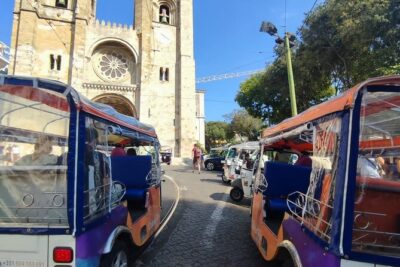 ★ 5.0Lisbon Highlights: Private Tuk Tuk Tour Adventure SightseeingFrom $843,284 reviews
 ★ 5.0Welcome Lisbon Tour with Local Guide in Private Eco Tuk TukFrom $171,691 reviews
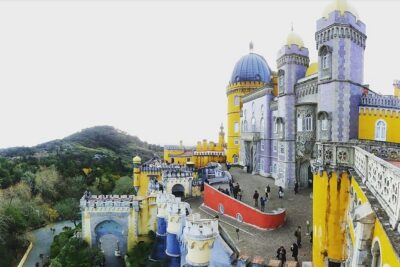 ★ 5.0Sintra Full-Day Private Tour – A Journey through WonderlandFrom $1871,665 reviews
 ★ 5.0Sintra Private Trip from Lisbon Customizable Dreamlike ExperienceFrom $1631,414 reviews
 ★ 5.0Airport Private Transfer to/from LisbonFrom $271,284 reviews