
Reviewed · PHOTOGRAPHY SESSIONS
19th Century Photography Experience
Tintypes turn minutes into a 19th-century time machine. At Five Historic Photography Studio in Sintra, I love the wet-plate collodion process and the truly private session pace that lets you ask questions. One consideration: the exposure can run up to 10 seconds, so it’s not a great pick for very young kids.
You’ll sit for a portrait, choose a size, and style it with period clothing and accessories. Then you’ll follow the hosts into the lab to see the development step under safe red light. Your aluminium plate is ready about one hour after the shoot starts, so you’re not walking out empty-handed.
In This Review
- Key highlights at a glance
- A 19th-Century Portrait Session in Sintra’s Wet-Plate Collodion Style
- Inside Five Historic Photography Studio: Antique Gear and Period Atmosphere
- How the Portrait Works: Sizes, Props, and Exposure Seconds
- The Dark Room Moment: Watching Development Under Safe Red Light
- Picking Up Your Aluminium Plate Tintype and Protecting It
- Price and Value for a Private 1-Hour Session at $48.06
- Best Fit for Your Group: Who Should Book This and Who Should Skip
- Should You Book This Wet-Plate Tintype Experience?
- FAQ
- What type of portrait process is used?
- How long is the experience?
- When can I collect my tintype plate?
- Are period clothes and props included?
- Is the activity wheelchair accessible?
- Are digital copies included?
Key highlights at a glance
- 19th-century wet-plate collodion tintype portrait made using an 1851 method
- Dark-room development under safe red light you can actually watch
- Private, personalized experience with only your group
- Choose from three portrait sizes and use period props (optional)
- Aluminium plates ready to collect ~1 hour after shooting begins
- Digital copies cost extra (€5 per booking)
A 19th-Century Portrait Session in Sintra’s Wet-Plate Collodion Style
This is one of those tours that changes how you look at photography. Instead of a quick snap and instant screen gratification, you’re stepping into a slower craft from the mid-1800s: wet-plate collodion. The process traces back to Frederick Scott Archer, who introduced it in 1851, and that detail matters here. You’re not just hearing a history lesson. You’re watching the image come together through the actual workflow.
I especially like two things right away. First, it’s private, so the session doesn’t feel rushed or generic. You’ll have room to understand what’s happening and adjust things like posing and props. Second, you get to see the development process in the dark room. Under safe red light, it’s the closest thing to time travel that still fits inside a normal vacation schedule.
There’s also a very real trade-off. You’re doing something old-school, and that means you should plan for a less flexible experience than a modern studio portrait. If your priority is a digital photo immediately or you’re bringing tiny children who struggle to hold still, this might feel like work rather than fun.
Worth a look before you lock anything else in around Sintra:
- 19th Century Photography Experience
★ 5.0 · 17 reviews - Sintra – Cascais Private Tour with Photos 🙂
★ 5.0 · 9 reviews
Inside Five Historic Photography Studio: Antique Gear and Period Atmosphere
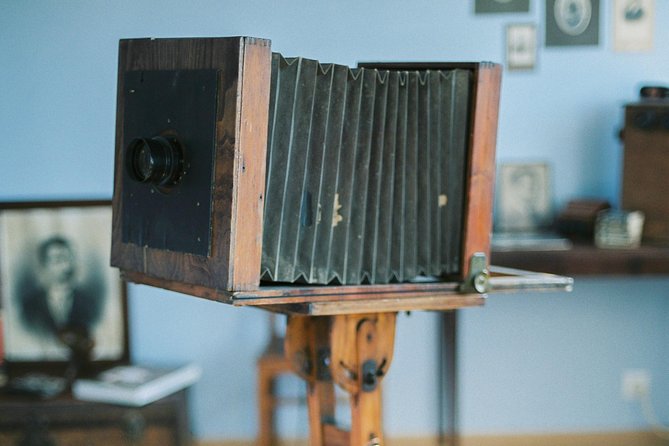
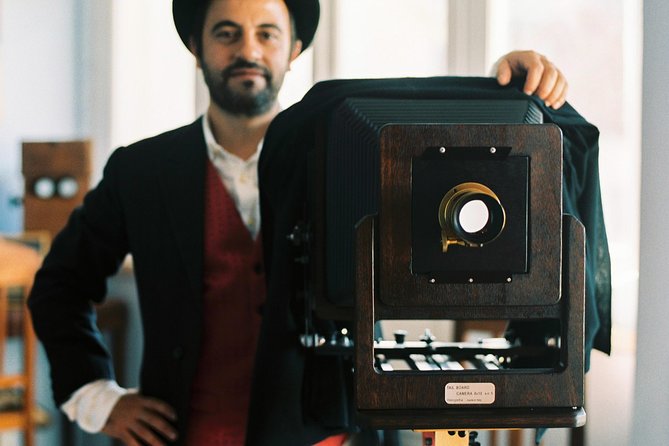
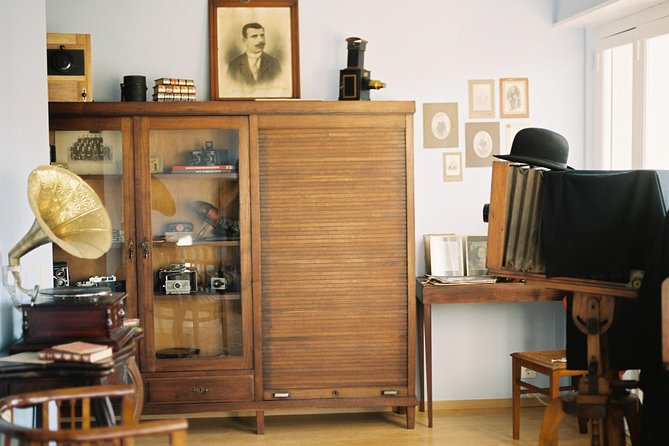
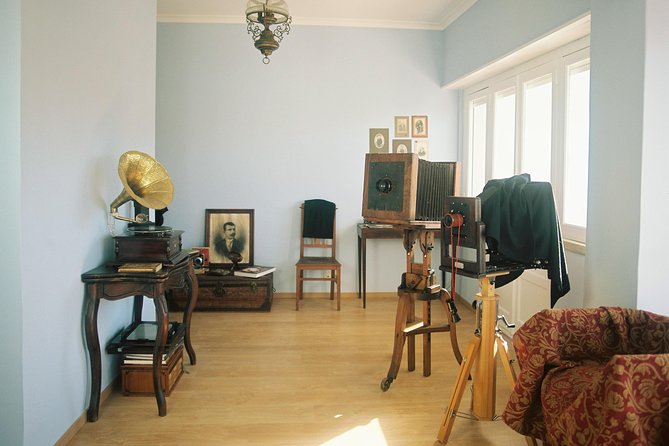
Five Historic Photography Studio is built for the mood as well as the craft. When you arrive, the space is filled with antique cameras, period furniture, and reference material about 19th-century photography. That matters because it sets expectations. This place doesn’t treat tintypes like a gimmick. It treats them like a working art process.
The “studio vibe” also helps you make decisions. Before the shoot, you’ll get a sense of the look and feel that suits the era—so your portrait doesn’t end up looking random or mismatched. Since you’ll also have access to period clothing and accessories (optional), you can lean into the style without having to guess.
Another practical plus: the experience offers English, and you’ll get a confirmation at booking. You’ll use a mobile ticket, which is handy in Portugal where you might be hopping between viewpoints and transit stops. The meeting point is at Largo 1º de Dezembro 14, and the activity ends back there—simple and low-stress.
One more comfort note: service animals are allowed, and the studio is near public transportation. Just remember it’s not wheelchair accessible, so plan your route accordingly if mobility is a factor.
How the Portrait Works: Sizes, Props, and Exposure Seconds
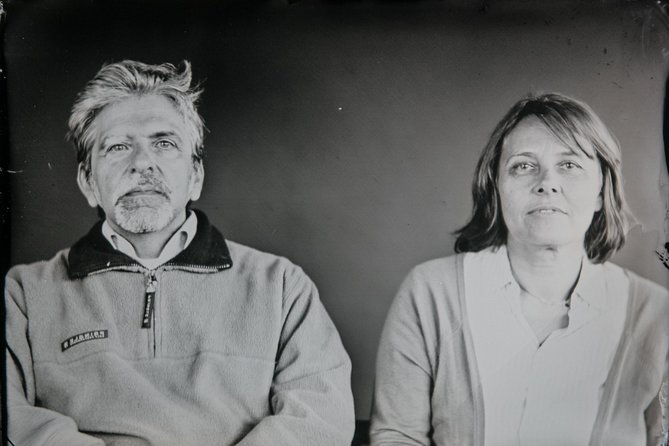
Your core takeaway is a tintype portrait made on an aluminium plate. You’ll choose from three different portrait sizes, which is great if you’re thinking about what the finished photo will look like in a frame, on a shelf, or in a keepsake box.
Styling is part of the fun here. You’ll have access to some 19th-century clothes and props for the portrait session, with period accessories available as well. If you already brought something that matches the look, that can help personalize the result even more. The goal isn’t a perfect costume. It’s a believable vintage portrait.
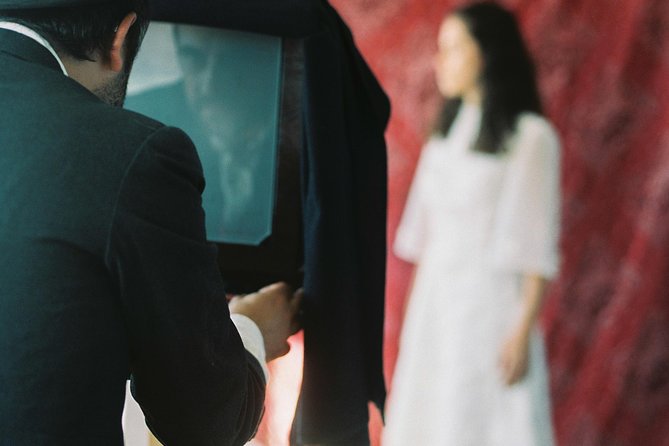
The posing part is also worth respecting. This technique can involve an exposure time that may go up to 10 seconds. That’s why the tour isn’t recommended for children under 6. For adults, it just means you’ll want to breathe calmly and hold your expression steady. For kids, it can be hard—so they’d likely end up feeling uncomfortable or bored before the shot is even done.
What I liked is that the hosts guide the session. This isn’t you alone, trying to operate an old camera like you’re in a movie. You’ll be set up for the portrait, and the process is explained as you go. If you’re the kind of traveler who enjoys learning while doing, this format clicks.
Also: it’s designed as a private activity, meaning only your group participates. No waiting around for other strangers to finish their turn. Your time stays yours.
The Dark Room Moment: Watching Development Under Safe Red Light
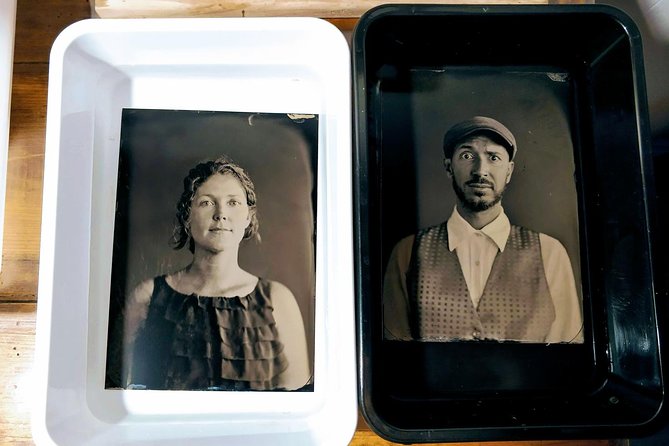
Here’s the moment that makes this tour feel special: you get to follow the hosts to the laboratory/dark-room and see the development process. You’ll be guided under safe red light, so you can actually watch what’s happening instead of just hearing a story about it.
This is where the idea of photography history turns into something you can see with your own eyes. The process starts with the negative image, and then you watch it develop into the final look. I like this because it gives you an immediate understanding of why tintypes feel so different from modern prints. You’re seeing results come from a real physical workflow, not a digital shortcut.
You’ll also learn what’s going on in a way that’s practical, not academic. The hosts provide an introduction to 19th-century photography and the collodion process as part of the session. Even if you’re not a photography nerd, you’ll pick up the core concepts quickly because you’re seeing each stage in sequence.
One small but meaningful detail: the development is shown while you’re there in the room. That’s a big difference between a museum display and a workshop. You’re not just looking at a finished tintype behind glass. You’re watching the craft do its job.
And yes, you may be able to capture video of the dark-room moment, depending on how the session is run. The key point isn’t the recording. It’s that you’ll witness a transformation that feels almost magical, but still grounded in real technique.
Picking Up Your Aluminium Plate Tintype and Protecting It
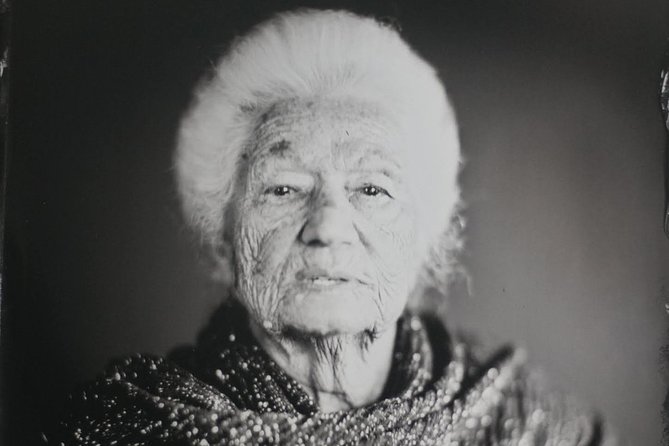
After the shoot, you don’t leave with an instant print. Instead, the aluminium plates are ready to take about one hour after the experience starts (and specifically, one hour after the shoot starts). That timing works well for a short vacation plan in Sintra. You can head back when it’s ready rather than trying to squeeze in a full-day activity.
When your portrait is collected, you’ll also receive it in a protective presentation. In my experience, it came in a nice box designed to keep the photo safe. You’ll also get guidance on how to care for it—important for something you’ll want to keep for years.
This is a real value point. Many “souvenir photos” are either low quality or printed in a way that doesn’t age well. A tintype is a physical object with texture and character. If you take a little care with storage and handling, it becomes the kind of keepsake you’ll actually keep.
Also remember: digital copies are not included. If you want a digital version for sharing or backup, there’s an added cost of €5 per booking. I think that’s reasonable given the hands-on craft you’re paying for, but you should factor it into your total budget if you’re someone who likes to upload everything.
Price and Value for a Private 1-Hour Session at $48.06
At $48.06 per person for about 1 hour (approx.), this isn’t a “cheap and cheerful” activity. You’re paying for specialized equipment, materials, and skilled hosts who guide you through both the portrait and the development process.
So is it worth it? For me, the value comes from three things.
First, it’s a private session. That alone changes the feel. You’re not competing for time slots or dealing with group pacing.
Second, you’re not just watching. You’re participating in a real 19th-century method—wet-plate collodion—and you leave with a tangible portrait on aluminium.
Third, you get the dark-room learning moment. Seeing the development under safe red light makes the craft understandable, not just impressive.
Could you find a cheaper photo souvenir in Sintra? Sure. But it wouldn’t have the same story attached. This is the kind of experience you do once and remember, because it doesn’t behave like typical tourism.
One planning tip: it’s often booked in advance (on average, about 62 days ahead). That’s a strong hint that you shouldn’t leave this to the last minute if you’re traveling during peak season.
Best Fit for Your Group: Who Should Book This and Who Should Skip
This experience is a good match if you enjoy hands-on craft, history that actually happens in front of you, and a take-home object with real character. It also fits travelers who like small-group or private activities—quiet, focused, and paced for your questions.
It’s especially suitable for:
- Couples or friends who want a unique keepsake from Sintra
- People who like photography, even as casual hobbyists
- Anyone who enjoys period props and the fun of dressing for a portrait
It may not be the best match if:
- You need wheelchair accessibility (the tour is not wheelchair accessible)
- You’re traveling with children under 6 due to potential exposure times up to 10 seconds
- You only want a digital photo right away (digital copies are extra)
If you’re traveling with mobility limitations, the key is to check your route from the meeting point to the studio space, since the tour itself isn’t wheelchair accessible. If you’re bringing your dog or a service animal, you’re good—service animals are allowed.
Should You Book This Wet-Plate Tintype Experience?
Book this if you want a portrait that feels like an artifact from the 1800s and you’d enjoy watching the process—not just hearing about it. I’d also book it if you like private, guided sessions and you’re okay with a slower pace tied to how old photography works.
Skip it if your top priority is instant digital delivery or if you’re bringing very young kids who may not handle holding still for up to 10 seconds.
If you do decide to go, try to lock it in earlier rather than later. Free cancellation is available up to 24 hours in advance, so you can plan confidently, but don’t wait until the last minute.
FAQ
What type of portrait process is used?
It uses wet plate collodion, a 19th-century photography process invented by Frederick Scott Archer in 1851, resulting in a tintype portrait.
How long is the experience?
The session is about 1 hour (approx.).
When can I collect my tintype plate?
The aluminium plates are ready to take about one hour after the experience starts, including one hour after the shoot begins.
Are period clothes and props included?
Period clothing and accessories are available for the portrait session and are optional to use as part of the experience.
Is the activity wheelchair accessible?
No, the experience is not wheelchair accessible.
Are digital copies included?
No. Digital copies cost €5.00 per booking.
More Photography Sessions in Sintra
- Sintra – Cascais Private Tour with Photos 🙂★ 5.0 · 9 reviews
- Lisbon: Capture its Charm with a Laidback Photoshoot★ 5.0 · 4 reviews
More Tour Reviews in Sintra
- Sintra: Pena Palace and Park Entrance Ticket★ 4.2 · 17,410 reviews
- Lisbon: Sintra, Pena, Regaleira, Cabo & Cascais Tour★ 4.8 · 4,326 reviews
- Quinta da Regaleira Skip-the-Ticket-Line Entry & Audioguide★ 4.2 · 3,316 reviews
- Sintra: Castle of the Moors Skip-the-Line Ticket★ 4.6 · 2,893 reviews
- From Lisbon: Sintra & Cascais Group Tour with Pena Palace★ 4.8 · 2,237 reviews
Just in: fresh Sintra reviews from the team


Photography Sessions, compared.
 ★ 5.0Photoshoot with a Professional Local PhotographerFrom $21170 reviews
 ★ 4.9Private Tuk Tuk Tour with Polaroid PhotosFrom $34138 reviews
 ★ 4.8Lisbon PhotoshootFrom $3987 reviews
 ★ 4.5Photoshoot with a Local Professional Photographer in LisbonFrom $4883 reviews
 ★ 4.9Romantic Photoshoot Experience for Couples in LisbonFrom $7378 reviews
 ★ 5.0Alfama: Unforgettable Photoshoot Experience with a LocalFrom $8177 reviews
 ★ 5.0Lisbon Cinematic Photoshoot with Top-Rated PhotographerFrom $10276 reviews
 ★ 4.92-Hour Street Art Photo TourFrom $6043 reviews
Browse the lists this tour appears in